
Caffeine has become a staple in the beverage industry, influencing consumer preferences and choices. For business owners in sectors like food service or retail, understanding the caffeine content in popular drinks is crucial for catering to health-conscious clientele. Mountain Dew, a beloved soft drink, boasts a noteworthy caffeine level that varies by package size and flavor. This article delves into the specifics of how much caffeine is contained in a standard bottle of Mountain Dew, comparing it with other beverages, exploring variations across different flavors, and discussing the potential health implications of caffeine consumption. Each chapter is designed to provide business owners with essential insights to make informed decisions in their operations.
The Science Behind Mountain Dew’s Caffeine: A Size-Driven Dose
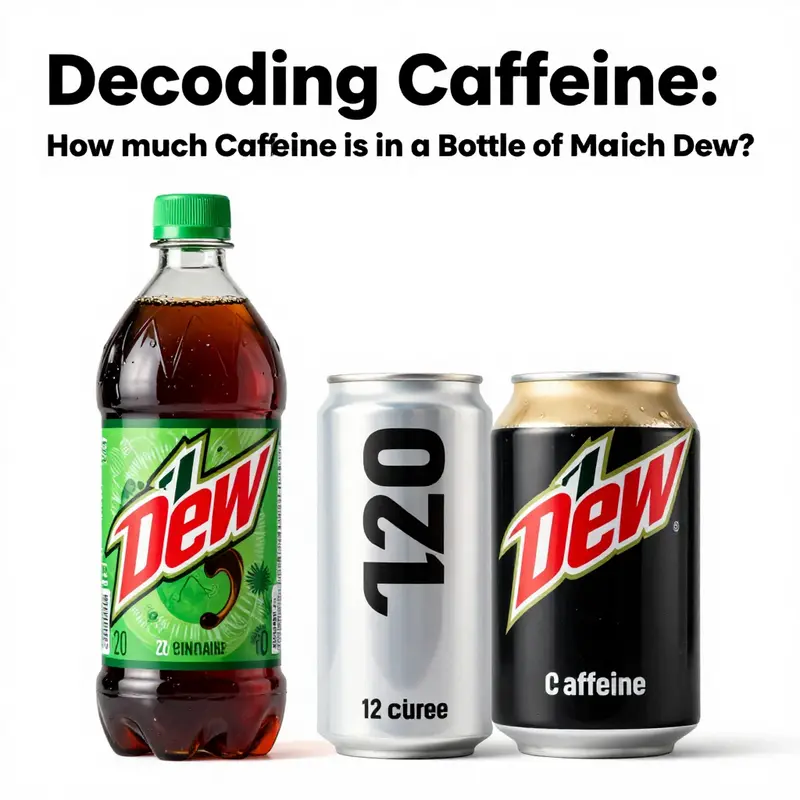
Mountain Dew’s caffeine content varies by format and batch. In common formats, a 20-ounce bottle contains about 72 mg of caffeine, while a 12-ounce can contains about 55 mg. The total caffeine scales with volume, but the per-ounce concentration can be higher in a smaller serving. Across literature, the typical figures sit in a narrow range, around 72 mg per 20-ounce and roughly 55 mg per 12-ounce. Limited editions or regional variants can shift these numbers slightly, so the label on the exact product you buy is the best reference. For practical planning, you can think of Mountain Dew as a moderately caffeinated option: more caffeine overall in the bigger bottle, but not a dramatically higher per-ounce dose.
From a labeling and health perspective, many brands now present caffeine as mg per serving and mg per bottle, helping you translate the numbers into daily intake. The effect of caffeine depends on individual sensitivity and timing, but these figures provide a stable baseline for comparison with other sodas, energy drinks, and coffee beverages. For readers who want extra context, official product pages and independent caffeine-content references offer updated figures and cross-checks when new flavors or limited editions appear.
In practice, whether you choose the 20-ounce bottle or the 12-ounce can, the key is consistency with your daily caffeine budget and awareness of how your body responds to caffeine across the day.
null
null
Variations in Caffeine Levels: A Comprehensive Look at Bottled Citrus Flavors and Their Caffeine Footprints
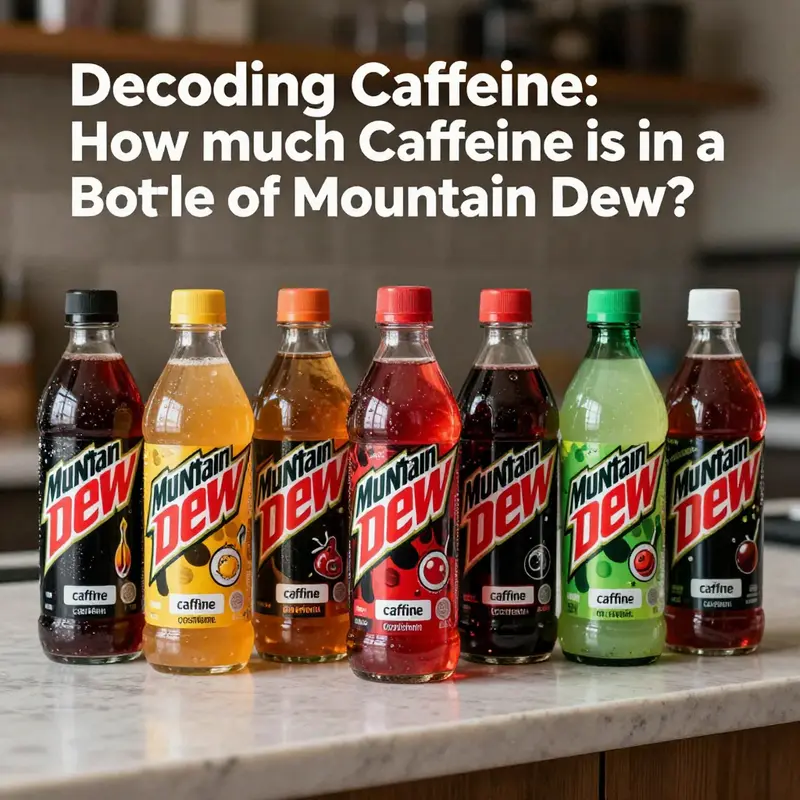
Every bottle of the citrus-fueled soda carries caffeine as part of its formula, yet the exact amount can feel like a variable that shifts with flavor and bottle size. The standard guidance points to roughly 55 mg of caffeine per 12-ounce serving for the common, non-diet formulation. When you pour that same liquid into a larger container, such as a 20-ounce bottle, the total caffeine climbs to about 72 mg, simply because more liquid carries the same caffeine density. These numbers are approximate and can vary by batch, region, and even by the marketing line that the drink belongs to. Still, they give a practical sense of how much caffeine may be found in a single drink and how it scales with packaging.
Across the lineup, the majority of the ordinary flavors share a similar caffeine profile on a per-serving basis. The standard citrus base and the sugar-free version typically hover around the mid-50s per 12-ounce serving. This consistency makes it easy for someone to switch between the regular and the sugar-free option without recalibrating their caffeine expectations. The difference in calories or sweeteners does not necessarily translate to a dramatically different caffeine punch in these steady lines.
Then there is a distinct category designed for a higher energy lift. In this line, a 16-ounce can can carry about 150 mg of caffeine. That centers around a density of roughly 9 to 10 mg per ounce, more than double the density of the standard 12-ounce serving. The effect is intended to be a more immediate, more sustained alertness, and its packaging signals that intent clearly. This demonstrates how a single brand can span a calm, everyday refreshment profile and a more potent stimulant range, simply by altering the formulation and the serving size. It also means that a consumer who reads the label will find a noticeably higher caffeine total on the can or bottle compared with the standard lines.
Variations by flavor within the standard range are not typically dramatic in caffeine content. The routine flavor profile tends to keep caffeine density in the same neighborhood, whether one chooses a variant with a different fruit emphasis or a diet version. The standard and its sugar-free counterpart will typically deliver around the same caffeine per 12-ounce serving, even if the taste and mouthfeel differ due to sweeteners. The difference is felt more in calories and flavor kinetics than in the caffeine dose, for most everyday beverages in this category.
From a consumer standpoint, this matters when planning daily caffeine intake. If you are counting by cans or bottles, the key is to note the serving size and the total caffeine per container. A 12-ounce serving with about 55 mg means roughly 4.6 mg per ounce. A 16-ounce energy-focused variant with about 150 mg yields roughly 9.4 mg per ounce. A 20-ounce regular bottle at around 72 mg has around 3.6 mg per ounce. The takeaway is that bottle size matters for total caffeine, but the per-ounce exposure can differ significantly depending on which product line you are looking at.
To illustrate how this translates into everyday use, imagine you start your day with a regular citrus beverage. The session of alertness you obtain will be mild and steady, appropriate for a mid-morning lift if you are not sensitive to caffeine. If you reach for the higher-energy variant for a late-afternoon pick-me-up, you will likely experience a stronger effect and a longer window before any crash, again because of the greater caffeine density. If you prefer a sugar-free option, the caffeine is typically the same per 12-ounce serving, so the difference is mostly in the sweetness and the calorie footprint. This is a useful real-world distinction when evaluating caffeine intake across multiple drinks in a day.
Label checking remains essential because the exact numbers can vary with regional formulas or limited-edition releases. The broad pattern is stable: standard flavors cluster around 55 mg per 12-ounce serving; a high-energy line pushes toward 150 mg per 16-ounce can; diet or sugar-free versions align with the standard caffeine level; larger bottles raise the absolute caffeine totals in line with the serving size, but not necessarily with higher caffeine density.
In practice, for those monitoring caffeine, a quick rule of thumb is to treat each standard 12-ounce serving as around 55 mg, and treat a larger, energy-focused can as a higher-dose option. If you drink the regular line in a 20-ounce bottle, expect about 70-75 mg. If you opt for the energy variant in a 16-ounce can, plan for around 150 mg. Keep in mind that these are rough guidelines; the packaging label remains the ultimate authority for your daily intake. For readers seeking a concise reference to caffeine contents across Mountain Dew variants, caffeine content MT Dew provides a straightforward overview that can help you compare options quickly.
Finally, for the most current numbers and any formulation changes that may occur over time, consult the official nutrition information provided by the manufacturer. official nutrition page
null
null
Final thoughts
Mountain Dew, with its distinct flavor and notable caffeine content, offers more than just refreshment; it can significantly influence consumer choices and business operations. Understanding the nuances of its caffeine levels—as well as those in comparison to other drinks—enables business owners to cater their offerings to diverse consumer needs and preferences. As emerging health discussions surrounding caffeine continue, staying informed presents an opportunity for businesses to responsibly address their customers’ concerns while still satisfying their desires for flavorful, energizing beverages. Knowledge of these elements can empower business decisions, enhance customer satisfaction, and ultimately lead to sustained success.