
Understanding the caffeine content in Mountain Dew is essential for business owners in the beverage industry. With consumers increasingly seeking energy and refreshment, knowing how much caffeine each variant contains can influence your product selections and marketing strategies. This article will delve into the caffeine levels of different Mountain Dew flavors, discuss the health implications of caffeine consumption, compare these levels against other popular soft drinks, and analyze consumer preferences surrounding caffeine content. Each chapter aims to equip you with the knowledge required to make informed decisions in your business.
Caffeine by the Can: A Closer Look at a Popular Citrus Soda’s Stimulant Dose
In the realm of everyday caffeine sources, some beverages stand out for delivering a noticeable lift without a caffeine label that reads like a pharmacist’s inventory. One well-known citrus-flavored soft drink sits high on that list, not merely for its bright tang and electric sweetness, but for the amount of caffeine it provides in a standard serving. When you crack open a 12-ounce can, you are tapping into something that researchers and nutritionists often describe as a high-caffeine profile for a nonalcoholic carbonated beverage. The numbers, which surface repeatedly in official nutrition facts and product panels, place the drink among the more stimulating options commonly found in grocery aisles and vending machines.
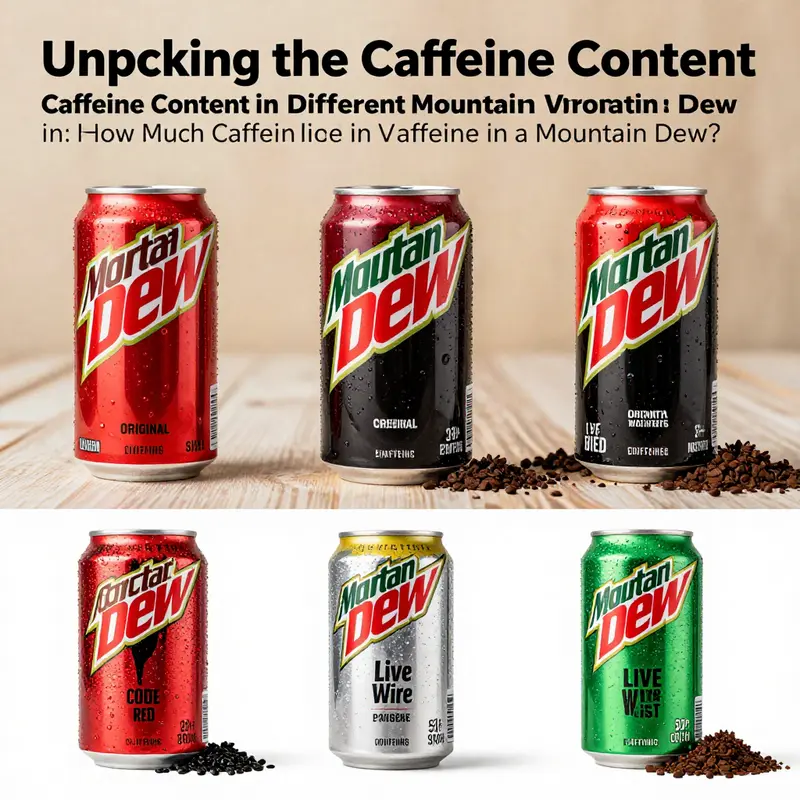
In this chapter, we trace the caffeine dose across the major variants. The original formulation—the one most people recognize as the signature version of the drink—comes in at about 54 to 55 milligrams per 12-ounce serving. That range captures the small fluctuations that happen from batch to batch and from one regional market to another, but it also conveys a consistent theme: a single can delivers well over fifty milligrams of caffeine. It is enough to spark wakefulness in many readers and to contribute to that familiar sense of an energy lift that fans often report alongside the beverage’s fizzy, citrus-forward character.
The company’s widespread variants, including a version with a sweeter cherry-citrus profile, show a striking similarity. The Code Red flavor, for example, clocks in at roughly 54 milligrams per 12-ounce can as well. The Live Wire, marketed with a bold orange-tangerine persona, carries about the same amount. Across these flavors, the caffeine dose holds steady in the mid-50s per 12-ounce serving. These small, deliberate differences matter to fans who track how different flavors might modulate intake, but the consistent figure across core offerings means that choosing a flavor does not significantly alter your caffeine load, at least on a per-can basis.
This near-uniformity is meaningful in practical terms. For someone trying to gauge daily caffeine intake, the takeaway is straightforward: whether you prefer a traditional citrus corker, a red-tinted cherry variant, or a zesty orange riff, you are generally consuming about 55 milligrams per 12-ounce container. The exact value may drift by region or production run, but the general consensus from official sources confirms that the major flavors deliver roughly 55 milligrams per serving. This consistency is part of why the drink remains a popular energy option for those seeking a quick lift without committing to a larger beverage or a caffeine-heavy shot.
To put that figure into broader perspective, compare it with the caffeine found in more typical sodas. A standard cola often carries about 30 to 35 milligrams per 12 ounces, roughly half of what this citrus-based soda provides. That disparity matters for someone who is trying to manage taste, caffeine sensations, or sleep-friendly timing. The difference becomes even more pronounced when you place these sodas beside energy-formulated beverages, which commonly push the caffeine content well above 60 milligrams per 8-ounce serving or through larger cans. The takeaway is not simply a number; it is a sense of proportion about where this drink sits in the caffeine landscape of everyday beverages.
For readers who enjoy the details of nutrition labeling, the experience is about deciphering the label rather than guessing the effect. Nutrition Facts panels frame the caffeine content on a per-serving basis, typically a single 12-ounce can in the United States. Because cans come in roughly that standard size, the per-can caffeine figure becomes a reliable shorthand for planning intake, whether one is watching caffeine deliberately or simply curious about the source of a chosen product’s punch. Regional formulation differences can exist, but they rarely tilt the result enough to turn a 54-55 mg per can into something wildly different. The story is one of consistency across the major variants, with only minor regional variation peppering the margins.
Beyond the numbers, there is the practical effect. A dose in the mid-50s milligrams is large enough to be felt by many people as a mild stimulant, influencing wakefulness, focus, and even reaction time when consumed in the late afternoon or early evening. The experience, however, depends on the drinker: tolerance, body mass, and concurrent caffeine sources all shape how that 54 to 55 milligrams lands. For a casual consumer, those figures translate into a notable, but not overwhelming, lift that complements a busy day without requiring the commitment of a larger caffeinated product. And for those who juggle multiple small caffeinated beverages, the cumulative effect becomes a meaningful factor to consider when planning caffeine timing to reduce sleep disruption.
The broader caffeine conversation often invites a measure of nuance. While the mid-50s per can may seem modest when viewed in isolation, the frequency with which a beverage is consumed, or the fact that multiple servings could be included in a single sitting, can quickly add up. Some readers might wonder whether the caffeine level is the same in the sugar-free or diet variants. In many cases, the caffeine is similar, though there can be occasional small deviations due to formulation changes intended to meet regional preferences or product reformulations. The central point remains: for the core line of flavors, the caffeine constant tends to hover around the mid-50 milligrams per 12-ounce can, providing a consistent energy signal to the consumer.
From a consumer research perspective, those consistent numbers help sellers and buyers alike calibrate expectations. A lot of the beverage’s reputation as an energy-boosting option rests on that reliability. People who know they can count on a specific amount of caffeine when they choose a can are better positioned to manage their daily intake relative to other sources. The numbers also invite a practical science: one can, with a familiar flavor profile, equals a predictable caffeine dose. Such predictability makes it easier to compare this drink with other common caffeinated beverages and to model daily caffeine consumption with a straightforward arithmetic mindset rather than resorting to guesswork.
It is worth noting that the most precise approach to understanding caffeine content remains the Nutrition Facts label on the container and the official product information published by the manufacturers. While the core 54-55 mg per 12-ounce can is a reliable baseline, only the label or the brand’s official site can confirm the exact number for a particular batch, region, or product line. This nuance matters for anyone who needs to document caffeine intake for health reasons, athletic training, or daily habit tracking. The bottom line is simple: a single 12-ounce serving of this popular citrus-inspired soda carries about 54-55 milligrams of caffeine, with a few minor regional exceptions that keep the figure from being perfectly uniform across every market.
In the broader context of beverage choice, the caffeine story invites a moment of reflection about how we use caffeine in daily life. For many, it is a convenient, palate-pleasing way to brighten a moment and sharpen attention during a long afternoon. The drink’s appeal lies not only in its bright taste but in its ability to offer a quick energy lift that feels both familiar and reliable. However, this is not the be-all, end-all of caffeine consumption. It sits alongside dozens of other sources, from coffee and tea to an array of energy drinks and snack items. The key for most consumers is simple: know your numbers, plan your intake, and balance caffeine with sleep and hydration. When you step back from the can and consider the whole caffeine landscape, the figure of roughly 55 milligrams per 12-ounce serving emerges as a useful benchmark, a baseline against which other beverages can be compared.
For those curious about the practical implications, a few concise takeaways can guide everyday decisions. If you enjoy one or two cans a day, the caffeine you ingest from this drink will contribute meaningfully but not overwhelmingly to your total. If you pair it with other caffeinated products, the cumulative total rises, and you may want to coordinate consumption with meals or rest periods to avoid interference with sleep. For athletes or active individuals, that consistent dose can be counted on as part of a broader fueling plan, especially when energy balance and performance timing matter. And for the cautious consumer, knowing the approximate 54-55 mg per 12-ounce serving provides a reliable basis to compare with other beverages and to tailor intake to individual tolerance.
As this chapter winds toward its place in the larger exploration of caffeine in everyday drinks, the central message again emerges: the caffeine content in a single can of this citrus-forward soft drink sits in the mid-50 mg range for most formulations. The exact number is a matter of labeling and regional production, but the enduring pattern—roughly 54 to 55 mg per 12-ounce serving—translates into a consistent energy signal that has helped the drink carve out a distinctive niche in the caffeinated beverage world. With that clarity, readers can move forward to compare this beverage not in isolation, but alongside its peers, evaluating how each source of caffeine fits into their personal energy strategies and sleep rhythms.
For those who want to inspect the precise figures themselves, official sources remain the best reference. Look to the Nutrition Facts panel on the can and to the brand’s published data for the most up-to-date numbers. The consistency across the major flavors underlines a straightforward conclusion: caffeine content of this line of drinks generally hovers around 55 milligrams per 12-ounce serving, with small regional variations that should be noted if you are tracking caffeine intake with a very precise routine.
In closing, the caffeine profile of this iconic citrus-forward beverage reflects a broader pattern found in many popular soft drinks: a high, predictable caffeine dose in a familiar, readily available package. It offers a reliable energy lift without introducing complexity in the choice. Readers who crave a quick, recognizable source of stimulation can count on about 54 to 55 milligrams per 12-ounce can, a number that remains worth checking on the label, especially if you are balancing caffeine with other drugs, medications, or dietary restrictions. This number forms a practical anchor in any conversation about caffeine in everyday beverages, a point of reference that helps anchor further comparisons across the spectrum of caffeinated drinks.
For those who want to go beyond surefire numbers, and to situate the caffeine content within a wider landscape of beverages, the next chapter will examine how these statistics compare with other caffeinated options—from coffee to energy drinks and even other sodas with different flavor profiles. The aim is not to champion one source over another, but to equip readers with a clearer map of how much caffeine sits in a familiar can, and how that amount stacks up against the rest of the caffeine-containing universe.
For a current, official reference to caffeine content across products, see the manufacturer’s information here: https://www.coca-colacompany.com
Buzz with Boundaries: Parsing Caffeine, Sugar, and Health in a Popular Citrus Soda

Caffeine acts like a signal flare in the human body, waking neurons, quickening thought, and nudging energy into plain tasks. In the landscape of everyday drinks, a familiar twelve-ounce citrus-flavored soda carries roughly 55 milligrams of caffeine. That figure sits in the moderate range when you measure it against coffee, tea, and energy drinks, yet it’s enough to create a noticeable lift for many people. For some, this lift comes with a price tag: a jittery edge, a faster heartbeat, or a restless night if the caffeine is consumed late in the day. The precise numbers can vary slightly by batch or formulation. In the most common varieties, the caffeine content hovers around the mid‑50s in milligrams per can, with most standard versions converging near 54 to 55 mg. Those margins matter when you start stacking servings or pairing this drink with other caffeinated sources. The rhythm of a typical day can shift quickly from steady to overcharged if a person drinks several cans or combines this beverage with coffee, tea, or energy shots. The body doesn’t always adapt linearly to small changes; sensitivity plays a major role, and tolerance isn’t universal. What feels like a normal afternoon pick‑me‑up to one person can become a disruptive burst of stimulation for another. This is not merely about wakefulness; it’s about how caffeine interacts with sleep, mood, and physical responses such as heart rate and blood pressure, especially in people who are sensitive to caffeine or who already consume caffeine from other sources.
Beyond the caffeine, the same beverage is notable for its other nutritional and chemical traits. A single 12-ounce can contains a substantial amount of sugar—approximately 46 grams. That level of sugar adds calories and, for some, contributes to a faster rise and fall in energy, often followed by weariness or a craving cycle. The sugar content matters not only for energy weathering but for long‑term metabolic health when such beverages become a regular part of the diet. The combination of caffeine and sugar can also influence mood and cognitive performance in the short term. Some people report improved alertness and concentration after a single can, while others may experience jitteriness or a crash later on. The timing of intake is relevant here; caffeine’s effects can linger for several hours, and the body’s response can be shaped by recent meals, sleep quality, and individual caffeine tolerance. When this drink is consumed late in the day, the caffeine can interfere with sleep onset and sleep architecture, reducing overall restfulness. Sleep quality matters because poor sleep can amplify daytime fatigue, which in turn may increase reliance on stimulants the next day, creating a cycle that is hard to break.
Another dimension of health risk comes from the beverage’s acidity and its impact on dental health. The formulation relies on citric acid and phosphoric acid to achieve its tangy profile, a combination that can erode tooth enamel over time if exposure is frequent. This enamel erosion can lead to tooth sensitivity and a higher risk of cavities, especially when combined with high sugar intake. The acidic environment can also interact with other dental conditions or sensitivities a person might already have, making regular consumption without protective dental care more problematic. The message here is not to demonize a single drink but to recognize how its constituents—caffeine, sugar, and acids—work together to shape health outcomes. Moderation becomes a practical guideline when people weigh immediate benefits against potential dental and metabolic risks, particularly for children, teens, or adults who already consume multiple sugary or caffeinated products each day.
From a public health perspective, the picture becomes more nuanced when one considers daily patterns. For someone who sips this citrus soda as a rare treat, the caffeine amount likely poses little risk. For a daily consumer, however, that same caffeine dose compounds with sugar and acids, contributing to a broader risk profile. Obesity, type 2 diabetes, and other metabolic disorders have been linked to high sugar intake from beverages over time. While a single can doesn’t determine health outcomes, habitual consumption in large amounts can move the needle on weight gain and metabolic health. The risk magnifies when such beverages replace more nutrient-dense options or water in the daily routine, leaving less room for hydration with lower-calorie or noncaloric choices. The liver and insulin systems respond to sugar loads in ways that, over months and years, shape energy balance, appetite, and glucose tolerance. The caffeine component adds another layer of complexity. Caffeine can improve alertness, reaction time, and mood transiently, which can be advantageous in some contexts. But it can also provoke anxiety, sleep disturbances, and heart‑rate changes in sensitive individuals or with excessive intake. The net effect, then, hinges on quantity, timing, and personal physiology. This is not a universal verdict; it is a call for informed moderation tailored to personal tolerance, daily caffeine exposure, and overall health status.
Recognizing that every person’s tolerance and health goals differ is essential. For some, a single can can be integrated into a balanced day without issue. For others, especially those with sleep challenges, cardiovascular sensitivity, or those who are managing conditions like diabetes or dental health concerns, it makes sense to approach this beverage with more intentionality. The guidance tends to favor moderation and awareness—the idea that small adjustments can reduce risk without denying oneself everyday pleasures. Practical strategies include limiting daily intake, reducing the number of cans per week, and avoiding consumption near bedtime. When choosing a beverage in the same family, seeking lower-sugar or less-acid alternatives can preserve enjoyment while mitigating health risks. This approach aligns with a broader effort to understand caffeine in context: not as a single nutrient to be avoided or embraced in isolation, but as part of a dietary pattern that interacts with sleep, mood, energy, and long-term health outcomes.
To those who crave a quick, citrusy lift without overdoing it, the question often becomes about balance rather than ban. It helps to map out daily caffeine sources and consider the cumulative load. A typical day for many people includes coffee, tea, soft drinks, and possibly energy products. When these sources add up, it is easy to exceed a level that interferes with sleep or contributes to unwanted side effects. In practice, keeping a modest budget of daily caffeine and sugar—perhaps reserving one can for an afternoon pick‑me‑up and substituting water or flavored seltzer the rest of the day—can preserve energy without creating a cascade of negative outcomes.
For readers seeking a concise resource that situates this specific caffeine amount within a wider landscape, a focused article delves into how this caffeine content compares with other beverages. It offers a clear, side‑by‑side view of how a typical twelve‑ounce serving stacks up against common alternatives. See caffeine-content-mt-dew for a detailed comparison framed around the same beverage family and its peers. This reference helps put the numbers in perspective and can guide decisions about when and how to enjoy such drinks within a responsible pattern of intake.
In weaving these threads together, it becomes evident that health implications hinge on context. The caffeine amount in this citrus soda is modest by some standards, yet it is not trivial. The sugar and acids intensify the conversation, shifting the focus from caffeine alone to the broader nutritional profile. Moderation, thoughtful timing, and attention to personal health goals are practical ways to harmonize enjoyment with well‑being. Those who need to manage caffeine sensitivity, sleep, or dental health may find it especially prudent to treat this beverage as a treat rather than a staple. The ultimate message is straightforward: knowledge of the caffeine dose is a first step, but using that knowledge to shape daily choices is where health benefits accrue.
For individuals who want a science‑backed anchor on safe caffeine consumption limits and potential risks, authoritative guidance is available through reputable medical sources. The Mayo Clinic lays out nuanced considerations about caffeine use, withdrawal, and the broader spectrum of effects on the body. Accessing their guidance can help people calibrate personal intake, especially when managing sleep, anxiety, heart rate, or metabolic concerns. This external resource offers a research‑based framework for understanding how caffeine interacts with daily life and long‑term health, which complements the practical discussions of sugar, acids, and dental health presented here. Relevant health principles emphasize moderation, attention to individual tolerance, and a focus on overall dietary patterns rather than isolated choices. By combining the quantitative detail of caffeine content with the qualitative context of lifestyle and health, readers gain a clearer path to making informed decisions about what to sip and when.
External resource: Mayo Clinic. https://www.mayoclinic.org/diseases-conditions/caffeine-withdrawal/expert-answers/caffeine/faq-20058137
Caffeine Comparison: Mountain Dew and the Soft-Drink Caffeine Landscape
In the crowded world of carbonated beverages, Mountain Dew stands out with a bold citrus flavor and a caffeine level that is notably higher than many traditional soft drinks. This chapter places Mountain Dew within the broader caffeine landscape of mainstream sodas and contrasts it with common peers to help readers gauge daily caffeine intake. The story is not just about milligrams; it is about how taste, volume, and sugar interact with stimulation to shape everyday choices.
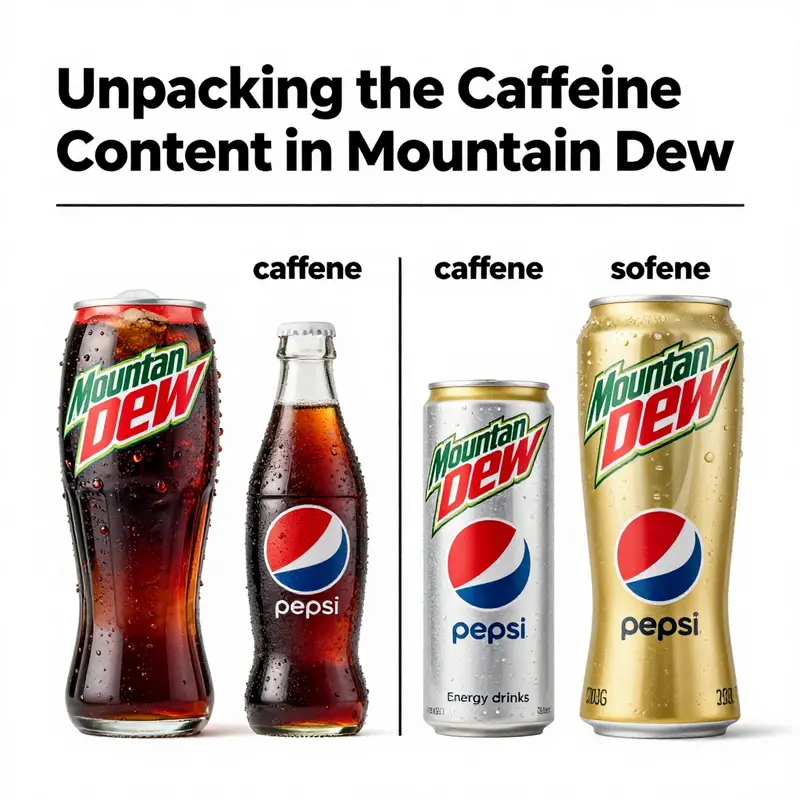
Across the standard 12 ounce serving, Mountain Dew typically contains about 54 to 55 milligrams of caffeine. That places it above Coca-Cola, which generally runs around 34 milligrams per 12 ounce, and above Pepsi, which hovers near 38 milligrams. It can be close to other citrus offerings like Live Wire, which often lands in the mid 50s. This clustering around the mid 50s milligrams per 12 ounce helps explain why many fans perceive a noticeable lift from Mountain Dew without venturing into specialized energy products.
When the caffeine landscape is broadened to include energy drinks, the contrast becomes clearer. A typical energy drink such as Red Bull delivers about 80 milligrams in an 8.4 ounce can, while a 16 ounce Monster can carry around 160 milligrams. In this context Mountain Dew is robust for a soft drink, but it does not match the concentrated caffeine punch of energy beverages. The practical takeaway is that Mountain Dew provides a strong stimulant effect within the soft drink category, suitable for a quick lift that remains flavor focused.
Sugar content adds another layer to the decision. A regular 12 ounce Mountain Dew contains roughly 46 grams of sugar, which contributes to calories and may influence how often the drink is chosen. Diet Mountain Dew, on the other hand, delivers the same caffeine payload of about 54 to 55 milligrams per 12 ounces but with zero sugar and zero calories. For readers balancing caffeine with calorie goals, the diet version offers an equivalent stimulant effect without the sugar burden.
Serving size and labeling are practical realities that affect daily caffeine totals. The standard 12 ounce can is common, but beverages are also offered in larger or smaller portions in shops and vending machines. If someone consumes more than one can in a sitting or over the course of a day, total caffeine intake rises quickly. This is why mindful consumption matters, especially for individuals who are sensitive to caffeine or who aim to limit late day intake to support sleep.
In summary, Mountain Dew sits near the top tier of caffeine per 12 ounce among mainstream soft drinks, outperforming most colas and many fruit-flavored options while falling short of the higher doses seen in energy drinks designed for concentrated caffeine delivery. Its appeal lies in a distinctive flavor paired with a noticeable lift, a combination that explains its enduring popularity. For those comparing caffeine sources, Mountain Dew offers a credible daily option within the soft-drink category, with Diet Mountain Dew providing a sugar-free alternative that preserves the same caffeine content. The broader takeaway is that caffeine is best understood in the context of serving size, sugar, calories, and personal tolerance rather than as an isolated metric.
The Caffeine Equation: How Mountain Dew’s Energy Kick Shapes Buying Behavior

Caffeine is more than a buzzword on a label; it is a signal that travels from the can to the brain, to the sleep schedule, and onward into daily routines and shopping decisions. When readers think about the energy they want to fuel a study session, a workout, or a long commute, the precise amount of caffeine per serving becomes a quiet but potent guidepost. In this chapter we unravel how the caffeine profile of a popular, high-energy soda fits into the broader dance of consumer choice. We will trace not just the numbers, but the implications those numbers carry for a market that increasingly prizes transparency, balance, and personal fit as much as it does taste or branding. The core finding from the research is straightforward: a standard 12-ounce can delivers roughly 54 to 55 milligrams of caffeine. That is a substantial lift for a non-diet, non-alcoholic beverage, positioning this product among the higher-caffeine options in the soda category. For a buyer seeking a quick mental and physical edge, this can be exactly what they want, and the appeal is reinforced by the consistency of caffeine across regular formulations and popular flavors alike. The signal is clear. The energy kick is real, and it is predictable. A consumer can rely on the caffeine quantity to plan a caffeine budget across the day without the guesswork that comes with more opaque beverages. The value proposition is not only the jolt itself but the ability to compare this option with others in the same aisle, using a common metric that matters to performance, study, or sport. Yet the same data can become a tool for caution as much as for choice. For individuals who are sensitive to stimulants, who are managing anxiety, or who aim to reduce daily caffeine intake, knowing the caffeine content helps prevent inadvertent overconsumption. The risk of jitteriness, an elevated heart rate, or disrupted sleep is not theoretical; it is a practical temptation when multiple servings slip into a day. The exact numbers matter because they anchor personal decisions in a framework that translates taste and habit into physiological reality. This balancing act—between energy needs and rest, between daily productivity and long-term health—defines a large slice of contemporary consumer behavior. The chapter’s emphasis on transparency is not merely a marketing ideal; it is a response to a broader cultural shift. Buyers increasingly want clear labeling, straightforward nutritional information, and the ability to compare products on a level playing field. In this context, the caffeine figure becomes a proxy for trust. If a brand reports caffeine in a transparent way, consumers are more likely to feel confident that other ingredients are being disclosed with equal care. This mindset dovetails with wellness-forward attitudes that now pervade food and beverage decisions. People are not just counting calories or grams of sugar; they are evaluating whole product narratives. They want to know how a product aligns with their values, schedules, and health goals. As a consequence, the willingness to choose a caffeinated option depends not only on the number itself but on how clearly that number is presented and how it fits into a larger dietary pattern. In the discussion of ingredients, caffeine is not an isolated trait; it sits alongside a constellation of other components that shape a drink’s profile and its appeal. The standard label communicates caffeine alongside calories, sugars, and other additives. This constellation matters because it frames a product as part of a regulated system designed to help consumers make informed choices. In many cases, buyers will also examine the ingredient list for items that have sparked concerns in the past, such as additives that have drawn health debates or regulatory scrutiny. The presence or absence of certain additives can color a decision as much as any caffeine figure. The narrative surrounding caffeine content also intersects with evolving industry responses to consumer demand for lower-caffeine or caffeine-free options. The market now features a spectrum of beverages that caters to different caffeine budgets, from light to strong, as well as to those who prefer to avoid caffeine altogether. This trend is notable because it reframes the baseline expectation: the same consumer who values an energizing boost may also prize the option to opt out when needed. The result is a more nuanced consumer landscape in which caffeine content becomes a part of a larger calculus rather than a single selling point. The research materials illustrate how this calculus plays out in real purchasing behavior. For students burning the midnight oil, athletes seeking steady focus, or professionals navigating long shifts, a 54 to 55 milligram boost per can offers a reliable energy profile. It is enough to sharpen attention, improve reaction time, and sustain effort without pushing the scales toward the realm of overstimulation for typical daily consumption. This reliability is what makes the caffeine figure so persuasive for buyers who count themselves among the power users of caffeinated beverages. It is also what makes transparency so valuable in the eye of the consumer. When a label clearly communicates caffeine content, a buyer can tailor intake with confidence. If someone plans a light coffee-and-soda routine, they can space their caffeine sources across the day, rather than encountering a cumulative effect that surprises sleep or mood later. Conversely, for individuals mindful of their total daily intake, the same information becomes a guardrail, a reference point that helps them maintain balance. The broader consumer trend toward wellness amplifies this dynamic. People are seeking products that align with health goals, and that includes not only what is inside the can but how that information is disclosed. A growing segment of buyers pays attention to the transparency of formulators and manufacturers, preferring brands that publish clear data and maintain consistent labeling across product lines. In situations like this, the caffeine figure becomes part of a larger narrative about whether a company communicates openly about ingredients, sourcing, and formulation changes. The transparency conversation naturally expands to concerns about other ingredients that may accompany caffeine. For example, brominated vegetable oil (BVO) and related additives have previously raised questions about health effects in some markets, prompting reformulations and regional labeling differences. Consumers who are attentive to such issues may extend their scrutiny beyond caffeine to how a product is built, what compounds it includes, and how those compounds interact with personal health considerations. This expanded awareness reinforces the idea that buyers are not simply chasing a single measurement; they are aligning multiple dimensions of a product with their personal values and routines. In this light, the caffeine figures serve as a starting point, a reliable anchor from which an individual can explore a product’s broader health and wellness story. The consumer decision-making process thus becomes a narrative of alignment: does the energy profile fit within a daily caffeine budget? Does the labeling offer the clarity needed to maintain that budget? Do other ingredients and potential additives align with personal health standards? And does the brand demonstrate a commitment to transparency in a way that feels trustworthy and actionable? These questions are not rhetorical; they shape actual purchasing trajectories. They influence not only what people buy, but how they talk about their choices with friends, roommates, teammates, and colleagues. They inform how people compare one beverage against another, not just on taste and price but on how well a product supports a responsible daily rhythm. The practical takeaway for readers who seek to apply this knowledge is straightforward. Start with the baseline: know the caffeine per serving. Use that figure to map out your daily caffeine plan, considering other sources you consume and your schedules. If you need to avoid caffeine after a certain hour, set a cut-off; if you want a mid-day lift, you can incorporate a single serving without overstepping your limits. And when choosing among beverages, compare not only caffeine but also how clearly the brand communicates its data. A label that clearly discloses caffeine alongside other essential nutrients signals a broader commitment to consumer trust. In this way, the caffeine line on the nutrition panel becomes more than a number; it becomes a decision aid, a practical instrument that supports health-minded buying. For readers who crave more detailed quantification of caffeine content in this family of beverages, a concise breakdown is available in other resources that focus specifically on caffeine content across varieties, including direct comparisons with similar caffeinated drinks. This cross-checking helps buyers calibrate their choices against a larger landscape of energy options, ensuring that their preferences for taste, energy, and transparency all line up. In practice, a well-informed buyer will often rely on a combination of the official Nutrition Facts label, the manufacturer’s product page, and independent resources that compare caffeine across beverages. The official product page and the Nutrition Facts label are reliable anchors for the exact milligram figures per serving and per container, while independent comparisons provide context about how those numbers stack up against competitors in the market. A reader might find it helpful to consult a dedicated page that compiles caffeine content across popular beverages, using standard serving sizes to facilitate apples-to-apples comparisons. For readers who want to dig deeper into this specific product family, there is a concise reference that summarizes the caffeine content and offers quick comparisons to other caffeinated sodas. Such resources help readers translate the numbers on the label into practical daily choices, reinforcing that the headline figure—54 to 55 milligrams per 12-ounce serving—works in concert with other factors to shape buying behavior. Ultimately, the caffeine content matters most when it is contextualized within a consumer’s routine and values. A student juggling deadlines and study sessions may value a predictable boost, while someone who prioritizes sleep or who avoids stimulants may seek lower-caffeine or caffeine-free alternatives. A health-conscious buyer will look for transparency around both caffeine and other additives, seeking assurance that the product aligns with their preferences for balance and well-being. The takeaway is not a universal prescription but a personalized framework. The numbers empower buyers to calibrate their caffeine intake, the labeling empowers them to trust what they read, and the evolving product landscape empowers them to choose options that reflect their evolving health goals and lifestyle needs. Readers who want a quick, digestible reference can explore the basic caffeine content and its practical implications through dedicated resources that distill the key figures into easy-to-use guidance. In closing, the caffeine content of a popular, high-energy beverage is more than a simple metric. It is a lever that buyers use to tune energy, sleep, and daily routines, while also guiding expectations about transparency and health. The chapter above outlines how these forces interact in a real-world purchasing scenario, illustrating why knowing the caffeine per serving matters to buyers and how that knowledge contributes to more intentional, values-aligned choices. For readers seeking a deeper dive into the specifics of caffeine content and related considerations, see the internal resource linked here: caffeine-content-mt-dew. For additional context and cross-reference, consult the official product information provided by the manufacturer’s site, which highlights caffeine content alongside other nutritional details. As markets continue to evolve toward clearer labeling and more nuanced wellness conversations, the caffeine figure remains a reliable touchstone for consumers navigating the intersection of taste, energy, and long-term well-being. External reference: https://www.mountaindew.com
Final thoughts
In conclusion, understanding the caffeine content in Mountain Dew is crucial for business owners. Each variant’s caffeine levels not only inform product selection and marketing but also align with consumer health interests and preferences. By leveraging this knowledge, businesses can enhance their offerings and cater to the demands of a health-conscious market. Staying informed about caffeine content can provide a competitive edge and foster better customer relationships.