

Understanding caffeine content in beverages like Mountain Dew is pivotal for businesses targeting energy-conscious consumers. With about 55 milligrams of caffeine per 12-ounce can for regular variants such as Original Mountain Dew and Code Red, this article explores various aspects of caffeine in Mountain Dew. We will delve into how much caffeine is in a Mountain Dew compared to other soft drinks, the health implications for consumers, and the caffeine content in different product variants. Each chapter provides crucial insights that can inform business decisions in the beverage industry.
Caffeine in a Citrus Soda: Understanding the 55 mg Benchmark
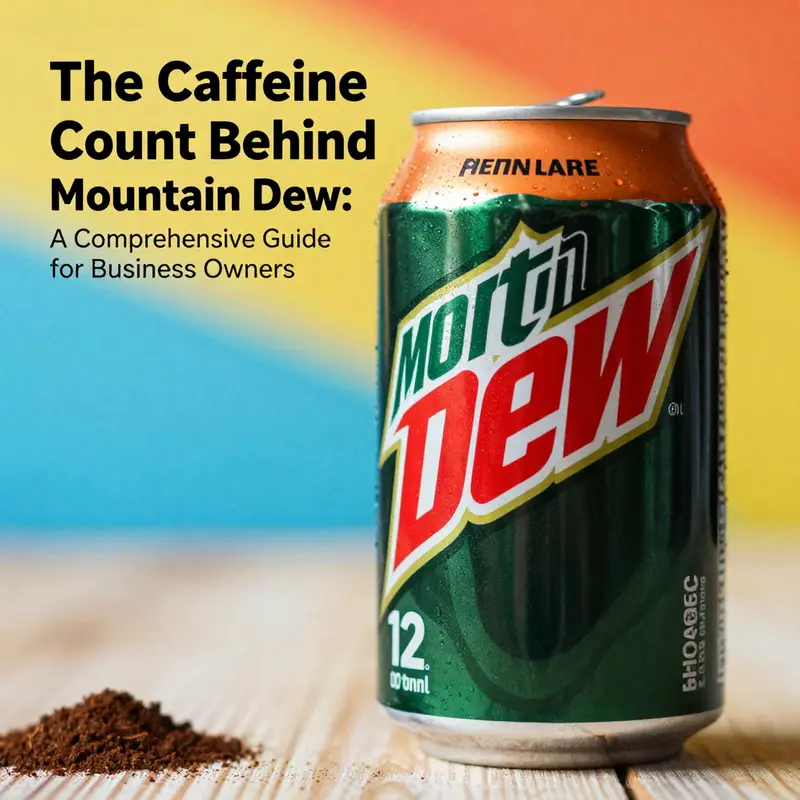
Caffeine has a predictable role in many daily routines, and citrus-flavored sodas with caffeine are often discussed in terms of a standard 12-ounce serving. The typical amount is about 55 milligrams per 12-ounce can, which places it between tea and coffee in a way that can boost alertness without an intense energy spike. However, exact amounts can vary by flavor, size, and batch, so checking the nutrition facts panel on the specific container is the best practice.
Compared with an 8-ounce cup of brewed coffee, which commonly ranges around 95 milligrams, the citrus soda offers a milder lift. Metabolism and sensitivity influence how you feel the caffeine, and the timing of consumption can affect sleep later in the day. For planning daily caffeine intake, many guidelines suggest a general limit around 400 milligrams for healthy adults, though individual needs may differ. In practice, treat the label as the authority for any given can and consider total daily caffeine from all sources when planning your day.
Balancing the Burst: Unpacking Mountain Dew’s Caffeine Within the Landscape of Popular Soft Drinks

What makes a soft drink feel like a jolt rather than just a refreshment can hinge on one number on the label: the caffeine content. Among the broad spectrum of nonalcoholic beverages, Mountain Dew has earned a distinctive reputation for delivering a noticeably stronger lift than many of its peers. The simple, practical fact often cited by curious consumers is that a standard 12-ounce can contains about 55 milligrams of caffeine. That single line of figures, though compact, opens the door to a wider conversation about how caffeine is scaled across servings, flavors, and even product families. In the grand ecosystem of caffeinated beverages, Mountain Dew occupies a position that is both straightforward to quantify and rich with nuance. Its caffeine footprint matters not only to the person seeking a quick pick-me-up but also to households that navigate daily caffeine budgets, to athletes who rely on timing and focus, and to parents who monitor caffeine exposure for younger readers of the energy-boosting habit. This chapter invites readers to move beyond the headline number and into a more integrated understanding of how much caffeine truly sits in each can, how that figure compares to the rest of the market, and what it means for daily choices and health considerations over time.
At the core is a comparison that many people instinctively make when standing in front of a cooler or a grocery shelf. A 12-ounce serving of Mountain Dew offers approximately 55 milligrams of caffeine. That benchmark is not isolated; it anchors a broader scale where common cola drinks typically hover in the 30 to 38 milligram range for the same 12-ounce portion. Within this tier, Mountain Dew stands out as distinctly higher, a distinction that is not merely academic. caffeinated beverages come in a spectrum of formats and intensities, and the difference of roughly 15 to 25 milligrams per 12-ounce segment can translate into perceptible differences in alertness, focus, and the subjective sense of a “kick” over the course of a few hours. For a reader weighing efficiency of caffeine against taste and calories, the 55 mg figure becomes a practical reference point, not merely a trivia data point.
The numbers become more meaningful when they are anchored in real-world context. For instance, a popular cola like Coca-Cola Classic is typically around the mid-30s for caffeine per 12 ounces, while Pepsi tends to sit closer to the upper 30s. Sunkist Orange Soda, a fruit-flavored option, tends to land lower still, around a quarter of Mountain Dew’s caffeine content in the same serving size. These comparisons matter in everyday decisions, whether a consumer is trying to limit caffeine intake, time a caffeine boost for a particular activity, or simply choose a beverage that aligns with personal energy needs. The contrast highlights Mountain Dew’s unique positioning among mainstream sodas: a product that delivers more of a stimulant effect without entering the realm traditionally associated with dedicated energy drinks.
Within this landscape, it is also important to acknowledge that caffeine content is not a static number etched in stone. The formulation of a given brand can evolve, and even within a single product family, small shifts can occur due to changes in sweeteners, flavor components, or manufacturing tolerances. The 12-ounce can labeled as regular Mountain Dew is described in multiple sources as containing about 55 milligrams of caffeine, and this level has been presented as consistent across notable core flavors such as Original Mountain Dew and Code Red. Yet the same general statement often notes that slight variability can occur between different formulations and package sizes. The practical takeaway for consumers is straightforward: for the most precise reading, check the nutrition facts panel on the exact can or bottle you intend to drink. Labeling remains the most reliable source for that specific product at the moment of purchase, and it is the best guide when comparing two different packaging sizes or regional variants.
The group of Mountain Dew variants often mentioned in everyday conversation includes Live Wire (Wild Orange) and Code Red. While these flavors differ in taste and brand storytelling, their caffeine profile remains closely aligned with the regular formulation. In other words, the caffeine content per 12-ounce serving tends to hover around the same high level—approximately 55 milligrams—across the standard lineup. This consistency across flavors reinforces the idea that the perceived energy effect is driven by caffeine rather than by flavor-related expectations. For readers who are curious about how flavor variants might influence caffeine, the core message remains that taste differences do not appear to markedly alter the caffeine density on a per-ounce basis. If a consumer is comparing a can labeled as Live Wire to a can labeled as Original, the takeaway is that the energy potential remains similar, even as the sensory experience shifts with the orange-forward or citrus-forward flavor notes.
The broader spectrum of beverages offers further perspective. In the category of non-carbonated liquids, such as sports drinks, caffeine is typically minimal or nonexistent—often less than 5 milligrams per 12-ounce serving. The contrast with Mountain Dew’s 55 milligrams is stark enough to remind readers that caffeine is not a universal feature of hydration beverages; it is a strategic inclusion in certain products designed to deliver a quick, noticeable lift. On the other end of the spectrum, dedicated energy drinks present a higher intensity of caffeine per serving, with approximately 80 milligrams per an 8.4-ounce can in many mainstream formulations. That level, while still within common regulatory expectations for caffeine labeling, is concentrated in a smaller package and often paired with other stimulant-focused ingredients. The juxtaposition helps readers understand how Mountain Dew’s caffeine content sits in the middle-to-upper range for mainstream sodas, while energy drinks routinely pack more caffeine into a smaller volume.
This broader context does more than just map numbers; it also invites readers to think about how caffeine translates into real-world effects. The bodily experience of caffeine depends not only on milligrams but also on factors such as absorption rate, individual tolerance, time of day, and concurrent intake of food or other stimulants. What is measurable on a label—55 milligrams per 12-ounce serving—captures the potential for a certain degree of alertness and metabolic activation. How sharp or how sustained that effect feels can vary from person to person. For some, the lift is clean and enduring over several hours; for others, it may be brief or felt most strongly during the initial minutes after consumption. In practical terms, the labeled caffeine content offers a predictable baseline, but the subjective experience remains variable. This is one reason why readers seeking to balance caffeine with sleep, focus, or daily routines often approach the data with both the certainty of the number and the flexibility of personal experimentation.
To help readers navigate these choices, it is worth emphasizing how to use the information responsibly. If you are monitoring daily caffeine intake, the 12-ounce benchmark of 55 milligrams serves as a clear reference point for planning around meals, workouts, or late-day activities. Multiplying the 12-ounce baseline by the number of servings you consume is a straightforward method to estimate total daily intake from this particular beverage. For example, a 16-ounce serving would roughly contain 73 milligrams of caffeine, calculated by scaling the 55 milligrams from 12 ounces. While this exact figure depends on the packaging and formulation, it illustrates how serving size directly alters the caffeine load. Consumers who frequently drink beverages with caffeine should consider the cumulative effect of multiple products in a single day, especially when combining sodas with other caffeinated sources such as coffee, tea, or certain medications. Keeping a simple tally can help prevent exceeding personal comfort thresholds and eyeing the practical daily limit that aligns with health goals.
The labeling environment can sometimes produce confusion, especially where regional variations or limited-edition runs appear. Some specialty or seasonal Mountain Dew variants are often described as maintaining the same high caffeine profile. The practical implication is not that the flavor is a caffeine bet, but that the energy potential—per standard serving—remains robust. For readers who want precise, variant-specific information, the most dependable route is to consult the nutrition facts on the exact product you purchase. Manufacturers typically publish this information on packaging and, in many cases, on official product pages. When accuracy matters—for example, if you are managing a caffeine-sensitive household member or coordinating a diet around caffeine limits—the can or bottle you pick up in-store is the best source of truth.
The interplay between flavor, energy, and labeling also invites a broader reflection on how people approach beverages as part of daily routines. For some, a brisk 12-ounce can of a high-caffeine soda becomes a reliable prompt to begin work, an occasional pick-me-up during a midafternoon slump, or a flavorful alternative when coffee is less appealing or unavailable. For others, caffeine consumption is more nuanced, with careful timing around sleep windows or exercise schedules. The takeaway is not simply the number on the label but the relationship between that number and personal needs. In the context of the article as a whole, understanding Mountain Dew’s caffeine content becomes a gateway to evaluating a family of beverages that share the goal of delivering a quick, dependable boost, while still requiring mindful attention to total daily intake, interactions with other dietary components, and individual variance in sensitivity. The numbers become a language through which readers can express preferences, set boundaries, and make informed choices that align with health goals and lifestyle realities.
For readers who want a consolidated reference that specifically focuses on Mountain Dew’s caffeine content, a concise breakdown across varieties is available in a dedicated page that presents the MT Dew caffeine content in a straightforward format. This resource offers a helpful look at how the caffeine numbers stack up across the most common flavors without requiring readers to sift through multiple product pages. It is a practical companion for someone building a quick, side-by-side view of what to expect from each can or bottle they encounter on shelves. MT Dew caffeine content provides a concise, accessible snapshot to supplement the in-depth discussion above. While the page is a useful reference, readers should still verify the exact figures on the packaging they buy, since formulation and labeling can vary by batch and region.
In sum, Mountain Dew’s caffeine footprint—approximately 55 milligrams per 12-ounce can—places it in a notable position among mainstream soft drinks. The figure is consistent enough across core flavors to be considered a reliable baseline, yet flexible enough to accommodate the realities of packaging variations and labeling differences. When placed alongside other well-known sodas, the beverage distinguishes itself as a higher-caffeine option within its category, a reality that resonates with consumers seeking a more pronounced stimulant effect without moving into the territory typically associated with energy drinks. This chapter has traced the arithmetic of caffeine in a can, mapped it against a broader market, and offered practical guidance on how to interpret this information for personal consumption. The result is a clearer sense of what the caffeine number means in daily life, and a pathway toward more informed, conscious beverage choices as readers continue through the broader landscape of caffeinated drinks in the article.
External reference: https://www.caffeineinformer.com/mountain-dew-caffeine-content
The Mountain Dew Buzz Decoded: Caffeine Levels, Health Impacts, and Everyday Choices

The act of opening a can of Mountain Dew feels like flipping a switch in the body’s energy ledger. The bright citrus aroma hits first, followed quickly by a familiar hiss of carbonation and the crisp rush of liquid against the palate. Caffeine sits at the center of that experience, a molecular cue that nudges the brain toward a state of heightened alertness and a subtle sharpening of focus. But beyond the sensory flash, caffeine is a tiny chemical agent with real implications for how we sleep, how we manage anxiety, and how we balance the demands of a daily routine. To understand what a single 12-ounce can contributes, it helps to start with the numbers. In roughly 12 ounces of the regular, classic formulation, Mountain Dew contains about 55 milligrams of caffeine. This figure, while modest when viewed against some energy drinks or coffee beverages, is far from negligible. It represents a deliberate dose designed to provide a lift without overwhelming the senses for most healthy adults. The consistency of this caffeine level across the brand’s staple flavors—Original Mountain Dew and Code Red, in particular—helps consumers gauge what to expect when they reach for a can at lunch or during an afternoon slump.
What makes the 55 mg figure meaningful is not simply the number itself but the way it sits in a broader landscape of caffeinated choices. Compared to a cup of coffee, which can range from around 70 to 140 mg per 8-ounce serving depending on the bean, roast, and brewing method, Mountain Dew offers a smaller, steadier nudge. It’s enough to lift daytime fatigue and sharpen reaction time for many people, especially those who are sensitive to the stimulant or who drink caffeine infrequently. Yet the same dose can feel exaggerated for others, particularly if they are already near their daily caffeine ceiling or if they consume more than one can in a single sitting. The layered experience of caffeine is as much about timing and context as it is about milligrams.
For readers who crave precision, there’s a useful edge to this topic: different variants may carry different caffeine loads. While the regular formulation tends to hover around that 55 mg mark, certain lines bearing the Mountain Dew banner—such as those marketed as energy-enhanced or limited-edition citrus blends—have been known to push caffeine higher. The exact amounts can shift with formulation tweaks, packaging changes, or regional labeling. The best practice remains simple and reliable: check the nutrition facts panel on the specific can or bottle you’re purchasing. It’s the most direct source of truth and helps set expectations forTaste, energy, and sleep in the days that follow. To connect this practice to a broader resource, you can explore a concise overview of the caffeine content across Mountain Dew variants in the linked internal reference.
The physiological ripples from waking a sleepy system with caffeine are well documented in consumer nutrition guidance. A dose around 55 mg can yield a perceptible lift in alertness and mental clarity for many people. It can improve vigilance, shorten reaction times, and enhance the ability to perform simple cognitive tasks during the day. Yet that same lift can blur into jitters if the dose lands at a sensitive moment, or if the consumer already copes with stress or anxiety. The effects are not merely a function of the caffeine itself; they hinge on a web of factors: whether you’ve eaten recently, your body weight and metabolic rate, your tolerance, and even your sleep debt. In short, caffeine acts as a stimulant that amplifies signals in the brain and periphery, which can be a boon or a burden depending on timing and personal physiology.
For younger readers, the numbers carry a different weight. The American Academy of Pediatrics has long advised conservative caffeine intake for children and adolescents, recommending no more than about 100 milligrams per day. In practical terms, a single Mountain Dew can already account for a significant portion of that limit. For a child who might be curious about soda’s kick, that one 12-ounce can isn’t merely a casual choice; it represents a meaningful portion of daily caffeine exposure. For this reason, caregivers and educators often emphasize moderation and awareness of how caffeine can affect sleep, mood, and overall daytime performance in developing bodies.
The considerations don’t stop with youth. Among adults, 55 mg is typically well within a safe range when consumed as part of a balanced diet and reasonable daily limits. The caution note is important, however: long-term or habitual high intake can contribute to issues like anxiety, digestive discomfort, or sleep disruption, particularly if caffeine is consumed in the late afternoon or evening. The broader caution is about habit formation more than any single dose. When people use Mountain Dew as a daily source of energy, the cumulative effects over weeks and months can become noticeable, especially in how well they sleep, how easily they wake, and how steady their energy feels across the day.
An important part of navigating these choices is acknowledging that caffeine is not a one-size-fits-all stimulant. Some individuals process caffeine more slowly or are more sensitive to its effects. For these readers, even a small dose might feel potent, causing restlessness or a raised heart rate. Conversely, habitual caffeine users may build tolerance, which means they notice less of the same effect from the same amount. Tolerance, however, does not erase the potential for sleep disturbance or anxiety, especially if caffeine is consumed late in the day or in larger quantities. That is why many health professionals encourage mindful consumption: pairing caffeine use with awareness of one’s sleep schedule, daily routines, and personal responses.
A practical aside concerns labeling and ingredient variations. Mountain Dew products sometimes differ in caffeine content across markets or product lines. In addition to caffeine, manufacturers sometimes adjust sweeteners, acidity, and other flavoring components to maintain a consistent taste profile in spite of evolving regulations and consumer preferences. While caffeine remains the centerpiece of the product’s energy claim, the label is a compact ledger of what the consumer is putting into their body—an ongoing reminder to read the facts panel before deciding how many servings to reach for. For those who want a quick reference to the numbers, the caffeine content mt dew provides a concise overview of how this beverage stacks up in the broader landscape of caffeinated drinks.
Beyond the core 55 mg per can, savvy readers might wonder how this number lines up with other popular choices. A typical 8-ounce cup of brewed coffee can carry roughly 95 mg of caffeine, though this varies widely with the roast and brew strength. A can of cola, by comparison, contains far less—often under 40 mg for a standard 12-ounce serving. The difference isn’t only about the numerals on a label; it’s about how the body experiences energy across the day. Coffee’s dose is concentrated and can yield a more abrupt peak and a more noticeable crash, especially if consumed on an empty stomach. Mountain Dew, with its milder dose, tends to produce a steadier sense of wakefulness, which some people find easier to manage within a busy schedule. When we place Mountain Dew alongside other beverages that supply caffeine, the choice becomes less about a universal standard of “strength” and more about matching a product to personal rhythms and needs.
For anyone aiming to navigate this landscape with clarity, there is value in recognizing the relationship between caffeine and sleep. The timing of consumption matters as much as the dose. Consuming caffeine close to bedtime can delay the onset of sleep, reduce total sleep time, and degrade sleep quality for many individuals. The half-life of caffeine—the time it takes for the body to eliminate half of the substance—varies among people but often falls in the range of five to six hours. That means a Mountain Dew enjoyed in late afternoon might still be influencing arousal levels near a typical bedtime. It’s not a universal rule, but it’s a practical heuristic for people aiming to protect nightly rest while maintaining daytime functioning.
Another dimension to consider is hydration and overall fluid intake. Caffeine-containing beverages do not count toward daily hydration in the same way water does, but the diuretic effect of caffeine is modest for regular consumers. This means that a single can adds not only caffeine but also calories, sugar, and fluids to the day. For most adults, a can can be folded into a balanced pattern of meals and snacks without causing dehydration or electrolyte imbalance, particularly if it’s moderated by water and nutrient-dense foods. For younger athletes or highly active individuals, balancing caffeinated beverages with electrolyte-rich fluids and whole foods becomes a practical habit rather than a theoretical guideline.
The topic would not be complete without acknowledging some historical and regulatory context surrounding caffeinated beverages in this category. While the modern formulation of Mountain Dew has moved away from certain controversial additives that triggered public concern in the past, the discussion emphasizes vigilance. In earlier years, some citrus-flavored beverages faced scrutiny for ingredients that raised safety questions for certain populations. This history serves as a reminder that manufacturers continually refine recipes in response to scientific data and consumer expectations. The overarching message to consumers remains simple: review ingredient lists, compare nutrition panels, and consider how each product fits into your personal health goals and daily routine.
From a consumer education standpoint, the practical takeaways are clear and actionable. First, treat the can’s labeled caffeine as the baseline for planning your day. If you’re monitoring your total caffeine intake, add up the amounts from all sources—coffee, tea, sodas, energy drinks, and any medication that contains caffeine. Second, calibrate your consumption to your sleep schedule. If you notice trouble dozing or waking frequently, experiment with earlier timing for caffeinated beverages or reduce the quantity. Third, be mindful of cumulative effects in situations that demand steady mood and focus, such as exams, deadlines, or travel. In these cases, a measured approach—one can, perhaps, earlier in the day, with ample room before sleep—can help maintain balance.
The discussion about Mountain Dew’s caffeine content is not just about a single product in a catalog of drinks. It’s about how individuals make sense of energy in a modern life that prizes productivity, alertness, and quick comfort. The numbers matter, but the story behind them—how a consumer feels, when they drink, and what other daily habits accompany that choice—matters just as much. To connect this bigger picture to a practical resource, consider exploring the deeper exploration of caffeine content for Mountain Dew and related beverages in the linked internal reference. caffeine content mt dew.
For readers who want to verify external evidence or explore a broader set of cautions and summaries, Healthline provides a comprehensive overview of caffeine content in Mountain Dew and the nuanced health considerations associated with caffeinated beverages. This external resource helps situate the 55 mg figure within a wider context of how caffeine affects sleep, anxiety, digestion, and overall daily functioning. External resource: https://www.healthline.com/nutrition/caffeine-in-mountain-dew
Caffeine in the Citrus Pulse: Understanding Core Flavors and Variant Consistency in a Popular Citrus Soda

Caffeine is the quiet catalyst behind many everyday choices, a signal that nudges fatigue aside and reminds the body to stay alert. In the realm of widely consumed, non-coffee caffeinated beverages, a certain citrus-forward, highly effervescent soda sits near the top of the list for many fans of a quick, reliable energy lift. This chapter unpacks what that caffeine habit looks like in practice. It focuses on the caffeine content you can expect from a standard serving—typically a 12-ounce can—and then traces how this content holds across the brand’s main, widely distributed flavors. The core message is surprisingly straightforward: for the standard 12-ounce format, the stimulant content is consistently in the mid-50 milligram range, with only modest variation across the most popular flavors. It’s a level of consistency that makes deciding between flavors a matter of taste, not caffeine planning.
To begin with the basics, the typical 12-ounce serving of this citrus-forward, energy-oriented soda contains roughly 55 milligrams of caffeine when considering the original, flagship formulation. This serves as a useful baseline. It helps a consumer frame how much caffeine they are taking in with a single can, and it allows for quick comparisons with other caffeinated beverages that might populate a daily routine. Yet, this is not a fixed rule etched in stone on every single can. The caffeine content can vary slightly depending on the exact formulation and the size of the container. The labeling that accompanies each package is the most reliable point of reference, because it reflects the precise amount of caffeine in that specific container. As a practical matter, most of the widely distributed, mainstream flavors that people reach for in a grocery aisle or a vending machine align with that general mid-50s mg figure, though the exact number may hover a few milligrams above or below depending on packaging and batch.
A useful way to translate the label into expected experience is to break down the numbers in terms of concentration per fluid ounce. For the most popular variants in this category, the caffeine content mirrors a consistent standard: about 4.5 milligrams per fluid ounce. Multiply that by 12 ounces, and you arrive at ~54 milligrams of caffeine per standard 12-ounce can—the figure that becomes a common talking point when people compare flavors or plan their caffeine intake for the day. That 54-milligram figure is not a magical boundary carved in stone for every flavor, but it is a reliable benchmark that captures what most mainstream offerings deliver across the board. In other words, you can expect a similar stimulant payload whether you lean toward a citrus-forward original, a bright wild-orange variation, or a cherry-citrus style that tweaks the sweetness and finish. The important caveat remains: tiny differences can appear due to formulation tweaks and packaging choices. The nutrition facts panel on the can or bottle you pick up is the ultimate guide for that particular purchase.
What does that mean for someone choosing between flavors? If you’re evaluating the caffeine punch as one axis of decision, you’ll find that the core lineup tends to deliver almost identical energy to the user. The citrus-driven, high-energy profile that defines the brand’s signature experience is built around a robust caffeine foundation. Flavors can diverge in taste—some offer a brighter citrus burst, others emphasize a cherry or berry nuance—but the caffeine payload per 12-ounce serving tends to stay in the same neighborhood. This consistency is partly by design. In a product category where consumers count on a dependable caffeine lift, variance in stimulant content can be a blind spot in consumer decision-making. By maintaining a stable level around the mid-50s, the brand makes flavor choice a matter of palate rather than planning for a different energy outcome.
Of course, the precise numbers can vary if you’re looking at different can sizes or limited-edition runs. The general principle—roughly 54 milligrams per 12-ounce can for the major variants—remains a practical shorthand. If you pick up a larger can, a bottle, or a different regional formulation, the mg per can will scale with the size, but the per-ounce concentration often stays close to that 4.5 mg/oz figure for the variants most commonly stocked in mainstream markets. This is why labeling is so important: it communicates the exact caffeine amount for that container, which helps people manage their intake, especially if they track caffeine across multiple sources in a given day.
For readers who want to anchor their understanding in a single reference point, it helps to think of the caffeine content as a blend of formulation intent and packaging reality. The original formula, historically the most prominent in the lineup, has often been cited at around 55 mg per 12-ounce can, a hair higher than the 54 mg figure that is frequently cited for certain variants. The slight discrepancy can reflect rounding, batch-to-batch variation, or minor tweaks in the exact recipe used in a particular market. The trend, however, is that most of the major variants align with a 54 mg per 12-ounce can baseline, with the original edging slightly higher in some very early or region-specific labeling. This proximity in numbers matters for practical purposes: it means you can compare flavors with a reasonable expectation of similar caffeine payloads, rather than disparate, widely varying stimulant levels.
The practical implications extend beyond the can. When people plan a caffeine-heavy afternoon, for example, they often reach for a few reliable options in the same brand family. Knowing that the core flavors deliver about the same caffeine per can makes it easier to estimate total intake across a session. If you have one can in hand and you’re considering a second, the decision is not about whether you’ll receive a materially different caffeine kick; it’s about whether you want a slightly lighter or slightly stronger finish, and about how the taste profile fits your moment. The energy boost—while important—comes with a plateau: the body doesn’t perceptibly gain 2–3 additional milligrams of caffeine by switching from one core flavor to another, at least not in a way that would be meaningful for most casual consumers. The more visible difference tends to be in flavor perception—the orange-tinted brightness, the cherry-leaning sweetness, or the crisp lemon-lime finish—rather than in caffeine chemistry.
In practice, readers will find that the labeling on the can is their best guide. The nutrition facts panel explicitly states the caffeine quantity for that specific container. If you’re comparing across flavors, use the 12-ounce standard as your baseline, and be mindful of small variations. The label will tell you precisely whether a given can carries 54 mg or 55 mg of caffeine, and it will also indicate whether you’re looking at a larger or smaller container where the numbers scale accordingly. Being precise about the container you’re consuming is not pedantry; it’s the most reliable way to manage daily caffeine intake, especially when multiple sources are part of the routine.
For readers who want to situate this discussion in a broader context, it’s helpful to note that the caffeine content discussed here is consistent with what many consumers expect from energy-oriented citrus sodas in the same category. The approximate per-ounce concentration—4.5 mg per fluid ounce—serves as a practical yardstick that helps people anticipate the stimulant impact across the lineup. When you see a statement like 4.5 mg per ounce on a label, you’re looking at a typical pattern that the major flavors share. It’s also worth noting that the exact mg per can can be influenced by factors such as regional formulations, packaging variations, and regulatory labeling practices, all of which contribute to the small differences you may observe in the real world.
If you want a concise takeaway, it’s this: for the standard 12-ounce serving, expect roughly 54 milligrams of caffeine for the most common variants, and about 55 milligrams for the original formulation in markets where labeling rounds up. The difference is small but real, and it’s a reminder that caffeine content is a measured attribute grounded in formulation and packaging decisions. When you’re choosing which flavor to drink for a caffeine lift, you can rely on consistency across the core flavors, with taste preference guiding the final choice rather than a significant difference in energy delivered.
For readers curious about where the exact numbers come from, consider how manufacturers communicate caffeine through official labeling and the nutritional facts panel. That panel is the authoritative source for the precise caffeine amount in the can or bottle you’re purchasing. While the numbers shared in general summaries are useful for quick comparisons, the specific container you buy is the definitive reference point. In cases where a shopping trip involves multiple flavor options, you’ll often see packaging that mirrors the overall range discussed here, reinforcing the idea that the caffeine punch remains reliably consistent across core flavors, even as taste profiles vary.
A practical note for daily life: if you’re monitoring caffeine intake for health reasons, pregnancy, or sensitivity, you’ll benefit from this predictable range. The mid-50 milligram per can range means that, in the absence of other sources, a few cans spread across a day can accumulate quickly. Planning ahead—especially if you’re combining several caffeinated beverages from the same brand family—lets you enjoy the taste and energy without exceeding personal tolerance or safety guidelines. The nutrition label is your ally here, delivering the exact caffeine content for each specific product and size. In other words, flavor choice can be fun and deliberate, while caffeine planning remains methodical and precise.
For readers who want a broader sense of how this category fits into a longer caffeine conversation, there is a broader article that surveys caffeine content across related beverages, helping to position any one can within a wider lattice of options. This linked resource provides a more expansive view of how caffeine content compares across the spectrum, and it can be a useful companion as you map out daily caffeine strategies. See the linked article here: caffeine-content-mt-dew. This internal reference is designed to offer a complementary perspective without duplicating the exact figures discussed above, which are most reliably obtained from the product’s own labeling.
In sum, the caffeine story for this celebrated citrus-forward, energy-conscious beverage family—across its core flavors and the most widely distributed variants—is one of careful consistency. You can expect roughly 54 milligrams of caffeine per standard 12-ounce can for the main flavors, with a commonly cited 55 milligrams for the original formulation in certain markets. The speed and reliability of that energy boost, combined with the refreshing citrus profile and the brand’s famous fizz, make the product a go-to option for those seeking a quick lift. Readers who track caffeine intake will appreciate the predictable range and the straightforward guidance to read the nutrition facts on the label. And for those who want a broader context, the linked exploration of caffeine content in similar beverages can help situate this classic citrus-forward option within a wider caffeine landscape.
External resource: https://www.mountaindew.com/products/energy-and-nutrition
Final thoughts
Navigating the caffeine landscape of beverages like Mountain Dew is essential for business owners aiming to meet consumer needs and preferences. Whether through understanding the basic caffeine content or comparing it with other drinks, the insights provided empower businesses to make informed choices. With a keen awareness of health implications and the specific attributes of different Mountain Dew variants, entrepreneurs can cater effectively to health-conscious customers, creating a competitive edge in the beverage market.