

Caffeine consumption has become a critical concern for both consumers and business owners alike. As one of the most popular soft drinks, Mountain Dew is often chosen for its distinctive taste and energizing effects. Yet, many may not realize the exact caffeine content that comes with each bottle. Knowing how much caffeine is in a 20-ounce bottle of Mountain Dew is essential for business owners looking to cater to health-conscious customers and comply with regulations. This article provides a detailed look into the caffeine content in Mountain Dew bottles, addressing variations across flavors, how it compares to other beverages, and the health implications of consumption. We will also discuss regulatory aspects and how awareness plays a crucial role in consumer choices.
Beyond the Can: Decoding Caffeine in Mountain Dew Bottles
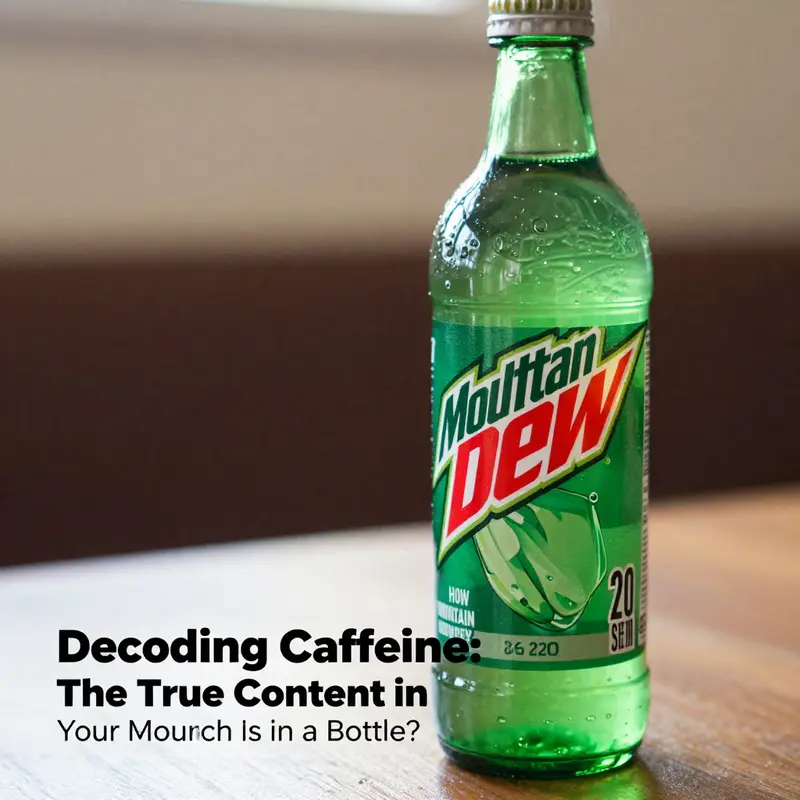
Caffeine is a common part of Mountain Dew, yet the numbers behind it can feel like a small puzzle. A standard 12-ounce can carries about 55 mg of caffeine. In a 20-ounce bottle, the total rises to roughly 73 mg. The math is straightforward: larger bottles hold more caffeine in total, though the per-ounce concentration shifts a bit depending on the exact formula for each package size. Reading a nutrition panel becomes a small exercise in proportional math rather than a guess.
Across the main lineup, the usual 12-ounce serving sits in a similar range, about 54–55 mg per can. When you move to a 20-ounce bottle, you typically see a total around 70–75 mg, with minor deviations by variant or batch. The practical upshot is that you can expect more caffeine in a bottle, but the per-ounce intensity does not dramatically spike just because the bottle is larger.
Specialty or limited-edition flavors can deviate, so the exact figure on the label is the best guide for that variant. In general, the caffeine profile is a balance between the base blend and the packaging size: the same mix delivers caffeine in a fixed total that is distributed over a larger volume in the bottle than in the can. A common takeaway is that a 20-ounce bottle sits near the 70–75 mg mark, while the 12-ounce baseline sits around 55 mg; always verify on the specific product you hold.
From a practical standpoint, you can compare caffeine exposure by looking at the total milligrams per container and, if relevant, the per-ounce rate. The larger format provides more caffeine overall, but it isn’t a dramatic leap in strength per ounce. For the most precise figure, check the official product information page for the exact variant and batch you’re considering.
The Caffeine Spectrum: How Much Buzz Is Packed in Each Mountain Dew Variety?
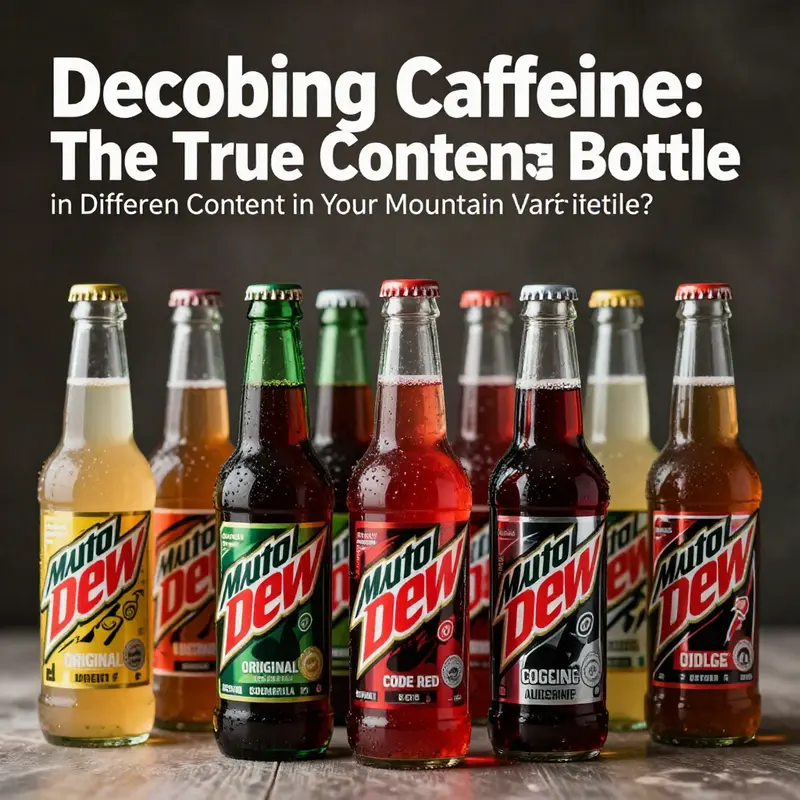
Caffeine often travels under the radar in everyday choices, yet it quietly shapes how alert or rested we feel after a simple can or bottle. When we ask how much caffeine is in a bottle of Mountain Dew, the answer isn’t a single number but a spectrum that shifts with the flavor, the packaging, and the serving size. This chapter threads together official data, practical math, and real-world consumption habits to map that spectrum and to translate the numbers into everyday decisions. The goal isn’t to champion caffeine as a hero or a villain, but to illuminate what each Mountain Dew variant can deliver in a given sip, so readers can chart a caffeine plan that fits their day rather than reacting to a label alone.
At the core, the caffeine content you see on a Mountain Dew can or bottle is presented per standard serving, most often per 12-ounce portion. Regular Mountain Dew and Mountain Dew Zero Sugar are both in the neighborhood of 55 milligrams of caffeine per 12-ounce serving. That puts them in the same ballpark as a modest coffee once you measure by 12 ounces, and it means the sugar-free option offers the same caffeine kick without added sugar. This parity matters for folks who want a consistent caffeine experience whether they’re watching calories or calories in the moment. It also highlights a broader trend in soft drinks: flavor ingenuity can ride along with a steady caffeine baseline, letting the consumer anticipate a familiar buzz regardless of sugar content.
When the caffeine stakes rise, Mountain Dew responds with variants designed to deliver more caffeine per serving. Mountain Dew Energy packs a noticeably stronger punch, clocking in around 86 milligrams per 12-ounce serving. That extra heft shifts the experience from a light mid-day lift to a more pronounced alertness, something readers may notice if they’re sipping during a late afternoon work session or a long gaming session when sleep isn’t an option. In contrast, Mountain Dew Kickstart variants—original and fruit punch alike—hover around 70 milligrams per 12-ounce serving. That places Kickstart in a middle ground: enough caffeine to power through a task, but not so much that it dominates the palate or disrupts a routine where rest matters. Baja Blast, the beloved tropical-flavored variant, generally follows the regular formula with about 55 milligrams per 12-ounce serving, showing that a flavor-forward brand extension isn’t inherently tied to a higher caffeine load. These numbers, drawn from official nutritional data and standard production patterns, create a practical hierarchy: Energy leads in caffeine, Kickstart sits between traditional and high-energy, and Baja Blast aligns with the classic baseline.
A crucial nuance often overlooked is how these numbers translate when you pour the bottle into your day rather than into a lab. The 12-ounce serving is a handy benchmark, but many Mountain Dew fans reach for larger formats. A standard 20-ounce bottle of Regular Mountain Dew will, by simple scaling, suggest a caffeine total closer to 20 ÷ 12 × 55, which works out to roughly 91 or 92 milligrams per bottle if the caffeine distribution is perfectly linear. Yet several markets have reported lower totals for 20-ounce bottles, with figures around 73 milligrams appearing in some regions. Those discrepancies aren’t accidents; they reflect regional labeling conventions, batch-to-batch variation, and the practical reality that not all bottles carry a perfectly proportional caffeine amount to a 12-ounce reference. In short, the “20-ounce” figure is a real-world live data point, not a guarantee, and the safest assumption is to rely on the bottle’s nutrition panel for the exact total. This is why, when you plan caffeine intake, the most reliable approach is to consult the specific container you’re holding as you drink.
The broader picture across the Mountain Dew lineup reinforces how flavor and format can tune the caffeine experience without changing the brand’s core aesthetic. Regular Mountain Dew and Mountain Dew Zero Sugar share the same 55 mg per 12-ounce benchmark, which means that swapping sugar content for sugar-free in your daily routine doesn’t alter the caffeine buzz. Mountain Dew Energy’s 86 mg per 12 ounces isn’t a dramatic leap in the way you’d see with some energy drinks; it’s a calculated increase, designed to deliver a sharper lift when a longer afternoon is ahead. Kickstart’s approximately 70 mg per 12-ounce serving suggests a purpose-built balance: enough caffeine to energize a morning start or a workout warm-up without pushing the envelope into jittery territory. Baja Blast, while heralded for its flavor profile rather than its caffeine strategy, remains close to the baseline in most production runs, reminding us that taste and caffeine can travel together without compromising one another.
If you’re mapping your daily caffeine budget, these numbers become a practical toolkit. The commonly cited daily limit of about 400 milligrams for healthy adults provides a rough ceiling, though sensitivity varies widely. Some people digest caffeine well into the afternoon, while others feel restless with even small doses after early afternoon. For teens and younger readers, the guidance is more conservative, and for pregnant individuals, caffeine intake is often more tightly controlled. In this context, a single Mountain Dew Energy can push a daytime plan toward the upper end of a moderate tier, while a regular Mountain Dew or Zero Sugar keeps you well within a safer margin for a single sitting. The real guideline isn’t a strict boundary; it’s about how caffeine interacts with sleep, anxiety, and daily rhythms. Listening to how your body responds remains the most reliable compass.
To make these numbers actionable, approach Mountain Dew as part of a broader caffeine budget rather than a single source to chase a specific “buzz.” If you measure your intake across the day—morning coffee, a mid-morning Mountain Dew, perhaps a later caffeine-free beverage for balance—you can tailor the sum of all caffeinated beverages to suit your schedule. In practical terms, a 12-ounce Mountain Dew Energy represents a sizable chunk of that daily allotment, whereas a 12-ounce Regular Mountain Dew leaves more room for other sources. This way, the caffeine you consume supports your alertness when you need it, without compromising sleep later or creating an artificial peak-and-crash cycle that leaves you drained.
For readers who want a quick, site-wide reference, there is a concise resource that consolidates current product information. You can explore the broader caffeine landscape for Mountain Dew variants in our dedicated article caffeine-content-mt-dew. This context helps you compare flavors, observe how caffeine sits within the brand’s lineup, and consider how your taste preferences interact with caffeine levels. The takeaway is simple: the caffeine story in Mountain Dew is multi-layered, with the same core caffeine per 12-ounce serving across many flavors, punctuated by higher-dose variants designed to deliver a stronger lift when needed. The math matters, but so does mindful consumption and an understanding of how your body processes caffeine over the course of a day.
What threads this discussion together is not a single fixed number but a careful alignment of serving size, formulation, and personal tolerance. If you’re curious about the exact caffeine content on your bottle, take a quick look at the nutrition panel on the label. The numbers may vary by region or batch, but the pattern remains: regular and Zero Sugar hover around 55 mg per 12-ounce serving, Energy surpasses them at 86 mg, Kickstart sits near 70 mg, and Baja Blast remains close to the baseline. This spectrum gives you a practical framework for planning, whether your goal is a steady afternoon lift, a pre-workout nudge, or simply a flavorful, lower-caffeine alternative. The bottom line is that the “how much caffeine in Mountain Dew” question has a nuanced, context-driven answer—one that reflects both product design and human variability.
External reference: https://www.mountaindew.com/nutrition
Measured Buzz: Mountain Dew’s Caffeine in Context Within the Soft-Drink Landscape
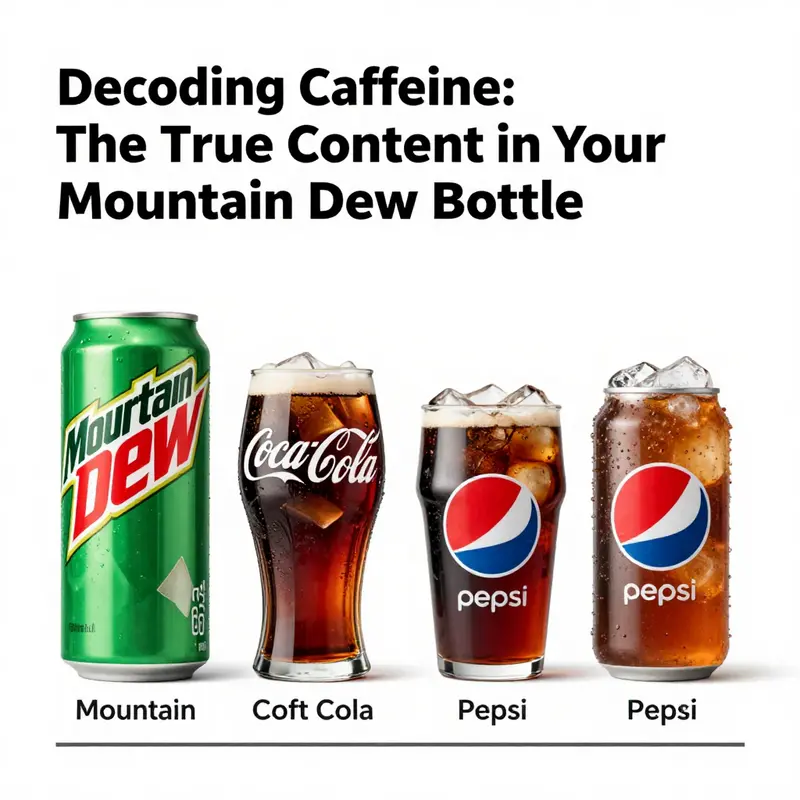
Few beverages invite a caffeine comparison quite like Mountain Dew. Its bright branding promises a quick boost, and the label numbers accompany that claim. Official data place the typical 20-ounce bottle at roughly 73 milligrams of caffeine, while a standard 12-ounce can carries about 55 mg. Those figures anchor a larger conversation about caffeine in soft drinks, where bottle size and formulation both shape the total punch on the tongue and in the bloodstream. Readers often assume a linear scale—more liquid means proportionally more caffeine—but the reality in carbonated beverages is messier. The caffeine is present where the drink’s recipe concentrates it, and the packaging choice largely determines how those milligrams accumulate in a single sitting.
Beyond the bottle, market-wide measurements paint a different shade of the same picture. A 2026 analysis of soft drink caffeine levels notes that Mountain Dew can pours roughly 50.8 mg of caffeine per 12-ounce serving in the New York State market. That figure sits high in the spectrum of mainstream colas, which typically carry 10 to 30 mg per 12-ounce can. The contrast is instructive: even when compared white to white, Mountain Dew remains among the most caffeinated everyday sodas, a distinction that helps explain why many people reach for it when a sharper alertness is desired rather than for a gentle lift.
Within the broader family of caffeinated sodas, Mountain Dew often stands near the top, and its per-can caffeine often eclipses the numbers seen in other brands. The Ontario study, for example, found the highest caffeine level among tested sodas at 29.4 mg per can, which still falls well short of Mountain Dew’s typical can content and even more so of its 20-ounce bottle. The result is a brand identity built around a bold, rapid energy profile. This is not an isolated quirk; it extends across flavors. Diet Mountain Dew and Mountain Dew Code Red, for instance, maintain similar caffeine levels, preserving the energizing character across the lineup even as sugar content shifts with the formula changes. The consistency across form factors reinforces a consumer expectation: if you want a brisk caffeine push from Mountain Dew, you’ll find it reliably in most major formats.
That reliability invites both practical consideration and a little cultural shorthand. People often frame Mountain Dew as a go-to when timing is critical—late afternoon study sessions, long drives, or workouts that require a quick, drinkable dose of stimulation. The beverage’s reputation as a high-caffeine option matters because it positions it as a benchmark in casual caffeinated consumption. It’s one of the reasons many readers ask how it stacks up against ordinary sodas and even energy drinks. The numbers tell a story: while a typical cola sits well under 30 mg per can, Mountain Dew’s profile sits closer to the mid-range of energy-boosting drinks when measured per can, yet it can exceed that range by a fair margin when evaluated by bottle size. In other words, the caffeine story for Mountain Dew is as much about packaging choices as it is about formulation choices.
To understand the full landscape, it helps to compare what people actually purchase in the real world. A 12-ounce can is not simply a smaller version of a 20-ounce bottle; it often carries a distinct arithmetic of caffeine that shapes consumer behavior. Caffeine labeling practices provide a predictable, if sometimes imperfect, map of intensity. Regulatory bodies require disclosure, but the practical takeaway for a consumer is straightforward: if you opt for a larger bottle, you may be trading a lighter per-ounce concentration for a higher total milligram count. For many, that total matters more than the percentage of caffeine per sip, because it translates into how long the stimulating effect lasts and how quickly they feel the effect, especially when one is balancing work, errands, and late-night commitments. The bottom line is that Mountain Dew offers a meaningful caffeine payload in both its bottle and can formats, and the payload is consistently high relative to many peers in the soda aisle.
Data interpretation matters, too. Different regions and markets may wire caffeine slightly differently due to formulation adjustments, production runs, and regulatory labeling conventions. The NY-state figure of 50.8 mg per can represents one regional snapshot, not a universal certificate of the brand’s caffeine across the entire country. The New York data, the Ontario finding, and the brand’s own nutrient disclosures together map a spectrum rather than a single fact. This is why casual conversations about caffeine in soft drinks often hinge on whether the reference is per can, per bottle, or per serving. The Mountain Dew team has long positioned their product as not merely a refreshment but a source of quick, dependable energy, a stance that has helped it carve out a distinctive niche among citrus-forward beverages. When you read the official site’s nutritional data, you see a blunt statement of milligrams that confirms the general trend: the caffeine in Mountain Dew is substantial enough to notice, but not so outsized as to be unmanageable for most adults who follow standard daily guidelines.
Readers seeking a precise, source-forward view can consult the official nutritional data and compare it with independent audits. The broader takeaway remains consistent: Mountain Dew sits at the upper end of the traditional soda caffeine curve, with values that outpace most colas and stand well above caffeine-free citrus sodas. The repeated pattern across flavors strengthens the claim that the brand’s energizing identity is not a fluke but a deliberate balancing of flavor, sweetness, and stimulants. If you want to drill down further, a focused look at Mountain Dew’s caffeine content can be found in dedicated coverage that synthesizes these data points into a clear, user-friendly reference. For a focused look at Mountain Dew’s caffeine content, see this detailed overview. caffeine content of Mountain Dew.
Ultimately, the caffeine conversation around Mountain Dew feeds into everyday choice and personal tolerance. For instance, a single 20-ounce bottle delivering roughly 73 mg means a consumer who also drinks coffee, tea, or other caffeinated beverages must consider total daily intake. Health authorities often cite upper limits for daily caffeine as a practical guide to avoid sleep disruption, jitters, or elevated heart rate, particularly for sensitive individuals or young readers for whom protective guidelines exist. In many regions, an adult can safely consume a few hundred milligrams daily, distributed through beverages and food, but personal sensitivity varies widely. The overlap between Mountain Dew’s high per-serving caffeine and the broader adult caffeine budget means that people who rely on this beverage for a quick lift should think in terms of total daily caffeine rather than a single serving. This perspective helps explain why some households prefer lighter alternatives for late evenings while keeping Mountain Dew as a daytime option for high-caffeine bursts of focus and momentum.
Looking ahead, readers might also wonder how this caffeine profile compares to niche beverages with a different purpose, such as energy drinks. While Mountain Dew is a soda, it sits in a category where caffeine delivery is more conservative than many energy products, yet it still offers more punch than the typical cola. For those who crave the precise caffeine math, the numbers cited above—73 mg per 20-ounce bottle, about 55 mg per 12-ounce can, and regional variations around 50 mg per can—provide a practical framework for decision making. By mapping the data across formats and markets, the chapter stands as a snapshot of how a single brand can shape a segment’s expectations and consumer behavior without sacrificing flavor or brand identity. And that is the alliance of taste and stamina that keeps Mountain Dew recognizable in a crowded beverage aisle.
External reference: Mountain Dew official site: https://www.mountaindew.com
null
null
Caffeine in a Citrus Favorite: Regulation, Labels, and Consumer Awareness
Across the soft drink aisle, caffeine is a familiar stimulant that shapes flavor perception and daily routines. In a standard 20-ounce bottle of the popular citrus-flavored beverage, caffeine content is commonly cited as around 73 milligrams. This figure sits alongside the basic baseline many consumers know: a typical 12-ounce can contains about 55 milligrams, so, in theory, a larger bottle should carry more caffeine. In practice, the numbers reported by manufacturers and nutrition trackers can diverge. Some sources converge on roughly 73 milligrams for a 20-ounce bottle, while simple scaling from a 12-ounce serving would suggest closer to 90 milligrams. Those discrepancies remind us that caffeine content can vary by batch, formulation, and even by product line within the same beverage category. What remains consistent is a central point: this is a meaningful amount of caffeine for a non-coffee product, enough to influence alertness, sleep, and cardiovascular responses in sensitive individuals when consumed regularly or in combination with other caffeine sources. The conversation about caffeine in this beverage sits at the crossroads of consumer demand, labeling practices, and regulatory oversight, all playing out in real kitchens, classrooms, and workplaces where people decide what to sip and when to sip it.
The regulatory frame around caffeine in ready-to-drink beverages is not built on a single mg-per-serving mandate. In the United States, caffeine levels in beverages are not set by a hard ceiling for each drink category. Instead, they are governed through a combination of safety assessments, labeling accuracy, and industry practice. The Food and Drug Administration (FDA) provides overarching guidance about how ingredients should be declared and how the content should be represented to consumers. Still, the FDA does not typically mandate a specific caffeine cap for soft drinks; rather, it expects manufacturers to avoid misbranding and to ensure that labels truthfully reflect the product’s composition. This nuance is why recipe changes, like the removal of certain controversial ingredients in the past, often accompany discussions about caffeine as part of broader formulation transparency. When questions arise about a beverage’s caffeine content, the best practice is to consult official sources—the FDA’s pages on caffeine safety and labeling, and the manufacturer’s own product information—and to compare across reputable databases that compile tested measurements. The broader takeaway is that regulatory status is dynamic. It evolves with new evidence, public health input, and consumer sentiment, rather than existing as a fixed rulebook etched in stone. The ongoing dialogue underscores the need for ongoing clarity in labeling and for accessible explanations of what caffeine means for different age groups and health profiles.
Complementing regulatory considerations, there is also a practical story about how much caffeine shows up in the lineups consumers actually encounter. The data that often circulates in research notes a distinct, higher-caffeine option within the caffeinated segment: a variant sold in larger single-serving packages carried around 92 milligrams of caffeine per a 16-ounce serving. This higher-caffeine point is important because it highlights how formulation choices within the same beverage family can alter stimulant exposure substantially. For families tracking total daily caffeine intake or for athletes coordinating hydration with energy needs, such variations matter. They also foreground the challenge of making sense of caffeine content in a market where many beverages share common flavors, bottle sizes, and marketing claims. The difference between a standard 20-ounce bottle and a fortified 16-ounce option is not a marginal one; it translates into a meaningful shift in how the body metabolizes caffeine, how sleep might be affected after late-day consumption, and how tolerances can develop with repeated exposure. In short, consumers are not just choosing flavor; they are selecting a stimulant exposure profile with potential implications for mood, focus, and rest.
Beyond the numbers, the consumer experience around caffeine is inseparable from questions of ingredient safety and transparency. A long-standing concern in this space centers on brominated vegetable oil, or BVO, a compound once present in several citrus-forward beverages. Even at extremely low concentrations, BVO sparked health debates due to associations with other brominated compounds and potential effects when consumed in high amounts or over extended periods. Although modern formulations have eliminated BVO from many products in response to advocacy and regulatory scrutiny, the episode remains a case study in how ingredient choices can drive public perception and trust. The episode reinforces a critical lesson: transparency about every ingredient matters as much as clarity about caffeine content. Consumers, especially parents and guardians, are advised to read labels carefully and to watch for brominated substances or other additives that may provoke concerns. The overarching message is not to shy away from caffeine information but to approach it with a broader view of ingredient quality, sourcing, and the ongoing evolution of formulation standards.
The regulatory narrative also intersects with consumer education. The pilot research mentioned in the chapter materials indicates a strong baseline awareness: when asked, a substantial majority of children—more than nine in ten in the study—could correctly identify that the beverage in question contained caffeine. Yet awareness alone did not guarantee responsible consumption. The same study found that caffeine intake among youth tended to rise on weekends, a pattern that points to gaps in understanding safe consumption levels and the cumulative effects of caffeine across a week. This mismatch—recognition without accompanying behavioral wisdom—highlights a persistent challenge in public health messaging: knowledge without practical guidance can lead to inadvertent overconsumption, particularly when beverages are combined with other caffeine sources like tea, coffee, or energy products. The call to action, therefore, is twofold. First, labeling should aim to be more than a numeric feed; it should provide context—explicit guidance about daily limits for different age groups, signs of excessive intake, and potential interactions with medications or sleep patterns. Second, educational outreach should align with real-life drinking patterns, recognizing how weekends or social events can amplify caffeine exposure and how families can plan caffeine use within a balanced daily routine.
In synthesis, the questions surrounding caffeine in this popular citrus beverage touch regulatory nuance, consumer behavior, and ingredient safety in a single, dynamic space. There is no single answer that applies to every consumer in every context. Instead, the landscape invites ongoing attention to two intertwined tasks: clear, accurate labeling that communicates caffeine content and serving size, and robust, accessible education about how caffeine interacts with age, health status, and daily rhythms. For readers navigating this topic, the guiding principle is cautious curiosity. Check the label, compare products mindfully, and consider how a given serving fits within total daily caffeine exposure. As formulations continue to evolve—driven by regulatory guidance, consumer pressure, and evolving scientific understanding—the conversation itself becomes a proxy for a broader public-health effort: empower people to make informed choices about what they drink, how much they drink, and when they drink it.
To connect these threads back to the broader article, the underlying message is clear: caffeine content in bottled beverages is more than a number. It is a lens on consumer education, product transparency, and regulatory stewardship. The numbers help adults pace their intake; the labeling standards shape daily habits; and the public dialogue about ingredients and safety drives better formulations in the future. As readers move from this chapter toward the next, they can carry with them a practical framework: know the serving size, know the caffeine amount, understand the health context, and seek clarity from reputable sources whenever questions arise. The conversation about this beverage thus becomes a microcosm of how society negotiates stimulant exposure in everyday life, balancing taste, culture, and health in a rapidly changing market.
External resource: https://www.amazon.com/dp/B07ZJLXG8K
Final thoughts
Understanding the caffeine content in a bottle of Mountain Dew is crucial for business owners who aim to align their offerings with consumer health trends and regulatory standards. With a standard 20-ounce bottle containing approximately 73 milligrams of caffeine, and the variety of flavors available each having their own caffeine levels, it’s vital to stay informed. Comparisons with other soft drinks highlight Mountain Dew’s competitive caffeine content, while health considerations emphasize the need for responsible consumption. Lastly, addressing the regulatory landscape reinforces the importance of transparency and consumer awareness. Equipped with this knowledge, business owners can make informed decisions, ultimately enhancing customer trust and satisfaction.