
Understanding the caffeine content in beverages like Mountain Dew is crucial for business owners, particularly in the food and beverage industry. Caffeine affects consumer choices and preferences, which can ultimately influence sales. This article delves into the caffeine levels found in a standard cup of Mountain Dew, compares it with other popular beverages, addresses health considerations associated with caffeine consumption, and explores the variability found in special editions of Mountain Dew. Each chapter contributes to a holistic view of how caffeine impacts consumer behavior and how businesses can tailor their offerings accordingly.
Measuring the Buzz: How Much Caffeine Lives in a Cup of Mountain Dew
Caffeine has, for many, become a quiet partner in the daily routine—a small boost that can sharpen attention or simply keep fatigue at bay while navigating a long to-do list. When the drink in hand is a citrus-hued soda that many people reach for as a refreshing pick-me-up, questions about caffeine can feel urgent: exactly how much caffeine is in a single can, and what does that translate to in terms of a standard cup? The simple, often cited answer is that a 12-ounce can of the regular version contains about 55 milligrams of caffeine. That number ticks along with a surprising consistency across reputable sources and recent health and beverage databases. It sits in the same neighborhood as a modest afternoon caffeine boost, yet it sits well below a typical 8-ounce cup of coffee, which often clocks in between 80 and 100 milligrams. And yet, the story isn’t purely linear. Formulations shift, batches vary, and limited-edition or energy-lean variants may push the caffeine content higher. The careful reader learns to read the label—not as a ritual, but as a precise guide to what is inside the bottle or can in hand. Label literacy becomes the practical skill here, because caffeine content is one of those numbers that seems to drift when you’re not looking, even within the same product line.
The arithmetic of caffeine content begins with the common reference point: a standard 12-ounce (355 ml) serving. If one measures the caffeine by cup, the math is straightforward but revealing. Eight ounces is about two-thirds of 12 ounces. So, 55 mg divided by 12 ounces times 8 ounces yields approximately 36.7 milligrams per 8-ounce cup. That figure is useful for anyone trying to compare beverages on a per-cup basis, especially when they’re balancing multiple drinks across a day. It’s also a gentle reminder that a “glass” or a “cup” of this beverage isn’t identical to a cup of coffee, tea, or an energy drink in either caffeine density or impact on the body. As with many foods and beverages, the context of consumption matters as much as the absolute amount.
Individuals who monitor caffeine intake closely—whether for personal sensitivity, health considerations, or parental oversight—often turn to the product’s official packaging or the manufacturer’s website for the most accurate numbers. Formulations can evolve over time, and regional variations can exist. The “about 55 mg per 12-ounce can” line is a reliable baseline, but it’s not a guarantee of sameness from one batch to the next. In practice, that means paying attention to the label on the can or bottle in your hand. Some flavor lines, special editions, or “Energy” iterations sometimes raise the caffeine ceiling, presenting a sharper edge to the morning or afternoon crackle of alertness. While the added caffeine might be marketed toward a specific energy-boosting effect, the scientific takeaway remains the same: if you’re watching the numbers, check the exact packaging. The official product page can provide the most current information, and it’s a prudent step for anyone who tracks caffeine intake across days, weeks, or months.
Within the broader landscape of caffeinated beverages, the Mountain Dew family—like many fruit- or citrus-flavored sodas—occupies a middle ground. It’s not a high-caffeine energy drink in the vein of some modern products that explicitly aim for a stronger energy punch, nor is it a caffeine-free or low-caffeine option. The typical 55 mg per can positions it as a useful, moderate caffeine source for those who enjoy a noticeable but not overwhelming lift. For comparison, a cup of brewed coffee remains a common yardstick for caffeine intensity, often delivering roughly double the caffeine of the standard Mountain Dew serving. But belief and practice diverge depending on habit and tolerance. Some people begin their day with a cup of coffee and continue with a can of a citrus soda later, while others alternate beverages across the day. The important point is that caffeine content is not a fixed message across all beverages or even all cans of the same line; it’s a moving target that shifts with product variation and time.
The nuance grows when one considers the broader category of Mountain Dew variants. The regular flavor sits in a predictable neighborhood, yet other lines—such as those positioned for an energy-oriented audience or those released as seasonal or limited editions—may push caffeine higher to achieve a more pronounced effect. In some formulations, caffeine is increased to bolster alertness during activities that demand sustained concentration or physical energy. This isn’t a claim about the brand specifically driving a higher caffeine dose in every case, but rather a reminder that product developers sometimes adjust caffeine content to align with the intended consumer experience. For anyone who follows their caffeine intake for health, performance, or sleep considerations, this means a careful check of the label on whatever can or bottle is purchased. It also suggests a useful habit: keep a mental map of the typical ranges you encounter in your preferred beverages, and treat any outliers as potential exceptions rather than the rule.
A practical, day-to-day consequence of these numbers is how people plan around caffeine consumption. For someone who drinks one can mid-morning, the 55-milligram dose might be enough to sharpen focus without causing jitteriness or a late-energy crash. For others, particularly those with caffeine sensitivity, even the standard amount can feel like a lot. For pregnant individuals or people with certain medical considerations, many health guidelines recommend limiting daily caffeine intake, sometimes around 200 milligrams, though exact recommendations vary by country and medical professional opinion. In that context, knowing that a single can contributes roughly 55 milligrams helps in composing a daily total that remains within personal or advised limits. The math becomes a practical tool: add up cups of coffee, cans of this soda, and a few other caffeinated choices to understand your overall exposure. The simple act of reading a label becomes a responsible practice, not merely a curiosity for caffeine nerds or label readers.
The mathematics of measurement also invites a moment of reflection on why the cup size matters at all. In the kitchen or on the go, how we define a “cup” influences our perception of the beverage’s strength. Eight ounces is a conventional standard in many nutritional discussions, but in everyday life, people pour into a variety of cup sizes, mugs, or travel tumblers. When someone says “a cup,” do they mean eight fluid ounces or a larger brew? The answer often lies in context. If the goal is to compare caffeine across beverages on a per-cup basis, then eight ounces is a common baseline. If the aim is to compare energy density across products, looking at caffeine per fluid ounce can be illuminating. In practice, translating a 12-ounce can into a per-cup figure makes sense because it creates a common frame of reference. It helps people reason through how many cups of coffee would deliver the same caffeine, or how many cans of this soda would approach a given caffeine target.
Beyond numbers and labels, the body’s response to caffeine adds texture to the story. Caffeine blocks adenosine receptors in the brain, which reduces the feeling of tiredness and can enhance concentration for a window of time. The length of that window varies by person, influenced by genetics, tolerance built through regular use, and even the time of day. A moderate intake of roughly 100 milligrams per day has been associated with a low risk of adverse effects for many adults, but sensitivity ranges widely. Some people notice mood changes, a racing heart, or sleep disturbance even with smaller amounts, while others may barely feel a lift. When you think of a standard can containing about 55 milligrams, you start to realize how easily one or two cans could contribute to a day that feels busy but not overboard, especially if paired with meals and other beverages. For someone who consumes coffee along with this soda, the total broadens quickly, underscoring the importance of mindful accounting rather than assuming a fixed caffeine picture across the day.
In the long arc of consumer information, one practical takeaway holds steady: check the label, stay tuned to your body, and remember that a single product line has varieties with potentially different caffeine levels. The baseline of 55 mg per 12-ounce can is a helpful anchor, but the real value lies in understanding your own pattern of consumption. The same ratio that translates 55 mg in 12 ounces to about 36.7 mg per 8-ounce cup can be a mental tool you carry into grocery aisles, coffee corners, and the snack shelves of your local store. When you see a new flavor, or a seasonal release, you may find that the caffeine content nudges slightly higher or lower. The difference often reflects the manufacturer’s design goals, whether the aim is a subtle lift or a more pronounced energy kick. Those shifts are not inherently good or bad; they are a reminder of the science and business that blend to create the beverages you reach for.
For readers who prefer a deeper dive into the numbers, the official product page and nutrition panels remain the best sources. They reflect the most current data and any changes made during production cycles. If you’re curious about how Mountain Dew stacks up against other popular non-coffee caffeinated beverages, there are many comparative resources that explore caffeine per serving, per ounce, and per common cup size. Such comparisons can illuminate why one may feel more or less stimulating than another, even when the stated caffeine amounts are similar. In the end, the cup you pour is more than a sum of milligrams; it’s a piece of a larger daily rhythm—one that interacts with your sleep, your activity, and your personal tolerance.
If you want a direct, source-backed line to verify the numbers as you read, you can consult the manufacturer’s information, which provides the most up-to-date caffeine content. For readers who want to cross-check with a broader context, it’s useful to compare to other widely discussed beverages and consumer guides that tackle caffeine content in everyday drinks. The conversation about caffeine is not about demonizing a single beverage; it’s about understanding how each choice contributes to the daily total and how that total feels in your body over time. The conversation is practical, not rhetorical, and it rests on clear data and careful reading of labels.
For those who want to bridge to related topics and broader discussions within this article, consider exploring how caffeine content compares across common non-coffee drinks, and how to balance caffeine with hydration and nutrition throughout the day. The aim is to empower readers to make informed choices that fit their schedules, health goals, and personal comfort with caffeine. The numbers are useful, but their real impact comes from how you weave them into your everyday routines.
External reference for readers who want to verify the official caffeine content directly: https://www.mountaindew.com/caffeine-content
Internal resource for a quick, referenced cross-check within this article’s broader discussion: How much caffeine is in Mountain Dew.
Bright Buzz, Clear Comparisons: Mapping Mountain Dew’s Caffeine Against Everyday Beverages
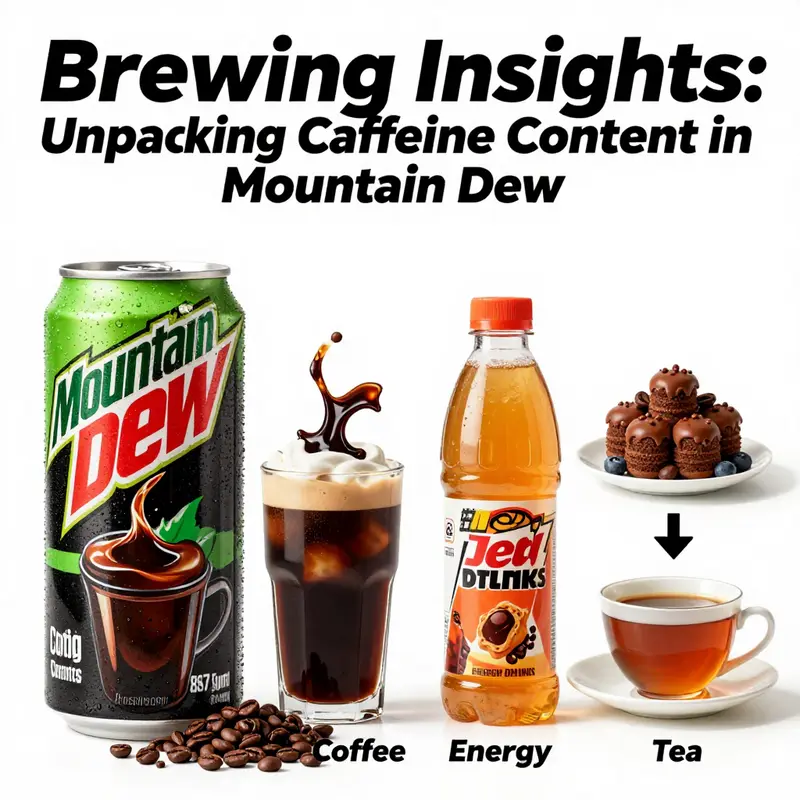
Caffeine sits in the realm of everyday chemistry, a tiny molecule with outsized influence on wakefulness, mood, and even appetite. When you pop open a can of Mountain Dew, you’re not just releasing a neon-green fizz; you’re releasing a measured dose of stimulation that has to be understood in context. The standard 12-ounce can of regular Mountain Dew contains about 55 milligrams of caffeine. That figure, consistent across most contemporary nutritional profiles, serves as a practical benchmark for comparing this popular soft drink to other caffeinated beverages and to the broader landscape of daily caffeine consumption. If you’re thinking in terms of cups, the math is straightforward: 55 milligrams spread over 12 ounces amounts to roughly 4.6 milligrams per ounce. In eight-ounce increments, that translates to about 37 milligrams of caffeine per cup. It is a useful yardstick for anyone trying to map their caffeine intake to a daily limit or to a personal tolerance threshold. For those monitoring every milligram, it’s important to note that not all Mountain Dew varieties carry the same load. Special or limited-edition blends and energy-imbued versions—think lines that blend mountain-startup energy with citrus flavor—often push caffeine higher. In those cases, the label is the only trustworthy guide, and reading it becomes essential when strict limits matter. The official nutritional facts panel on the can or bottle provides the most reliable, up-to-date data, and the product pages on the Mountain Dew site typically reflect those figures as well. If you want a concise, manufacturer-verified snapshot of Mountain Dew’s caffeine content, a quick follow-up read on a dedicated article about Mountain Dew’s caffeine content can be helpful. For a precise snapshot of Mountain Dew’s caffeine content, see the article on caffeine content of Mountain Dew. And then consider how that caffeine payload converges with or diverges from other common beverages in your pantry, gym bag, or office fridge.
To place Mountain Dew in a broader context, it’s helpful to compare its caffeine load with a few familiar benchmarks. Coffee, the benchmark for caffeine intensity in many people’s minds, typically delivers about 80 to 100 milligrams of caffeine in an 8-ounce cup. That puts Mountain Dew at roughly a third to half the caffeine punch of a standard cup of coffee, when you measure by the traditional 8-ounce serving. The contrast becomes even starker when you look beyond coffee to energy drinks, another common source of caffeine for those seeking a quick lift. A 12-ounce can of Red Bull, for example, contains about 80 milligrams of caffeine. Other energy drinks, such as Monster or Rockstar, show a broader range, generally spanning from about 70 to 160 milligrams per 12-ounce can. In this spectrum, Mountain Dew sits comfortably below the high end of energy drinks but above some traditional sodas, offering more caffeine than many cola-based beverages without reaching the strongest energy formulas. And while Mountain Dew contains more caffeine than the classic Coca-Cola, which typically has around 34 milligrams per 12-ounce serving, it remains a mid-range option when stacked against the caffeinated beverages that are designed specifically to deliver a robust kick.
The comparison doesn’t end with soda versus coffee or energy drinks. Tea, especially in its black form, presents another useful reference point. An 8-ounce cup of black tea commonly ranges from about 40 to 70 milligrams of caffeine, depending on the blend, steeping time, and leaf quality. Green tea, generally milder, sits closer to 20 to 45 milligrams per 8-ounce cup. When you line Mountain Dew up against these tea benchmarks, you’ll find that the soda sits in the mid-range for caffeine content among widely consumed beverages. It surpasses Coca-Cola by a comfortable margin, but it typically does not approach the higher end of black tea, nor does it reach the upper echelons of even the milder end of coffee. This placement matters for daily planning: if you’re trying to limit caffeine to a modest amount, a can of Mountain Dew gives you a noticeable lift without delivering the same dose as a larger coffee order or some energy drinks. If your aim is to navigate a mixed beverage day—say, a cup of coffee with a Mountain Dew chaser or a couple of smaller caffeinated drinks—Mountain Dew’s 55 milligrams per 12-ounce serving becomes a predictable, trackable piece of the puzzle.
The value of precise labeling cannot be overstated here. Caffeine content is not a mystical property; it is quantified and disclosed. In practice, most consumers encounter the 55 mg figure in the context of a standard 12-ounce can. But as with any product, there are caveats worth noting. The caffeine content can vary slightly due to formulation changes, batch variations, and regional packaging. This is especially true for lines that are periodically refreshed or rebranded, or for products marketed under different regional flavors or energy-leaning iterations. The safest approach for anyone actively tracking caffeine is to read the label on the exact product they possess and, when in doubt, opt for the nutritional facts panel that accompanies the container. The label is not merely a legal formality; it is a practical guide to what you’re about to consume in one serving. And because caffeine affects individuals differently, even a seemingly small change in serving size or caffeine concentration can shift how alert you feel, how long you stay awake, or how susceptible you are to jitters if you tend to run on the edge with caffeine intake.
A broader takeaway emerges when you consider how Mountain Dew compares to other common beverages. The soda falls between Coca-Cola and most energy drinks in terms of caffeine load, while staying well under a typical cup of coffee. Yet the landscape is not static. Variants like Mountain Dew Kickstart or specially formulated blends may push caffeine levels higher, as manufacturers experiment with flavor and functional claims. This is a reminder that a single number—55 milligrams per 12-ounce can—functions well as a general reference but should not be treated as a universal rule across all Mountain Dew products. For readers who want to explore the dynamics more deeply, there is a helpful roadmap in the broader literature, including reputable sources that categorize caffeine content across beverages and help translate milligrams into practical, daily-use guidance.
Understanding these numbers matters because caffeine’s effects are cumulative. The body metabolizes caffeine at different rates, influenced by factors like age, body mass, liver function, genetics, and even habitual use. Some people experience noticeable wakefulness or improved concentration with modest caffeine doses, while others may feel anxiety, digestive discomfort, or disrupted sleep with even smaller amounts. The standard daily upper limit commonly discussed in health guidance hovers around 400 milligrams for healthy adults, though individual tolerance varies widely. Knowing that Mountain Dew contributes about 55 milligrams per 12-ounce serving helps in planning a day’s caffeine intake, especially for someone who alternates between sodas, coffee, and energy drinks. If your daily routine includes several caffeine sources, the math becomes a practical habit: add up the milligrams across beverages and compare to your personal threshold. It is a straightforward exercise, but it pays off in clarity and control, especially when balancing energy needs with sleep quality and overall well-being.
The broader conversation about caffeine is not purely numerical. It is also cultural and behavioral. Some people look at Mountain Dew as a daily, casual caffeine companion—easy to drink, familiar in flavor, and modest in caffeine compared with the strongest energy drinks. Others treat it as a periodic pick-me-up, perhaps in the late morning or early afternoon, when a reminder to stay alert is welcome but not overwhelming. There is a rhythm to caffeine consumption that aligns with how you structure your day, your workouts, and your study sessions. In that rhythm, Mountain Dew asserts its place as a mid-range option: enough to deliver a noticeable lift without delivering the intensity that accompanies high-caffeine beverages. In turn, those who monitor caffeine for health reasons will find that Mountain Dew’s standard formulation is a more predictable, manageable component of a varied beverage portfolio.
If you’re curious about deeper comparisons or want to situate Mountain Dew within a broader dietary map, there is a useful, topic-specific resource that compiles caffeine content across common beverages. It offers a practical reference for readers who want to compare not only per-serving caffeine but also per-calorie or per-fluid-ounce metrics. External research emphasizes that while numbers provide guidance, personal response remains the ultimate test. The Mayo Clinic’s overview of caffeine content and its effects on health is a reliable external anchor for readers who want to go beyond the numbers and consider how caffeine interacts with sleep, anxiety, and cardiovascular health. For those seeking a direct link to that broader science, you can consult the Mayo Clinic’s caffeine content overview, which summarizes typical ranges and highlights how caffeine can vary across beverages and preparation methods.
All of this points to a simple, practical takeaway: Mountain Dew sits in a predictable part of the caffeine spectrum. It is not the strongest source in the daily lineup, but it is a consistent, reliable option when a quick taste and a modest lift are appropriate. The 55-milligram figure per 12-ounce can offers a stable foundation for planning, whether you’re aiming to limit caffeine, optimize performance in the afternoon, or simply satisfy a taste preference without overcommitting to caffeine’s more intense effects. Reading labels remains essential, especially as product lines evolve and new formulations arrive with different caffeine profiles. When in doubt, treat Mountain Dew as a mid-range caffeine source and plan your day accordingly, balancing it with other beverages and your sleep needs. In the end, knowledge of these numbers empowers you to choose with intention rather than assumption, to distribute your caffeine load with precision, and to enjoy the beverage in a way that aligns with your health goals and daily routines.
For more detailed comparisons to related drinks, consider exploring the broader discussion of how Mountain Dew stacks up against other caffeinated beverages in a dedicated guide that contextualizes caffeine content by serving size and product type. This approach makes it easier to translate milligrams into real-world choices, whether you’re mapping a workday, a study session, or a workout schedule. And for readers who want a quick, direct reference, the internal resource on caffeine content in Mountain Dew provides a concise, beverage-specific lens through which to view the data. By combining per-serving analysis with cross-category comparisons, you gain a clearer sense of where Mountain Dew fits into your personal caffeine map—and how a single can can influence a day that already includes coffee, tea, and maybe a discreet energy boost in the form of a supplement or drink formulated for focused performance.
External resource: Mayo Clinic caffeine content overview. https://www.mayoclinic.org/healthy-lifestyle/nutrition-and-healthy-eating/in-depth/caffeine/art-20049372
The Quiet Jolt: Decoding Caffeine in a 12-Ounce Cup of a Popular Citrus Soda and What It Means for Your Day

Caffeine has a way of slipping into daily routines the way sunlight slips through a window—unobtrusive at first, then unmistakable as it nudges wakefulness, focus, and mood. In the landscape of caffeinated drinks, a familiar citrus-flavored soft drink sits near the middle of the spectrum: not a chemical energy shot, not a decaf whimsy, but a beverage that offers a steady, modest kick. A standard 12-ounce can of this beverage contains about 55 milligrams of caffeine. That figure, echoed across reputable sources, positions it as a noticeable energy lift for many people, yet far from the heavier hit delivered by typical coffees or some energy drinks. It’s a distinction worth bearing in mind for anyone trying to manage caffeine intake without sacrificing just enough alertness to get through a busy day.
To gauge where 55 milligrams sits on the caffeine spectrum, it helps to compare it with other common sources. A cup of brewed coffee—an 8-ounce serving—often carries between 80 and 100 milligrams of caffeine, and many energy drinks push well past that range. Within this hierarchy, the citrus soda with 55 milligrams lands in a middle ground: more caffeine than most popular colas, but less than a strong cup of coffee. This relative position matters not only for energy planning but also for sleep, anxiety, and heart-rate considerations. The perception of “a little boost” versus “a jittery excess” can hinge on personal sensitivity, timing, and what else is consumed that day. And because individuals vary so much in how caffeine is absorbed and processed, the same 55 milligrams can feel very different from person to person.
The practical implications of this modest caffeine content become clearer when we consider how people actually use the beverage. For some, the 55 milligrams provide just enough mental lift to nudge away the mid-morning fog, sharpen concentration for routine tasks, or offer a quick pick-me-up during a long shift. For others, particularly those who are caffeine-sensitive or already close to their daily limit, even this amount can trigger jitters, a rapid heartbeat, or a restless night if consumed late in the day. The timing is crucial: caffeine takes effect relatively quickly, and peak blood levels often occur within 30 to 60 minutes of consumption. The duration of that effect depends on how rapidly the body metabolizes caffeine, a rate that varies with age, genetics, hormonal status, medications, and other factors.
A practical way to think about caffeine is as a budget line on a daily ledger. Each person has a personal ceiling for stimulant effects, and 55 milligrams may or may not push you toward or past that line. For someone who drinks this beverage as part of a morning routine and then couples it with coffee later in the day, the cumulative caffeine load can begin to accumulate more quickly than expected. Conversely, someone who limits other caffeine sources—tea, chocolate, certain supplements, or other sodas—to small amounts might feel the same 55 milligrams as both a comfortable lift and a modest, almost invisible, part of their day. The key takeaway is that this quantity is not an absolute standard of safety or harm; it is a meaningful signal within a broader pattern of consumption.
Label literacy matters here. Even when a general rule of thumb exists, product formulations can shift with new markets or seasonal editions. While the regular formulation tends to hover around 55 milligrams per 12-ounce can, special or limited editions—such as blends designed to be more energy-forward—may push caffeine higher. The guidance to check the label remains essential for anyone tracking caffeine intake, whether they’re managing health conditions, monitoring kids’ or adolescents’ consumption, or trying to align their beverages with a personal wellness plan. The official nutritional facts panel on the can or bottle provides the most reliable, up-to-date snapshot of caffeine alongside sugar, acid content, and other ingredients. When in doubt, consulting the product’s labeling is the safest bet.
Beyond the numbers, caffeine’s effects are mediated by a constellation of factors. The same 55 milligrams can translate into a noticeable lift for one person and a negligible change for another, depending on baseline sleep patterns, stress levels, and overall dietary context. For instance, sleep debt amplifies sensitivity to caffeine. If someone is already sleep-deprived, even a modest dose may disrupt sleep further or provoke anxiety and restlessness the next day. On the flip side, those who have developed a tolerance over time can experience a milder perceptual shift from the same amount. Tolerance develops gradually with regular use as the body adjusts receptor sensitivity, a dynamic that makes one person’s 55 milligrams feel like a gentle nudge and another’s a brisk prod.
Caffeine doesn’t operate in isolation. The beverage in question contains sugar and acidity that can interact with how a caffeine dose is perceived. A higher sugar content can spur a quick energy spike followed by a crash, a pattern some people notice more with sugary drinks than with black coffee, for example. The acidity can also impact comfort, especially for those with sensitive stomachs or reflux. These sensory and physiological facets are part of the broader experience of consuming caffeinated beverages: caffeine is a stimulant, but its effects are layered with flavor, texture, and metabolic responses that shape the overall experience.
For those seeking a balanced approach to caffeine, the idea of a daily “budget” becomes a practical framework. If you already consume coffee in the morning and perhaps an afternoon caffeinated tea, adding a 12-ounce can with 55 milligrams might necessitate a recalibration of subsequent sources. It’s a simple arithmetic exercise but one that matters for sleep quality and daytime steadiness. This is especially true for people who must maintain alertness for long stretches of work or study, as even small fluctuations in wakefulness can cascade into performance differences later in the day. In such contexts, a measured, aware consumption pattern helps preserve a steady baseline of energy without tipping into over-stimulation.
Health-focused discussions often highlight populations that require particular caution. Adolescents, pregnant individuals, and people with certain heart rhythm conditions, anxiety disorders, or high blood pressure may react differently to caffeine. For adolescents, recommended limits are typically lower, reflecting ongoing development and sensitivity. Pregnant individuals are commonly advised to moderate caffeine intake due to potential effects on fetal growth and development. In all these cases, the same 55 milligrams can assume different levels of risk depending on the person, the timing, and the presence of other stimulants. The takeaway is not to demonize caffeine but to understand its dynamics within a personal health framework. When in doubt, discussing daily caffeine sources with a healthcare provider can help tailor a plan that respects sleep, mood, and cardiovascular considerations while still allowing occasional enjoyment.
It’s also worth noting that the beverage landscape includes products that intentionally pack more caffeine into similar serving sizes. While the regular formulation presents a moderate dose, other offerings marketed as energy- or performance-enhancing can deliver higher levels. The practical implication is simple: labels matter. Reading the nutrition facts panel and any accompanying ingredient lists can illuminate where a given beverage sits on the caffeine spectrum and how it fits into a broader dietary strategy. For readers who want to explore these comparisons with a bit more depth, there is a dedicated overview that examines caffeine content in this particular beverage and contrasts it with other popular choices. You can explore that resource here: caffeine-content-mt-dew.
All of this points to a core idea: caffeine’s power is real, but its effects are contingent. Fifty-five milligrams can be the difference between a day that starts with a clear head and one that drifts into afternoon fog. It can be enough to sharpen focus during a routine task, or it can contribute to sleep disruption if consumed late. The key is awareness—of the dose, of personal sensitivity, and of how other daily inputs either amplify or dampen the stimulant’s impact. The most reliable way to stay in the driver’s seat is to cultivate a mindful habit: know your numbers, know your patterns, and know when to opt for decaffeinated or caffeine-free alternatives. In this sense, the 12-ounce serving becomes not just a source of energy but a signal about how you want to navigate the day ahead.
For readers seeking a broader public health perspective, a reputable source offers practical context about caffeine levels in common drinks and how they relate to daily guidelines and individual responses. The link below provides a broader lens on caffeine consumption and its physiological effects, helping readers place a single can’s content within a wider framework of health and behavior. External resource: https://www.cdc.gov/nutrition/healthy-eating/caffeine-in-drinks.html
Caffeine Variability in a Citrus Soda Lineup
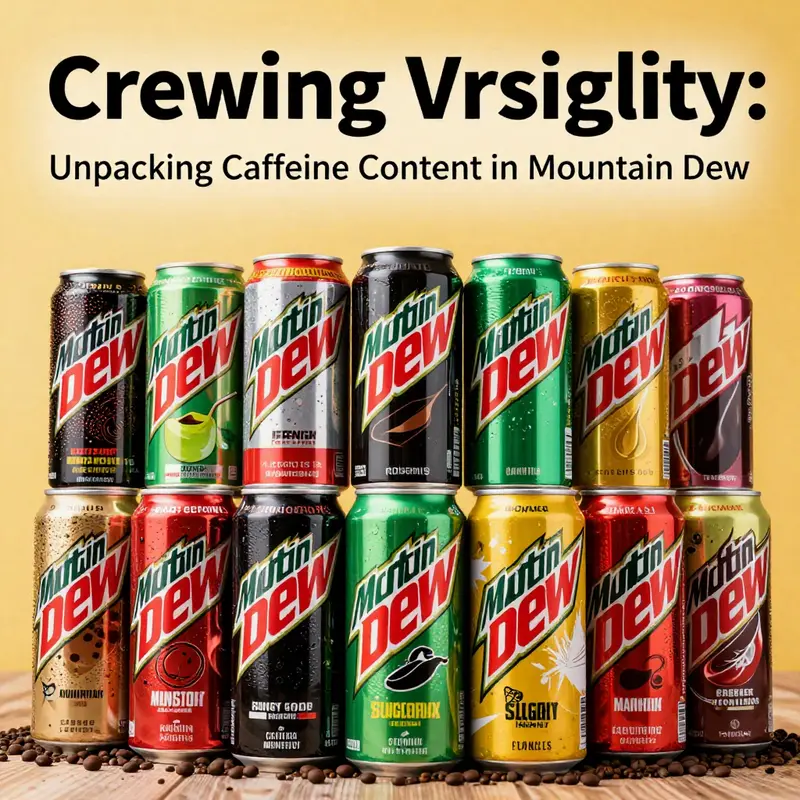
A long time ago, people assumed that a familiar neon-green can delivered a simple jolt of caffeine at a predictable level. In practice, the reality is more intricate. The caffeine you get from a can of this popular citrus soda depends less on a single standard and more on a spectrum of formulations that have evolved over years. What begins as a straightforward question—how much caffeine is in a single cup?—quickly becomes a calculation that must account for serving size, variant type, and market-specific recipes. The numbers that show up on labels are not just numbers; they are a window into the balancing act between flavor, energy, and consumer expectations. In this light, examining caffeine content across the flagship product and its special editions reveals a pattern that readers can apply to many beverages they encounter, whether at the grocery store, the vending machine, or a convenience shop on a late-night errand.
On the most fundamental level, the classic format in this category contains roughly the same caffeine per standard serving as many other mainstream sodas. When you pour a typical 12-ounce (355 ml) can into a glass, you should expect caffeine in the mid-50s of milligrams. This places the drink well below a typical cup of brewed coffee, which often lands in the 80 to 100 milligrams range for an 8-ounce cup. The contrast is meaningful for anyone tracking daily caffeine intake, whether for energy planning, sleep hygiene, or medical reasons. Yet the simplicity ends there. The range in caffeine content widens as you move away from the standard product and step into the realm of high-energy variants, seasonal flavors, and regional formulations. The precision of caffeine labeling in these cases matters because it changes how a consumer might space their caffeine throughout the day.
One variant category in particular casts a light on this broader variability: high-energy interpretations that market themselves as more than just a soft drink. In many markets, a 12-ounce serving from this line shows a caffeine content that more than doubles the standard amount, nudging up toward the 100-milligram mark. This jump is not merely a marketing flourish. It reflects a deliberate formulation choice designed to deliver a noticeable energy lift while preserving the recognizable citrus flavor profile. For someone who is careful about caffeine intake, that difference—almost double the caffeine in a similar-size can—translates into a practical impact on daily limits. It also illustrates an important principle: the energy attribute of a beverage often comes at the expense of a broader consumer expectation of taste, color, and aroma. The balance is subtle, and the decision to escalate caffeine content is typically paired with an accompanying marketing claim that the drink is optimized for alertness and focus during the afternoon slump or late-night study sessions.
The landscape grows even more varied when the product line includes a version that is explicitly non-carbonated and positioned as an energy-focused option. In such forms, caffeine amounts can rise sharply, reflecting the broader category of energy drinks. In a standard 16-ounce (473 ml) bottle, caffeine content can climb to around 150 milligrams, a level that sits at the high end of what many people encounter in the energy-drink segment. This formulation makes the beverage a practical case study in the relationship between serving size and caffeine exposure. A larger bottle, even with a flavor that remains familiar and comforting in aroma, becomes a different energy proposition altogether. It invites readers to consider not only the caffeine per serving but also the cumulative intake across multiple servings in a single day, an aspect that is particularly relevant for regular consumers who might enjoy multiple beverages during a workday or social gathering.
Beyond these two clearly higher-caffeine paths, the lineup also includes seasonal or regional variants that can drift in caffeine content by formulation tweaks, regulatory differences, or regional taste testing. In many cases, these variants maintain a baseline near the standard level, roughly in the mid-fifties per 12-ounce can, but they can extend into a broader range—sometimes as high as the mid to upper hundreds of milligrams per 12 ounces on specific, market-specific formulations. The factors driving this spread are multifaceted. They include the use of additional energy-enhancing ingredients, differences in sweetness profiles that may require adjusted flavor balancing, and even packaging decisions that influence serving size norms in particular markets. The upshot is that a consumer cannot rely on a single, immutable caffeine figure for the entire product family. Instead, the accurate approach is to read the label on the exact product you intend to purchase, particularly when choosing a variant that markets itself as a high-energy option or a seasonal release.
This variability matters not only to the informed consumer but also to those who aim to manage their caffeine intake with precision. The numbers carry practical implications: someone who needs to limit caffeine for health reasons, or who is sensitive to caffeine, has to account for the fact that a single brand family can present several different caffeine footprints within roughly the same aroma and flavor profile. The act of reading labels becomes a small ritual of care. It requires attention to serving size annotations; the units on the can or bottle—whether it’s 12 ounces or 16 ounces—directly affect the total caffeine delivered. The same principle applies when a product exists in multiple regional editions, where a label might indicate a different caffeine content than what appears in another market. The takeaway is straightforward: do not assume uniform caffeine across variants. The precise figure lives on the packaging, and it is always worth a moment to verify before consumption if caffeine is a factor in your daily plan.
In this sense, the chapter of caffeine in this citrus lineup is less about a single number and more about a choreography of numbers that shift with flavors and formats. The standard option sets a familiar baseline—roughly the mid-50s milligrams per 12-ounce can. A high-energy, 12-ounce variant can present around 100 milligrams per can, which doubles the energy without changing the packaging in a way that would radically alter the flavor profile. In the energy-drink version, the numbers leap again: a 16-ounce bottle can deliver about 150 milligrams of caffeine, a level aligned with other energy products in the market and a clear signal that this is an energy-focused option rather than a conventional soft drink. Seasonal and regional flavors complicate matters further, offering a spectrum that can range from the standard baseline to a higher ceiling, contingent on formulation choices and packaging.
For readers who want a mental model to navigate this landscape, a few practical rules help. First, always note serving size. A larger bottle will carry more caffeine even if the flavor profile remains similar. Second, check the exact variant’s label rather than relying on memory of a flavor’s reputation, because formulation adjustments over time can subtly shift caffeine content without altering taste. Third, be mindful of cumulative intake. If an energy-focused variant sits beside a regular option in a day’s lineup, their combined caffeine could quickly exceed a comfortable threshold for some individuals. In short, this is a story about standardization evolving into a spectrum, not a single number that holds across every product in the family.
As a reader moves from curiosity to practical application, the narrative invites consideration of how these numbers intersect with daily routines. For a student burning the midnight oil, the 150-milligram energy option is a dense caffeine source that may help push through the last hours of a project. For someone who enjoys a casual afternoon pick-me-up, the standard 54–55 mg can offers a gentler lift that fits more easily into a broader caffeine budget. The seasonality of flavors adds another layer of nuance; a limited-edition variant may present a caffeine content that’s either slightly elevated or demonstrably higher, which can make it a momentary exception rather than the rule. The consumer’s best practice is to verify the label, understand how a serving size translates into caffeine, and think through how that amount fits into the day’s total caffeine exposure. If the goal is consistent energy without surprises, sticking to the standard baseline and mindful consumption becomes a reliable strategy; if the objective is a deliberately stronger jolt, selecting a higher-caffeine variant and planning with that knowledge becomes an equally valid approach.
For readers who want to dig deeper into how caffeine content compares across beverages in this broader category, there is value in cross-referencing with related discussions that explore caffeine content in similar drinks. The discussion around mountain-dew-like beverages often intersects with broader questions about caffeine in sodas versus energy drinks, the regulatory labeling standards, and the cultural expectations of “energy” branding in mainstream beverages. To connect these threads with more context, readers can explore broader resources that compare caffeine across cola- and citrus-flavored beverages, as well as consumer-facing guides that translate label language into practical daily limits. For further reading on how this particular beverage family stacks up against others, see the linked resource on caffeine content MT Dew. caffeine content MT Dew.
The value of knowing these numbers extends beyond personal caffeine budgeting. It invites a more nuanced conversation about how flavor and energy coevolve in popular beverages. The soda’s refreshing taste remains a central appeal, while the caffeine content plays a supporting role that can tip the balance toward alertness or restlessness depending on the context. In markets where regulatory oversight, packaging, and labeling conventions vary, the exact milligram figures may reflect local formulations as much as taste preferences. The reader who tracks this closely will recognize that what begins as a simple question—how much caffeine is in a cup of this citrus soda?—becomes a study in how product families adapt to consumer demand, health guidelines, and evolving tastes. The chapter thus ends where it begins: with the reminder that caffeine content is not a fixed attribute but a variable trait shaped by the variant, batch, serving size, and market.
External resource for further reading at the end of this discussion can offer a broader perspective on caffeine contents in similar beverages and help readers place these numbers in a wider context. For an external overview, you may consult a comprehensive caffeine-content resource that aggregates beverage data from multiple sources, which provides a comparative lens beyond a single brand’s lineup. External resource: https://www.caffeineinformer.com/caffeine-content/mountain-dew
Final thoughts
The significance of understanding caffeine content in Mountain Dew extends beyond mere curiosity; it is integral for business owners looking to cater to consumer preferences. With Mountain Dew’s caffeine levels being lower than those in coffee but comparable to some other soft drinks, owners can strategically position their products and educate consumers on their choices. Furthermore, being aware of healthier options and the variations in special editions can guide marketing strategies and product placements. Ultimately, adapting to these insights can enhance customer satisfaction and drive sales.