
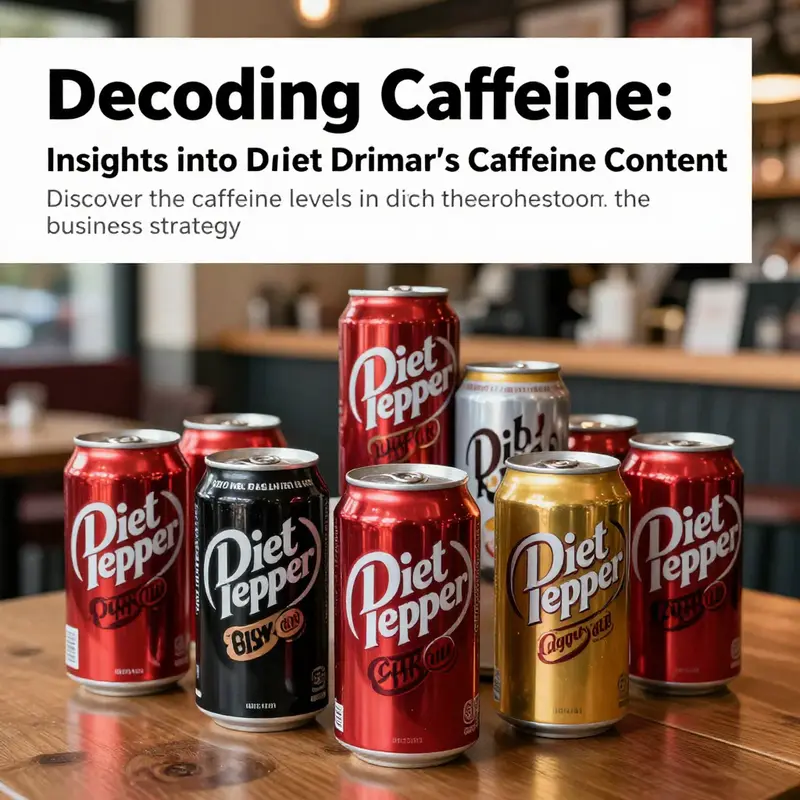
Understanding the caffeine content in Diet Dr Pepper is vital for business owners in the beverage industry, especially those catering to health-conscious consumers. With 41 milligrams of caffeine per 12-ounce can, equal to standard Dr Pepper, this knowledge allows businesses to better position their products in a competitive market. This article explores the caffeine dynamics in Diet Dr Pepper, comparing it with other soft drinks, examining health implications, analyzing consumer perceptions, and discussing relevant regulations. Each chapter aims to equip business owners with insights that can enhance product offerings and marketing strategies.
Quantifying a Classic Sip: The Caffeine Profile of Diet Dr Pepper
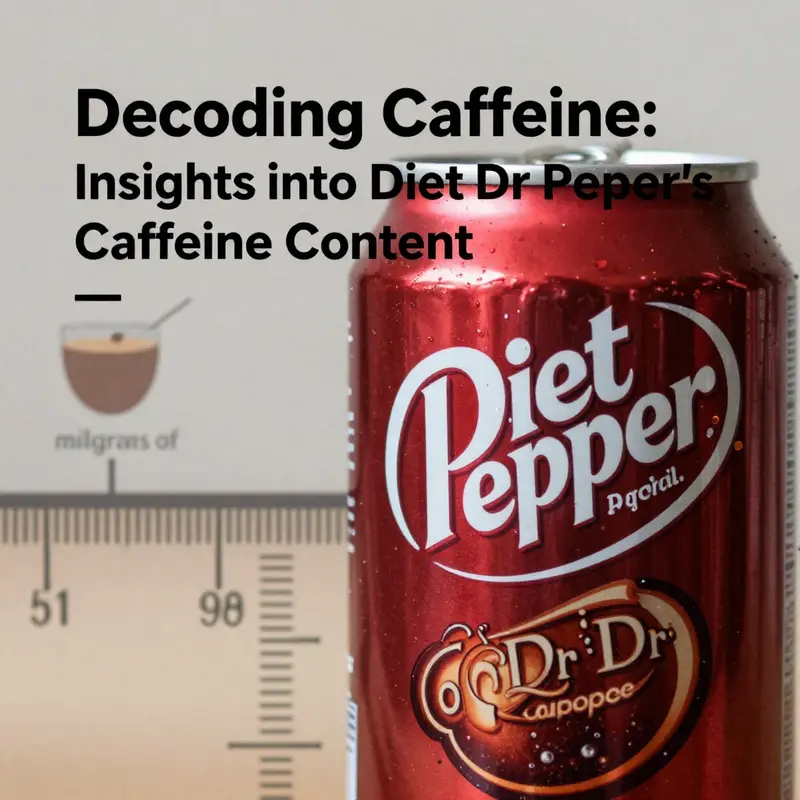
Statistics around caffeine in everyday beverages often feel like a moving target, shifting with testing methods and batch-to-batch differences. In the case of Diet Dr Pepper, the center of the question – how much caffeine is in a 12-ounce can? – resides in a narrow range rather than a single fixed value. Industry data and independent tests commonly place the figure around forty milligrams per 12-ounce serving. Some measurements show 41 mg, while others report 42 mg. Those small differences reflect rounding, instrument sensitivity, and the margin of error that accompanies laboratory analyses. The practical takeaway for most readers is simple: Diet Dr Pepper delivers roughly the same caffeine presence as its regular counterpart, despite the calorie-focused labeling.
Across markets in the United States, the cited caffeine level tends to be consistent, which is useful for readers who rely on a predictable source of caffeine in daily routines.
Context among caffeinated sodas: A typical 12-ounce Diet Pepsi carries about 36.7 mg, placing it slightly lower than Diet Dr Pepper. The differences matter when tracking daily caffeine totals precisely. Diet Dr Pepper occupies a mid-range position among non-coffee beverages – enough to provide a lift, but not so high as to dominate a daily caffeine budget.
Formulation and caffeine delivery: The caffeine in Diet Dr Pepper is integrated as part of a carefully balanced formula that supports its distinctive taste, aroma, and mouthfeel as part of a 23-flavor blend. Caffeine is not simply sprinkled in; it is embedded in the overall recipe so the flavor remains front and center. The sweetness and effervescence carry the stage, while caffeine provides support for that familiar lift.
Common misconception: Diet sodas should have less caffeine; not the case here. The diet version mirrors the full-sugar version in caffeine concentration, so choosing Diet Dr Pepper does not automatically mean a lighter caffeine experience.
Practical guidance: For those tracking intake, treat a 12-ounce can of Diet Dr Pepper as roughly 40 milligrams of caffeine. If you drink multiple caffeinated products in a day, sum them to stay within guidelines. People who are caffeine sensitive or on medications that interact with caffeine should consider their total daily exposure.
Closing: While the exact milligram figure can vary slightly by batch or measurement method, Diet Dr Pepper offers a consistent caffeine experience that aligns with expectations for a mid-range caffeinated beverage in the American market.
Caffeine Footprint in a Can: How Diet Dr Pepper Stacks Up Against Its Soft-Drink Counterparts
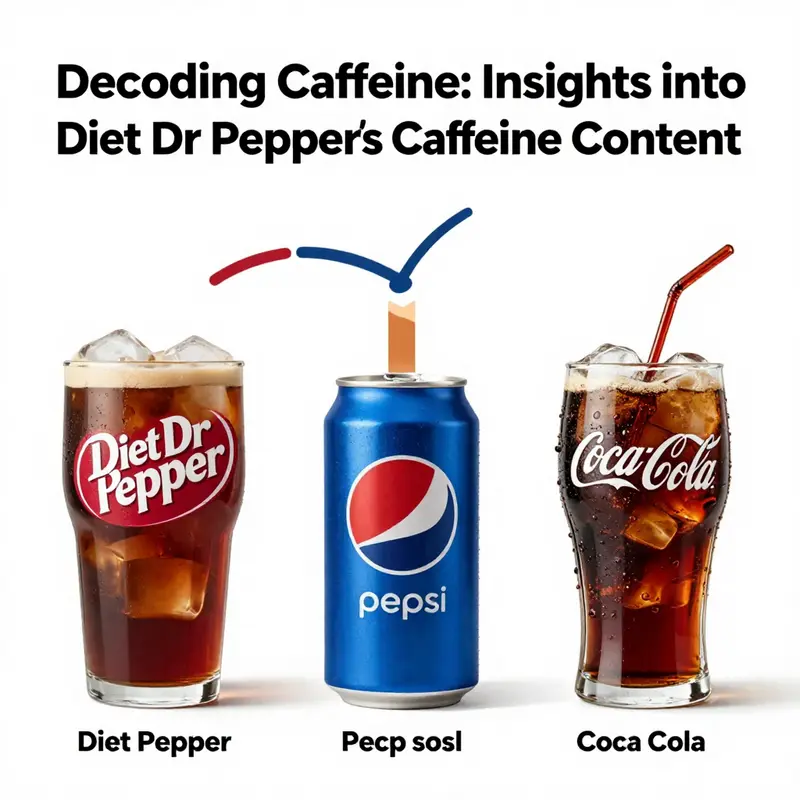
Caffeine is a constant companion in many people’s daily routines, hitching a ride in a variety of beverages from morning coffee to afternoon sodas. When we zoom in on a specific, widely available diet option like Diet Dr Pepper, the caffeine story becomes a little more nuanced than a single number on a label. In the body of research surrounding caffeinated soft drinks, Diet Dr Pepper sits in a mid-to-upper range, with analyses commonly placing its caffeine content in the low forties milligrams per standard 12-ounce can. The precise figure can vary a notch depending on the source and method, with figures ranging from 41 mg to about 44 mg per 12-ounce (355 ml) serving. Those small differences matter more than one might expect, because they reflect the realities of how formulations are created, tested, and presented to consumers across different markets and batches. A 12-ounce serving, for context, equals roughly 355 milliliters, a standard for U.S. labeling and beverage analysis, and it is the baseline used when many comparisons are drawn against other sodas and caffeinated beverages. This mid-range placement means Diet Dr Pepper provides a noticeable lift without approaching the higher-end caffeine content found in some other popular options, a distinction that becomes clearer when we widen the lens to include a broader field of beverages.
To understand Diet Dr Pepper’s position more clearly, it helps to place it side by side with other recognizable drinks. Regular Dr Pepper, which shares its flavor family and branding heritage, typically clocks in at around 42.6 mg per 12-ounce serving, a touch lower than some diet formulations but still firmly in the same neighborhood. Meanwhile, Diet Coke sits slightly higher on a per-serving basis, delivering about 46 mg of caffeine per 330 ml can. The difference in reported milligrams partly reflects the modest volume difference between a 12-ounce can and a 330 ml can; even when the caffeine mass is similar, the concentration per milliliter can vary because the volume is not identical. If a consumer purely compares milligrams per 12 ounces, Diet Coke might appear stronger on the caffeine scale, but the comparison becomes more nuanced when you adjust for the actual serving size people drink.
Beyond the kola-leaning family, the caffeine landscape widens significantly with beverages that have become staples for many as energy boosters. Mountain Dew, for example, is consistently higher, registering about 54.8 mg per 12-ounce serving. Diet Mountain Dew nudges even higher, at around 55.2 mg per 12-ounce serving. Those numbers place both versions in the upper tier of mainstream sodas, more aligned with beverages marketed for heightened alertness or a sharper caffeine kick. The contrast with Diet Dr Pepper is instructive: the flavor-forward, low-calorie option still offers a meaningful caffeine lift, but it does so with a profile that leans toward the mid-range rather than the upper end. For readers who track caffeine intake closely, this difference matters, especially when planning a day that includes multiple caffeinated sources.
If we widen the comparison to include beverages outside the traditional soda aisle, the picture becomes even more informative. For instance, some energy drinks sit in the same neighborhood as Diet Dr Pepper in terms of caffeine mass, though they often differ in total serving size and formulation. A product like Lucozade Energy, for instance, has about 46 mg of caffeine per roughly 380 ml, a volume that resembles Diet Dr Pepper in offering a similar caffeine payload but in a different container and flavor profile. This parallel underscores a practical point: the caffeine content people experience is often a function not just of the milligram amount but of the amount of beverage consumed. A smaller can with a slightly higher mg amount can feel similar to a larger can with a somewhat lower mg figure because what matters in daily life is total caffeine intake per drinking occasion.
In this broader context, Diet Dr Pepper’s caffeine content—whether you see 41 mg or 44 mg per 12-ounce serving—emerges as a balanced middle ground. It provides a discernible lift, enough to cut through fatigue for some, but not so intense as to push the drink into the realm typically associated with energy-focused products. For someone who enjoys the flavor and wants a low-calorie option, the caffeine punch is real but restrained compared with some other popular choices. This is an important distinction for readers who are monitoring caffeine intake for health, sleep, or personal sensitivity. It helps to keep in mind that caffeine’s effects are not purely about milligrams per serving; individual tolerance, timing, and other dietary factors all color the actual experience of consuming a caffeinated beverage.
To convey how these numbers translate into everyday choices, consider how a single Diet Dr Pepper can compares to a day’s worth of caffeine goals. If someone adheres to a general guideline that many health authorities reference—roughly 400 mg of caffeine per day as a rough upper limit—a single can represents only about 10% of that ceiling. That means a person could enjoy a Diet Dr Pepper without pushing past a typical daily threshold, assuming they don’t exceed the limit with coffee, tea, chocolate, or other caffeinated products in the same 24-hour window. The scenario changes, of course, for individuals with heightened sensitivity to caffeine, those who are pregnant, or those who must avoid caffeine for medical reasons. In such cases, even a single can can carry more weight than it would for a casual consumer.
The measurements behind these figures are not universal constants carved in stone. Differences in formulation by region, testing methods, and batch variation can yield slight shifts in reported caffeine content. In addition, reporting practices may round figures to the nearest milligram, which can accumulate into a variance when you compare multiple sources. For readers seeking the most precise, source-verified figures, the landscape is best appreciated as a spectrum rather than a single line. The spectrum reminds us that caffeine content is real and measurable, but the consumer reality lies in how many cans are consumed, over what period, and alongside other caffeine sources. A deeper dive into these patterns can be enlightening; for those who want a more technical snapshot, a dedicated resource outlines caffeine content across a broad array of soft drinks and other beverages, offering a broader map of where Diet Dr Pepper sits in the caffeine hierarchy. For a focused look on the caffeine content specific to Diet Dr Pepper, you can explore this analysis: caffeine content of Diet Dr Pepper.
As with any nutrient or stimulant, context matters. If you’re crafting a daily routine that hinges on caffeine, it helps to view a can of Diet Dr Pepper as part of a larger menu. A single can supplies enough caffeine to contribute to wakefulness without projecting you into the realm of high-dose caffeine products. If your day includes multiple caffeinated beverages, the cumulative effect becomes more relevant than the per-serving figure alone. This is particularly true for late-afternoon or evening consumption, where caffeine’s half-life can influence sleep patterns. Understanding the relative caffeine load across drinks can empower people to make choices aligned with personal goals, whether those goals are staying alert through a workday, balancing a workout, or safeguarding sleep quality.
The data also invites a conversation about labeling and consumer information. In many markets, caffeine content is not required to appear as a per-serving milligram figure on every label. Instead, the presence of caffeine is listed among ingredients, and the exact mg-per-serving may be gleaned from independent analyses or company data. That reality underscores the value of independent beverage analysis and the role of public health research in presenting a transparent view of how much caffeine people are likely to ingest when they select a familiar, flavor-forward drink. For readers who want a broader map of caffeine levels across beverages, there is a comprehensive study from a state health department that surveys caffeine content in selected soft drinks; it serves as a reference point for comparisons beyond the handful of brands most people know. For a broader look at caffeine levels across beverages, see the New York State Department of Health study: https://www.health.ny.gov/environmental/food/caffeine.htm.
In sum, Diet Dr Pepper occupies a stable middle ground in the caffeine landscape of mainstream sodas. Whether you interpret the figure as 41 mg or 44 mg per 12-ounce serving, the practical reality remains: it’s enough to offer a meaningful lift for many drinkers, yet not so high as to eclipse other caffeinated choices in everyday scenarios. This positioning makes it a compelling option for people who enjoy a flavorful, low-calorie beverage and want a steady, moderate caffeine impact rather than a strong stimulant jolt. As with all caffeinated choices, the best approach is to align intake with personal health considerations, daily caffeine commitments, and sleep goals, always bearing in mind that the total caffeine load from all sources in a day is what ultimately shapes the experience.
External resources and further reading can help place these numbers in a broader context. For readers who want to explore a wider array of beverage caffeine contents and compare them across categories, refer to the external study linked above. This broader perspective can illuminate how a single product fits into the daily rhythm of caffeine consumption and how those rhythms vary across individuals and regions.
Tracking the Quiet Buzz: Caffeine, Flavor, and Daily Limits in a Diet Cola

Caffeine is one of the most studied stimulants in modern diets, yet its presence in the everyday beverage aisle often goes overlooked. The science behind caffeine is not merely about wakefulness; it also touches taste, mood, and even appetite signals that guide how we choose drinks during a busy day. In the landscape of diet colas, caffeine functions as a quiet architect, shaping not just alertness but the overall sensory profile that makes these beverages familiar to millions. A standard 12-ounce can of a popular diet cola contains caffeine at a level that pairs with sweetness, acidity, and the drink’s signature aftertaste. Typical figures cited by product data place caffeine around forty-two milligrams per 12-ounce serving, a rounded estimate that holds across many mainstream brands. It’s not the most potent caffeine source in the beverage world, but it is enough to lift alertness for many people without pushing into discomfort for most healthy adults. For practical purposes, this amount is roughly comparable to a cup of black tea in strength, a useful benchmark when comparing to other options. While the can is cold and the sweetness is calling, keeping this equivalence in mind helps consumers plan their caffeine intake with greater clarity. \n\nThe body’s response to caffeine adds nuance. After ingestion, caffeine is rapidly absorbed, enters the bloodstream, and crosses the blood-brain barrier to block adenosine receptors. This can reduce fatigue, sharpen attention, and speed reaction time in the short term. Effects vary with dose, genetics, tolerance, and timing. The same serving that helps one person focus can trigger jitters or sleep difficulties for another, especially if consumed late in the day. A moderate daily exposure—roughly 200 to 300 milligrams spread across the day—fits many routines, and a single diet cola contributes a meaningful portion of that total for a midafternoon lift. \n\nPublic health guidance places a ceiling around four hundred milligrams per day for healthy adults as a general safeguard, while recognizing individual sensitivity. Pregnant individuals, people with certain heart rhythm conditions, and slow metabolizers should be particularly mindful, since even moderate amounts can influence sleep, mood, or heart rate. In this context, a single 12-ounce can becomes part of a larger pattern rather than a standalone statement about safety. \n\nBeyond caffeine’s role in alertness, it adds flavor nuance. Caffeine can modulate taste perception and, when paired with artificial sweeteners, helps deliver a balanced profile where sweetness and bitterness complement rather than compete. This interplay contributes to the familiar mouthfeel that makes diet cola a go-to option for many. \n\nFor those monitoring daily intake, coffee, tea, sodas, and other sources can add up. Mapping a day by when and how much caffeine is consumed helps prevent overloading the system while preserving the energy boost. Health literacy means recognizing caffeine is part of a daily rhythm, not a single moment. \n\nThe broader product category also invites consideration of artificial sweeteners like aspartame and acesulfame potassium. These additives keep calories low while preserving sweetness, inviting ongoing scientific inquiry into long-term health effects. Most regulatory bodies deem these sweeteners safe within established limits, but ongoing research continues to examine their effects on metabolism, appetite, and gut microbiota. Balancing short-term satisfaction with longer-term dietary patterns remains a practical approach. \n\nFor readers seeking a concise reference, the figure of around forty-two milligrams per 12-ounce can serves as a practical anchor for daily planning rather than a strict rule. Individual products may vary slightly, and batch differences can occur. \n\nIf you want to verify broader guidance, official resources on dietary caffeine provide context for safe consumption and labeling expectations.
Beyond the Diet Label: Reading the Real Caffeine Count in a Sugar-Free Cola

When people hear the phrase “diet” on a beverage label, their first instinct is often relief from calories rather than a prompt to scrutinize caffeine. Yet caffeine content is not a casualty of a sugar-free formulation. In fact, a can of the diet version of a popular pepper-flavored cola carries a caffeine load that is comparable to many sugared colas and, for some, enough to influence daily caffeine budgets. This chapter peels back the assumptions that come with the word diet, explains what the label does and does not promise, and threads together how a consumer can translate label wisdom into practical decisions. The core message is simple: diet does not mean caffeine-free, and the gap between perception and reality can shape both taste expectations and caffeine intake choices.
Caffeine, a stimulant with no flavor, enters beverages in precise amounts that are largely invisible to the palate. The taste of a cola—its caramel notes, the bite of carbonation, the sweetness—does not reveal how much caffeine lurks inside. And because the diet version strips sugar, many readers assume a lighter stimulant profile as well. That assumption is a misreading of what the label conveys. In standardized terms, the caffeine content per 12-ounce serving is a fixed datum, a value determined by the formulation rather than the calories or absence of sugar. For most readers, the familiar 12-ounce can is enough to cap caffeine at a level that is close to a small cup of tea. In numerical terms, the per-serving figure hovers around forty milligrams, a band that places it squarely in the range that many people encounter in popular teas and some other colas. This consistency across sources helps anchor consumer expectations, even as personal sensitivity to caffeine varies widely.
Understanding why this discrepancy between belief and reality persists starts with how people interpret the word diet. The term is a calorie-driven shorthand that signals a low-calorie or sugar-free product, not a caffeine guarantee. The public conversation around caffeine content is often scattered across product data sheets, labeling, and third-party analyses. Some authoritative compilations and official data present a precise number per serving, while others reference ranges or rounding. That divergence can be unsettling for shoppers who wish to budget their caffeine intake with precision. The reality, however, is that the caffeine content in the diet variant of this cola is not an estimate born of marketing strategy; it is a defined figure, set during formulation and verified with analytical testing. The figure may appear in the neighborhood of forty milligrams per 12-ounce can, a level commonly compared to a cup of black tea in caffeine content. Consumers who assume “diet equals caffeine-free” are thus exposed to a dissonance between expectation and fact when they first glance at a nutrition label.
This cognitive disconnect is not merely a trivia quirk. It shapes how people approach their daily caffeine budgeting, interacts with other dietary goals, and informs choices in contexts ranging from school meals to workplace breaks. When someone aims to cut calories but still wants a caffeine lift, they might gravitate toward a diet product expecting zero caffeine. The reality—forty-something milligrams per can—means that a single can can contribute a meaningful amount to daily caffeine totals, especially for heavy consumers who drink multiple caffeinated beverages. In practice, this makes reading the entire nutrition panel crucial. The caffeine figure is just one part of a broader puzzle that includes serving size, total daily intake from all sources, and individual tolerance. And since caffeine metabolism varies from person to person, the same can be felt as something mild by one individual and as a noticeable stimulant by another, particularly if the person also consumes coffee, tea, or energy drinks at the same time of day.
Taste is another powerful driver of perception. Many consumers report that the diet version tastes closer to the original, sugared formulation than other sugar-free beverages. This perceived taste similarity can create a paradox: if the diet product tastes familiar, people may assume their caffeine was adjusted to reflect the loss of sugar, or they may believe the stimulant effect has been softened. Yet caffeine’s presence is independent of sugar; it does not vanish with fat-free or sugar-free science. The sensory experience of taste and the cognitive label of “diet” together can foster a belief that a lower-calorie option should also be a lighter stimulant, which is not always the case. This is not a flaw in the product; it is a reflection of how perception is built on a complex mix of flavor, labeling, and personal caffeine history.
To untangle these threads, it helps to anchor the discussion in data and sources. A reliable source of exact per-serving caffeine content exists, and it aligns with the broader context that many common colas carry caffeine in the tens of milligrams per 12-ounce can. The precise figure has circulated in multiple analyses and official data sets, reinforcing that the diet variant is not caffeine-free. For readers who want to see the direct source and the exact figures, there are practical resources that compile lab-tested caffeine content by beverage, making it easier to compare across options without relying on memory or rumor. Such transparency is a crucial counterpart to the label’s message; it equips consumers to make informed choices even when the label’s terms are ambiguous or loaded with preconceived notions.
Label literacy plays a central role in how people navigate caffeine in diet beverages. The nutrition facts panel offers a concrete number, but it is easy to overlook or misinterpret. In some datasets, the caffeine figure is stated as approximately 42 milligrams per 355-milliliter serving, or roughly 44 milligrams per 12-ounce can, depending on the data source and rounding conventions. These small numerical differences can feel inconsequential, yet they matter when a person consumes multiple servings daily or tracks caffeine intake for sleep, anxiety, or medical reasons. The upshot is that even a sugar-free product can contribute a nontrivial amount to daily caffeine consumption, and consumers should tally caffeine from all sources with the same care they apply to calories or sugar. The broader lesson is clear: treat caffeine like any other nutrient in the label—read, verify, and compare across products rather than assuming absence because calories are minimized or sugar is removed.
Within the ecosystem of information, consumer education continues to evolve. Some health and beverage information platforms emphasize that caffeine content is an exact figure tied to official data rather than an estimate. This emphasis helps counteract the idea that the diet label implies a completely different stimulant profile. In practice, the message translates into a straightforward habit: whenever you pick up a diet cola, check the per-serving caffeine value and map it onto your daily caffeine plan. If you’re a caffeine sensitive reader, you may want to limit yourself to smaller quantities or pair fewer caffeine sources in a given window. If you’re not sensitive, you may still prefer to monitor how caffeine affects sleep, focus, or jitters, especially on days when you’re balancing multiple caffeinated foods and beverages.
For readers seeking direct clarification from consumer-focused sources, there is a concise, forthright resource that addresses the central question: Does Diet Dr Pepper have caffeine? The discussion there underscores the importance of reading the label rather than trusting the “diet” label to imply caffeine absence. It also illustrates how accessible, consumer-oriented explanations can help bridge the gap between perception and reality. To explore this point further, refer to the dedicated article Does Diet Dr Pepper Have Caffeine? Get the Truth In. This internal reference anchors the chapter in a shared, reader-friendly dialogue about caffeine content and label interpretation.
Beyond Diet Dr Pepper itself, the broader landscape of caffeine in sugar-free beverages invites a closer look at how these products fit into daily routines. People who rely on zero-calorie drinks to deter sugar spikes may still encounter a nonzero caffeine burden. For those who manage caffeine intake for sleep or health considerations, the exact milligrams per serving are more than a statistic; they are a tool for planning, much like carb counts or fat grams. The conversation about caffeine in diet beverages is not merely about numbers; it is about equipping consumers to make choices that align with their personal goals, whether that means limiting caffeine, balancing energy needs, or simply avoiding surprises during a busy day.
To close the loop, it helps to anchor the discussion in a practical context. A single 12-ounce can of this diet cola contributes a caffeine amount comparable to a cup of black tea, a frame that many people can intuitively evaluate. If you drink one can with breakfast and another in the early afternoon, you’re already approaching or surpassing a typical guideline for caffeine intake. If you combine these with coffee, tea, or other caffeinated products, the total daily load can add up quickly. The key takeaway remains consistent: the diet label signals a sugar-free, lower-calorie product, not a caffeine-free one. Reading the label and understanding the exact per-serving caffeine content empowers consumers to make informed decisions aligned with their health, energy needs, and daily rhythms.
External reference: https://www.caffeineinformer.com/diet-dr-pepper-caffeine
The Caffeine Ledger: Regulation, Labeling, and the Hidden Details Behind Diet Colas
Caffeine is a familiar companion in many everyday drinks, and its presence in popular colas is a detail many consumers encounter in passing rather than deliberate inquisition. Yet when we probe the regulatory and labeling landscape, the caffeine story unfolds with important nuances. The chapter you are reading sits at the intersection of chemistry, policy, and consumer choices. It is not simply about how much caffeine a can contains, but about how that information is obtained, how transparently it is shared, and what it means for people who must monitor caffeine for health, pregnancy, anxiety, or heart conditions. In the context of a widely consumed diet cola, the numbers matter because they anchor a broader conversation about which beverages count toward daily caffeine limits and how those limits are or are not communicated on the label.
When we turn to the science of content, the caffeine level in this dietary cola—across both its diet and its regular iterations—has been reported with a narrow range. Several analyses and official data sources place the caffeine content at roughly forty-two milligrams per 12-ounce can. A closely watched line of inquiry notes a nearly identical figure, with some sources citing forty-one milligrams per 12-ounce serving. While that single-milligram difference might seem trifling in casual conversations, it highlights a broader point: caffeine content can vary slightly depending on the batch, the measurement method, and the source of the data. What remains consistent is this beverage’s status as a caffeinated option—not a caffeine-free one. The caffeine present contributes to flavor complexity in addition to providing a mild stimulant effect many consumers expect from carbonated colas, a nuance that helps explain why even dieters who watch calories still choose beverages with caffeine rather than opting for entirely caffeine-free alternatives. For readers pursuing a concise, source-driven understanding of the caffeine content, there is a helpful reference that distills this topic in accessible terms: caffeine content of Diet Dr Pepper.
Beyond the chemistry, the labeling landscape carries its own quiet ambiguity. In the United States, there is no federal requirement that beverage manufacturers disclose caffeine levels on product labels. This regulatory gap means that for many mainstream soft drinks, the explicit caffeine content may not appear on the nutrition facts panel unless a company chooses to publish it or a third-party dataset highlights it. What appears on the label, in contrast, is governed by broader nutrition labeling regulations: calories, sugars, sodium, and other nutrients must be listed, but caffeine is not universally mandated to be itemized. This lack of universal labeling creates a kind information asymmetry for consumers who are trying to manage caffeine intake precisely. Some brands and suppliers do publish caffeine amounts on their own sites or in FDA data compilations, and researchers frequently cross-check multiple sources to triangulate the most credible figure. The situation underscores a practical reality: to know with confidence how much caffeine is in a given can, consumers often need to consult a combination of official data and independent testing rather than rely on the face label alone.
This absence of mandatory labeling has real consequences for decision-making. For people with cardiovascular concerns, anxiety disorders, or those who are pregnant or nursing, the ability to gauge daily caffeine intake becomes part of a broader health strategy. Advocates for clearer labeling argue that mandatory disclosure would empower consumers who need to track caffeine for medical, dietary, or personal reasons. The absence of a universal label does not render information inaccessible, but it does require proactive efforts: checking company data, seeking third-party analyses, and cross-referencing credible databases. In this sense, regulation is less about banning or mandating a specific figure and more about establishing a transparent, consistent practice so consumers can compare products on a like-for-like basis. The result is a landscape where the truth about caffeine content is technically available but not always as conspicuously presented as many people would prefer. To those seeking a direct line to the caffeine specifics of this type of beverage, a concise explainer on data sources and measurement practices can be a useful companion, and it exists within the broader discussion of caffeine content for this diet beverage ecosystem.
From a consumer perspective, the implications of labeling gaps are practical and personal. If a person enjoys multiple caffeinated beverages in a day, an untracked total can push them past recommended daily thresholds. This is not a theoretical concern but a daily reality for individuals balancing caffeine with sleep quality, anxiety management, or blood pressure considerations. When labeling is inconsistent, it amplifies the need for consumer literacy: understanding the range of caffeine typical for similar beverages, recognizing that the exact figure may vary by batch, and knowing where to look for the best available data. The conversation around labeling is not merely technical; it touches everyday choices about energy, mood, and overall well-being. It also intersects with broader debates about consumer rights to nutrition transparency and the role of government agencies in safeguarding those rights without overregulating products into impractical hindrances for industry and habit for consumers.
For those who want a tighter, more precise sense of what this category of beverages contributes to daily caffeine intake, academic and regulatory analyses often synthesize data from multiple sources. They note that among common caffeinated beverages, this particular diet offering sits in a moderate range. It is less than high-energy drinks but more than some caffeine-free alternatives, positioning it somewhere in the middle of a spectrum that includes other cola products and conventional soft drinks. This comparative framework helps readers contextualize a single can’s impact: it is enough to be noticeable, enough to warrant occasional consideration in a daily tally, and also consistent enough to be predictable for routine planning. The dialogue about labeling thus becomes a practical skill—how to read data responsibly, how to interpret a label or a data sheet, and how to balance personal health goals with the convenience and sensory appeal of familiar beverages.
In the end, the caffeine equation tied to this diet cola hinges on data transparency as much as on chemistry. The available figures—often cited around forty-two milligrams per twelve-ounce serving, with occasional references near forty-one milligrams—provide a workable baseline for most consumers. Yet the regulatory reality remains that the label itself does not universally carry that exact datum. This is why many readers turn to multiple sources, including official data repositories and independent analyses, to assemble a clear picture. The conversation is less about a single numeric verdict and more about developing a habit of verifying caffeine content where it matters most. For readers who want to dig deeper into the labeling topic itself, the functioning of data sources and the implications of disclosure policies offer a meaningful lens through which to view daily choices. And for those who seek direct, practical guidance on where to find reliable information, the cited internal resource on caffeine content acts as a gateway to more precise figures without losing sight of the surrounding regulatory context. External perspectives, such as regulatory commentary and media analyses, reinforce the point that transparency evolves with policy, science, and consumer demand. For further perspective, see the external analysis exploring how a common diet cola’s caffeine content is debated and clarified across sources: https://www.drpepper.com/blog/debunked-diet-dr-pepper-caf-feine-equals-regular-42mg/.
Final thoughts
In summary, understanding the caffeine content in Diet Dr Pepper is crucial for business owners navigating the increasingly health-conscious market landscape. With its caffeine level at 41 mg per can, comparable to similar beverages, this information aids in crafting targeted marketing strategies. Furthermore, addressing consumer perceptions and complying with labeling regulations is essential for positioning products effectively. By leveraging these insights, business owners can better meet consumer demands and enhance their brand’s reputation within the beverage industry.