

Cleaning your commercial BUNN coffee maker is more than just a chore; it is vital to the quality of coffee served and the longevity of your equipment. This guide outlines essential cleaning practices that every business owner should implement to ensure their coffee maker operates optimally. Each chapter focuses on critical components of the coffee maker — descaling to remove mineral buildup, cleaning the spray head and showerhead for consistent brewing, and maintaining the brew basket and internal tubes for optimal performance. By the end, you will have the knowledge to keep your coffee machine in top shape and serve excellent coffee reliably.
Descaling a Commercial Coffee Brewer: Essential for Performance and Longevity
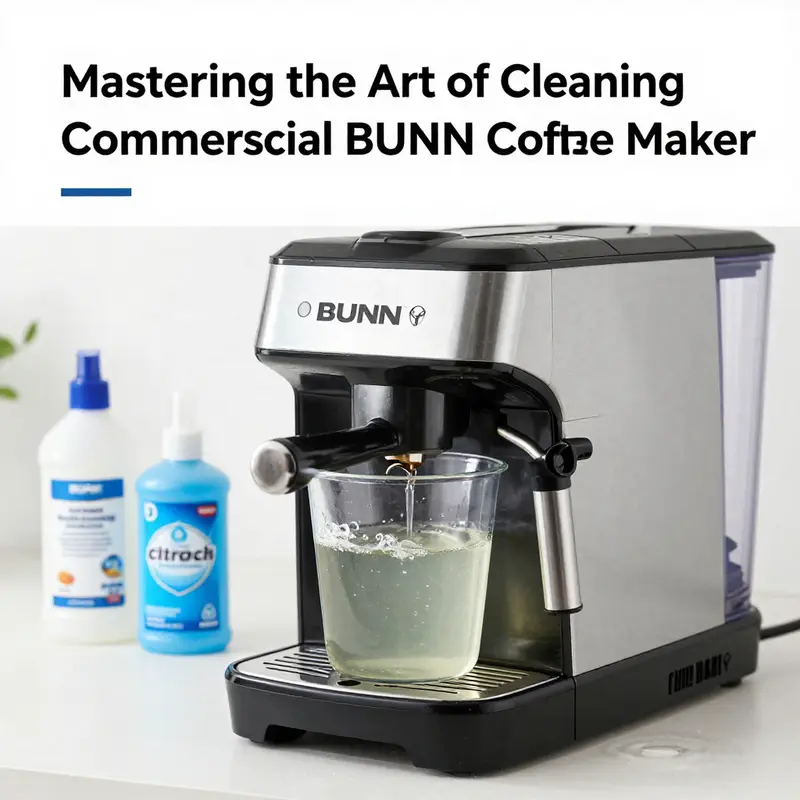
Mineral buildup from hard water is more than a nuisance in a commercial coffee system. It is a performance thief that slowly erodes heat transfer, reduces water flow, and pushes the machine to work harder for the same brew quality. In busy environments, where dozens or hundreds of carafes pour each day, mineral scale can creep into the boiler, heating elements, and the network of tubes with consequences that range from uneven extractions to unexpected downtime. Descaling is not a one-off task but a recurring preventive measure, a quiet maintenance ritual that keeps the system operating at the temperatures and volumes required by high-demand service. When scale is allowed to accumulate, the difference is tangible: brews take longer to reach target temperatures, batches may taste flat or inconsistent, and energy costs creep upward as the machine compensates for impeded heat transfer. The value of regular descaling shows up in two ways that matter most to a business: consistent cup quality and predictable maintenance costs. A routine descaling schedule also extends the life of vulnerable parts, such as gaskets, seals, and fittings that can suffer accelerated wear when mineral deposits press against them or harbor micro-critters in hard water environments. In short, descaling is not an optional maintenance chore; it is the foundational care that preserves performance, protects investment, and supports a steady coffee program for customers and staff alike.
The most effective descaling approach begins with choosing the right solution for the job. Among the options commonly recommended in professional settings, citric acid stands out for its balance of strength and gentleness. Citric acid is a natural compound found in citrus fruits, and when used properly, it dissolves mineral scale without the harsh odors that can linger after other cleaners. The barriers to success with mineral scale are not about finding a powerful chemical; they are about using the right dilution, circulating the solution through the machine, and giving scale time to break away from metallic surfaces and plastic reservoirs. In a high-volume environment, the goal is to dissolve mineral buildup efficiently while minimizing downtime and preserving the integrity of the internal components. For this reason, citric acid is often recommended as the primary descaling agent in commercial workflows where reliability and odor control are priorities. When citric acid is used as described, the solution penetrates the crevices and channels that feed the boiler and the tubing network, loosening scale so it can be flushed away with fresh water.
To begin, consider the core steps that define a successful descaling cycle. First, prepare a citric acid solution by dissolving one tablespoon of citric acid powder in one quart (four cups) of warm water. This dilution is gentle enough to protect plastics and metals inside the system while still delivering the mineral-softening power needed to loosen buildup. The machine should be ready for maintenance, which means it is turned off, unplugged, and cooled to a safe state before any access to the reservoir or internal circuits is attempted. Once the solution is prepared, pour it into the machine’s water reservoir. Run a full brewing cycle using the citric acid solution as you would with water. This initial pass exposes the scale to continuous heating and circulation, giving the acid time to interact with mineral deposits.
After the first full cycle completes, allow the solution to rest inside the system for a designated soak period. In most professional guidelines, a two-hour soak is recommended to maximize penetration of the scale against metal surfaces and in narrow passages. The soak step is crucial because it allows the citric acid to do the heavy lifting while gravity and system circulation take a back seat, enabling the mineral scale to detach more completely before the final flushing. Following the soak, run another full brewing cycle to flush the descaling solution through the system. This second pass helps ensure that dissolved minerals, citric acid residues, and any dislodged debris are carried out with the rinse water rather than remaining inside the brewing circuit.
Rinsing is a critical follow-through that should not be skipped. After the descaling cycle is completed, thoroughly rinse the machine to remove any residual acidity and to restore a neutral taste profile to future brews. A thorough rinse involves filling the reservoir with fresh, cold water and running several full brewing cycles—typically three to four—discarding the water after each cycle. The objective is to exit the process with no detectable taste or smell of the cleaning solution in the brew. In fast-paced commercial settings, a properly executed rinse translates into consistent flavor across batches and avoids cross-contamination of cleaning odors with coffee aromas that guests associate with your program.
Citric acid is not the only path to descaling. White distilled vinegar has a storied place in home and small-office cleanup, and it can be used in the same dilution pattern as citric acid, typically equal parts vinegar and water. However, the vinegar method carries a known caveat: the odor can be perceptible during and after the descaling process, sometimes carrying into subsequent brews. For venues that produce back-to-back service, lingering vinegar scents can be undesirable, making citric acid a more favorable option for odor control and for maintaining a clean, neutral-tasting brew. If vinegar is your chosen method, the same steps apply: run a full cycle with the mixture, allow a 2-hour soak, and complete a final flush with fresh water until the odor ceases and the taste returns to a clean baseline.
For those who prefer purpose-built descaling solutions, commercial descaling products designed for coffee equipment present a compelling alternative. These formulations are developed to be safe for all internal components, and they often offer a more predictable performance profile in a busier operation. The advantage here is that these products are designed with the enzyme-based or acid-based formulations to target mineral scale while preserving hardware integrity and minimizing the risk of corrosion or residue. The trade-off is cost; commercial solutions tend to be more expensive than DIY options like citric acid or household vinegar. In a high-volume environment where uptime matters, the reliability and model-specific compatibility of a commercial descaler can be worth the expense, especially when the manufacturer or service provider emphasizes dedicated compatibility with your brewing system. Regardless of which descaling route you choose, it is essential to follow the manufacturer’s instructions to the letter, including recommended dilution, circulation times, and rinse procedures. This adherence protects warranty coverage, reduces risk, and ensures optimal performance.
A descriptive maintenance cadence helps translate these steps into a sustainable routine. In areas with hard water—where the water hardness exceeds seven grains per gallon—a monthly descaling schedule is prudent. In softer water regions, intervals can extend to every three to six months, depending on usage volume and the vigor of the brewery operation. The key is to align descaling frequency with actual wear and mineral exposure rather than a rigid calendar. For venues with exceptionally high throughput, a proactive approach can be to schedule descaling during overnight downtime or between peak service blocks, thereby minimizing any impact on service while allowing the system to soak and flush without interruption. It is also wise to track descaling events in a maintenance log, noting the solution used, the date, the duration of the soak, and the observed brew characteristics before and after descaling. This historical data helps refine the schedule, supports accountability, and provides a reference point for any service technician who may be called in for more extensive maintenance.
Beyond the descaling cycle, the health of the mechanical pathways within the brewer deserves care. The spray head and showerhead are critical for even extraction and uniform contact with the coffee grounds. Mineral deposits can clog the tiny orifices, leading to uneven saturation that manifests as under-extraction in some portions of the brew basket and over-extraction in others. To address this, remove the spray head from the brew basket assembly with care, then inspect the tiny holes for blockages. A straightened paperclip, a toothpick, or a dedicated cleaning tool can be used to gently clear debris from each opening. It is important to avoid aggressive prying or force, as the delicate tips can bend or break. After clearing the holes, rinse the spray head and, if applicable, the separate showerhead under warm water. A soft cloth with a touch of mild dish soap can help remove mineral films from the exterior surfaces, followed by a thorough rinse to ensure no soap remains that could affect future brews.
The interior of the machine also benefits from a thorough cleaning of the brew basket and the associated tube assembly. The brew basket should be removed and washed with warm, soapy water using a brush to dislodge any coffee oils or residue that cling to the mesh or frame. Rinse thoroughly and allow the basket to air dry completely before reassembly. Internal tubes and piping, including bypass lines or fittings accessible through the service ports, should be inspected and cleaned with a flexible brush or pipe cleaner. Gently insert the cleaner into the tube connection points and rotate to dislodge mineral films and coffee oils that may contribute to off-flavors or restricted flow. This cleaning step is often compatible with the same descaling cycle and rinse process, reinforcing the principle that scale removal and residue cleaning work best when integrated into a single, coherent maintenance sequence.
The final phase of maintenance is a careful reassembly and a test run. After all parts have been cleaned, dried, and reassembled, fill the reservoir with fresh water and run a few test brews to ensure that the system is free from odors, that water flows freely, and that the brew temperature remains consistent with your performance targets. A well-executed rinse and test not only confirm the success of the descaling but also reestablish confidence among staff that the machine will deliver reliable results in the next service window. If taste or aroma anomalies appear during testing, it is prudent to repeat the rinsing cycles and, if necessary, perform a second, shorter descaling rinse using a fresh batch of water to guarantee that all residues are flushed from the system. These checks are essential because, in commercial environments, even small deviations in temperature, flow, or flavor can cascade into customer dissatisfaction, wasted product, and potentially higher operational costs as staff compensate with adjustments elsewhere in the workflow.
Within the broader context of a busy beverage program, it helps to view descaling as a core component of equipment stewardship rather than a standalone event. It is one of several practices that together uphold the integrity and consistency that customers expect. In addition to descaling, routine cleaning of external surfaces helps reduce the risk of cross-contamination and ensures a presentable station for staff and guests. It is best to schedule cleaning during periods of low activity so that the team can monitor the machine without pressure and handle any unexpected issues promptly. The goal is a seamless, predictable operation in which the equipment performs its role reliably and quietly in the background, allowing baristas or service staff to focus on the craft of brewing and the experience of hospitality rather than fighting against avoidable mechanical issues.
Manufacturers emphasize adherence to model-specific guidelines for descaling, cleaning, and maintenance. While the core concepts described here—dissolving mineral scale, circulating cleaning solutions, thorough rinsing, and inspecting critical components—are widely applicable, exact steps, part numbers, and recommended dwell times vary by model and configuration. When in doubt, consult the official user manual for your unit and reach out to the manufacturer’s support resources for guidance tailored to your equipment. The manual provides diagrams that can help technicians identify bypass lines, fittings, and service ports, while the support team can offer model-specific recommendations and troubleshooting tips that reduce downtime and protect your warranty.
For readers seeking direct guidance from the source, the manufacturer’s support pages provide model-specific instructions, diagrams, and service advisories that can clarify any ambiguities that arise during maintenance. While the general descaling framework described here is robust, aligning with the official guidance ensures compatibility with the exact hardware in your facility and reinforces best practices for long-term reliability. As with any professional-grade equipment, the path to peak performance lies in a disciplined maintenance routine that treats descaling as a preventative investment rather than an afterthought.
In applying these concepts, it is helpful to remember that every commercial coffee program is a living system. The water used, the frequency of service, the cleanliness of contact surfaces, and the cadence of maintenance all interact to shape overall performance. Descaling is the loudest reminder that minerals travel with the water we rely on, and it is up to the operation to keep those minerals in check. When done thoughtfully, descaling supports a stable extraction, consistent heat, and reliable service—three pillars that uphold the reputation of a coffee program in a fast-paced environment. And when combined with routine cleaning of spray heads, baskets, and tubes, it creates a holistic approach to maintenance that reduces disruption, preserves equipment life, and sustains high standards across the board.
For facilities that want to strike a balance between cost, convenience, and performance, a tiered approach can be effective. A plan that uses citric acid as the primary descaler, supplemented by occasional use of a commercial descaling solution during periods of heavy mineral exposure, can provide robust scale control without overreliance on any single method. This strategy also provides a buffer against potential supply interruptions or price fluctuations in one particular descaler type. In all cases, the guiding principle remains the same: clean water paths, unobstructed heating, and the absence of scale and residue in critical components. The end result is a coffee system that delivers consistent heat, stable flow, and reliable flavor, which are the hallmarks of a well-maintained commercial brewer.
If you are integrating this chapter into an ongoing maintenance program, use it as a reference to shape your team’s routine. Emphasize safety first—unplug the unit before disassembly, wear gloves when handling cleaning solutions, and ensure good ventilation during descaling cycles to manage any fumes that may be released. Document each maintenance session, including the solution used, date, soak duration, number of rinse cycles, and any observations about brew quality. Over time, this documentation becomes a valuable resource for operators, technicians, and managers who oversee quality control and equipment reliability. A well-documented program also aids in onboarding new staff, enabling them to follow a proven process that minimizes the risk of missed steps or inconsistent results. With a thoughtful, well-executed descaling routine as part of daily operations, a commercial coffee system can continue to deliver the robust performance customers expect, even under demanding service conditions.
External resource for further reference: manufacturer’s official support page provides model-specific instructions and troubleshooting guidance to complement the approach described here.
External link (for model-specific guidance): https://www.bunn.com/support
Flow with Confidence: Mastering Spray Head and Showerhead Cleaning for Consistency in a Commercial BUNN Brewer
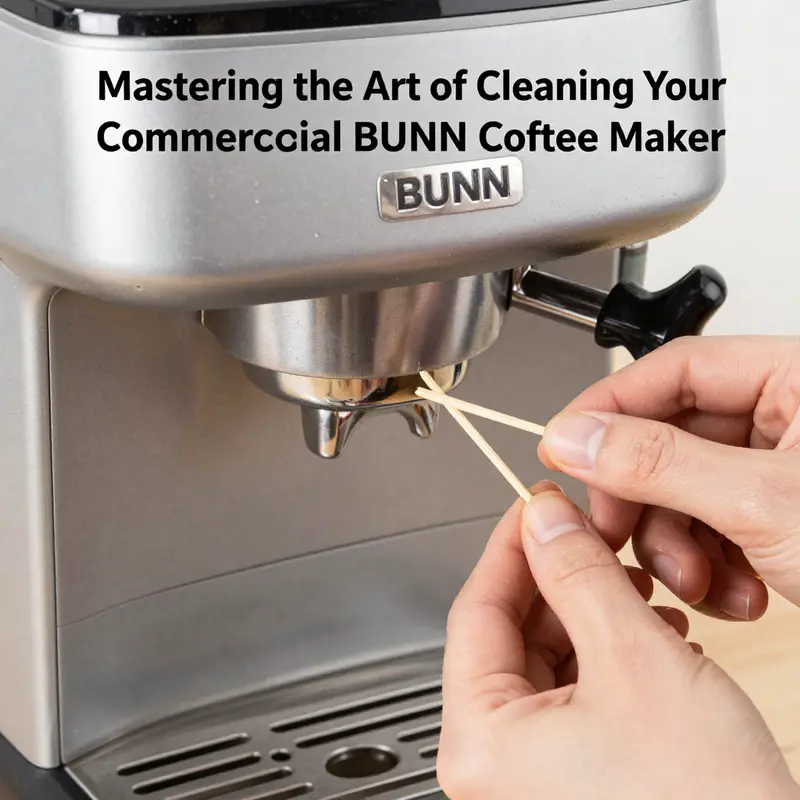
The spray head and showerhead in a commercial BUNN coffee maker are the quiet workhorses of a smooth, repeatable brew. They don’t shout when they’re doing their job, yet when mineral deposits, coffee oils, and tiny particles clump their tiny orifices, the delicate choreography of hot water and ground coffee falters. The result isn’t a dramatic failure, but a drift from the dependable cup—the warmth, the balance, and the extraction that customers expect from a busy cafe or office kitchen. Cleaning these components is not a cosmetic task; it is a performance maintenance discipline. When you clean the spray head and showerhead, you’re preserving even water distribution, preventing channeling, and sustaining the machine’s ability to deliver consistent pours across long shifts. A thoughtful routine that gives attention to these parts pays off in more stable temperatures at the bed of coffee, fewer inconsistencies between stations, and less downtime spent diagnosing baffling taste notes that come and go with mineral buildup and oil residues.
To approach this cleaning with confidence, imagine the process as a seamless continuation of your broader routine: you pause briefly to access the heart of the water delivery system, you gently disentangle the buildup without forcing anything, you clear the tiny pathways that breathe the water onto the grounds, you reassemble with care, and you verify with a cautious rinse that nothing leaves behind a hint of the cleaning routine in the cup. The method described here blends practical disassembly, precise brushing, and careful reassembly into a single, flowing procedure that fits naturally within the day-to-day operations of a high-volume coffee program. It also dovetails with the descaling you perform on a regular schedule, because when mineral scale forms, it rarely stops at the spray head alone. A clean spray head is both a prerequisite for effective descaling and a beneficiary of it, creating a virtuous loop: less scale means easier cleaning, and cleaner spray heads help the descaler work more efficiently on other pathways inside the machine.
Begin with a simple premise: you are handling a system designed to distribute hot water evenly across a bed of grounds, and every tiny hole in the showerhead matters. The coffee you serve depends on how well those holes remain open and how evenly water can exit. A clogged hole can cause a weak spot in the bloom, while a misaligned spray can lead to uneven extraction, which in turn yields uneven flavors across the brew. The steps that follow emphasize gentleness, patience, and precision. You will not rush; you will not pry; you will verify as you go that each connection remains solid and leak-free. If you approach the task as a measured, almost meditative routine, the spray head becomes less mysterious and easier to maintain over time. You’ll find that once you adopt a steady cadence, future cleanings feel more routine than remedial.
Start by ensuring safety and access. Before you touch any internal components, switch off the brewer and unplug it from the power source. If your model includes a hot water dispense or a standby heat feature, allow any residual heat to subside. This step protects you from accidental burns and helps you work calmly with the parts. Next, remove the brew basket. The basket is a relatively simple part, but it acts as a gatekeeper to the spray head assembly. With the basket removed, you expose the shower head where water is distributed as the machine runs. Depending on the model, you may have a single-piece shower assembly that threads into the outlet or a more modular unit that simply lifts away. The manual for your exact model will guide you through the exact method to detach, but the core principle remains the same: do not force fittings. If something resists, pause, assess, and consult the manual rather than wrenching a component free. Treating plastics and threads with respect now will save you from a stubborn crack or cross-threading that could trigger leaks later on.
Once the showerhead is accessible, inspect the exterior for oils, coffee residues, and mineral film. A damp microfiber cloth makes quick work of surface gunk, but your focus is aimed inward toward the holes themselves. Use a slender brush, a soft toothpick, or a dedicated cleaning tool to approach the interior of each small hole. The idea is to clear mineral deposits and coffee oils that can dry into a crust that blocks the flow without deforming the delicate tips. It’s not a heavy-handed operation; it’s meticulous attention to the tiny passages that define the brewer’s ability to spray water across the grounds evenly. If you’ve never done this before, you may be surprised by how many holes are still open and how many have been narrowed by scale. Take your time and breathe; you are restoring the spray head to its original, even distribution.
In some cases, you’ll find that a more thorough cleansing benefits from a cleaning tool that reaches into the crevices of the showerhead. Rather than naming any specific product here, imagine a long, slender implement designed for small-tapered passages. Gently insert the tool into the spray head and rotate or move it slowly to loosen and lift mineral buildup. The goal is not to scrape aggressively but to encourage deposits to loosen and lift away with a gentle back-and-forth motion. If your model allows, you can perform a light backflush by guiding the cleaning tool through the interior passages in a forward and backward motion, ensuring that any loosened material is dislodged rather than pushed deeper into the system. The key is control: avoid bending or forcing parts, and never use metal tools that could scratch or gouge the soft metal surfaces or delicate plastics around the holes.
After you’ve cleared the holes and verified a clear path through the showerhead, move to the exterior and the connection points. A damp cloth removes oily residues that can accumulate on the outer surface and around the threaded connection. A brief wipe-down reduces the chance of oils transferring back into the system during reassembly. If needed, a tiny amount of mild dish soap on the cloth can help, but ensure you rinse thoroughly. Soap residue anywhere in the system can alter taste, so give every surface a fresh-water wipe and a thorough rinse as you finalize this stage. Return the showerhead to its place with steady pressure and confirm that the seal is snug but not over-tightened. Reinsert the brew basket so the system is structurally complete and aligned as it was when you began.
With the showerhead back in place, you’ll often gain additional access to the internal water pathways. If your model allows, use a pipe cleaner or a flexible cleaning brush to run through the tube that connects the spray head to the brew gear. Insert the tip gently and rotate back and forth to dislodge any debris inside the tube or near the fitting where the spray head attaches. You are aiming to keep this path clear so that the water can flow without obstruction when the next brew begins. Do not push debris further into the system; when you pull back, you should see a cleaner path and a smoother interior surface. In some configurations, bypass lines or fittings also require a light, careful pass with the cleaner. If you encounter a stubborn pocket of buildup, repeat the cleaning motion and allow a moment of contact time before rechecking. The combination of disassembly, hole-by-hole cleaning, and careful brushing creates a cascade of cleanliness that translates into uniform spray across the coffee bed in the next brew.
The next phase concerns the rinse and the integration of this specific cleaning with the broader descaling routine that you perform regularly. After you’ve touched the spray head, perform a brief, controlled test run with clean water. This is not a full brew; you’re flushing to confirm that the water’s path is open, that the spray pattern appears even, and that there is no leakage at the fittings. If you notice any drips at the connection, recheck the seal and retighten carefully. You do not want to overload the system with force; simply reseat the connection and re-test. If the pattern appears uneven, you may need to revisit the spray head’s position or again examine the holes for any remaining residues. The goal is a balanced spray that coats the coffee grounds evenly, enabling a uniform bed of extraction that yields a consistent cup from start to finish.
You’ll also want to consider the ongoing, daily maintenance that makes a big difference in how easily you can perform this work and how consistently your machine brews. In a busy setting, daily upkeep can mean a quick wipe-down of the showerhead exterior and a light rinse of the spray head holes to prevent a heavy crust from forming. Descaling solutions or cleaning powders intended for commercial coffee equipment can be used as part of a short, routine flush that keeps mineral buildup from hardening in the showerhead passages. The emphasis here is on regular, not punitive, maintenance—a brief but deliberate ritual that remains easy to fit into a morning prep or an evening close. The more you accept this small ritual as part of the daily routine, the less often you will face more labor-intensive cleanings later. You’ll also notice that a well-cleaned spray head contributes to a more forgiving flavor profile. When water flows cleanly through the head, the uniformity of extraction improves, and the interplay between water contact time and coffee surface exposure stays predictable across shifts.
As you refine your routine, you can weave in cross-references to the broader maintenance plan that governs your unit’s longevity. A comprehensive guide to BUNN cleaning typically covers descaling, spray head care, and the separation of tasks to prevent repeated, redundant work. The descaling step targets mineral scale across internal channels, including those that feed the spray head, but the spray head’s immediate cleanliness is a prerequisite for descaling to be fully effective. If mineral scales accumulate in the lines feeding the spray head, you’ll end up with uneven flow or an inconsistent spray pattern even after a descaling cycle. Therefore, approach your spray head cleaning as both a standalone practice and a complementary component of the larger maintenance framework.
For readers who want a more expansive view of how all these pieces fit together, there’s a broader guide that discusses the full cleaning sequence for a BUNN brewer. It emphasizes that the spray head, the showerhead, the brew basket, and the internal tubes all contribute to the machine’s performance. Reading through that material after you complete a spray head session can help you see how one clean cycle supports the next and how to time maintenance to minimize disruption during service. If you’re looking to connect this chapter to a wider context, consider linking to the complete cleaning guide that covers the entire workflow, including the descaling steps and the broader rinse protocol. how-to-clean-a-bunn-coffee-maker provides a more expansive walkthrough that you can consult as part of a continual improvement in your maintenance program.
Beyond the hands-on aspects, it’s useful to reflect on the why behind every step. Cleaning the spray head is not just about removing mineral scale; it is about maintaining the physics of heat transfer and fluid dynamics that determine how the water interacts with coffee grounds. When mineral deposits obscure the tiny orifices, heat transfer efficiency drops, and the temperature stability of the brew can become compromised. In a high-volume environment, even small drifts in temperature can accumulate, affecting extraction time and, ultimately, the flavor balance in the cup. The tiny holes are the front line of defense against uneven extraction. By keeping them clear, you ensure that the hot water reaches every surface of the coffee bed in a consistent, predictable pattern. This is the difference between a routine cup and a cup that reveals the nuances of a well-ground, well-dosed, and precisely extracted shot. The spray head’s cleanliness also helps the overall machine last longer. When scale and oils are allowed to accumulate, they can work their way into seals and fittings, increasing the risk of leaks and component wear. A focused, careful cleaning of the spray head reduces this risk and supports the durability of the equipment over years of service.
In closing the practical loop, remember that the spray head and showerhead are part of a system. Their performance is tied to what happens in the rest of the machine—the descaling process, the cleanliness of the brew basket and tubes, and the force and stability with which you reassemble components. Treat each step with care, and you’ll enjoy a smoother workflow, faster service, and consistently excellent coffee. If you want to explore the full maintenance picture and weave this chapter into a broader maintenance narrative, the comprehensive guide to cleaning a BUNN coffee maker can be a helpful companion. It provides an integrated view of how to sequence tasks, what to watch for, and how to calibrate your routine to match the water quality you contend with every day. For a deeper dive into the full spectrum of steps, including detailed model-specific instructions, you can consult the broader resource noted in the linked guide above.
External resources can also offer practical perspectives on tool selection and best practices. While this chapter focuses on the hands-on procedure, you may wish to review general maintenance resources that discuss how to choose tools that reach into tight spaces, how to handle disassembly with care, and how to test for leaks after reassembly. In particular, there are external references that discuss the design intent of spray heads and how the distribution pattern changes as deposits accumulate. Reviewing these sources can deepen your understanding of why a clean spray head matters so much for flavor consistency and equipment reliability over time.
By embracing the spray head and showerhead cleaning as a core element of your daily routine, you align with a philosophy of proactive maintenance rather than reactive repair. In practice, that means shorter service windows, fewer flavor variances across batches, and a more confident team that can deliver consistently high-quality coffee during peak periods. And because the spray head is one of the most visually minimal components, it’s easy to overlook its importance. When you finally notice the improvement in evenness and the ease with which the machine delivers water onto the grounds, you’ll understand why this step deserves a steady place in your cleaning cadence. The next time you run through your maintenance checklist, let the spray head be your reminder of how precision in small passages leads to big gains in flavor, consistency, and the longevity of your equipment.
External links and further reading
- For a broader, integrated guide to BUNN cleaning that situates spray head care within the full maintenance workflow, see the linked article on how to clean a BUNN coffee maker. This resource provides a comprehensive sequence that can be adapted to your facility’s schedule and water conditions. how-to-clean-a-bunn-coffee-maker
- For additional context and practical tool considerations, an external resource offers more about access tools and maintenance hardware that can assist in reaching tight spaces and performing delicate cleanings. External link: https://www.amazon.com/dp/B07W3T2B5K.
A Thorough Clean: Restoring Flow and Flavor by Cleaning the Brew Basket and Tube Assembly on a Commercial Coffee Maker

In the rhythm of a busy service day, every drop of coffee depends on a clear, unobstructed path from the water tank to the cup. The brew basket and the tube assembly are the narrow channels that carry hot water through coffee grounds and deliver the finished brew. When mineral scale, coffee oils, and tiny fragments of grounds accumulate in these passages, flavor fades, extraction becomes uneven, and the machine becomes harder to heat evenly. A thorough clean of the brew basket and tube assembly is not a cosmetic task. It is a performance act that preserves consistency, hygiene, and efficiency. This chapter threads together practical care with the quiet science of flow, showing how attention to a few critical parts can safeguard a customer’s favorite morning beverage. It builds on the broader routine of keeping a commercial brewer in peak condition, focusing on how to approach the brew basket and its connecting tube with care, purpose, and a clear plan.
Safety comes first, even before curiosity about what lies inside the machine. Begin by powering down the unit and unplugging it from the electrical source. Allow the metal and plastic components to cool completely. A hot surface or an energized circuit is a hazard not only to the operator but also to the machine’s sensitive internal seals and wiring. Safety also means being deliberate about the tools you choose. You want brushes that are soft enough not to scratch, towels that absorb drips without leaving lint, and a descaling solution that is formulated for commercial coffee equipment. If you opt for citric acid as a descaler, dissolve one tablespoon in a quart of warm water. This natural alternative dissolves mineral buildup and tends to leave fewer odors than some other cleaners. If you prefer a traditional approach, a well-diluted, food-grade descaling solution designed for commercial brewers is appropriate. The key is to follow the manufacturer’s guidance and to avoid abrasive cleaners or metal scrapers that could nick the soft metal, wear away plastic coatings, or compromise seals.
With the machine safe and the environment ready, detach the brew basket. Locate it at the top of the unit, where hot water departs to bathe the coffee grounds. On many models, you simply lift the basket out; on others, you may need to press a release button or lever. As you lift, note how the basket fits into its rails or seats. A well-fitted basket seals the flow path in each position, and a basket that misaligns can leaks or allow stray grounds into the tube. Set the basket on a clean towel and inspect it for coffee grounds, oil residues, and any mineral crust that stubbornly clings to the metal mesh. A soft brush or cloth works well for removing loose debris. If deposits cling, soak the basket briefly in warm water with a touch of descaling solution for up to thirty minutes. Do not use abrasive cleaners or steel wool; they can scratch the finish and dull the mesh, which reduces the basket’s ability to distribute water evenly.
Meanwhile, inspect the tube assembly that connects the brew basket to the heating element. On some machines, this is a rigid connector; on others, a flexible tube may be present. If your model permits, carefully disconnect the tube at the designated fitting. Consult the manual if you are unsure of the correct procedure, because forcing a connection or disconnection can damage the fitting, spring clamps, or seals. Once the tube is free, inspect its interior for mineral deposits, coffee oils, or small fragments of grounds that could collect inside and restrict flow. A small brush designed for coffee equipment can gently scour the inside of the tube. If there is scale buildup, flush the tube with clean water first, then with a descaling solution designed for commercial coffee makers. Rotate and move the brush to dislodge deposits, and repeat until the interior appears clear. A pipe cleaner of appropriate diameter can be useful for gently sweeping through bends or tight sections. Take care not to push debris further into the line, and never use excessive force that could puncture a flexible tube or loosen fittings.
After the basket and tube have received attention, return to the basket’s exterior and to the tube’s connections. Rinse all cleaned parts thoroughly with warm water to remove any cleaner residue. A lingering cleaner can alter the taste of the next batch or leave unappealing aftertastes in the cup. The goal is a neutral, clean baseline that allows the coffee’s own flavors to come through clearly. For the basket, a quick rinse under warm running water followed by a gentle shake to remove water droplets is often sufficient. For the tube, ensure that no cleaner remains in crevices where residue could collect or where it might contact the coffee grounds in the next cycle. If you used a soaking step, be extra thorough with the final rinse to ensure all traces are gone.
Reassembly marks the transition from cleaning to testing. Slide the tube back into its fitting, ensuring a snug seal that resists leaks. Reinsert the brew basket, aligning it with the rails or seats so that it sits flush and uniform. A misaligned basket can cause uneven water distribution or drips around the rim of the brew head. Once reassembled, perform a brief flush test with plain water before introducing coffee. Run a full cycle of clean water through the machine without coffee supply. This is often referred to as a flush cycle and serves to dislodge any remaining cleaner or debris, and to condition the system for the next brew. Observe the flow: a steady, even stream with no spurts or air pockets suggests the path is clear. If you detect any irregularities, stop, re-check connections, and repeat the rinse and flush until the flow remains consistent.
The cycle of cleaning and rinsing is not a one-off ritual but part of a regular maintenance rhythm. In settings with hard water, mineral buildup can accumulate quickly, so it is prudent to clean the brew basket and tube assembly every one to two weeks, depending on usage and water quality. In softer water environments, you may extend the interval to two to four weeks, but you should still adhere to the machine’s maintenance schedule and the local water conditions. The broader descaling routine you may perform in tandem with this cleaning step will address mineral buildup in the heater lines, bypass routes, and other internal pathways that support consistent temperature and flow. The goal is to keep the water moving at the intended rate and to prevent any hot spots or temperature fluctuations that affect extraction. If you run a busy operation where high volumes are produced daily, you could adopt a proactive approach: clean the brew basket and tube assembly at the end of a shift, and then run a flush cycle first thing next shift to confirm the system is ready for back-to-back service. This habit reduces the risk of a disrupted service during peak hours and reinforces a culture of meticulous hygiene and care around the equipment.
Throughout this process, it helps to maintain a mental map of how the brew basket and tube assembly contribute to the machine’s performance. The brew basket acts as the initial stage of coffee contact, shaping how water meets the grounds and how evenly flavor compounds are drawn into the final brew. When the basket is blocked or the mesh is damaged, extraction can become spotty and inconsistent, leading to weak or sour tastes in some cups. The tube assembly functions as the conduit and regulator of flow, controlling the pressure and the speed at which water interacts with the coffee. Deposits inside the tube can slow down the water, create uneven wetting of the coffee bed, and introduce unwanted variability in temperature. By cleaning these parts thoroughly, you preserve the integrity of the entire brewing path. The result is a more predictable extraction profile, a cleaner palate in the cup, and less strain on the heating system because mineral buildup is less likely to insulate or obstruct heat transfer.
A practical reminder ties back to the finer points of technique. When soaking the basket or cleaning the tube, avoid aggressive tools that could mar finishes or fray gaskets. Gentle brushing and careful rinsing preserve the life of o-rings, seals, and the basket’s mesh itself. If you ever notice tears or fraying in the basket’s mesh, or if you see cracks around the tube’s fittings, treat those signs as a cue to replace worn parts. Early replacement prevents bigger problems during service and reduces the risk of a partial batch being discarded due to a compromised flow path. Replacement parts aren’t a sign of failure but a routine step in sustaining performance. Keeping a small stock of common wear items—such as gaskets, O-rings, and the occasional replacement tube—can prevent downtime and keep service smooth in high-demand environments.
To weave this practice into a broader cleaning routine without overcomplicating operations, consider integrating the brew basket and tube assembly maintenance with your other cleaning steps. For example, after you descale the machine’s reservoir and components, a synchronized clean of the basket’s interior and the tube’s accessible passages can be scheduled in the same session. The sequencing matters: address any scale or mineral buildup early, then verify water distribution and then finalize with a thorough rinse. This logical flow keeps the system from being overwhelmed by a single, long cleaning session and helps staff build a predictable routine. As you grow more comfortable with the process, you will be able to perform these tasks efficiently, with minimal disruption to service.
For readers seeking additional guidance on the broader context of cleaning a BUNN-style commercial brewer, a practical reference is available in a detailed how-to guide that walks through related steps and offers clear, model-agnostic instructions. It situates the brew basket and tube assembly cleaning within the larger framework of maintaining hygiene and performance across the machine. How to Clean a BUNN Coffee Maker provides a sibling perspective on the descaling, spray head care, and general upkeep that complements the specific techniques described here. The aim is not to replace the manufacturer’s manual but to reinforce a reliable routine that minimizes downtime and maximizes the quality of every cup.
As a final practical note, always keep a record of your cleaning schedule and the outcomes of each cycle. A simple log noting the date, the parts cleaned, the descaling method used, and any observations about flow or brewing temperatures can be a powerful tool over time. It helps you spot trends, anticipate when a component may need replacement, and maintain a consistent performance level even as staff changes occur. In busy environments, a visible schedule and a short checklist can reinforce best practices and ensure that the essential steps—power down and cool, remove and inspect, soak when needed, flush thoroughly, reassemble, and test—are performed consistently. The small investment in time and attention pays off in fewer fluctuations in brew quality, longer equipment life, and a steadier supply of reliable coffee for customers and staff alike.
External resource for official guidance and model-specific instructions can be found at the manufacturer’s support page, which offers maintenance schedules, parts diagrams, and contact information for supplies and service. This resource complements the practical steps outlined here and can help technicians and operators tailor the cleaning routine to the exact model in use.
External resource: https://www.bunn.com/support
Final thoughts
Regularly cleaning your commercial BUNN coffee maker is essential for delivering high-quality coffee to your customers and extending the life of your equipment. By implementing the practices outlined in this guide — from descaling to ensuring all parts are clean and unobstructed — you can guarantee that your coffee remains flavorful and consistent. Make cleaning a routine priority to not only enhance your coffee’s taste but also to safeguard your investment in quality coffee equipment.