

For business owners, a quality coffee experience can amplify workplace morale and impress clients. Understanding how to properly program a Black + Decker coffee maker ensures that fresh coffee is brewed precisely when needed, enhancing productivity and satisfaction. This guide dives into step-by-step instructions for programming your machine, a detailed look at its timer function, and expert tips to optimize brew strength, ensuring that every cup is perfectly tailored to your business’s coffee demands.
Brewing with Precision: Mastering Time, Temperature, and Morning Ritual on a Black & Decker Programmable Coffee Maker
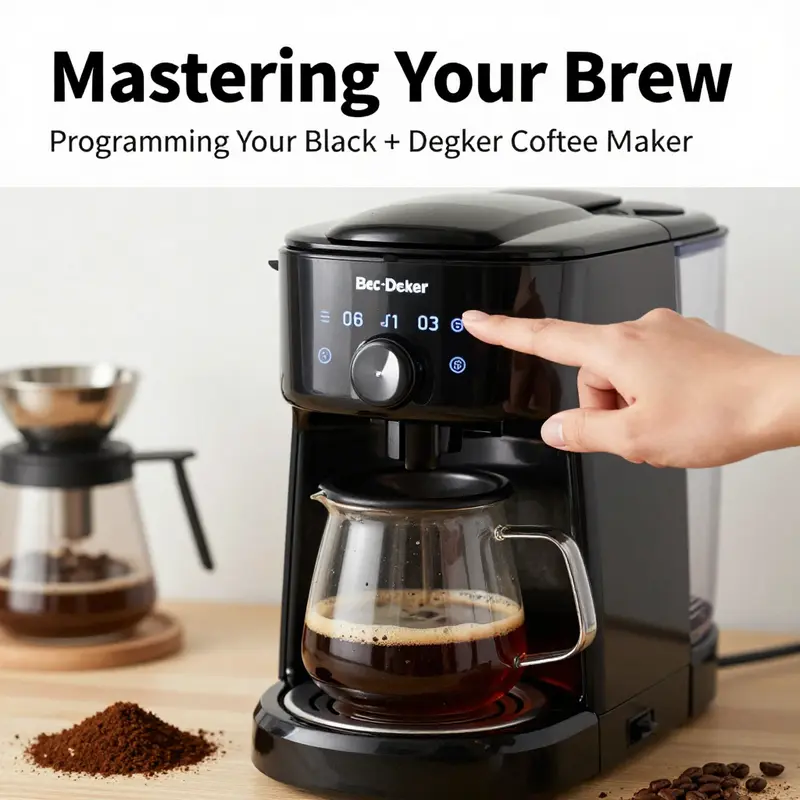
Morning light spills across the kitchen as you approach the Black & Decker programmable coffee maker. Programming this device is a practice in clarity and calm: you set the current time, choose a start time, and decide on strength. The result is a cup that arrives as you wake, not after you hurry. The steps are simple but meaningful. Fill the reservoir with cold water to the fill line, insert a paper filter, add ground coffee in a consistent measure, and place the carafe on the warming plate. A common rule of thumb is one to two tablespoons per six ounces of water, adjusted to taste.\n\nNext comes the clock and program sequence. Press the Clock button to wake the display and set the current time, then use the hour and minute controls to align with reality. Save the setting, then press Start or Program to set the Start Time. Choose a time that matches your morning routine; at that moment the machine will heat water and begin extraction automatically. If your model offers a Brew Strength option, select Regular or Bold to tailor flavor without altering the proportions.\n\nThe magic is in automation. Once scheduled, the machine handles the rest, so you can focus on other morning tasks. The water heats to an optimal range, the grounds steep in the fixed ratio, and the warming plate keeps the carafe warm until you are ready to pour. With practice, the routine becomes a reliable cadence rather than a ritual of guesswork.\n\nVariations across Black & Decker models exist, but the core concept remains: set time, set strength if available, and let the timer do the heavy lifting. Keep the machine clean, use fresh water, and measure coffee consistently. When the beep signals the brew is complete, remove the carafe and enjoy. This approach turns a simple device into a dependable ally for a calmer morning.
When Wake-Up Meets Brew: A Deep Dive into Mastering Timer Programming on a Programmable Coffee Maker
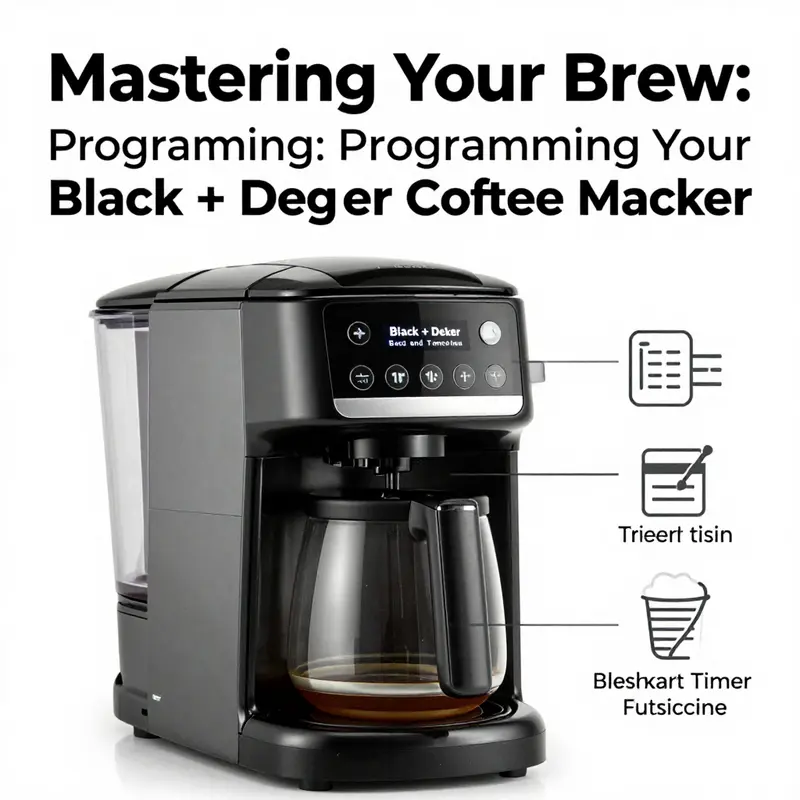
The quiet hum of a programmable coffee maker at dawn feels like a promise kept. The kitchen is still, the house is waking, and a pot of freshly brewed coffee waits for the moment the clock declares it time. Behind that small ritual lies a simple yet powerful idea: you can choreograph the coffee you drink, so the aroma rises exactly when you need it, without rushing a single step. This chapter unfolds not as a checklist of features, but as a narrative of how the timer and program functions weave into a morning routine. It invites you to think of programmable coffee making not as a gadget’s trick, but as a partner in daily habit formation, a way to align your wake-up with the warmth of the pot already steeping. In the language that follows, the maker is treated as an ally that translates a desired moment into the mechanics of water, ground coffee, and heat, so your day begins with intention rather than haste.
To begin, you prepare the basics with care: the water reservoir should be filled with fresh, cold water, and the carafe should be placed in its cradle with the filter basket ready. The water marks inside the reservoir are your first compass—fill to the level that corresponds to the number of cups you intend to brew. A good rule of thumb is to adjust the grounds to match the strength you prefer and the size of the batch you’ll drink. The ritual of measuring coffee remains as important as the timer itself. A standard guideline often cited by café routines suggests a measured amount per cup, but the true art lies in tuning that amount to your palate and schedule. Once the grounds and water align, the machine quiets down into readiness, waiting for the clock to tell it when to begin.
The clock and timer are the heart of the setup, not as decorative features but as the orchestral conductor of your morning. The control panel typically features a Clock or Timer function that you activate to enter a setup mode. The current time begins to flash, signaling that the device is listening for your cue. In this moment you set the actual time, using Hour and Minute adjustments to synchronize the machine with your living rhythm. Confirming the time is a small act of trust: you are telling the machine that its duties start at a precise moment, not when the coffee maker happens to feel like it. When the current time is locked in, you move on to the next movement in the routine—the programming of the start time for brewing. After all, the power of a programmable maker lies not in the act of brewing immediately, but in the ability to begin at a moment you choose.
Programming the start time is where the calendar and the kettle join forces. On most models you press a Start or Program button, which makes the display flash or switch to a new indicator—often a “Start Time” that invites you to pick the hour and minute you want brewing to commence. The choice is practical: if you want a pot ready at 7:00 a.m., you set the start time to 7:00. The act of setting the start time is not about forcing the machine to work at a certain moment; it is about aligning the machine’s energy with your arrival in the kitchen. After you set the desired time, you confirm the setting by pressing the Start/Program button again, or by waiting a few seconds for the display to exit the setup mode. The display then reflects your programmed start time, serving as a quiet affirmation that the plan is in place. This moment—returning to the current time, then stepping forward to the programed brew—highlights a simple truth: timing can be as precise as the grind and as intimate as your morning routine.
There are variations across models, of course. Some machines offer a Strength or Brew Size option, a small knob or button that lets you tilt the brew toward Regular or Bold, sometimes with a stronger extraction for the same grounds. If your model provides this feature, the adjustment is straightforward: select the strength you crave for the morning, or the size that matches your cup or carafe. The consequence is more than a flavor difference; it is a way to tailor the earliest moments you spend with your coffee to your physical needs and daily plan. It is easy to underestimate the role of strength settings in shaping your sense of wakefulness. A bolder brew can feel more robust, more present, and can carry you through a longer morning, while a gentler option may suit a slower start or a lighter caffeine need. Either way, the strength choice remains a piece of the same orchestration—the timer, the grind, the water, and the heat working in concert to deliver a moment’s ritual with predictability.
With the programming completed, you return to the practical cadence of the kitchen. The machine rests on the counter, a quiet sentinel awaiting the tick of the clock. When the programmed start time arrives, the device powers on, begins heating the water, and the journey from cold reservoir to steaming carafe unfolds. The process is mechanical yet satisfying: water is heated to the appropriate temperature, the coffee grounds mingle with hot water, and the aroma rises as the filter does its work. The pot fills, the timer’s work completes, and the day’s first cup is ready for you to lift and savor. If you find yourself in a morning where you want a warm pot without an earlier alarm, you can choose to brew immediately by simply pressing the Brew or Start button after you have loaded the grounds and water. The program remains, but the option to run instantly gives you the flexibility to adapt to changing mornings. It is a reminder that programming is not a prison but a framework—a scaffold you can lean on when you want control without rigidity.
The chapters of routine do not end with the first cup; they extend into maintenance and awareness. A programmable maker rewards regular care. Keeping the water reservoir clean and free of mineral buildup helps preserve the accuracy of the timer, the reliability of the heating element, and the clarity of flavor in the cup. This is not a lecture on cleaning for its own sake, but a practical note: scale and residue can alter water flow and heat dynamics, subtly changing the very conditions that the timer relies on to execute its tasks. Regular rinses, occasional descaling when mineral content is high, and thoughtful storage are small acts that preserve the longevity of the machine and the consistency of your brew. You may find yourself returning to the same ritual again and again, not out of obsession but out of trust in a system that has grown comfortable with your routine. The timer becomes less a feature to master and more a companion in daily life.
In this light, the act of programming moves beyond a sequence of button presses. It becomes a mindful practice of anticipating needs and rewarding yourself with a reliable, warm cup as you enter the day. The rhythm of setting the clock, selecting a start time, and choosing a brew strength mirrors the rhythm of preparing a space you inhabit—the kitchen becomes a small stage where time and taste perform together. If you seek a broader perspective on how such routines fit into a larger picture of daily life, you may explore how a cohesive coffee culture takes shape in the larger narrative of daily rituals. For readers curious about weaving these routines into a broader lifestyle conversation, the Coffee Rich Life guide offers a thoughtful exploration of how small daily acts accumulate into a meaningful pattern. It is a reminder that the timer, the cup, and the morning light can be integrated into a life that values deliberate, enjoyable rituals. You can explore more about this broader lifestyle at Coffee Rich Life, which offers reflections on how coffee rituals align with time, intention, and daily rhythm.
Beyond the mechanics, a crucial mental shift occurs when you begin thinking of a programmable maker not as a specialized device but as a tool for habit formation. The timer helps you externalize a portion of your routine, reducing decision fatigue in the morning. You decide the moment you want your coffee; the machine stores that decision and executes it faithfully, so your brain does not have to hold onto it while you step toward the kitchen. In practice, this means that even on days when energy is low or attention is scattered, the system remains stable. The clock remains set, the start time remains programmed, and the aroma that signals your day is no longer contingent on chance. The ritual becomes predictable without becoming dull; predictability here is not monotony but a foundation upon which you can build a more intentional morning.
In the sections that follow, you will encounter a few practical notes that reinforce this mindset. First, if you ever find that the programmed start time arrives but the brew does not begin on schedule, consider whether the power was interrupted or the clock lost its synchronization. A moment of adjustment can restore alignment. Second, when you adjust the start time, give the machine a brief moment to reinitialize—it needs that quiet breath between settings to ensure the new time is recognized and saved. Third, if your morning routine shifts—if you rise earlier on weekends or later on busy days—the timer remains flexible. You can adjust the start time as needed, or opt for a quick manual brew when spontaneity dictates. The strength setting, if available, can complement these changes by modulating the profile of the coffee to match your evolving energy needs. And finally, keep in mind that the model you use may present subtle differences in its control layout. The general principles remain the same: you fill, you set the clock, you program the start time, you choose the strength if offered, and you let the machine do the rest. Because the core logic is consistent, the same approach can be applied across many programmable makers, turning any morning into a moment where time and taste align.
If you’d like to explore how these ideas connect to broader routines and cultural perspectives around coffee, consider visiting the Coffee Rich Life hub. There you can discover essays on how coffee culture shapes daily rituals, from the quiet morning moment to the social ritual of a shared cup. The link below points you to a resource that places these tiny acts into a larger narrative of living with intention. It’s not strictly about programming, but it enriches the context in which these machines operate and helps you see your routine as part of a larger story about coffee’s role in our days. Coffee Rich Life, with its thoughtful reflections, invites you to see your morning brew as a consistent thread that ties together the waking hours, the kitchen’s scent, and the minute-by-minute pace of a life well cared for.
In closing, think of the timer as a collaborator that respects your mornings as much as you do. It carries the weight of your plans, while you carry the weight of your day’s ambitions. The moment the programmed start time arrives, the machine breathes in a quiet hiss of heat and begins its work. The aroma follows, and with it comes a small celebration: a pot of coffee ready precisely when you intended, not when chance allows. This is the essence of programming a programmable coffee maker—an ordinary technology that, when used thoughtfully, can make ordinary mornings a little brighter, a little calmer, and a little more capacious for the day ahead.
External resource for model-specific details and troubleshooting can be found through the official manuals. For a robust, model-specific reference, consult the manufacturer’s documentation, which provides precise button labels, exact sequence timing, and any model-specific quirks that might affect your programming workflow. Official manuals are designed to clarify the most subtle differences across iterations of programmable makers, helping you avoid missteps when your routine needs to adjust to a new day or a new model. Official manuals are a reliable companion when you want to verify the exact steps for your device without guesswork, ensuring you never miss a beat in your morning ritual:
External resource: official manufacturer manuals
Programming Black and Decker Coffee Makers: Mastering Timed Brews, Flavor, and Morning Precision

Programming a Black and Decker coffee maker is less about magic and more about choreography: water, grind, timing, and a little patience. The goal is not merely to push a button but to align a sequence of simple actions so that your coffee lands in the carafe with consistent strength and aroma at the moment you need it. This chapter follows a path from the core setup to the nuanced adjustments that let you tailor each pot to your taste, without getting lost in a maze of knobs and modes. You begin with clean mechanics, then move through water quality and coffee grounds, and finally enter a rhythm of timing and flavor that can become as reliable as your alarm clock. Along the way you will encounter features that repeat across models and others that are unique to particular iterations. The thread tying these experiences together is a practical mindset: understand what each control does, anticipate how it affects flavor, and maintain the machine so that its performance remains steady over time. For readers seeking a broader overview of model variations, a useful resource collects practical guidance in one place: Black Decker coffee makers—the complete guide. This reference helps you map features to expectations, while the core steps described here will work as a reliable foundation across many programmable Black and Decker units. The route from unprogrammed operation to a precisely timed brew is not a mystery; it is a sequence you can internalize and then adapt as you explore different coffee preferences and daily schedules. Begin with a clear workspace, a clean machine, and a plan for how you want your mornings to unfold. The blueprint you adopt starts with one habit that pays dividends every day: freshly cleaned equipment and fresh water. Mineral buildup and old grounds can dull flavor and confuse the control panel, so a quick wipe and rinse before any programming is a wise step. When the reservoir is clean and ready, fill it with water that reflects your preference for purity and taste. Fresh, cold water is best, and if your tap water is hard, using filtered water can improve clarity and aroma in the brewed coffee. The general rule about coffee grounds remains straightforward: a filter in place, grounds added to the basket, and a measured approach to strength that aligns with your taste. The standard ratio used in many households is about one tablespoon of ground coffee for every six ounces of water for a regular brew; for a stronger cup, you can increase the grounds slightly or opt for a finer grind. It is easy to adjust once you start tasting and comparing, and the changes accumulate into a more consistent result over time. The act of programming becomes a routine when you think of it as setting a small timer based on your morning needs, with a final check about flavor before leaving the kitchen. Once the reservoir is filled and the filter basket prepared, the timing features take center stage. To capture the essence of a scheduled brew, locate the clock or timer control—this is the natural point where the device becomes a personalized morning assistant. In many units, you press and hold the clock button to flash the current time on the display, then use the hour and minute controls to align the device’s sense of time with yours. Confirm by pressing the clock button again. The next step is to program the start time. After you set the current time, you press Start or Program. The display will flash Start Time, and you set the hour and minute you want the brew to begin. A final press confirms and saves the programmed start time. With the structure in place, you can decide whether you want the pot to begin automatically at a precise moment or to brew immediately by pressing Start when you are ready. This choice is not just about speed; it is about preserving heat and aroma, ensuring that the coffee remains at an inviting temperature as you transition from the kitchen to the day ahead. Beyond timing, you may see controls labeled Strength or Brew Size. When available, these features let you skew the brew toward Regular, Bold, or Strong. The language on the label near the button is the best guide, because different models present the options with slightly different terminology or icons. In practice, the strength setting modifies the flow or contact time between water and coffee, which translates into a more intense extraction and a thicker mouthfeel. If your model includes a Brew Pause function, you can pull a cup mid-cycle. This feature interrupts the brewing briefly, allowing you to enjoy a small cup before the full pot completes. It is a small convenience, but it reveals an important design principle: the machine is meant to be forgiving, not rigid. A pause feature invites you to savor early notes or test the strength of the brew before the cycle finishes. These considerations lead to a central habit: taste as you go. The best way to calibrate strength and timing is through iterative brewing. Start with a standard ratio and a scheduled start time, observe the aroma and taste, and then adjust. The process is iterative but straightforward: you tweak one factor at a time, wait for the next pot, and compare notes with yesterday’s batch. In this light, the concept of “optimal results” becomes a moving target shaped by bean origin, roast level, grinder texture, water origin, and personal preference. Freshly ground beans deliver a brightness and complexity that can be lost when coffee sits for too long in a pre-ground state. If you can grind just before brewing, you unlock a level of freshness that elevates the entire routine. The timing and the grind shape interact, so if you switch grind size, you may need to adjust the coffee-to-water ratio to maintain balance. A lighter grind increases the extraction surface, which can require a touch less coffee to keep the flavors in harmony with the water volume. Conversely, a coarser grind may demand a slight increase in coffee to preserve aroma intensity. These are not hard rules but guidelines that become meaningful as you taste more pots and learn what you enjoy most. Maintaining a clean machine is equally important. Descaling and routine cleaning every one to three months, depending on water hardness, improve flavor and prolong the life of the heating element and the internal pathways. White vinegar or a descaling solution can be used according to the manufacturer’s recommendations, followed by a thorough rinse cycle to remove any residual acidity or cleaning agents. Regular maintenance reduces the risk of off flavors and ensures the timer and display function stay legible and reliable. The broader ritual around programming extends beyond the mechanics. It encompasses the philosophy of using good ingredients, organizing your morning, and creating a reliable cadence that supports your day rather than adding friction. A well-programmed coffee routine becomes a quiet ally, enabling you to move through the morning with one less decision to make. In practice, this means choosing a night-before setup that keeps you in a rhythm: set the water, prepare the grounds, and program the time to wake you with the aroma that signals the start of your day. Even if a morning runs late, you still have a plan embedded in the device that helps you stay on track. As with any routine, there are caveats to consider. Model-to-model variations mean that a feature might be labeled differently or located in a different part of the control panel. If your unit has a strength setting, the wording might be Bold, Strong, or Regular, and the Start/Program button may behave slightly differently depending on the model. A practical approach is to master the essential sequence first: fill, insert filter, set current time, program start time, and choose a brew strength if available. Once you can repeat this sequence with confidence, you can explore enhancements without risking routine performance. To support this ongoing learning, it is useful to keep a short note about what works best for you. A simple log of coffee-to-water ratios, grind size, and whether you used a timer or brewed on demand can reveal patterns that improve consistency. You may discover, for example, that a particular grind for your favorite beans yields a smoother finish when brewed at a specific time of day, or that a certain filtration approach enhances clarity when using filtered water. These small observations accumulate into a personal archive of preferences that informs future adjustments. The journey toward mastery of programming is also a journey toward simplicity. A clean, well-lit kitchen workspace, a consistent approach to measuring, and a calm, patient testing mindset all contribute to reliable results. The device will reward your diligence with predictable performance and a morning ritual that feels less like a chore and more like a small, personal ceremony. Central to this process is acknowledging that flavor is subjective and variable. One pot might taste excellent with a bold setting, while another day calls for a lighter touch. The ability to adapt without sacrificing consistency depends on two things: an understanding of how the basic controls map to outcomes and a discipline about keeping the equipment in good condition. A thoughtful practice is to revisit the manual when you encounter a feature that seems unfamiliar. The CM2045B-style controls, for instance, may share a common logic across models but hide subtle differences in button labeling or the path to saving a programmed start time. When in doubt, returning to the manual—either the official online resource or the community’s practical summaries—can help you align your expectations with the device’s design. The value of learning and adapting grows when you consider the broader coffee ecosystem. Fresh beans, disciplined grind size, filtered water, and a clean machine all contribute to a more satisfying cup. The programmable aspect of the machine is not an end in itself; it is a means to support a consistent, satisfying ritual. A well-timed brew frees mental bandwidth for other morning tasks, while a flavor profile that aligns with your preferences can reduce the need for post-brew adjustments, such as adding milk or sugar. In this sense, programming becomes a productive constraint that helps you design a morning experience rather than a series of scattered actions. It is a lesson that translates beyond coffee: structure can cultivate calm, reliability, and a sense of control in daily life. As you practice, you may discover that the most impactful change is not a new feature but a disciplined routine. Start by ensuring the basics are sound—clean water, clean hardware, proper filtration, and accurate timing. Then, layer in taste preferences by adjusting the strength and experimenting with grind size. Finally, create a reliable cycle that leverages the timer to deliver coffee at the precise moment you want it. If you follow this path, you will gradually reduce the cognitive load of your morning while increasing the satisfaction you derive from that first cup. The chapter’s guidance continues to emphasize model variations and practical steps, but the core behavior remains consistent: treat the machine as a tool that helps you brew with intention rather than as a passive appliance. In summary, programming a Black and Decker coffee maker is a sequence of deliberate actions that, when performed with care, yields reliable, flavorful results. By starting with a clean slate, using the recommended water-to-coffee ratios, and adopting a predictable timing routine, you establish a foundation that supports better mornings. The small decisions—how much coffee to use, whether to grind just before brewing, how long to pause during a pot—aggregate into a daily experience that feels controlled, efficient, and rewarding. As you grow familiar with the process, you may find room for subtle refinements that reflect your evolving tastes. The ultimate goal is not to chase an elusive perfection but to cultivate a dependable system that consistently delivers comfort in a cup.
Final thoughts
Programming your Black + Decker coffee maker efficiently can greatly enhance the coffee experience in your business. By following the step-by-step instructions, utilizing the timer feature, and optimizing the brew strength, you can ensure that you provide a consistently excellent cup of coffee for your employees and customers. With the insights shared in this guide, you’ll be well on your way to becoming a coffee expert in your workplace.