
Understanding caffeine’s role in popular beverages, especially Dr Pepper, is crucial for business owners in the beverage industry. Caffeine impacts not only consumer choices but also health considerations. This article delves into the caffeine content of Dr Pepper, how it compares to other drinks, consumer awareness, and a historical perspective. Each chapter contributes to a comprehensive understanding, allowing business owners to make informed decisions about their product offerings.
A Gentle Lift Within a 23-Flavor Symphony: Tracing Caffeine in Dr Pepper
Dr Pepper sits at a curious crossroads in the world of soft drinks. It is not a straight-forward cola, nor is it a mere fruit-flavored sipper. It emerged from a late nineteenth-century impulse to blend familiar flavors into something new, and over the decades it has kept that sense of a quiet, almost insistent character that invites a second sip. Central to that character is caffeine, a small but meaningful companion to the drink’s complex profile. The conversation about caffeine in this beverage often starts with a single number—the amount per standard serving—and from there it unfolds into questions about how that amount shapes taste, how it compares to other drinks, and what it means for everyday consumption. In the context of the broader topic—whether caffeine lives in Dr Pepper—the official data provide a clear, consistent baseline that helps consumers make informed choices without guessing or relying on rumor. The most current and reliable data from official nutrition sources place the caffeine content of a standard 12-fluid-ounce serving at 41 milligrams. This figure holds steady across regular formulas and the zero-sugar version, making the caffeine story of this brand feel both stable and predictable to those who care about such details. It is not a huge dose, but it is a precise one, enough to lend a gentle lift without the sharper edge associated with higher-caffeine products. This stability matters for people who want to understand how Dr Pepper fits into their daily rhythm without tipping into overstimulation or sleep disruption, and it matters for those who balance caffeine with appetite, activity, or other sources of stimulation throughout the day.
The idea of a single sip delivering a measurable amount of caffeine can seem almost clinical, yet in practice it becomes part of a sensory equation. Caffeine does not operate in isolation here. It works in concert with the soda’s characteristic blend of 23 fruit and spice flavors, a signature that is often described as both intriguing and balanced. The bitter edge some experience from caffeine finds a natural counterpoint in the drink’s sweetness and aroma, creating a more nuanced mouthfeel than one might expect from a product that looks like a standard soft drink. In that sense, caffeine contributes not only a jolt of alertness but also a subtle textural cue, a quiet bite that helps the overall taste profile “snap” into focus after the first swallow. For regular consumers, this is part of the appeal: a mild energy lift that doesn’t monopolize the experience but rather enhances the perception of flavor and finish.
A closer look at the numbers helps ground this discussion. A 12-ounce can contains 41 milligrams of caffeine. That is true for both the regular formulation and the zero-sugar version, which preserves the same stimulant content even as sweetness is pared back with alternative sweeteners. The uniformity across these variants reflects a deliberate formulation choice: caffeine serves dual purposes, reinforcing flavor while providing a modest energy cue that can satisfy without overpowering the palate. When placed beside other drinks in the same family, Dr Pepper’s caffeine level sits in a middle lane—higher than caffeine-free options, yet lower than many energy-forward beverages. For instance, many traditional colas in the same category hover in the mid-to-high thirties for a 12-ounce serving, while energy drinks can double or more that amount per smaller servings. The practical implication is straightforward: this beverage offers a measured stimulant effect that can be part of a routine without demanding extraordinary caffeine management.
The experience of that caffeine is also highly individual. Some people notice only a gentle uplift, a smoother transition into the afternoon, without the jittery sense that sometimes accompanies higher-caffeine choices. Others may feel the lift more keenly, especially when the beverage is consumed alongside other caffeine sources or later in the day. This variation matters because it places Dr Pepper within a spectrum of stimulants where personal tolerance, timing, and overall daily intake interact in meaningful ways. The same 41 milligrams that contribute to the drink’s character can add up across a day if multiple cans are consumed, which is why many guidelines emphasize moderation and awareness of total intake. In practical terms, a single can gives about a tenth of a 400-milligram daily limit for most adults, translating to roughly 10 percent of that benchmark. Some calculators and guides round this to about 12 percent depending on how one interprets daily limits and rounding. Either way, the message is consistent: this beverage provides a moderate, approachable amount of caffeine that can fit into many schedules without becoming a dominant factor.
The consistency across formulations—regular and zero-sugar—extends beyond caffeine to the broader consumer experience. In a market where sugar substitutes and sweeteners can subtly alter mouthfeel, maintaining the same caffeine baseline helps preserve the intended balance. Diet versions often aim to preserve flavor intensity while reducing calories, and in this case caffeine remains a steady anchor. The interplay between sweetness, aroma, and the mild bitterness from caffeine becomes a recognizable signature, a sort of backstage cue that signals the drink’s identity even before the first sip is completed. This is not merely a matter of science; it is about ensuring that brand experience remains reliable for fans who seek familiarity in a globally available product. The physiological impact—what the caffeine does to the body—remains the same regardless of sugar content, but the perception can shift when calories and sweetness are altered. The result is a beverage that offers continuity in one dimension, while still providing a distinct sensory journey shaped by its flavor profile.
For readers who want to verify these figures or explore related questions, the official nutrition information page provides the most authoritative source. It lays out the caffeine content and ingredients for all Dr Pepper products, including both the regular and zero-sugar lines. That page also offers context on serving sizes and other nutrient details, which can be helpful for anyone building a broader understanding of how this drink fits into dietary plans or daily routines. If you’re curious about how a particular variant compares in caffeine content to other beverages in the same family, you’ll find the data presented in a clear, standardized format that supports straightforward comparisons and planning.
In this context, one practical takeaway emerges clearly: Dr Pepper delivers a modest caffeine presence that aligns with its brand philosophy of offering a balanced, flavor-forward experience. The amount per 12-ounce serving is enough to contribute to daytime alertness without overshadowing the drink’s core taste or turning a casual beverage into a high-caffeine encounter. For those who want to explore the topic further, there is a useful internal resource that discusses caffeine content in more detail, specifically focusing on the diet variant and its caffeine equivalent. This resource presents the question in a direct, consumer-friendly way and helps consumers understand how the sugar profile intersects with stimulant content. It is worth noting that such discussions can depend on regional formulations and updates from manufacturers, so checking the latest official data remains a prudent step for precise planning.
When we situate Dr Pepper within the wider landscape of caffeinated beverages, the numbers illuminate both positioning and choice. The drink’s 41-milligram per serving figure places it squarely in the mid-range for caffeinated soft drinks, offering a more restrained caffeine experience than high-energy options but more than entirely caffeine-free choices. This nuance matters for people who drink a variety of beverages throughout the day and want to manage caffeine exposure across different contexts—work, study, or casual leisure. It also means that Dr Pepper can be a reliable everyday option for those who appreciate a modest lift without committing to a high-caffeine regimen. The same logic extends to the zero-sugar version, where flavor complexity remains a priority even as sweetness is reduced. In both forms, caffeine remains a consistent thread that helps preserve the brand’s distinctive resonance, a steadying note that complements the aromatic blend rather than competing with it.
For readers seeking a concise point of reference, a standard 12-ounce can is still the benchmark: 41 milligrams of caffeine per serving, consistent across regular and zero-sugar formulations, with the data anchored in official nutrition information. This clarity enables people to plan their intake with confidence, whether they are coordinating with other sources of caffeine, monitoring sleep patterns, or simply enjoying a familiar beverage as part of their daily routine. It also underscores a broader principle in beverage formulation: consistency matters. When a product communicates a reliable caffeine level, it invites trust and predictable consumption, which in turn supports informed choices about timing, dose, and balance with other dietary components.
If you are exploring this topic in depth, it’s helpful to consult the official nutrition page for the most up-to-date figures and to compare how the caffeine content stacks up against other beverages you commonly choose. And for anyone curious about the specific question of the diet version, there is a dedicated resource that addresses whether the diet variant contains caffeine and how much. You can explore that topic here: Diet Dr Pepper caffeine content.
In the end, the caffeine story of this brand is a reminder that a product can carry a modest stimulant on the side of a richly crafted flavor profile. The 41 milligrams per 12-ounce serving are not a loud proclamation but a quiet, dependable thread through a long-standing taste tradition. The consistency across versions and the careful placement of caffeine within the flavor balance are what allow fans to enjoy a familiar sensory experience while also recognizing the functional note caffeine provides—an energy-aware companion that fits into the broader rhythm of daily life. For anyone who regularly weighs caffeine in daily decisions, this profile offers a straightforward reference point: a beloved, flavor-forward drink that delivers a gentle lift, not a dramatic surge, and that does so with remarkable consistency across its forms. The data, the taste, and the everyday practicality all align to explain why this beverage remains an enduring pick for people who value both character and consideration in their drinks.
External reference: For the official, up-to-date caffeine content and ingredient details, see the Dr Pepper nutrition information page: https://www.drpepper.com/nutrition
Caffeine in the Pepper-Flavored Cola: Truth, Taste, and Health Implications

Few beverages carry as much cultural nuance as the pepper-flavored cola that has lingered in menus and memories for decades. When people ask whether this familiar soda contains caffeine, they are not just debating a label; they are weighing a small but real factor in daily routines, sleep patterns, and dietary balance. In practical terms, the answer is yes. A standard 12-fluid-ounce (355 mL) can contains roughly 41 to 42 milligrams of caffeine. This amount is consistent across the usual formulations found in the United States and Canada, providing a predictable yet modest stimulant kick that can sharpen focus for some and nudge others toward restlessness if they are sensitive. It is a number that many drinkers pass by on a regular basis without a second thought, yet it sits at the intersection of flavor chemistry, sensory experience, and personal health decisions.
Caffeine does more than wake the palate. In this context, its role is twofold: it shapes the drink’s sensory profile and it offers a mild, caffeine-fueled lift that has become part of the beverage’s appeal. The bitterness that caffeine contributes blends with the drink’s complex flavor profile, a symphony of over two dozen notes, creating a nuanced finish that is at once familiar and a touch unconventional. For those who track taste, the caffeine-related bitterness helps to balance sweetness, giving the drink a more rounded, less one-dimensional character. For others, that same bitterness is a signal of energy and alertness, an association reinforced by routine and memory as much as by chemistry.
The caffeine story is not simply about the core product. The same approximate caffeine level appears in the zero-sugar variant, which emphasizes a bolder taste while maintaining the same basic stimulant profile. That consistency is useful for consumers who switch between sugar-containing and sugarless options, because the caffeine content remains a steady thread across choices. The practical implication is straightforward: if you are accustomed to certain caffeine effects from other beverages, you can anticipate similar levels when you reach for this pepper-flavored cola, regardless of whether you choose the sugared version or its zero-sugar counterpart.
When considering how much caffeine is acceptable, most adults can draw upon established guidelines. The U.S. Food and Drug Administration suggests a general daily limit of about 400 milligrams for healthy adults. By that standard, a single can represents a modest slice of the daily total—roughly one-tenth of the upper limit. For someone who drinks several caffeinated beverages a day, the math becomes more nuanced, and timing matters. The same amount that can help with afternoon focus may, for a sensitive sleeper, contribute to late-night wakefulness if consumed too late in the day. Individual tolerance varies widely, influenced by genetics, habitual intake, and personal sensitivity to stimulants. In clinical terms, caffeine blocks adenosine receptors to promote wakefulness, but it can also raise heart rate slightly and increase cortisol transiently, rarely inducing notable discomfort in those who metabolize caffeine rapidly. For most adults, these effects are mild to moderate when the total daily intake stays within recommended boundaries.
Dietary considerations deepen the conversation. The classic version delivers sugars that contribute to daily carbohydrate intake, while sugar-free variants eliminate that sugar load but introduce artificial sweeteners. Two widely used sweeteners—one a basic aspartame and the other an ace-k compound—are approved by regulatory authorities, yet still draw attention from individuals who prefer to minimize synthetic additives or who notice sensitivities. In practice, some people find that even small amounts of caffeine paired with artificial sweeteners can influence digestion, mood, or sleep quality in ways that feel outsized relative to the caffeine amount alone. For others, the combination is a non-issue, a familiar flavor profile paired with a reliable energy note that fits neatly into a broader dietary plan.
From a long-term health perspective, the pattern of consumption matters as much as the caffeine content itself. Regularly consuming caffeinated beverages—whether sugar-containing or sugar-free—should be balanced with overall diet quality, hydration, and sleep hygiene. Sugar-containing drinks can contribute to excess calorie intake and, when consumed in large quantities, may influence weight management and metabolic health. Sugar-free options sidestep those calories but introduce a different set of considerations around artificial sweeteners and their potential metabolic or digestive effects in sensitive individuals. Neither option is inherently harmful in moderation, but the cumulative effect of daily choices matters. Those who are pregnant, have anxiety disorders, hypertension, or sleep disorders often need to monitor caffeine more carefully, incorporating it into a broader plan to manage symptoms and improve rest. In such cases, a single can remains a small piece of a much larger daily tally, and mindful consumption becomes part of a holistic approach to well-being.
Flavor nuance aside, the caffeine story invites a broader reflection on how consumer choices interact with individual health. The cola’s caffeine contribution is modest, but it is not inconsequential for a portion of the population whose daily caffeine tolerance is lower or whose schedules require precise timing to support alertness without compromising sleep. For these readers, the act of choosing this beverage becomes a small negotiation: a trade-off between taste, ritual, and physiological response. The choice may be influenced by context—whether one is enjoying a mid-afternoon break, seeking a quick mental nudge during a long drive, or simply pairing a familiar flavor with a caffeine habit. In all cases, awareness of the caffeine content helps inform moderation, especially when other caffeinated sources wind up in the same day’s tally.
What emerges from the evidence is a straightforward picture: the pepper-flavored cola contains caffeine in a consistent range across common market versions, with the same approximate milligram count whether sugar is present or absent. This clarity allows individuals to plan, track, and reflect on how caffeine fits within personal health goals. It also invites a nuanced conversation about sensory experience and energy—how a single beverage can deliver both a momentary flavor moment and a gentle, measurable physiological response. In a landscape crowded with caffeinated options, the pepper-flavored cola stands as a reliable reference point. It is not a powerhouse of caffeine, but it is a dependable source for those who want a modest stimulant coupled with a distinctive, memorable taste.
For readers who want to verify the numbers and explore the broader context of caffeine content across beverages, there are independent sources that compile and compare caffeine levels in popular drinks. While numbers can shift slightly with formulation changes and regional differences, the central takeaway remains stable: a standard can of this particular cola brings a little more than forty milligrams of caffeine, a value that most adults can fit into a balanced daily pattern without concern. The practical takeaway is simple: treat it as you would any other modest caffeinated choice, mindful of the total caffeine tally you carry through the day, and enjoy the unique flavor that has kept this classic beverage in rotation for generations.
External reference: https://www.caffeineinformer.com/caffeine-content-in-dr-pepper-soda
The Caffeine Equation: Where Dr Pepper Stands Among Everyday Beverages
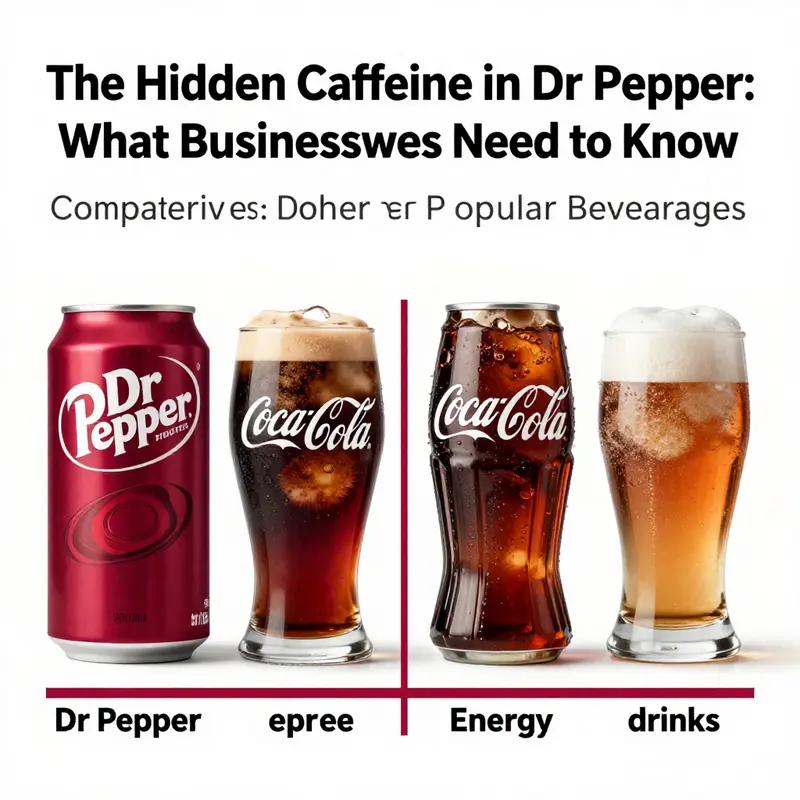
A can of Dr Pepper opens with a familiar hiss and a complex aroma that promises more than sweetness alone. Beyond its unmistakable flavor profile lies a subtle but meaningful caffeine presence, one that shapes the drink’s character without turning it into an energy boost. The caffeine content in a standard 12 ounce can of Dr Pepper settles in a moderate zone, a placement that helps explain why the beverage feels balanced rather than overly bright or jittery. In numerical terms, Dr Pepper contains about 41 milligrams of caffeine per 12 fluid ounce serving, a figure that remains consistent across the usual formulations in the United States and Canada. This stability across markets is not accidental; it reflects a deliberate calibration by the brand to maintain its signature drinkability while offering the expected stimulant lift that many consumers associate with a refreshing soda. The number itself is more than a statistic. It shapes everyday choices, influences how you pace your day, and informs which beverages pair best with meals or late-afternoon tasks. When you consider this 41 mg reference point, you begin to see how Dr Pepper sits within a wider landscape of popular carbonated drinks. It is not the most caffeinated option in the soda aisle, and it sits noticeably below the high end of energy drinks, yet it clearly offers more caffeine than several other cola-style beverages, depending on the brand and formulation. This position matters for people who drink caloric beverages as part of a daily rhythm rather than as a pure caffeine fix. For someone who wants a mild lift without a pronounced caffeine kick, Dr Pepper’s moderate content delivers a certain kind of beverage stability: enough bite to cut through sweetness, enough smoothness to avoid a harsh aftertaste, and a profile that remains friendly to a broad audience, from a morning pick-me-up to an afternoon indulgence. Across the table of beverages, the comparison becomes more tangible when you stack their caffeine levels side by side. Pepsi, a close competitor in many retailers, typically clocks in around 38 milligrams per 12 ounce can, a touch less than Dr Pepper. Diet Coke tends to run higher, at about 46 milligrams per 12 ounce serving, which gives it a noticeably brisker edge in the caffeine department. These numbers, while precise in their own right, are more meaningful when linked to the overall sensory experience of each drink. Dr Pepper’s flavor, characterized by a nuanced blend of fruit essences and spice-like undertones, benefits from a caffeine presence that adds just enough bitterness to balance sweetness. The effect is not an overpowering jolt but a rounded, gently stimulating sensation that aligns with the drink’s identity as a distinctive, comforting option rather than a high-energy potion. It is a reminder that caffeine does not exist in a vacuum; it interacts with taste, mouthfeel, and aroma to shape how a drink is perceived and enjoyed. In the broader category of beverages that supply a caffeine lift, Dr Pepper occupies a space that someone might describe as “moderate but meaningful.” The contrast with Diet Coke, which brings a higher caffeine punch, and with Pepsi, which sits a notch below Dr Pepper, helps explain why some tasters perceive Dr Pepper as offering a more balanced stimulatory profile. For anyone who tracks caffeine intake carefully, these numbers provide a practical frame for planning daily consumption. The World Health Organization and various national health bodies emphasize that moderation matters when caffeine is part of the daily routine. The exact advice can vary based on age, health status, and sensitivity, but the underlying message is clear: knowing how much caffeine is in your beverage helps you distribute your intake across the day without tipping into excessive territory. In that context, Dr Pepper, along with its zero sugar counterpart, maintains a parity that is both predictable and convenient. Dr Pepper Zero Sugar mirrors the caffeine content of the regular version, offering the same sensory experience and stimulant profile but without calories. For consumers who are managing calorie goals or who prefer to avoid sugar while still savoring the brand’s characteristic complexity, the zero sugar variant makes the same 41 mg per 12 ounce benchmark accessible. The implication is straightforward: if the objective is a familiar flavor with a moderate caffeine lift, the brand provides a consistent option that does not force a trade-off between taste and stimulation. This steadiness is valuable in households, offices, and social settings where people vary in caffeine tolerance and daily routines. When people evaluate caffeine across beverages, they often consider not only the numbers but the subjective timing and effect. A 41 mg dose aligns with a mild to moderate stimulation. It tends to support alertness and focus without producing the heightened agitation associated with higher caffeine loads found in many energy drinks. It also tends to deliver a less pronounced rebound after the initial lift, which can matter for late-afternoon or early-evening consumption. The sensory experience reinforces this dynamic. Dr Pepper’s flavor profile—its signature blend that leans toward a smooth sweetness tempered by a subtle bite—does not overwhelm caffeine with bitterness. Instead, caffeine serves as a backstage partner that helps balance the sweetness, contributing to a lingering finish that feels simultaneously crisp and comforting. The interplay between flavor and caffeine is a reminder that caffeinated beverages tell a story beyond “how much caffeine.” They reveal how brands shape consumer experiences by aligning stimulants with palatability, aroma, and mouthfeel. In practical terms, that means consideration of daily limits is sensible, especially for individuals who are more sensitive to caffeine or who are pregnant or managing stimulant-related health concerns. The category still invites enjoyment in moderation, with an awareness of how each serving stacks up against personal thresholds. For the curious reader who wants to place Dr Pepper in a broader comparative frame, there is a simple method: look at caffeine as the dosage that tunes the flavor dial rather than as an energy imperative. A widely cited cross-category comparison helps illuminate this point. For example, a common snapshot shows beverages and their caffeine content across popular choices, including a note on how some carbonated options differ from true energy beverages. In this context, a quick reference point—such as the comparison of caffeine in Mountain Dew vs Coke—offers a practical lens for understanding how a few milligrams can shift perception, mood, and timing. That reference, while not exhaustive, anchors the discussion in real-world choices and primes readers to consider how much caffeine they want to ingest with each drink. For readers who are exploring these questions beyond the page, it may be helpful to consult broader guides that aggregate data from manufacturers and independent analyses. These resources organize caffeine content by product category, helping families and individuals map out a day’s beverage plan without surprises. The key takeaway remains consistent: Dr Pepper sits squarely in the middle of the caffeine spectrum for regular sodas, a position that respects both its storied flavor and the practicalities of daily consumption. If you want to explore the surrounding landscape further, a deeper dive into cross-brand caffeine comparisons can illuminate how taste objectives align with stimulatory goals, and how a beverage’s caffeine level can subtly influence when and how often it is enjoyable. For readers who plan ahead, documenting caffeine intake across a week can reveal patterns, such as pairing a moderate caffeine soda with meals or saving a higher caffeine option for mornings when focus is essential. In all cases, the objective is clarity and balance: to savor the drink’s distinctive character while staying mindful of the stimulant content that accompanies it. External references reinforce this approach, offering broader context on caffeine in popular drinks and helping readers craft informed daily choices that fit their lifestyles and health considerations. For a broader context on caffeine in popular drinks, see the Healthline resource linked at the end of this chapter. And for readers looking to compare caffeine directly within the soda landscape, a concise cross-brand example can be useful: consider how caffeine in Mountain Dew compares with Coke, a topic covered in the linked article that helps situate Dr Pepper’s 41 mg per 12 oz within a practical frame of reference. Internal link example here can serve as a quick anchor for readers seeking a related comparison within the same site: Caffeine in Mountain Dew vs Coke. This chapter has aimed to present a cohesive picture that situates Dr Pepper not as an isolated curiosity but as a meaningful data point in a continuum of caffeinated beverages. The numbers matter, but so do flavor, context, and personal health considerations. In the end, the caffeine equation for Dr Pepper reflects a thoughtful balance between taste and lift, a balance that has helped the drink endure as a recognizable staple in many daily rituals. External reference: https://www.healthline.com/nutrition/caffeine-in-popular-drinks
The Dr Pepper Buzz: Caffeine, Clarity, and Everyday Choices

Dr Pepper occupies a unique nook in the world of soft drinks, a flavor profile that many consumers describe as complex and unmistakable. The caffeine question—whether the drink contains caffeine at all, and if so, how much—does more than satisfy curiosity. It shapes how people plan their day, how they portion their indulgence, and how they negotiate the fine line between a pleasant pick‑me‑up and a jittery afternoon. The most consistent data indicate that a standard 12‑fluid ounce (355 mL) can delivers about 41 milligrams of caffeine. This figure, reported across standard formulations in the United States and Canada, places Dr Pepper in a distinct category: it is caffeinated, but not to coffee‑like levels, and certainly not caffeine‑free. The precise number matters not only for the caffeine fan who tracks intake but for the casual sipper who wants to understand how each drink might contribute to daily limits or daily rhythms. When the official product information is consulted, the 41 mg per serving emerges as the benchmark for both regular Dr Pepper and its zero‑sugar counterpart, offering consistency that helps consumers make predictable comparisons against other beverages in a busy shopping list or a crowded pantry.
This consistency matters because awareness is uneven. Some people know exactly how much caffeine they are ingesting with each can, and they factor it into plans for study sessions, workouts, or late evenings. Others—perhaps drawn to Dr Pepper’s signature flavor because it is not a traditional cola and does not rely on kola nut as a defining ingredient—assume the drink is caffeine‑free. The absence of kola nut, historically a marker of some cola beverages, can sow confusion about caffeine content. In reality, caffeine lives in the formula regardless of that flavor lineage, and for many readers the takeaway is that flavor does not equate to caffeine absence. This misalignment between taste cues and caffeine facts underlines a broader point: ingredient transparency matters for health, for routine management of intake, and for personal decisions that intersect with anxiety, cardiovascular considerations, pregnancy, or medications. In those scenarios, knowing that a single can carries around 41 mg allows individuals to plan proactively, rather than reactively, to maintain a daily balance that aligns with medical guidance—often cited as up to about 400 mg of caffeine for healthy adults, spread across the day.
From the sensory vantage point, caffeine does more than wake the senses; it subtly shapes the drink’s perceived mouthfeel and bitterness profile. Dr Pepper’s distinctive sweetness meets a mild bitterness that caffeine can accentuate, contributing to a perception of lift without the sharp caffeine jolt that coffee can deliver. That nuanced interaction—between a proprietary 23‑ingredient blend and a gentle stimulant effect—helps explain why Dr Pepper can feel both refreshing and comforting at different moments. It supports flexible consumption patterns: a midmorning break, a late‑afternoon pause, or a casual sip with a meal. The same caffeine level holds steady whether one chooses the classic formulation or the zero‑sugar variant, reinforcing the idea that the drink’s appeal rests on flavor continuity as much as on predictable caffeine content.
The practical implications ripple outward into how people approach their daily caffeine budgets. For many, a single 12‑ounce can of Dr Pepper is a reliable but modest source of stimulation, a choice that fits between water, juice, and more robust caffeinated beverages. For those monitoring caffeine for medical reasons, the 41 mg per can creates an easy accounting unit. A typical adult might combine Dr Pepper with coffee, tea, or energy drinks, but this combination invites careful math to avoid surpassing personal thresholds. Health professionals often emphasize not just the total daily amount but the timing of caffeine intake, since later consumption can interfere with sleep or amplify anxiety symptoms in sensitive individuals. Dr Pepper’s stable caffeine content adds a layer of predictability to that planning. It allows a consumer who values flavor to enjoy a familiar drink while still respecting medical or lifestyle constraints. In that sense, caffeine becomes less of a obstacle and more of a parameter—part of the drink’s identity rather than an afterthought to be ignored.
The consumer landscape around Dr Pepper also intersects with trends toward mindful home beverage creation. A growing interest in homemade Dr Pepper‑style syrups reflects a desire for transparency and control: to determine sweetness levels, acidity, and spice balance, and to decide whether caffeine should be included at all. In most home recipes crafted to mimic the original flavor, caffeine is not automatically present unless the maker adds it deliberately. This distinction matters for people who want to avoid caffeine entirely in their kitchens or who seek a caffeine‑free recreation of the drink with a similar flavor profile. Yet for those who do want a caffeine lift, the challenge becomes finding a reliable way to couple a homemade syrup with a controlled caffeine source. The result is an almost culinary approach to caffeine management: flavor fidelity on one side, stimulant level on the other, with both choices driven by informed sourcing and clear labeling.
Within the broader conversation about caffeine, Dr Pepper’s position helps illuminate how soft drinks fit into daily caffeine rituals. Some readers may notice that caffeine content in sodas has historically varied by region and formulation, even when the product name remains constant. In practice, though, the standardization across the major North American markets means that a 12‑ounce can in many households delivers about 41 mg, a figure that consumers can memorize and apply when they approximate their intake. This tonic of consistency makes Dr Pepper a cleaner comparison point when people tally caffeine from multiple drinks—diet sodas, regular colas, or non‑cola beverages—than products that drift upward or downward with reformulations or regional recipes.
Importantly, this discussion circles back to a simple yet powerful theme: information shapes choice. When a consumer understands that Dr Pepper contains 41 mg of caffeine per 12 oz, they can better gauge how a given can fits into a day’s plan. They can also compare it to the caffeine load from coffee, energy drinks, or tea, choosing a combination that aligns with their energy needs, time of day, and sensitivity to caffeine. This awareness is particularly valuable for expectant travelers, students studying late, or workers with shifting schedules who rely on caffeine as a steady companion rather than a sporadic stimulant. The clarity around the caffeine figure also supports conversations with clinicians about dietary restrictions, pregnancy guidelines, or cardiovascular health, where precise numbers can inform safer, more personalized recommendations.
For readers who want to explore related questions, a useful companion resource discusses the caffeine content in Diet Dr Pepper specifically. The linked article examines how Diet Dr Pepper compares in caffeine to its regular counterpart and to other beverages, offering a deeper dive into how sugar level, flavor, and caffeine interact in a single product family. See Does Diet Dr Pepper Have Caffeine? Get the Truth In. This internal reference helps bridge curiosity about the broader Dr Pepper lineup with concrete data on caffeine content and its practical implications. The broader takeaway remains straightforward: the caffeine present in Dr Pepper is real, measurable, and manageable within a well‑considered daily plan. The drink’s flavor identity is not compromised by a hidden stimulant; rather, caffeine contributes to a balanced sensory experience that many fans value as part of their everyday routine.
In discussing these dynamics, it is also helpful to anchor the conversation in official product information. The Dr Pepper ingredients page confirms caffeine content, noting that the 41 mg per 12 oz serving applies to both the regular and the zero‑sugar variants. This authoritative source reinforces the idea that the brand maintains consistent caffeine levels across standard formats, a detail that matters in both consumer education and product labeling. When readers encounter online discussions or anecdotal reports that claim different figures, they can weigh those claims against this verified data point and the brand’s own documentation. The result is a more grounded understanding of what a can of Dr Pepper delivers, not just in flavor but in the energy dimension as well.
External resource: https://www.drpepper.com/ingredients/dr-pepper-ingredients/
Source for this chapter’s context on caffeine content: Dr Pepper Caffeine Content: 41mg Per 12oz Can (2024) (external reference to the official product information).
Internal reference for readers seeking related caffeinated beverage comparisons: Does Diet Dr Pepper Have Caffeine? Get the Truth In
null
null
Final thoughts
In conclusion, understanding the caffeine content in Dr Pepper is essential for business owners looking to offer informed beverage choices. The implications for health, consumer preferences, and the historical context surrounding caffeine in soft drinks are vital for navigating today’s competitive landscape. By leveraging this knowledge, businesses can better align their offerings with consumer expectations and enhance their market positioning.