
Caffeine consumption is a crucial topic in beverage marketing, influencing consumer choices and health implications. Mountain Dew and Coca-Cola are two of the most recognized brands, each with distinct profiles in caffeine content. Understanding the differences between these two drinks is vital for business owners in the beverage industry. This article will delve into the comparative caffeine content of Mountain Dew and Coke, exploring health implications and consumer preferences, followed by current market trends and consumption patterns. Each chapter will provide insight for business owners seeking to align their product offerings with market demands and consumer health expectations.
High-Octane Buzz: Unraveling Caffeine in Mountain Dew and Coca-Cola and What It Means for Your Day
A common question in the caffeine conversation is how Mountain Dew compares to Coca-Cola when it comes to kick. The numbers aren’t mere trivia; they shape real choices for people balancing focus, energy, and daily rhythms. In a standard 12-ounce can, Mountain Dew Original carries roughly 54 to 55 milligrams of caffeine, while Coca-Cola Regular sits around 34 milligrams. Those figures, while precise, are best read as a texture of possibilities rather than absolute rules. They suggest Mountain Dew offers more of a jolt per can, but context matters—time of day, body weight, and how caffeine has built up in your system all color the effect. The picture becomes especially interesting when you widen the frame to other products in the same family. If you look at the core lineup, the caffeine content in Mountain Dew flavors tends to hover near that same 55 mg mark per 12-ounce serving, giving fans of the brand a consistent, predictable lift. Coca-Cola’s regular offerings, by contrast, rest closer to the mid-thirties, a level that many label as modest for today’s caffeine landscape. When you add variants into the mix, the contrast sharpens but also reveals nuance. Coca-Cola Energy, a distinct product line meant to compete with energy drinks, pushes the caffeine envelope much higher—about 90 milligrams per 12-ounce can. That amount sits nearly twice Mountain Dew’s standard dose and well above Coca-Cola Regular. The energy-focused variant demonstrates that caffeine content can be a deliberate differentiator within a single brand family, signaling a shift from “a little extra pick-me-up” to “a strong lift for a tight deadline.” The takeaway is not that one beverage is categorically better or worse than the other, but that each product targets a different caffeine niche. Mountain Dew positions itself in the high‑energy soda space with a steady, noticeable kick that fits a quick, daytime reset. Coca-Cola’s regular line offers a lighter baseline, suitable for those who want a milder lift, while its energy variant is designed for situations where a stronger signal is needed. For a practical sense of the landscape, a detailed breakdown focused specifically on caffeine content across these products puts the numbers into perspective and provides clarity that casual headlines often miss. A detailed breakdown is available here: caffeine content Mt. Dew vs Coke. This resource helps translate the mg per can into a daily planning tool, especially for readers who juggle multiple caffeine sources across a typical day. The numbers also invite a closer look at how people experience caffeine, which is not a simple line from ingestion to alertness. Caffeine works by blocking adenosine receptors in the brain, a mechanism that reduces the feeling of fatigue. But the timing, the context, and the presence of other compounds all shape the actual sensation. A 12-ounce serving that delivers 55 mg can create a quick lift for many, yet the same amount may feel insufficient for others who require a larger surge. The body’s tolerance, metabolism, and how close a person is to their usual caffeine ceiling all influence timing and intensity. The broader question, then, is not merely how much caffeine you ingest, but when you ingest it, and how it fits into the day’s cognitive and physical demands. If the day is structured around late-morning tasks that require sharp focus, a Mountain Dew-style dose may be enough to push you through a tricky review or a demanding coding session. If, however, energy is needed for a late-afternoon sprint or a keynote, a higher caffeine option such as Coca-Cola Energy can change the pacing, helping extend wakeful attention into the next phase of the day. It is important to be mindful of the fact that caffeine does not exist in a vacuum. The experience is modulated by sugar, carbonation, and other additives that accompany the caffeine dose. Mountain Dew’s profile tends to be perceived as bold and bright, with a flavor profile that matches its caffeine identity. Coca-Cola’s regular lineup has a smoother baseline, which can be preferable for someone who wants a gentler lift without a noticeable aftertaste or rapid shift in mood. In the end, consumption patterns matter as much as the numbers. If a person sips Mountain Dew in the morning and Coca-Cola later in the day, the total daily caffeine intake rises, but the impact follows a cadence shaped by individual biology and daily routines. The daily budget framework is a practical lens here. For many adults, public health guidance suggests a general upper limit around 400 mg per day. That rough ceiling means most people could, in theory, drink several Mountain Dew cans or Coca-Cola beverages across a day before approaching the boundary. Of course, tolerance varies, and caffeine from tea, coffee, or other sources contributes to the total. People who start the day with a strong dose of caffeine or who are particularly sensitive can feel effects with far smaller amounts. When you add Coca-Cola Energy into the equation, the landscape shifts again. The 90 mg per 12-ounce can stands out, offering a much more intense lift than the baseline beverages. This difference matters for plans that hinge on sustained performance, such as long study sessions, endurance workouts, or high-pressure work deadlines. Yet, with greater potency comes a need for careful timing. A high-caffeine product in the evening can interfere with sleep, erasing the one-hour-to-bed rule that helps many people stay rested. The broader lesson is not simply to chase the strongest lift, but to align caffeine choices with the day’s demands and personal tolerance. In a culture saturated with rapid, short-term energy signals, readers can still cultivate a disciplined approach. Track how much caffeine you consume across all sources and observe how you respond over a few days. You might discover that you feel more alert with a consistent lower-dose pattern, or you may find that certain periods call for a higher‑caffeine option. Either way, the numeric baseline matters. For those who want to understand the exact arithmetic behind the quick feel, a practical way to frame it is to convert milligrams per can into milligrams per ounce. Mountain Dew’s approximate 55 mg per 12 ounces translates to about 4.6 mg per ounce. Coca-Cola Regular at 34 mg per 12 ounces is roughly 2.8 mg per ounce. Coca-Cola Energy, at 90 mg per 12 ounces, delivers around 7.5 mg per ounce. This per-ounce lens helps when comparing beverages across serving sizes or when contemplating a single big drink versus several smaller drinks. If you are absorbed in the numbers, the nuance becomes even more meaningful. The same 12-ounce can that contains 55 mg may also be perceived as more satisfying in taste and sensation than a 12-ounce can with 34 mg, even if the cognitive lift is modest. Taste and mouthfeel affect adherence to a caffeine plan, just as the rate of caffeine absorption can be influenced by the beverage’s composition. The timing of caffeine’s peak effects can vary with individual metabolism, but the standard window for noticeable alertness typically occurs within 30 to 60 minutes after consumption. That moment of peak effect can align with a deadline’s crunch or a mid-mession slump, explaining why a consumer might stock up on one product for a specific time of day and choose another later if the goal shifts from alertness to sustained focus. For readers who track caffeine with color-coded goals or with apps, entering these numbers into a daily log becomes practical. It allows a person to see how Mountain Dew’s higher baseline interacts with Coca-Cola’s lower baseline and how Coca-Cola Energy’s high-end lift reshapes the day’s energy curve. The art of managing caffeine is not just about choosing the drink with the most mg per serving; it is about calibrating that mg against personal want and need, including the risk of jitteriness, sleep disruption, or a later caffeine crash. This chapter’s aim, then, is not to prescribe a single winning beverage but to illuminate the spectrum of options and how they map onto real-life schedules. If you want to explore the precise numbers and cross-check flavors, there is a detailed breakdown that focuses specifically on the caffeine content across these products. See the resource linked earlier for the numbers and context. Beyond the numbers, a broader awareness helps. Caffeine labeling is often straightforward in terms of amount per serving, yet the interpretation of that information resides in the individual consumer. Some people notice effects quickly; others report only subtle changes. The social practice of snacking or sipping—snack timing, meals, or work breaks—also influences how caffeine feels. A can used as a bit of afternoon ritual might feel differently from a can consumed during a high-focus task. For readers seeking a more granular understanding, the conversation can expand to compare caffeine sources across beverages, including tea, coffee, and energy drinks, to develop a more comprehensive picture of daily caffeine intake. The topic, while grounded in the numbers, ultimately touches personal habit, health goals, and daily rhythms. It invites readers to think critically about when and why to choose a higher or lower caffeine option, and how those choices shape the arc of the day from waking hours to the moment one finally turns off the desk lamp. As this book moves toward a broader frame, the caffeine conversation becomes an invitation to mindful consumption rather than a simple tally of milligrams. The guiding principle remains clear: know the numbers, know your own limits, and align beverage choices with the day’s tasks rather than chasing a higher numerical figure alone. For readers who want to delve deeper into the exact numbers and cross-check flavors, there is a detailed breakdown here: caffeine content Mt. Dew vs Coke. Finally, in the broader context of caffeinated beverages, it is worth recognizing that the landscape is constantly evolving. Manufacturers adjust formulations, new flavors appear, and regulatory guidelines respond to emerging research about caffeine’s health impact. This dynamic means that the precise mg per serving, while informative, is only part of a larger story about how societies consume energy and how individuals navigate wakefulness, performance, and sleep. To ground the discussion in official guidance, consider the standard public health perspective on caffeine consumption as a daily limit rather than a target. It emphasizes balance, personal tolerance, and the recognition that caffeine is part of a complex ecosystem of foods and drinks. For readers who want to consult a regulatory perspective, a reliable external resource offers a comprehensive overview of caffeine in beverages and consumer safety considerations: https://www.fda.gov/consumers/consumer-updates/caffeine-drinks
Caffeine in the Can: How Citrus-Fueled Sodas and Classic Colas Differ in Health Impact
When people reach for a familiar can, they often weigh taste, mood, and energy as separate outcomes. Yet caffeine content quietly threads through those decisions, shaping how a beverage feels in the body as much as how it tastes on the tongue. In the realm of popular soft drinks, two common choices sit at opposite ends of the caffeine spectrum: a citrus-flavored neon can that promises a quick lift, and a traditional dark-cola that has long been a daytime staple for many. The numbers tell a clear story. The citrus option delivers roughly 54 milligrams of caffeine per 12-ounce serving, while the classic cola offers about 34 milligrams per 12-ounce can. Those figures place the citrus drink significantly higher in caffeine density, nearly double the amount found in the standard cola. For someone who regularly consumes a couple of cans or more in a day, the cumulative impact is not a mere curiosity; it becomes a concrete factor in sleep quality, heart rate, and how the body metabolizes sugar. This isn’t a lecture about brand loyalty; it’s a closer look at how caffeine from these two beverage archetypes can ripple through daily life, health, and even the way people plan meals and study sessions. To explore the numbers in context, consider a broader frame: caffeine safety guidelines and the way the body responds to different caffeine dosages. Health authorities in several regions set practical limits, often framing safety around total daily intake. A 150 parts per million threshold for caffeine in soft drinks is cited in some regulatory discussions, a benchmark that translates to roughly 54 milligrams of caffeine per 12-ounce serving in certain formulations. That places the citrus-forward option squarely within a conservative safety margin, but it also means that a single can can push a cautious daily total closer to what some health professionals consider a prudent ceiling. The cola, by contrast, sits well below that single-can cap, offering a gentler onset of stimulation for those who prefer a lighter touch. The practical takeaway for readers who juggle workouts, late nights, or early classes is not that one beverage is categorically “bad” or “good,” but that the language of caffeine is most honest when translated into daily patterns and personal sensitivity. For someone who feels calm and alert with smaller doses, the difference between 34 and 54 milligrams per serving can still matter, especially when multiple servings accumulate. For others, a single high-caffeine can may be manageable, provided it does not replace sleep or create chronic caffeine dependence. This longer view—considering how a beverage fits into a day rather than how it feels in a single moment—reduces the risk of chasing energy with ever larger doses and helps readers align beverage choices with broader health goals. If you want to see a clear, side-by-side numeric reference, there are reputable resources that lay out caffeine content in popular drinks and explain how these numbers translate into daily intake. caffeine-content-comparison article. This kind of reference can be a practical bridge between taste, preference, and health planning, especially for readers who balance school, work, and exercise. Still, the real-life impact of caffeine is more nuanced than a single number. The human body processes caffeine differently from person to person, influenced by metabolism, sleep history, stress levels, and the time of day. Some people notice jitteriness, an earlier onset of anxiety, or difficulty falling asleep after consuming even a modest amount later in the afternoon. Others tolerate similar amounts with little disruption. These individual differences matter as much as the caffeine amount itself. A useful way to frame caffeine exposure is to think about peak and trough periods. If a high-caffeine can is consumed mid-morning, it may align with work or study tasks that require sustained attention and quicker reaction times. If the same amount is ingested hours before bed, it can blunt sleep onset or reduce sleep quality, creating a cycle of daytime fatigue and compensatory caffeine use. From a health-risk perspective, the higher caffeine content of the citrus beverage has particular relevance for individuals who are sensitive to stimulants, have irregular sleep patterns, or manage anxiety or heart-rate concerns. Those who need to monitor caffeine for medical reasons—such as certain cardiovascular conditions or pregnancy—should pay extra attention to portion size and frequency, regardless of brand. It’s not just about how much caffeine is in a single can but how many cans one consumes over the course of a day. The broader conversation includes the sugar content that often accompanies caffeine in these drinks. Both beverages carry notable sugar loads, which contribute to a range of metabolic considerations. Sugar is not a harmful constant in all contexts, but in excess, it becomes a driver of weight gain, insulin resistance, and conditions like fatty liver disease. The citrus drink’s acidic profile compounds the issue. Its citric acid contributes to enamel erosion when exposure is frequent and prolonged. When combined with a high sugar load, the erosive potential deepens, especially if sipped slowly over long stretches. Saliva can provide natural remineralization, but this protective mechanism works best when exposure is intermittent and balanced with other, non-acidic foods and beverages. The classic cola follows the same general path but can differ in the balance of acid and sugar depending on the formulation and whether any sugar substitutes are used. The takeaway for dental health is straightforward: frequent sipping of highly acidic sugary beverages creates a “double whammy” effect—acid aggressively attacks enamel while sugar feeds acid-producing bacteria in dental plaque. The practical implication is that even a beverage with a slightly lower caffeine content raises dental-health concerns if the pattern of consumption is chronic and the drink is consumed over long periods without relief from water or remineralizing foods. In this sense, caffeine and sugar act together as a duo that can magnify each other’s effects. Metabolic considerations extend beyond the mouth. When glucose from sugar circulates freely in the bloodstream, it challenges insulin signaling if intake is chronic and excessive. Over time, this can elevate triglyceride levels and contribute to non-alcoholic fatty liver disease and insulin resistance. While both beverages can contribute to such risks, the citrus option’s higher caffeine and acid load may accentuate sleep disturbances and stress responses that, in turn, influence daily energy regulation and appetite. Caffeine does not operate in a vacuum. It interacts with sleep, stress, physical activity, and even meal timing. The stimulant can mask fatigue and improve perceived performance, which may seem beneficial in the short term. Yet if sleep quality suffers, the body’s stress response can worsen, reinforcing a cycle of poor recovery and increased perceived need for stimulants. Athletes and students, who often push through fatigue to meet deadlines or training goals, may find this cycle particularly challenging. The body’s response to caffeine is also shaped by habitual use. Regular users often metabolize caffeine faster due to enzyme induction, which can modulate both the duration of effects and the risk of withdrawal symptoms when intake dips. For occasional consumers, the effects may be more pronounced and shorter-lived, while heavy users may experience longer stimulation with a more pronounced caffeine crash when a dose wears off. The bottom line remains grounded in moderation and mindful consumption. If the goal is to limit caffeine intake while still enjoying a flavorful beverage, choosing smaller portions, alternating with water, or reserving higher-caffeine choices for earlier in the day can help. For individuals who must manage anxiety, sleep, or heart-rate concerns, it may be prudent to forgo high-caffeine options altogether and lean toward beverages with lower stimulant content or zero stimulants. The broader health conversation also invites reflection on the regulatory and labeling landscape. Transparency about caffeine content helps consumers make informed choices, but it does not replace the need for personal observation of how a given dose interacts with sleep, stress, and overall health. Some readers may notice that even moderate caffeine consumption can disturb sleep architecture or mood if timing is not aligned with circadian rhythms. In that sense, the chapter’s core message is not simply about choosing one drink over another. It is about understanding how caffeine from these two familiar beverages could influence daily energy, mental clarity, and long-term health when viewed through the lens of personal tolerance, daily routines, and health goals. The discussion invites readers to translate research findings into practical decisions. If you are balancing late-night study sessions with early morning workouts, you might weigh the citrus option’s higher caffeine content against your sleep pattern. If you prioritize steady energy without a heavy sugar load, the classic cola’s lower caffeine and sugar profile might be more suitable, particularly if consumed with other meals or along with hydration strategies. For some, a mindful approach means integrating non-carbonated, non-caffeinated options during portions of the day that demand calm focus and recovery. In short, understanding caffeine content is a tool for informed consumption rather than a verdict on which beverage is universally superior. It empowers readers to align taste, energy, and health outcomes with personal needs, rather than relying on brand reputation or social cues. If you want to explore more about how these numbers translate into real-world effects, the broader literature and consumer guides offer a range of narratives—from rapid cognitive boost and heightened physical readiness to potential sleep disruption and digestive upset. For a broader medical overview that situates caffeine within daily wellness, you can consult external health resources that examine caffeine’s pharmacology, safety thresholds, and long-term health considerations. This larger context helps readers make choices that fit their unique lifestyles while keeping health risks in perspective. External resource: https://www.fda.gov/consumers/consumer-updates/caffeine-and-your-health. In the end, the decision to reach for a citrus-fueled or a classic cola beverage sits at the intersection of preference, schedule, and health priorities. A deliberate approach—knowing the caffeine content per serving, recognizing personal sensitivity, and balancing intake with sleep and meals—can help maintain energy without compromising well-being. The conversation about caffeine in familiar drinks is therefore less about absolutes and more about harmonizing daily habits with scientific insights. As readers move through this article, they will encounter other chapters that unpack how these caffeine dynamics interact with exercise, study strategies, and long-term metabolic health, always anchoring choices to real-life routines rather than abstract numbers. The next chapter will turn to how caffeine interacts with physical activity and recovery, offering practical tips to tune beverage choices to workouts and performance windows without losing sight of overall health.
Jolt and Tradition: How Caffeine Levels Shape Consumer Preference Between Mountain Dew and Coca-Cola
Caffeine is not just a chemical; it is a signal that travels through a crowded shelf of beverages and lands in the choices we make, often without our full awareness. When a consumer reaches for a citrusy surge or a familiar cola, they are not only selecting a flavor profile but also selecting the tempo of their day. In the ongoing dialog between Mountain Dew and Coca-Cola, caffeine content acts as a key differentiator that helps explain why people lean toward one brand over the other, especially in moments when a quick lift is desired. The data available across different times and formulations reveal a nuanced picture: Mountain Dew tends to carry a higher caffeine payload per 12-ounce serving than Coca-Cola, and even within Mountain Dew’s diverse lineup, the caffeine levels remain notably robust. These differences are not trivial; they have practical implications for how people plan their day, manage study or work sessions, and even decide how often they reach for a can during a workout or a long drive. Yet caffeine is only part of the story. Flavor, cultural branding, and habitual tendencies intersect with stimulant content to shape consumer preferences in a way that a simple mg measurement cannot fully capture.
To ground this discussion, consider the data that frame the caffeine landscape for these two beverages. A 2007 study led by KH Chou analyzed caffeine levels in prepackaged national-brand sodas and found that Diet Mountain Dew contained about 55.2 milligrams of caffeine per 12-ounce serving. That study positioned Mountain Dew as a high-caffeine option relative to its peers, with Coca-Cola trailing behind at roughly 46.3 milligrams per 12-ounce serving and Pepsi at about 38.9 milligrams. The significance of that finding lies in its direction: Mountain Dew’s stimulant content was more than Coke in that snapshot, which helps explain why certain consumer segments gravitate toward Mountain Dew when energy and alertness are priorities. This is not merely a testament to the potency of caffeine but also to the brand’s alignment with a young, energy-focused consumer base that seeks a bold, immediate effect as part of the beverage experience.
Over time, the landscape has evolved and formulations have shifted. Contemporary labeling and recent reference points often describe Mountain Dew (original flavor) as containing approximately 54 to 55 milligrams of caffeine per 12-ounce can, a slight adjustment but still well above the commonly cited caffeine content of Coca-Cola, which has hovered in the mid-30s to mid-40s depending on the product variant and the measurement method. In some instances, Coca-Cola’s caffeine content has been reported closer to 34 milligrams per 12-ounce serving in certain regional formulations or under specific labeling conventions, while other measurements—especially those that align with the 12-ounce benchmark used in the CHOU study—situate Coke higher, around the mid-40s. This divergence underscores a critical nuance: caffeine content is not a fixed, universal number. It varies with product variant (classic Coke versus caffeine-forward formulations or regional blends), serving size, and the exact methodology used to measure caffeine. Consumers who rely on a single memory—“Mountain Dew has more caffeine than Coke”—may be surprised to learn how much the context matters. The same is true for Diet Mountain Dew, which, in several analyses, mirrors the caffeine heft seen in regular Mountain Dew, reinforcing the perception of an energy-dense product line across the brand’s portfolio.
Beyond the numbers lies a broader truth about how people use caffeine in daily life. For some, caffeine is a tool for focus during late-night study sessions, early morning commutes, or demanding work shifts. For others, it is a ritual cue—a signal that the day has entered a new phase of energy and urgency. Mountain Dew’s higher caffeine content resonates with the first group more than with the second, particularly among younger consumers who prize an energetic, bold flavor profile that matches their fast-paced schedules. The flavor language of Mountain Dew—bright, citrus-forward, and punchy—seems to amplify the perceived kick of caffeine, creating a feedback loop in which the drink’s taste and stimulant effect reinforce each other. Coca-Cola, by contrast, has cultivated a complementary strength: a steady, reliable, familiar energy that aligns with its long-standing brand persona. The cola’s composition and taste have established a baseline expectation of a milder lift and a more measured feel, which some consumers interpret as smoother energy and a dependable go-to option during routine tasks or social settings. In this sense, caffeine content becomes part of a larger brand narrative—Mountain Dew as high-octane, adventurous, flavor-forward, and Coke as timeless, balanced, and universally approachable.
The chapter in the broader article must also reckon with the practical realities of reading caffeine content in labels and online descriptions. For consumers, the headline numbers matter, but the real decision comes down to mg per serving, the type of serving size used for comparison, and the number of servings consumed in a given period. The 12-ounce benchmark remains a common standard for reporting caffeine in sodas, yet the day-to-day reality for many people involves larger or multiple servings, especially when a beverage is consumed during a work session or a social gathering. In that context, Mountain Dew’s higher per-serving caffeine content can translate into a noticeably larger daily intake if one habitually chooses the high-energy option. But quantity alone does not determine preference. The flavor, aroma, mouthfeel, and even the aftertaste interact with caffeine to shape the overall experience. Mountain Dew’s citrus-forward profile can feel more immediate and assertive when paired with caffeine, while Coca-Cola’s smoother, caramel-laced profile may temper the stimulant effect in the mind of the consumer, producing a different kind of satisfaction, one that favors consistency and classic familiarity over a pronounced energy spike.
A closer look at the flavor-caffeine pairing helps illuminate why certain variants of Mountain Dew—Code Red, Voltage, Baja Blast—continue to command attention within the caffeine discourse. These flavors are crafted not only to deliver bold taste but also to appear as signals of energy and excitement. When a consumer contemplates a choice between a high-caffeine soda and a familiar cola, the decision often hinges on the context: am I trying to wake up, stay sharp for a long drive, or simply reward myself with a strong, refreshing lift? In each of these scenarios, the higher caffeine content of Mountain Dew can be a decisive factor, especially if the consumer is also drawn to the brand’s iconic, punchy flavor profile. Coca-Cola’s strength lies in its enduring brand equity and its ability to offer a reliable, balanced lift consistent with its well-known taste. The interplay between caffeine content and brand identity creates a dynamic marketplace where preference is as much about mood, occasion, and personal history as it is about mg per serving.
What does this mean for someone trying to calibrate caffeine intake? First, it underscores the importance of reading labels with care. A top-line claim of “more caffeine” should be understood in the context of serving size and the specific product variant. For those monitoring daily caffeine intake, it can be helpful to note not only the caffeine mg but also the sugar content, as high-sugar drinks can influence how the stimulant is perceived. Mountain Dew, particularly in its Diet form and many of its flavored iterations, often targets a profile that combines relatively high caffeine with a bold, sweet flavor. Coca-Cola offers a range of products that include traditional, lower-sugar, and zero-sugar variants, each with their own caffeine footprints. The net effect is that a consumer who is mindful of caffeine might choose Mountain Dew for a more intense lift during a long afternoon, while Coke might be preferred for steady energy wrapped in a familiar taste during a routine day. The choice then becomes a balancing act that includes caffeine quantity, flavor satisfaction, and the consumer’s unique tolerance and preferences.
From a research and data-interpretation standpoint, a key takeaway is that numbers matter, but they do not tell the entire story. The 2007 KH Chou study provides a benchmark showing Mountain Dew’s higher caffeine content relative to Coke in a contained snapshot. It is essential to recognize that product formulations shift over time, regulatory labeling practices vary by region, and manufacturers adjust recipes in response to consumer feedback, health considerations, and market strategies. As a result, a single figure cannot fully capture the range of caffeine exposure a consumer might experience across time, flavors, and locales. This is why the broader narrative—about consumer preference, brand strategy, and daily caffeine management—requires looking at multiple data points, acknowledging the existence of outliers and regional variations, and understanding how taste and stimulant effects interact in real-world settings. The take-home message is not simply that Mountain Dew contains more caffeine than Coca-Cola. It is that caffeine content is a tool that brands wield to shape behavior, and for some consumers, that tool translates into a more decisive preference for Mountain Dew’s high-energy profile, while others remain loyal to Coca-Cola’s dependable lift and time-tested flavor.
For readers who want to dig deeper into how caffeine concentrations are documented across Mountain Dew’s lineup, there is a concise resource that maps out the caffeine content across various Mountain Dew formulations. This page provides clarity on how different variants can carry similar or different mg-per-serving figures, helping readers to compare apples to apples when evaluating their own consumption. caffeine content of Mountain Dew. By connecting the data to real-world choices, readers can better appreciate why some people swear by Mountain Dew in the heat of a workout or during a long study session, while others reach for Coca-Cola to enjoy a classic, balanced lift during daily routines.
The implications of caffeine content reach beyond individual choice; they influence marketing narratives and consumer expectations. A brand that consistently delivers a higher caffeine payload per serving can position itself as the go-to product for quick energy during demanding tasks. Meanwhile, a brand known for its longstanding tradition and familiar flavor can emphasize reliability and routine, appealing to consumers who want a steady, predictable lift without an overwhelming peak. This interplay explains why the consumption landscape around Mountain Dew and Coca-Cola remains dynamic, with different consumer segments gravitating toward one or the other depending on the moment and the desired effect. As taste preferences, lifestyle patterns, and health considerations continue to evolve, caffeine content remains a dependable, measurable axis along which both brands navigate practice and perception. The ongoing dialogue among researchers, marketers, and consumers will undoubtedly continue to refine our understanding of how caffeine levels shape not only how we drink but why we drink at all, reminding us that even something as ordinary as a can of soda can carry a more complex set of signals than meets the eye.
External resource: Mountain Dew flavors and caffeine context can be explored further at https://www.mountaindew.com/flavors
Caffeine Signals in a Cola Landscape: Reading Market Trends through Mountain Dew and Coke Consumption Patterns
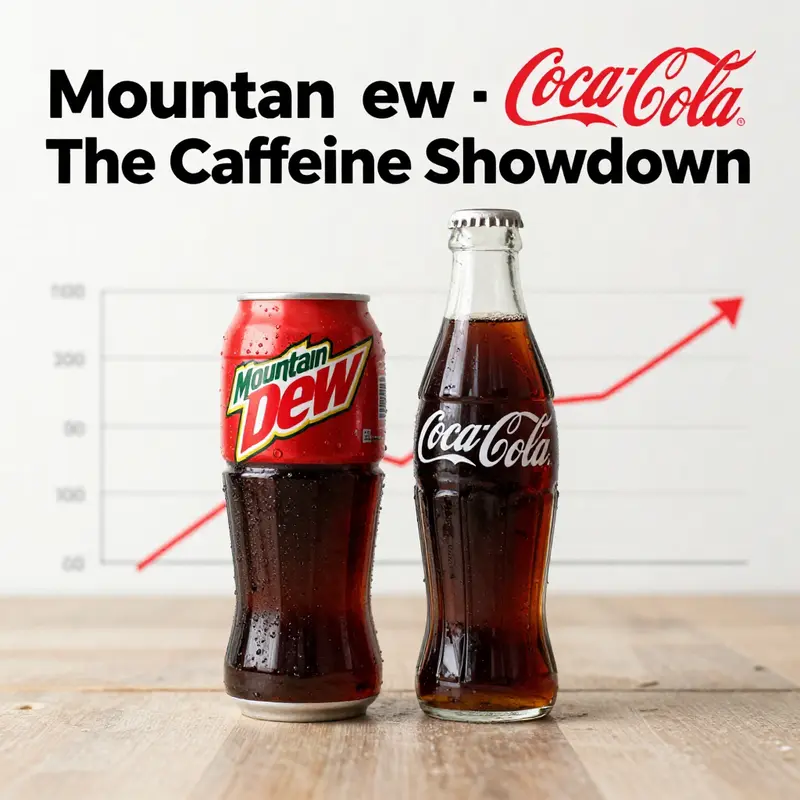
Across the soda aisles, two heavyweight brands occupy nearly every refrigerator door and grocery shelf, each speaking to a different kind of consumer choreography. One brand leans into a bold, citrus-forward energy narrative that aligns with sprinting, gaming marathons, and late-night pull-an-all-nighter sessions. The other leans into a timeless, classic refreshment story that fits into daily rituals, office breaks, and family gatherings. When we examine caffeine content as a lens, these stories converge and diverge in revealing ways. Mountain Dew, with its promise of immediate lift, carries a noticeably higher caffeine punch than Coca-Cola, which rails against the idea that a soda must be a modest pick-me-up rather than a reliable daily stimulant. The differences are not merely technical; they shape who gravitates toward each drink, when they reach for one, and how brands manage the evolving expectations around sugar, energy, and wellness in a crowded beverage landscape.
To ground this discussion in the numbers: a standard 12-ounce (about 355 milliliter) serving of Mountain Dew contains roughly 54 to 55 milligrams of caffeine. In contrast, Coca-Cola delivers about 34 milligrams per 12-ounce can. These figures place Mountain Dew on the higher end of caffeine among non-energy drinks, with Coke occupying a more middle-ground position in the broader arena of mainstream sodas. The difference—roughly 20 milligrams per serving—may seem small in isolation, but it translates into perceptible disparities in how alertness is experienced and how long that alertness persists after consumption. For consumers who are sensitive to caffeine or who rely on it for a midday lift, the distinction is meaningful. For casual drinkers or those who balance caffeine intake from multiple sources, the contrast becomes part of a larger calculus about daily consumption and sleep patterns. The data anchor this narrative in a real, measurable effect rather than a marketing slogan; it is this measurable differential that has helped Mountain Dew carve out a distinctive identity as a high-caffeine option within a landscape dominated by mainstream colas.
The branding implications of caffeine content are not incidental. Mountain Dew has long associated its flavor with boldness, high-energy activity, and a culture of fast-paced engagement—think extreme sports, outdoor adrenaline, and gaming communities where stamina and focus are valued. The higher caffeine content reinforces that association, making the drink feel like a practical ally for periods of intense activity or extended screen time. Coca-Cola, by contrast, anchors its appeal in consistency, reliability, and everyday refreshment. The brand’s positioning as a staple, widely accessible beverage ensures broad appeal across age groups and occasions, from quick thirst-quenching moments to casual social settings. The lower caffeine level aligns with a more generalist usage pattern, where the drink functions as a comforting, familiar option rather than a targeted energy tool. Taken together, the caffeine differential helps explain why Mountain Dew tends to attract a specific subset of consumers who seek a quick and dependable pick-me-up, while Coca-Cola sustains deep, pervasively integrated penetration across markets and demographics.
The consumption patterns that emerge from these brands also reveal how caffeine content interacts with broader lifestyle choices. Mountain Dew’s audience skews younger and more engaged with subcultures that prize speed, competition, and rapid feedback loops. For many in these circles, caffeine is not just a chemical signal; it is a social cue, a ritual that marks the start of a gaming session, a rallying point before a team event, or a convenient answer to the fatigue that accompanies long hours of practice or play. The higher caffeine content bolsters the perception of Mountain Dew as an “energy partner” rather than a mere beverage. Coca-Cola, meanwhile, remains deeply embedded in diverse daily routines. Its lower caffeine envelope makes it a flexible option for school days, family meals, work breaks, and casual socializing where stimulants are not the central appeal. This broader usage pattern does not erase Mountain Dew’s appeal among energy-focused consumers; rather, it highlights how each brand negotiates attention in a market where caffeine is a defining currency and where consumer preferences can be as diverse as the populations that purchase them.
Beyond caffeine, the two brands also navigate a shared concern among modern wellness-conscious consumers: the health implications of sugar and stimulant intake. The sugar content of classic Mountain Dew and Coca-Cola has long been a focal point for critics and health advocates, and it has driven a noticeable shift toward variants such as Diet Mountain Dew and Coke Zero. These products attempt to preserve the flavor and brand identity while offering reduced or zero calories, a move that partially neutralizes some consumer anxieties about sugar while preserving the caffeine profile that loyal users rely on. The trend toward low-sugar or no-sugar options intersects with caffeine considerations in nuanced ways. For some, a zero-sugar option with high caffeine may seem like a practical alternative to sugar-lweetened choices; for others, any stimulant in a non-nutritive beverage triggers concerns about health and sleep quality. Brands have responded by increasing labeling transparency, providing clearer nutrition panels, and foregrounding the idea that caffeine content is a factor in choosing a product for a given moment. In this way, the market is evolving not only to meet taste preferences but also to address the cognitive load of choosing a beverage in a world where caffeine and calories are closely watched metrics.
The broader market dynamics also show how consumer demand for information and control shapes product development. When people want to compare caffeine content across beverages, straightforward numbers matter. Mountain Dew’s 54 milligrams per can sits at the high end of non-energy sodas, a fact that can drive a particular consumer segment toward it for immediate alertness. Coca-Cola’s 34 milligrams offers a more moderate stimulant, fitting seamlessly into everyday consumption alongside a host of other caffeinated sources—coffee, tea, energy drinks, and supplemental products—without leaning too heavily on any single moment of activation. The result is a market where different rhythms coexist: some consumers plan their caffeine intake around peak performance tasks, while others prefer a steady, unobtrusive lift integrated into ordinary routines.
In the conversation about consumption, it is important to acknowledge variation within the brands themselves. While Mountain Dew maintains a reputation for higher caffeine levels, it is not a monolith. Diet Mountain Dew, for example, shares similar caffeine content with its sugared counterpart, maintaining the energy-boosting profile while offering a lower-calorie option. Coca-Cola likewise features variants such as Coke Zero that carry caffeine, sometimes at levels comparable to their sugared siblings, depending on formulation changes over time. These nuances complicate simple narratives about “high caffeine” versus “low caffeine” and underscore a central point: caffeine content is a function of formulation, target audience, and regulatory labeling, not a fixed attribute independent of context. The brand teams carefully calibrate caffeine as part of a broader product strategy—balancing taste, energy, health considerations, and marketing positioning in ways that appeal to distinct consumer tribes without sacrificing core brand equity.
The data landscape itself reveals an interesting tapestry. Across carbonated beverages, caffeine content varies widely, with some competitive options reaching up toward 48 milligrams per serving in certain formulations. Yet Mountain Dew’s standard benchmark—roughly 54 milligrams per 12-ounce can—places it distinctly above many peers in the non-energy soda category. This positioning reinforces the perception of Mountain Dew as the more energizing option, while Coca-Cola’s comparatively restrained caffeine load solidifies its role as a versatile, everyday refreshment. The interplay between flavor appeal and stimulant strength helps illuminate why some shoppers are drawn to one brand over the other in a given shopping trip, while others may choose based on context—an office break, a late-night study session, or a social gathering where brand familiarity and taste trump concerns about caffeine intensity.
These patterns also reflect how consumer behavior adapts to increased scrutiny of health and wellness. With growing awareness about sugar intake, both brands have pursued reformulations and new variants to meet demand for lower-sugar offerings. Yet caffeine remains a constant axis of differentiation. The market’s response has been to preserve the distinctive caffeine profiles of each brand while offering alternatives that reduce sugar or alter flavor dynamics. This balancing act creates a nuanced consumption landscape in which a consumer might choose Mountain Dew for a high-energy sprint when time is of the essence, and Coca-Cola for a more relaxed, everyday moment when the goal is simple refreshment rather than peak performance. In this sense, caffeine content becomes not only a statistical fact but a storytelling device—one that helps explain shifting purchasing patterns and the evolving etiquette around when and how much caffeine is appropriate in different moments of daily life.
A crucial takeaway from these trends is that consumer preference is rarely driven by caffeine alone. The appeal of Mountain Dew is amplified by its flavor profile, cultural associations, and the social circuitry around gaming and extreme sports. Coca-Cola’s charm rests on its breadth, reliability, and compatibility with a wide range of meals and activities. Caffeine content acts as a reinforcing signal that aligns with these broader narratives. When shoppers evaluate their options, they weigh taste, energy needs, health considerations, brand loyalty, and situational context. In other words, caffeine content is a meaningful constraint and an opportunity signal rolled into one: a constraint because it narrows the practical choices for certain tasks, and an opportunity because it invites brands to innovate in taste, packaging, and messaging that speak to evolving consumer values.
For readers who want a quick frame for how these patterns fit into the larger literature on caffeine in beverages, the comparison between Mountain Dew and Coca-Cola offers a compact case study in energy signaling, brand distinctiveness, and consumer behavior. It shows how a higher caffeine content can anchor a persona—the high-energy enthusiast—without compromising the broad reach of a mainstream product. It also shows how a lower caffeine profile can sustain broad appeal across different life stages and circumstances, ensuring that a popular legacy brand remains a reliable daily option even as health conversations push for moderation. The dynamics at play here are not just about caffeine as a chemical ingredient; they are about how caffeine content helps shape the social meaning of a beverage in a world where energy, attention, and timing are increasingly valuable resources. The ongoing conversation about labeling, health implications, and product transparency will continue to influence both brand narratives and consumer choices as companies calibrate caffeine in response to shifting expectations.
For readers seeking a concise reference that ties this discussion to the actual content of caffeine in these beverages, a reliable source that surveys energy drinks and soda can be consulted. This external resource provides a broader context for how caffeine in carbonated beverages is viewed from a public health and data perspective. CDC – Energy Drinks and Soda.
If you want to explore a focused comparison that complements the narrative above, you can also dive into targeted discussions that detail the caffeine content of Mountain Dew specifically. This internal resource helps connect the dots between numbers and consumer perception, offering a more granular look at how formulation choices translate into real-world consumption patterns. caffeine-content-mt-dew.
In sum, the Mountain Dew versus Coca-Cola dialogue on caffeine is less a simple competition over a single metric than a reflection of how brands encode energy into taste, culture, and daily life. The higher caffeine level of Mountain Dew reinforces its status as an energy-forward option for a subset of consumers who prize speed, focus, or extended activity windows. Coca-Cola’s more moderate caffeine load supports a broader, more flexible consumption pattern that suits countless daily moments. Together, they illuminate a market in which caffeine content acts as a persuasive signal, guiding choices in context and time as much as it does in dosage. As consumer expectations continue to shift toward transparency, wellness, and personalized caffeine experience, both brands will likely respond with further refinements that preserve distinct identities while inviting new audiences to discover how caffeine can be woven into everyday life with intention and nuance.
Final thoughts
In summary, the debate between Mountain Dew and Coca-Cola extends beyond taste preferences and brand loyalties; it encompasses critical factors such as caffeine content and health implications. Business owners must not only understand these differences but also be aware of consumer preferences and the evolving market trends. By staying informed, businesses can tailor their offerings to meet the demands of health-conscious consumers while maximizing their competitive edge in the beverage industry.