
In the competitive landscape of soft drinks, understanding caffeine content is crucial for business owners aiming to meet customer demands. This article dives into the caffeine content of Mountain Dew and Dr Pepper, exploring how each beverage can influence health outcomes, marketing approaches, and consumer habits. The following chapters will provide an in-depth analysis starting with a direct comparison of caffeine levels, followed by health implications of consumption, effective marketing strategies related to caffeine sourcing, and finally consumer preferences that drive sales. By the end of this exploration, business owners will gain valuable insights into how caffeine content impacts their product offerings and customer satisfaction.
Rising Buzz: A Cohesive Look at Caffeine Levels in Mountain Dew and Dr Pepper
Caffeine functions as a quiet conductor in the everyday ritual of drinking, nudging attention awake and shaping mood with the soft pull of a familiar spark. In this chapter, we move beyond taste and branding to map the caffeine landscape that underpins two of the most recognizable carbonated beverages in many markets. The numbers are small on a single can, but when you multiply by a daily routine, they reveal a pattern that influences choices, energy cycles, and even how people pace their days. The comparison between Mountain Dew and Dr Pepper—two stalwarts of the cola and citrus categories—centers on a simple question: how much caffeine is actually in each, per standard serving, and what does that mean for regular consumers who juggle work, study, workouts, and late-night screens?
Per standard serving, which in this context means 12 fluid ounces (about 355 milliliters), the caffeine story is straightforward in its arithmetic but nuanced in its implications. Mountain Dew Original has long been associated with a higher caffeine punch. Contemporary reference values place Mountain Dew Original around 54 to 55 milligrams per 12-ounce serving. This places the product in the higher tier relative to most mainstream carbonated beverages, where caffeine counts often cluster in the 30 to 45 milligram range. For consumers seeking a more pronounced caffeine lift without turning to dedicated energy drinks, Mountain Dew’s profile suggests a reliable, mid-morning, mid-afternoon, or pre-workout option that delivers a quick jolt without venturing into the territory of high-caffeine, all-day energy products.
The scene is more complex when we consider the brand’s line-up. Several Mountain Dew variants—Code Red and Live Wire among them—tend to retain a caffeine presence in a similar range to the Original, sometimes dipping slightly lower or nudging higher depending on formulation updates or regional adjustments. While exact numbers can vary by batch and market, the general takeaway remains intact: Mountain Dew’s caffeine footprint remains comparatively robust within the citrus-flavored carbonated segment. This consistency across lines contributes to a brand identity that readers often describe as “high-energy” or “boosting,” a perception reinforced by marketing and the sensory kick of the beverage’s citrus bite.
Dr Pepper presents a different baseline. In the classic formulation, the caffeine content per 12-ounce serving is about 42.6 milligrams. This figure sits below Mountain Dew’s level, casting Dr Pepper as a milder option in the caffeine spectrum while still providing a noticeable lift relative to non-caffeinated soft drinks. An interesting twist emerges with the Diet version: Diet Dr Pepper clocks in at roughly 44.1 milligrams per 12-ounce serving, a slight uptick compared with the standard Dr Pepper. The reason for the Diet version’s slightly higher caffeine count is not a dramatic shift in formulation but a reflection of the way sugar substitutes, flavor balance, and caffeine add-ins interact during production. In practice, the Diet variant narrows the gap just enough to matter for caffeine-conscious consumers who are weighing the trade-offs between caloric content and stimulants.
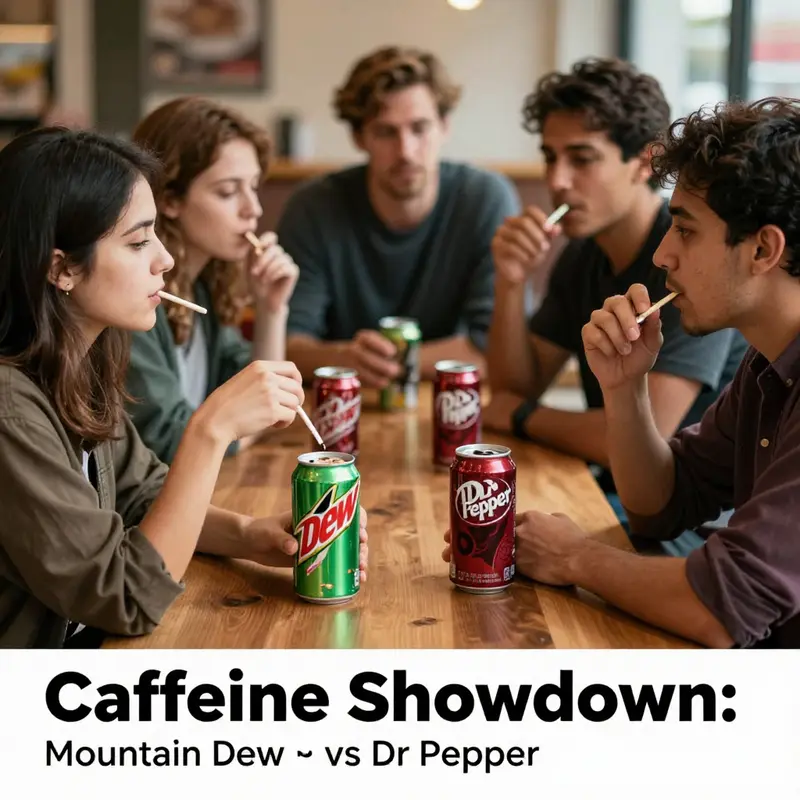
To place these numbers in a practical frame, the difference between Mountain Dew and Dr Pepper in a single 12-ounce can is about 11 to 12 milligrams. Fractionally, that translates to roughly a 25 percent higher caffeine content in Mountain Dew compared with Dr Pepper, acknowledging that the exact delta can shift with batch, flavor, and regional formula tweaks. Across a typical day, if a person drinks one can of each, the cumulative caffeine intake from these two beverages would reflect that proportional gap. For a consumer who switches from one to the other, the difference is noticeable but not overwhelming, especially when other caffeine sources—coffee, tea, chocolate, or certain medicines—are part of the daily mix.
This contrast invites a broader reflection on how caffeine figures into the routines of people with diverse caffeine tolerances and goals. Some seek a clean lift to power through a meeting, a workout, or a study session. Others aim to limit jitteriness, sleep disruption, or the perceived “crash” that sometimes follows a caffeine spike. In those contexts, the higher baseline in Mountain Dew offers a reliable tool for a quicker, broader alertness, while Dr Pepper’s more moderate caffeine load provides a gentler, steadier line of influence. The Diet version, with its slightly elevated caffeine, can blur that distinction further, depending on the consumer’s sensitivity to both caffeine and artificial sweeteners.
Understanding these numbers also means acknowledging the limits of a single metric. Caffeine content is a key variable, but it sits within a constellation of factors that shape a beverage’s real-world effect. The sugar load, for example, interacts with caffeine to alter energy trajectories. A high-sugar beverage can deliver a rapid glucose spike, which may amplify perceived energy in the short term before a subsequent dip or “crash.” The net stimulant effect, therefore, depends less on caffeine in isolation and more on how caffeine, sugar, hydration status, and individual metabolic tempo synchronize in a given moment. For people who routinely monitor their caffeine intake due to sleep considerations, anxiety, or medication interactions, these subtleties become essential when choosing between a higher-caffeine option and a more moderate one.
The data cited here reflect a synthesis of measured caffeine contents drawn from established research. A pivotal reference, often cited in the scholarly and consumer-education spheres, is the study that analyzed caffeine content in prepackaged national-brand and private-label carbonated beverages. That body of work provides a framework for understanding why some beverages land in a higher caffeine tier, while others rest closer to the middle. In practice, this research helps explain why a brand that is positioned as energetic can deliver a stronger kick per serving, and why others maintain a milder profile that is more compatible with a broader audience. For readers who want a deeper, data-backed snapshot of the caffeine landscape across popular beverages, there is a concise, authoritative source that documents these values and situates them within the broader category of carbonated drinks.
The practical upshot for consumers is straightforward: when you reach for a can, you’re not just choosing a flavor profile or a brand story—you’re selecting a stimulant strength that will interact with your body’s rhythm. If you are aiming for a higher caffeine intake for a particular task, Mountain Dew’s profile makes it a natural candidate within the citrus-flavored family. If you prefer a milder lift or wish to keep caffeine slightly under your daily ceiling, Dr Pepper, including its Diet variant, offers a more moderate option that, for some, blends more seamlessly with daily routines. In either case, the choice becomes a small but meaningful lever in a complex system of daily energy management.
To explore the topic further from a consumer-focused lens, you can consider a deeper dive into the caffeine content of Mountain Dew as a standalone reference point. For a concise, focused look at Mountain Dew’s caffeine footprint, see the analysis dedicated to the caffeine content of Mountain Dew. This internal resource highlights the numeric details and helps readers correlate the general patterns described here with the specific product line they actually reach for in the store or on the shelf. Linking to such a resource can ground intuition in measurable data and reduce the guesswork that sometimes accompanies quick beverage choices.
In evaluating these data points, it is also valuable to keep in view the broader context of serving size. The 12-ounce standard is a convenient convention for comparing beverages that come in similar can or bottle sizes. Some markets or product lines may offer different serving sizes, which will scale caffeine counts accordingly. A 16-ounce serving, for example, would multiply the baseline by about 1.33, amplifying the absolute difference even further. Conversely, a smaller serving would compress the delta, potentially narrowing the gap that a consumer might perceive when ordering online or at a cafe. In retail settings where conversions between cans and bottles vary, a quick mental calculation can prevent misinterpretation of a product’s stimulant potential.
The narrative about caffeine content in these beverages is not a verdict about health or virtue but a tool for informed choice. People who are trying to manage caffeine intake for sleep, for anxiety management, or for athletic performance often benefit from mapping out all sources in a single day. When Mountain Dew’s higher caffeine count is paired with other caffeine-rich items, the total can push past a comfortable threshold for some individuals. Conversely, Dr Pepper’s relatively lower baseline may align better with those who want a steadier energy profile without aggressive spikes. In this sense, the numbers become practical levers rather than abstract figures.
The landscape continues to evolve as formulations shift and manufacturers respond to consumer preferences and regulatory landscapes. While the cited values provide a stable snapshot, the larger takeaway remains: caffeine content is a fundamental, measurable property that interacts with taste, texture, and marketing narratives to shape daily routines. Consumers who track their caffeine intake—whether for performance, sleep hygiene, or personal health reasons—will find it useful to rely on measured data for the beverages they consume regularly. The comparison between Mountain Dew and Dr Pepper, in light of this data, underscores that even within a familiar shelf of products, there is meaningful diversity in stimulant potential that can influence daily patterns in a subtle but real way.
For readers seeking a compact, focused reference, the internal link to the Mountain Dew caffeine discussion offers a concise point of reference while this chapter situates those numbers within the broader caffeine ecosystem. This approach helps connect the dots between numerical values and everyday decisions, turning a simple can into a small but practical piece of one’s energy management strategy. By understanding not just what the numbers are but how they play out in real life—across meals, workouts, late-night study sessions, and periods of rest—readers can approach caffeine with both curiosity and caution. The science of caffeine in everyday beverages continues to be a living conversation, and the comparison between these two iconic drinks is a helpful anchor for that ongoing exploration.
External reference for deeper study: https://www.ncbi.nlm.nih.gov/pmc/articles/PMC2094784/
Caffeinated Contrast: The Health Footprint of Mountain Dew and Dr Pepper
Caffeine sits at the crossroads of instant energy and daily habit, and few beverages make that crossroads as public as two iconic sodas. The caffeine you find in a can shapes not only how alert you feel in the minutes after a sip, but also how your body responds over days, weeks, and years when those sips become routines. In the landscape of mainstream carbonated drinks, Mountain Dew and Dr Pepper stand as emblematic opposites in flavor and marketing, yet they share a common mechanism: caffeine as a preparatory jolt, a chemical nudge that awakens the nervous system and then fades, leaving room for sleep to be disrupted if consumption becomes heavy or late in the day. The numbers, while they should not be treated as simple verdicts, are nonetheless informative. A standard 12-ounce can of Mountain Dew contains about 54 milligrams of caffeine, while a 12-ounce serving of Dr Pepper sits closer to the mid-40s—about 41 to 42.6 milligrams depending on the source. Those figures place Mountain Dew at the higher end of caffeine content among widely available non-energy drinks. They matter, not as a label of virtue or vice, but because caffeine interacts with other drink components in ways that amplify or dampen health risks depending on how often and how much one consumes.
To understand what those numbers mean in real life, it helps to map the chain from caffeine intake to bodily response. Caffeine acts quickly by blocking adenosine receptors in the brain, which reduces the sensation of fatigue and can improve attention and reaction time for a short window. But this pharmacology is dose-dependent and context-dependent. For most healthy adults, a moderate daily caffeine intake—up to about 300 to 400 milligrams spread over the day—does not pose a major health risk. The line blurs, however, when beverages with substantial caffeine content become part of a broader pattern: multiple servings, daily, and especially when those servings occur in the afternoon or evening. In that scenario, caffeine can contribute to sleep disturbances, which, in turn, affect mood, cognitive performance, and metabolic regulation. The evidence often points to a complex relationship with mood disorders. Some studies suggest caffeine use is associated with depressive symptoms in certain contexts, potentially mediated by withdrawal effects or sleep disruption rather than by caffeine itself. Anxiety, by contrast, shows less consistency across studies in terms of a direct, universal link to caffeine intake. Individual sensitivity varies, and genetic, metabolic, and behavioral factors shape how caffeine lands in any given person.
Yet caffeine does not arrive alone in these beverages. The sensory experience of Mountain Dew and Dr Pepper—its sweetness, acidity, and carbonation—works in tandem with caffeine to influence how the drink is metabolized and how it affects dental and metabolic health. In the same breath as caffeine, we must attend to acidity. Mountain Dew is distinctly acidic, with a pH around 3.3. That level is sufficient to erode tooth enamel upon contact, especially with repeated exposure. Acids in soda are not just one-dimensional villains; they break down minerals in enamel and create a more hospitable environment for enamel wear when combined with sticky, high-sugar formulations. Mountain Dew’s formulation also relies heavily on sugars—primarily sucrose in many varieties—feeding oral bacteria such as Streptococcus mutans. Those bacteria metabolize sugars to produce acids, extending the time teeth are exposed to acid and elevating the risk of both enamel erosion and decay over time. The acidity-plus-sugar duo creates a defensive landscape where dental health can be compromised with chronic, frequent consumption.
Dr Pepper, while caffeinated and carbonated, tends to present a different dental risk profile. Its caffeine content is still meaningful, but its acidity level is not as extreme as Mountain Dew’s in most formulations. The result is a less aggressive enamel challenge per sip, all else being equal. Of course, any phosphoric or citric acid present will contribute to enamel demineralization, and sugar content remains a crucial factor in feeding harmful bacteria. In the end, the dental health picture is a function of several variables: how often you drink, whether you sip across the day or binge in a single sitting, your oral hygiene habits, and your overall dietary pattern. For many people, a single can—whether of Mountain Dew or Dr Pepper—does not instantly undo years of dental care. For others, especially younger individuals with developing dentition and those who drink multiple serving sizes daily, the cumulative effect becomes more pronounced.
The metabolic implications weave a parallel thread through the caffeine-and-acidity narrative. Sugar-laden beverages can elevate fasting insulin and triglyceride levels when consumed regularly in place of nutrient-dense options. The fructose in some soda formulations can place additional strain on liver metabolism, potentially contributing to a spectrum of metabolic concerns over time, including insulin resistance and concerns related to hepatic fat accumulation. In Mountain Dew, the combination of higher caffeine content, substantial sugar, and robust acidity creates a triad that, when experienced repeatedly, can influence metabolic homeostasis in ways that deserve thoughtful consideration. Dr Pepper, with its slightly lower caffeine burden and typically different flavoring profile, may present a somewhat gentler metabolic load on a day-to-day basis, but it is still a sugar-containing, acidic beverage with similar long-term considerations if consumed in excess.
In practical terms, what does this mean for the everyday consumer who enjoys one or two sodas on occasion, and what does it imply for those who lean more heavily on these beverages for energy or taste throughout the day? The core recommendation remains prudence and moderation. Caffeine can be part of a healthy routine for many people, but it thrives on context. If caffeine intake approaches or exceeds three servings per day, the likelihood of sleep disruption, elevated daytime arousal, and mood fluctuation increases, particularly for sensitive individuals. Sleep disruption, in turn, can impair cognitive performance and metabolic control, contributing to a cycle of fatigue that prompts even more caffeine consumption. The correlation between caffeine use and depressive symptoms found in some research is not a universal rule; it is often linked to withdrawal or the broader pattern of consumption and sleep. Anxiety, while not uniformly linked to caffeine across all studies, remains a concern for those who are sensitive or already prone to anxious states, especially when caffeine is combined with high-sugar, highly acidic beverages.
The dental and metabolic narratives push the same conclusion from a different angle: the long arc matters. Frequent exposure to high acidity and high sugar is a well-documented risk factor for dental erosion and caries, while long-term metabolic stress from added sugars can contribute to insulin resistance and dyslipidemia. With Mountain Dew, the heightened acidity and sugar content amplify those risk factors relative to Dr Pepper, which tends to present a milder enamel challenge per sip because of its relatively lower acidity and caffeine content. But both beverages share a broader pattern—frequent intake of high-caffeine, high-sugar, and acidic drinks increases the odds of adverse health outcomes than would be seen with more moderate beverage choices or with water and unsweetened alternatives.
If the goal is to weigh these drinks within a broader health framework, it helps to think in terms of dietary context and personal health goals. For someone who studies the long-term implications of daily habits, limiting exposure to highly acidic liquids and minimizing added sugars across the day stands out as a prudent strategy. This is not a binary verdict about one beverage versus another; it is a call to recognize how caffeine interacts with acidity and sugar to shape health trajectories. In that sense, the comparison between Mountain Dew and Dr Pepper becomes less about which one is categorically “better” or “worse” and more about how each drink fits into a person’s overall pattern of caffeine use, dental care, and metabolic health.
A practical takeaway for readers who want a firmer footing in decision-making is multi-faceted. First, if you monitor caffeine intake, be mindful of the cumulative load. A single can of Mountain Dew provides about 54 mg of caffeine, and a can of Dr Pepper about 41 mg. If you drink multiple caffeinated beverages in a day, the total can quickly add up. Second, consider the acidity and sugar content when planning your day. If you are consuming these drinks, pairing them with meals rather than sipping on an empty stomach or late at night can moderate their impact on digestion and sleep. Third, protect dental health by limiting prolonged exposure to liquids with low pH and high sugar. Using a straw to minimize contact with teeth, followed by a rinse with water and timely brushing, can reduce enamel contact time. Fourth, for those concerned about liver health and metabolic risks, it may be wise to choose alternatives with lower sugar content, or to hydrate with water or other non-sugary, non-acidic options most of the time. Finally, individual differences matter. People with anxiety sensitivity, sleep disorders, or preexisting metabolic concerns should tailor their intake accordingly and seek professional guidance if needed.
The broader context of these considerations is clearer when we think of how caffeine, acidity, and sugar interact in everyday life. The higher caffeine content in Mountain Dew can offer a more noticeable quick lift, particularly for those who metabolize caffeine quickly or who use it in bursts around periods of activity. Dr Pepper’s somewhat lower caffeine load, along with its flavor profile, may appeal to those who want a milder stimulant effect while still enjoying a familiar taste. Either way, the underlying health implications track closely with the dietary patterns that surround daily consumption. The conversation, then, extends beyond caffeine alone and into a broader awareness of how flavor, energy, and health intersect in everyday choices.
As researchers and health communicators continue to examine the nuanced effects of caffeine in popular beverages, readers benefit from focusing on patterns rather than isolated sips. Moderation, timing, and overall dietary context emerge as the most reliable levers for managing risk. For those seeking additional detail on the health risks associated with Mountain Dew’s ingredients and the dental concerns they raise, further reading can illuminate the constellation of factors at play and help readers weigh options with greater nuance. A relevant external resource offers a thorough synthesis of dental and metabolic considerations tied to high-acid, high-sugar beverages and can be consulted for a deeper dive into the topic: Is Mountain Dew Bad For You? Health Risks & Dental Concerns.
For further exploration on caffeine content specifics, readers may also find value in internal discussions that dissect the caffeine profile of popular beverages and how those profiles translate into real-world effects. A concise reference point on the caffeine content of a well-known citrus-forward beverage is available here: caffeine content of Mountain Dew. This resource helps situate the numbers cited above within a broader landscape of caffeinated drinks, allowing readers to compare across different brands and formulations with a consistent framework. By pairing such internal references with external health-focused analyses, readers gain a balanced view that informs both personal choices and public understanding.
In sum, the tale of Mountain Dew versus Dr Pepper is not merely a tally of milligrams. It is a study in how a single stimulant interacts with acidity, sugar, and personal health contexts to influence daily living and long-term well-being. The higher caffeine content of Mountain Dew offers a stronger immediate push, but at the potential cost of greater dental wear and metabolic load when consumed frequently alongside high-sugar content. Dr Pepper presents a somewhat gentler combination, with less caffeine and a different acidity dynamic, which may translate into a different risk profile over time. Neither beverage is inherently dangerous in moderation, but both embody a pattern of consumption that—if repeated across the weeks and months—can shape dental, hepatic, and metabolic health in meaningful ways. The choice, then, becomes part of a larger conversation about how individuals optimize energy, taste, and health in everyday routines, and how small shifts in beverage habits can yield noticeable differences in the years ahead.
External reference for further reading: Is Mountain Dew Bad For You? Health Risks & Dental Concerns (Healthline).
Caffeine as Compass: Mapping Flavor, Energy, and Brand Narrative for Mountain Dew and Dr Pepper
Two emblematic American sodas sit on opposite ends of a spectrum shaped as much by caffeine as by culture. On one side stands a citrus-forward, high-energy icon whose caffeine content has long been a centerpiece of its identity. On the other side sits a timeless, multi-flavor blend whose appeal rests as much on heritage and taste as on any stimulant effect. In this chapter, the focus is not merely on numbers, but on how caffeine sourcing and formulation intersect with brand storytelling to guide product strategy, consumer perception, and market position. When we compare the two through the lens of caffeine, we see a broader arc about how beverage brands channel chemistry into messaging, supply chains, and audience connection. The basic data are straightforward: roughly 54 milligrams of caffeine per 12-ounce can in the original formula for the citrusy, high-energy brand, versus about 42.6 milligrams per 12-ounce serving for its more heritage-driven competitor. These figures, drawn from long-running industry analysis, may seem like mere trivia, yet they anchor a larger debate about how caffeine functions as a product attribute and a marketing lever. The higher caffeine level is not simply a boost; it is a signal to a particular consumer cohort—young adults, late-night study sessions, and performance-minded skiers of culture who equate vitality with bold, rebellious branding. The other brand deploys caffeine as a more subtle companion to flavor variety. Its leadership tends to emphasize flavor identity, balance, and nostalgia, inviting a broad audience from teens to grandparents to enjoy a familiar, comforting taste while accepting a lighter caffeine profile. The juxtaposition invites a deeper dive into three intertwined threads: caffeine sourcing and formulation, brand positioning and audience targeting, and the strategic use of product variants to extend reach without eroding core identity. In the modern market, these threads are no longer separate streams but a braided approach in which every experimental flavor, every packaging tweak, and every line extension is checked against a caffeine-centric logic that can either amplify or dilute a brand’s personality. A practical example helps anchor this discussion: a high-caffeine line marketed around energy and action versus a sequence of flavor-forward iterations designed to broaden appeal without primarily signaling stimulation. While such variants have blurred boundaries in real-world practice, understanding their roots illuminates why one brand leans into energy culture while the other leans into taste and tradition. For readers seeking a concrete anchor on caffeine levels, see the internal post on caffeine content in Mountain Dew, which provides a detailed look at how specific formulations translate to consumer perception and usage occasions. For a direct link, consult this internal resource: Caffeine content in Mountain Dew. This reference underscores how even a single product’s caffeine profile can ripple through a campaign’s messaging, sales channels, and consumer expectations. The influence of caffeine goes beyond the can; it informs how a brand negotiates its place in a crowded aisle and how it guides procurement decisions that balance taste, energy, and regulatory considerations across markets. If we map the sourcing and formulation choices to brand logic, a clear pattern emerges. The citrus, high-energy brand relies on a centralized formulation process that integrates caffeine as a core differentiator. This approach is reinforced by a broader product ecosystem that includes variants explicitly designed to heighten energy perception, such as lines that combine carbonation with higher caffeine doses and functional ingredients like B-vitamins. The strategic use of caffeine thus becomes a brand attribute rather than a mere ingredient. It is a signal that the product is designed not only to refresh but to power through activities that demand alertness and quick bursts of stamina. In contrast, the more heritage-driven brand treats caffeine as a supporting attribute rather than a primary differentiator. Its core story emphasizes taste, history, and the breadth of flavor possibilities, with caffeine presented as a baseline stimulant that satisfies routine refreshment needs without dominating the narrative. This stance helps preserve broad appeal across generations and occasions, from casual refreshment during family meals to social sharing in community events. The marketing machine around this brand thus leans heavily on storytelling built around flavor profiles, iconic color palettes, and multi-generational memory. The caffeine variable remains in the background, present enough to accommodate adults who crave a gentle lift, yet never so prominent that it narrows the brand’s audience or constrains flavor experimentation. These positioning choices echo broader corporate strategies rooted in the parent companies’ brand portfolios and distribution ecosystems. On the one hand, the higher-energy brand operates within a system that prizes speed, digital engagement, and youth-centric culture. Its campaigns thrive on bold visuals, social media resonance, and partnerships that signal risk-taking and adventure. The messaging often centers on “powers you through” moments, aligning with extreme sports sponsorships, online challenges, and rapid iteration in flavor and format. On the other hand, the heritage-focused brand works within a portfolio that prizes consistency, reliability, and broad retail reach. Its channels include traditional advertising, durable partnerships with sports leagues and fan communities, and steady seasonal releases that reaffirm a sense of continuity. This divergence in campaigns—digital-forward energy narratives versus flavor-centric nostalgia—reflects two distinct approaches to building consumer trust and loyalty. Yet both strategies share a common thread: caffeine is a tool for shaping consumer expectations, not merely a sensory attribute. The supply chain, too, maps onto these strategies. In the higher-caffeine model, the sourcing strategy emphasizes consistency and scale, with caffeine embedded in the formula at the center of manufacturing operations. Global suppliers are coordinated to deliver uniform performance in every market, ensuring that a consumer’s experience remains stable whether they are in a coastal city or a mountain town. The emphasis is on reliability and speed, enabling rapid product iterations and fast time-to-market for new energy variants. The procurement logic integrates close monitoring of regulatory limits, labeling requirements, and cross-border caffeine standards to maintain compliance while sustaining the bold brand proposition. In the heritage-centered model, caffeine management is more fluid but still deliberate. Caffeine content is curated to fit a broad consumer expectation of “balanced refreshment.” The supply chain supports a wider portfolio of flavors and formats, including traditional standbys and occasional limited editions that test new taste territories. Because caffeine is not the primary differentiator, the emphasis in procurement is on stable supplier relationships, flavor chemistry, and the ability to scale flavors in line with consumer demand across regions. This approach minimizes risk to brand storytelling while preserving a flexible backbone capable of accommodating seasonal shifts and regional preferences. The consumer experience, of course, is the ultimate measure of success. Young adults gravitate toward products that feel current and energetic, and the higher-caffeine pathway speaks to this impulse by promising efficiency through a familiar, exhilarating taste. The messaging that accompanies it often translates into active, shareable moments: a late-night study session, a gaming streak, or an outdoor adventure where alertness is part of the thrill. In practice, this means campaigns built around performance cues, visual intensity, and social proof from influencers who epitomize speed and risk-taking. The effect is not merely a caffeine buzz; it is an association between the beverage and a lifestyle that prizes immediacy, challenge, and boundary-pushing experiences. Conversely, the flavor-led brand appeals to a wider social spectrum by offering familiar, comforting, and sometimes whimsical flavor journeys. The narrative leans into memory, social rituals, and the simple pleasure of a well-balanced taste. Marketing here cultivates trust through consistency, reliability, and a sense of belonging—whether that means a game-day ritual, a family picnic, or a shared moment at a community event. The caffeine element remains present but understated, allowing flavor complexity, packaging variety, and cultural resonance to lead. These dual tracks illustrate a broader industry dynamic: caffeine content can anchor a brand’s core promise or fade into the backdrop as a secondary signal. For marketers and procurement teams, the key insight is not to choose one path over the other but to recognize how caffeine strategy aligns with the intended consumer relationship and the channel mix. In an era of data-driven product development, the most successful efforts blend quantitative signals with qualitative storytelling. PepsiCo’s innovation ecosystem, for instance, has emphasized data-driven flavor development, channel testing, and consumer feedback loops that integrate real-time social sentiment, regional sales, and focus groups. The aim is to anticipate shifting tastes and energy needs without sacrificing the brand’s soul. A modern practice involves treating caffeine not merely as a dose but as a design parameter—something that can be tuned to suit different occasions, audiences, and moments in the consumer day. It also means recognizing when to lean into caffeine as a differentiator and when to let flavor, heritage, or lifestyle storytelling take the lead. This balance is not merely a marketing trick; it is a reflection of how brands evolve with their audiences while navigating regulatory landscapes, health considerations, and evolving consumer expectations around caffeine consumption. The narrative also extends into how products are marketed across channels. Digital campaigns that emphasize energy and action resonate with younger demographics who consume media through short-form video, livestreams, and interactive challenges. Traditional campaigns, with their focus on heritage, flavor diversity, and cross-generational appeal, reach broad audiences who value familiarity and trust. The procurement and manufacturing teams, meanwhile, must support both visions without compromising safety, quality, or consistency. That means maintaining robust supplier governance, rigorous quality-control protocols, and adaptive production lines able to switch between high-energy variants and more flavor-centric offerings with minimal downtime. The result is a dynamic market position in which caffeine serves not just as a chemical property, but as a strategic lever that intersects with design, storytelling, and consumer relationships. For those who want to explore the caffeine landscape in more depth, the external industry resource catalog offers a window into how major beverage brands invest in innovation and product development: https://www.pepsico.com/en/innovation. This portal illustrates how large beverage companies marshal research, consumer insights, and cross-functional collaboration to push the boundaries of taste, energy, and brand storytelling while navigating a landscape of evolving regulations and consumer preferences. In sum, caffeine sourcing and brand positioning illuminate a larger truth about modern beverages: ingredients are never purely technical; they are narrative instruments. When a brand chooses to elevate caffeine, it signals a particular lifestyle and set of expectations to consumers. When it opts for a more flavor- and heritage-driven path, it invites a broader audience to join a story that feels timeless. Both strategies can coexist within a single corporate family, provided they are coordinated with discipline, transparency, and an eye toward the evolving habits of a diverse global audience. As the market continues to demand customization, transparency, and responsible consumption, the future may see even more nuanced approaches to caffeine—where not just the amount, but the sourcing ethics, regulatory compliance, and consumer education, become integral parts of the brand promise. The conversation around caffeine, taste, and brand identity is unlikely to narrow. Instead, it will widen, giving manufacturers and marketers new levers to pull as they craft beverages that energize, delight, and connect across generations. As readers move from this chapter toward the next, they will see how flavor diversification, packaging innovation, and channel strategy further complicate the caffeine story, reinforcing the idea that even a simple can of soda carries a complex set of choices about energy, memory, and meaning.
null
null
Final thoughts
Through this in-depth analysis of Mountain Dew and Dr Pepper’s caffeine content, health implications, marketing strategies, and consumer preferences, business owners can make informed decisions that align their product offerings with evolving consumer tastes. A clear understanding of how caffeine impacts both health and marketing can lead to better engagement strategies, ensuring products resonate with the audience’s needs. Emphasizing caffeine levels in marketing may attract health-conscious consumers and caffeine enthusiasts alike.