

Caffeine is a driving force behind many beverage choices, and Mountain Dew is no exception. As a beverage that has carved out a significant share of the market, understanding the caffeine content in its classic and revised versions is crucial for business owners involved in retail or food service. This article delves into the caffeine levels of Mountain Dew products, comparing various flavors and formulations. Further, it will evaluate the potential health implications of caffeine consumption, helping business proprietors better inform customers and make educated decisions about product offerings.
Beyond the Citrus Kick: Unpacking the Caffeine Content and Its Real-World Implications in Classic Mountain Dew
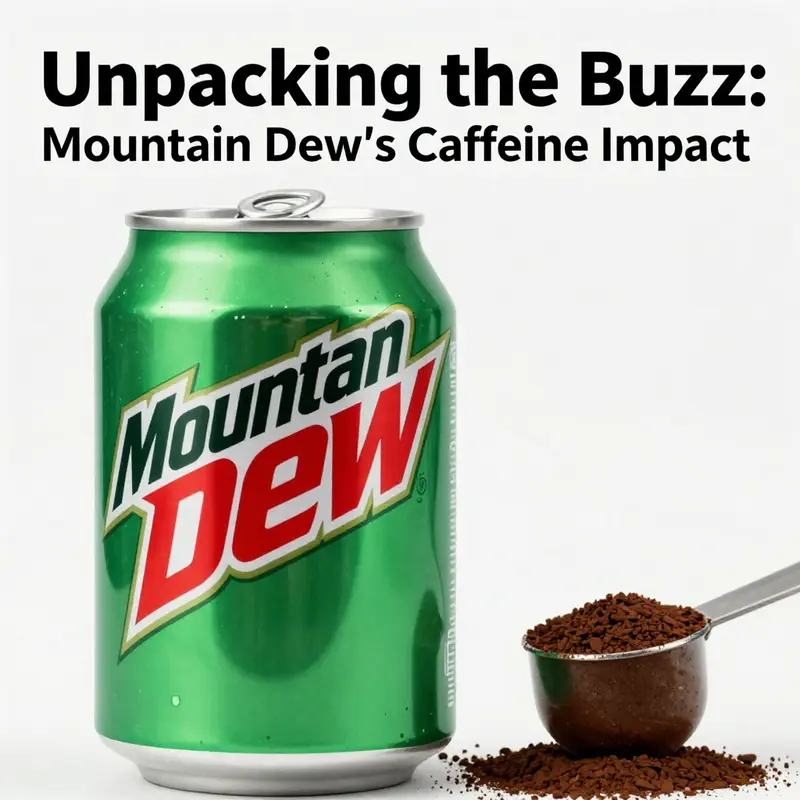
The scent of citrus and the sparkle of carbonation carry more than a refreshing sting; they carry a specific chemical profile, one that has fueled conversations about energy, focus, and daily routines for decades. When people reach for a can that bursts with tang and fizz, they are not just chasing a flavor. They are, consciously or not, selecting a dose of caffeine—an active compound that nudges wakefulness, sharpens attention, and can alter how long a person can stay engaged with a task, a game, or a long drive. The exact caffeine content in Classic Mountain Dew, the drink many associate with its bold, lemon-lime zing, helps anchor a larger discussion about how much caffeine is in popular soft drinks and how that amount translates into daily intake. Recent nutritional data places the caffeine content of a standard 12-ounce serving at a little over fifty milligrams. In the most commonly cited figures, a 12-ounce can contains about 54 milligrams of caffeine, a number that aligns with most official nutrition panels and the beverage’s own labeling expectations. It is a precise figure in practice, yet a single number that represents more than a single moment of consumption. It reveals how a beverage aimed at offering an energizing lift balances flavor and function in a landscape crowded with caffeinated options. The difference between 54 and 55 milligrams may seem minute, but it is a reminder that measurement in the real world is rarely perfect. Still, the consensus across reputable sources is clear enough: a classic can of this citrus-forward soda sits in the mid-50 milligram range, enough to contribute meaningfully to daily caffeine totals without crossing into the territory of most energy beverages that are designed to deliver a stronger jolt. This balance—strong enough to make a noticeable difference in alertness, yet not so overwhelming that it upends a typical daily routine—has helped cement the drink’s reputation as a steady, dependable source of a mild caffeine boost paired with a vivid, unmistakable flavor profile.
For readers who want the exact figure anchored to a widely acknowledged reference, the standard 12-ounce can is frequently described as containing around 54 milligrams of caffeine. This is not a contradiction to the sometimes-quoted 55 milligrams found in other sources. Rather, it reflects the kind of small numerical variances that creep into nutritional labeling and mass production. In practice, the difference is negligible for most consumers unless someone is carefully tracking caffeine intake down to the milligram or trying to compare across many brands. When the same beverage is consumed in a larger can or bottle, or when a sugar-free variant is considered, the caffeine story begins to branch into a more nuanced map of caffeine content, one that includes measurement realities, formulation choices, and packaging formats. The mid-50s milligram figure remains a reliable baseline for the classic option and serves as the anchor for broader discussions about how much caffeine one can expect from a single serving without delving into the higher territory reserved for energy-forward formulations.
The way caffeine is perceived in this context goes beyond the abstract science. Many consumers report that the boost from a familiar can is steady rather than explosive. It is a lift that can complement the drink’s sharp acidity and its sweet, citrus-forward taste. The effect is not just about staying awake; it is about maintaining a certain level of mental presence—being able to focus on a screen, a playlist, or a conversation for a longer stretch of time. In the daily grind, that kind of cognitive aroma matters as much as flavor. The taste of the beverage, with its characteristic tang, seems to prime the palate for the sense of immediate energy that caffeine can provide. The synergy between taste and stimulant can reinforce habitual consumption. People learn to anticipate the way a particular flavor pairs with a predictable jolt, and that expectation can become a part of how they plan their day. When a consumer plates this preference alongside a set of personal goals—finishing a project, powering through a study session, or sustaining a long drive—the caffeine content on the label takes on a practical meaning beyond mere numbers: it becomes a tool, one applied in measured ways to support a routine.
Yet caffeine content is only one axis in a more complex landscape. A 12-ounce serving of the classic formulation sits within a broader family that includes variations with different caffeine levels, flavors, and formulations. A high-caffeine variant in the same line is available, designed for consumers who want a stronger dose per serving. In that product family, caffeine content is higher, typically around 90 milligrams per standard bottle, and it is paired with other formulary choices that emphasize energy and alertness. This contrast—between a standard can in the mid-50s and a larger, high-caffeine option approaching the 90-milligram mark—illustrates how brands engineer energy in multiple ways. The design intention is not simply to create a more intense product; it is to offer a spectrum that accommodates different tastes for intensity, consumption contexts, and caffeine tolerance. The presence of multiple formulations within the same line also invites consumers to read the label carefully, because magnitudes matter when stacking caffeine with other stimulants or when balancing caffeine with sugar and acid. The packaging size matters as well; a larger bottle can deliver a higher total caffeine dose, even if the per-serving figure remains within a familiar range. In conversations about caffeine, the packaging geometry—can versus bottle, 12 ounces versus 16 ounces—becomes a practical factor in daily intake planning.
The discussion about caffeine content naturally leads to questions about how to interpret the label in the context of daily consumption. A typical adult might encounter a caffeine ceiling argued by national health authorities and medical researchers to be around four hundred milligrams per day for most healthy adults. This guideline is designed to minimize potential adverse effects such as jitteriness, sleep disruption, or anxiousness that can accompany higher caffeine loads. In that light, a single standard can of the classic formulation contributes a portion of the daily budget, leaving room for other caffeinated beverages or foods—coffee, tea, chocolate, or even certain medications, depending on the user’s regimen. The math is straightforward, but the implications are personal. For someone who cups a can or two during the afternoon while working or studying, the total caffeine in a day might accumulate in a delicate balance with sleep needs and activity level. For a parent juggling caregiving with a daytime workload, the same amount might be too much, particularly if caffeine-sensitive symptoms begin to appear as the day stretches late. Reading the nutrition facts panel with intention becomes a small, deliberate act, one that can help a person stay within personal comfort and health guidelines while still enjoying the sensory experience of a familiar favorite.
Label literacy is more than a habit; it is a practical skill in a world dense with caffeinated choices. Consumers increasingly seek clarity about what they drink and how much caffeine it carries, in part to avoid exceeding daily goals or, conversely, to ensure they have enough energy to meet the day’s demands. The classic can’s mid-50s milligrams is a standard against which other beverages—whether from the same family, a different citrus-forward option, or a non-cola energy drink—are measured. The wider market’s range of products often includes sugar-rich options with caffeine, sugar-free formulas, and even beverages designed to deliver a long, steady lift rather than a quick spike. In that context, the classic formulation stands as a benchmark: it is familiar, approachable, and predictable enough to be integrated into a routine without bumpy surprises. The predictability of caffeine content—within a narrow margin of a milligram or two—creates a sense of reliability, a factor many consumers value when building a daily caffeine plan.
For readers who want to trace the precise figure and see how it stacks up against related beverages, a practical path is to examine the nutrition panel directly and cross-check against reputable summaries that compare caffeine across brands and product lines. A concise resource that captures the core data for Mountain Dew’s caffeine content notes that the 12-ounce serving holds about 54 milligrams, which sits just shy of the commonly cited 55 milligrams seen in some references. This small gap underscores a broader point: caffeine content is generally stable across standard formats, but minor rounding decisions and labeling conventions can produce slight discrepancies between sources. The consistency across official information is reassuring, especially for people who rely on caffeine measurements to manage their intake. It also highlights why, when describing caffeine levels in a single category—soft drinks—the values often hover within a narrow band. The bottom line is that Classic Mountain Dew contributes a meaningful dose of caffeine per serving, enough to influence daily totals without overwhelming most schedules when consumed in moderation.
To bring a practical thread to this discussion, it helps to consider how this caffeine amount fits into real-life consumption patterns. Some readers will drink a can with breakfast, others in the afternoon as part of a gaming session, a study block, or a long drive. Caffeine interacts with other ingredients in the drink, most notably sugar and acidity. The sugar level, which acts as a source of energy and a quick-tasting sweetness, can influence how quickly the caffeine is absorbed and how soon the consumer perceives an energy lift. The acidity adds a sharp bite that can intensify the overall sensory experience, potentially heightening attention and arousal in some people. The combination—the taste that signals a tasty, refreshing moment and the stimulant that modulates alertness—creates a pairing that is more than the sum of its parts. This is an important dimension of why a single brand, in particular, can become embedded in daily routines: it offers a sensory cue plus a measurable energy contribution, packaged together in a familiar format. In a world full of options, that dual identity—the flavor story and the caffeine delivery—helps explain why some beverages maintain resilience in consumer culture for decades.
As readers consider these points, the practical question inevitably emerges: how should one think about the caffeine content when choosing among similar beverages, especially within a broader category that includes energy-forward products? The answer rests in a few actionable steps. First, check the Nutrition Facts label for the exact caffeine amount per serving. While the standard can sits around the mid-50s, variations across product lines can shift that figure upward or downward. Second, pay attention to the serving size, because caffeine content scales with volume. A larger single serving naturally contains more caffeine, even if the per-ounce figure remains similar. Third, consider the broader caffeine budget for the day. If a person already consumes coffee in the morning, tea in the afternoon, and perhaps a few caffeinated snacks, adding a high-caffeine option later in the day could push total intake toward uncomfortable levels, affecting sleep or causing jitters. Fourth, observe individual sensitivity. People metabolize caffeine at different rates, influenced by genetics, tolerance built from regular use, and even concurrent medications or health conditions. What feels like a mild lift for one person can feel noticeably stronger for another. All of these practical considerations underscore a simple truth: caffeine content, when rounded up or down on a label, is a guide, not a law. It is the context—the time of day, the user’s physiology, and the surrounding beverages—that completes the story of how caffeine interacts with daily life.
If readers want a quick contextual comparison that remains faithful to the data, a useful approach is to situate Classic Mountain Dew within the broader spectrum of caffeinated beverages. In a standard 12-ounce serving, the mid-50 milligram range positions it above many traditional soft drinks that do not rely on caffeine as a selling point, yet well below the strongest energy drinks that are designed for longer-lasting, higher-intensity energy delivery. This comparative frame helps explain why many people reach for it when they want a noticeable lift without feeling overwhelmed or when they want a flavor-forward experience that suits a social setting or solo study session. It is a beverage that trades a sharp, instant jolt for a steadier, more measured spark—an energy profile that many find compatible with daytime activities that require consistent cognitive engagement rather than a sudden spike followed by a slump. The classic formulation thus sits at an interesting intersection of flavor, stimulation, and ritual. For some, the ritual is as important as the effect: opening the can, hearing the hiss of carbonation, and taking that first cool sip becomes a trigger that marks a transition—whether from one work block to another, from a break to renewed focus, or simply from morning to afternoon. In this sense, caffeine content becomes a meaningful element of a larger routine rather than a standalone statistic.
For readers who want to explore this topic further, there is a compendium of perspectives and data that can deepen understanding of how caffeine interacts with different beverages and formats. One resource focused specifically on Mountain Dew’s caffeine content provides a concise, data-driven view of how much caffeine is present in different forms of the drink and how that compares to other caffeinated beverages. This kind of comparison helps readers make informed choices about when and how to incorporate caffeinated beverages into their day, especially when juggling competing demands for time, focus, and energy. As the data suggests, the mid-50s figure for the classic can remains a dependable baseline for most purposes, while the broader family of products in the same line demonstrates how brands tailor caffeine delivery to different consumer needs—whether that means a higher-energy option for extended tasks or a sugar-free version that preserves the caffeine profile while removing calories.
In closing the practical loop, the reader can now approach the classic formulation with new clarity: a familiar flavor that comes with a calculable, mid-range caffeine dose, one that can contribute meaningfully to a daily caffeine budget without overwhelming it. The numbers, while precise, serve as a guide to a broader habit. They invite mindful consumption aligned with personal wellness goals. They invite awareness of packaging, serving size, and the context in which the beverage is enjoyed. And they invite curiosity about how this particular caffeinated option sits within a broader ecosystem of drinks that people reach for when they want a lift—some with gentler energy, others with a broader energy mandate. For those who seek a deeper, more technical dive into how this caffeine figure is derived and how it compares across products, the journey can begin with a closer look at the nutrition panels and expand into a broader landscape of caffeine research and editorial comparisons. For a quick bridge to related discussions, readers can explore a further perspective on how Mountain Dew’s caffeine compares to other popular beverages via related articles that explore caffeine content in different contexts. caffeine-content-mt-dew offers a concise synthesis of the core data and sets the stage for broader questions about caffeine in everyday drinks. Additionally, the wider literature on caffeine metabolism and daily intake guidelines provides a scientific frame for converting milligrams into practical decisions about how much is appropriate in a given day. A respected external resource that discusses these themes in more detail is available here: https://www.healthline.com/nutrition/caffeine-in-mountain-dew.
The science of caffeine in a beloved citrus-flavored soft drink thus becomes more than a simple label exercise. It is a doorway into how we manage energy, how we balance taste with function, and how we navigate a market that offers a range of options, from classic formulations to high-caffeine variants designed for those who want a stronger lift in specific contexts. The mid-50s milligrams per can is a familiar benchmark, a practical rule of thumb that helps consumers calibrate their day. It sits at the intersection of sensory experience and physiological response, a reminder that even small differences in caffeine content can steer daily routines in meaningful ways. And while the exact milligram figure may wobble a bit from source to source, the overall narrative remains stable: this classic option provides a reliable, flavor-forward path to a gentle but real caffeine lift—an energizing moment that can blend seamlessly with a busy life when consumed with awareness and care.
null

null
Caffeine in Mountain Dew: A Closer Look at a Citrus Powerhouse
The familiar citrus bite of Mountain Dew carries more than flavor; it carries a caffeine footprint that shapes how many people reach for it during the day. Understanding that footprint means looking at typical caffeine levels, how they vary across products, and what that means for daily intake. For many, Mountain Dew sits in the middle of caffeine levels among popular sodas, providing a noticeable lift without the intensity of many energy drinks.
Caffeine content varies by product and bottle size. A standard 12-ounce can of the classic formulation often contains around 50-55 milligrams of caffeine, while larger bottles or higher-caffeine variants push the total higher. Reading the nutrition facts label on your chosen can or bottle is the most reliable way to know your exact dose at a glance.
Sugar, acidity, and caffeine interact to shape both flavor and health considerations. Mountain Dew’s sugar load contributes to calories and metabolic load, while its acidity can affect dental health if consumed frequently or sipped over long periods. The caffeine kick can aid alertness, but sensitivity to caffeine varies, and daily tolerance depends on total intake from all sources.
From a practical standpoint, mindful consumption means tracking caffeine across all beverages, paying attention to serving sizes, and balancing with water and meals. Those who are sensitive to caffeine or who limit it for sleep or anxiety reasons may prefer smaller portions or earlier-in-the-day consumption. For others, an occasional can can fit within a broader pattern of moderate caffeine and a balanced diet.
In short, Mountain Dew’s appeal lies not just in its bold flavor but in the wakeful edge the caffeine provides — a reminder that energy drinks, sodas, and coffee all contribute to a broader caffeine picture we navigate daily.
Final thoughts
Understanding the caffeine content of Mountain Dew and its various variants is essential for business owners. It not only helps in educating consumers but also shapes inventory decisions to cater to health-conscious patrons. As businesses integrate these insights into their strategies, they can enhance customer experiences and preferences around caffeine consumption. Overall, informed decisions can lead to a more responsible and thriving beverage business.