

For business owners looking to elevate their coffee offerings, understanding the coffee-to-water ratio in French press brewing is essential. This method not only influences flavor and strength but also affects customer satisfaction, making it a crucial component of your beverage strategy. With a ratio typically ranging from 1:10 to 1:16, each preference brings its own unique taste profile. This article explores the nuances of these ratios, from strong brews to the role of freshness in coffee, and how personal preferences can shape the experience. Delving into each aspect, you’ll discover how precise adjustments can enhance your coffee service, ultimately setting your business apart in a competitive market.
Ratio Alchemy: Crafting the Ideal Coffee-to-Water Equation for French Press Brewing
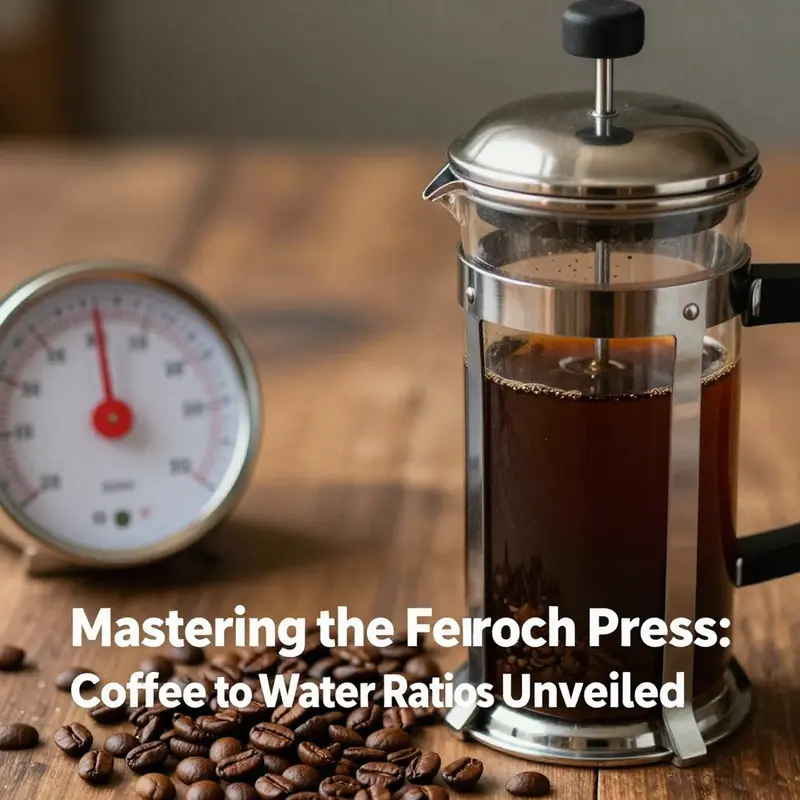
The ratio of coffee to water in French press brewing is more than a simple arithmetic rule; it is a compass that guides you toward a balanced cup. In practice, the ratio sets your starting point for strength, body, and aroma, but it is not a fixed decree. Fresh beans, roast level, and even ambient temperature shift the outcome, so your starting point should be a flexible anchor rather than a dogma. A widely used starting point is roughly 1:20, but many brewers push toward 1:15–1:16 for a bolder result or toward 1:22–1:24 for a lighter, cleaner cup. If you want a punchier cup, a 1:12 ratio is possible, though it can demand careful control of grind and time. For a liter of coffee, these ratios translate to about 66–67 g (1:15), 50 g (1:20), 45 g (1:22), or 83 g (1:12).
A practical approach is to start in the middle (around 1:18–1:20) and then adjust to taste. The grind interacts with the ratio: a coarser grind needs slightly more water or time to extract, and a finer grind can over-extract if contact time is long. In a French press, use a coarse to medium-coarse grind to minimize sediment while preserving body. Weigh everything carefully and aim for a total contact time of about four minutes, with water just off a boil (roughly 92–96°C). After the bloom, pour evenly, give a gentle stir, and press gently when time is up. If the cup tastes too strong or bitter, tilt toward a higher ratio (e.g., 1:16 or 1:17); if it lacks presence, tilt toward a lower ratio (e.g., 1:14 or 1:13).
When scaling to more cups, keep the ratio constant and adjust the coffee and water in the same proportion. This preserves balance across batches, while minor tweaks may help maintain perception of strength in larger volumes due to heat and aroma dynamics.
The key is to listen to your coffee. Use a measured starting point, then refine through a few brews, tasting after each to map your preferred range and to learn how your beans respond to grind, time, and pouring technique.
The French Press Equation: Crafting Strength Through Coffee-to-Water Ratios

The French press is a simple device, yet its beauty lies in the way a single dial—the coffee-to-water ratio—shapes the entire experience. When you study a cup and determine whether it feels bold, velvety, or nuanced, you are, in a quiet way, reading the outcome of that ratio, along with grind size, water temperature, and steep time. For many brewers, the journey begins with a practical benchmark: 1 gram of coffee for every 15 grams of water, a 1:15 ratio. This is not a rigid law but a dependable starting point that yields a robust, redeemably balanced cup for a wide range of beans. It gives you enough body to carry milk or sugar, enough brightness to keep flavors distinct, and enough forgiveness to accommodate minor inconsistencies in grind or pour. From this anchor you can explore the spectrum of strength and aroma that French press brewing can offer.
Across the coffee world, recommendations tend to cluster within a familiar corridor: roughly 1:10 to 1:16. The lower end—closer to 1:10—tilts toward a stronger, fuller cup with a pronounced backbone. The higher end—toward 1:16—promises more clarity and a lighter mouthfeel, letting delicate notes breathe through. The simplicity of these ratios is part of their appeal: they provide quick guidance without demanding a specialized toolkit. A common point of departure is 1:15, which, in practical terms, means about 1 gram of coffee per 15 grams of water. If you’re making a 300-gram cup, that translates to roughly 20 grams of coffee and 300 grams of water; tweak either side, and you shift the balance. Some brewers, especially when the roast is darker or the bean’s flavor is naturally bolder, gravitate toward 1:12 for a stronger cup with a touch more intensity. Others gravitate to 1:16 to preserve acidity and highlight origin notes. For newcomers, moving gradually from 1:10 to 1:15 or 1:16 provides a clear sense of how strength and flavor interact; it lets you learn what you value most—body, sweetness, or a livelier brightness—without losing the bean’s character.
Measurement matters as much as the ratio itself. In French press brewing, weight is a more reliable metric than volume, especially when you’re mapping taste to dose. If you’re targeting 1:15 with 450 grams of water, you would start with 30 grams of coffee. A 1:12 equation with the same water mass would call for 37.5 grams; rounding to an even 38 grams is a practical choice for many home setups. Water mass and volume align closely enough that, for brewing purposes, you can treat 1 gram of water as 1 milliliter. The precision of a kitchen scale becomes a quiet, indispensable ally, turning a guess into a repeatable moment. Freshness adds another essential layer: freshly roasted beans tend to deliver more pronounced aroma and more dynamic sweetness, which can make the same ratio feel brighter or richer depending on how recently the beans were roasted.
When the goal is a bolder cup, the 1:10 to 1:12 range is especially fruitful. A simple scenario—20 grams of coffee with 240 grams of water—produces a brew that carries substantial body and intensity, yet remains drinkable and often vivid in aroma. It can be described as espresso-like in its potential depth of flavor, without the structural heaviness that true espresso imposes. The trick, however, is not to treat this ratio as a blunt instrument; it requires complementary adjustments. Because more coffee in relation to water draws out more compounds, grind size becomes even more consequential. A coarser grind, akin to sea salt, is advisable to prevent overly rapid extraction that can yield harsh bitterness. With a stronger ratio, you typically want to clamp the contact time to about four minutes and maintain water temperatures in a narrow window—roughly 92 to 96 degrees Celsius (198 to 205 degrees Fahrenheit). A gentle initial stir can ensure even saturation so that the grounds don’t clump or channel. The aim is to coax the maximum expressive potential from the bean, not to force a heavy-handed extraction that masks the nuanced flavors within.
However, chasing boldness through ratio alone can backfire if your workflow isn’t equally disciplined. Pushing the ratio too far without adjusting grind and temperature often yields over-extraction: a bitter edge, dry mouthfeel, and a lingering astringency that obscures sweetness and aroma. Balance is essential. The broader lesson is that the ratio and the other variables—grind, grind uniformity, agitation, brew time, and water quality—co-create the final cup. For many, the simplest reliable practice is to maintain a consistent four-minute steep, a stable pour that wets all grounds evenly, and a careful cap on temperature. If you find the cup turning acrid or metallic, you may need to ease off the ratio slightly, shorten the steep, or refine the grind so the extraction remains balanced rather than aggressive.
Bean origin and roast level also shape how you perceive strength. A light or medium roast from a bright origin can deliver a crisp, sparkling acidity that remains legible at a moderate ratio and even a little stronger if you desire. A darker roast tends to present more sweetness and chocolatey notes, but doubling down on concentration can flatten those notes if the brew becomes too hot, too long, or too coarse in grind. The interplay of roast, origin, and ratio creates a spectrum of possibilities, and it’s this spectrum that invites ongoing exploration rather than a single, definitive solution. The key is to keep a small tasting log that records the coffee’ s origin and roast, the ratio used, the grind size, water temperature, steep time, and your sensory impressions. Over weeks, a personal map of preferences emerges—one that helps you decide whether you want a brisk, bracing cup or a more contemplative, smoother experience.
A practical method to cultivate a refined instinct is to perform side-by-side comparisons with the same gear and bean between two adjacent ratios. For example, brew one batch at 1:15 and another at 1:12 using the same grind size, kettle performance, and steep duration. Note differences in aroma, mouthfeel, and aftertaste. If you crave more body after that comparison, you can try a 1:10 version, adjusting only the ratio while leaving the other variables constant. This method is not about identifying a single best ratio but about training your palate to recognize which dimensions matter most to you—intensity, clarity, or a balanced profile that preserves origin character. As you refine your technique, you may also experiment with grind steadiness. A well-distributed grind helps prevent uneven extraction, a critical factor when the ratio is high. In practice, invest in a grinder that yields consistent particle size or dedicate time to sifting the grounds to reduce variability. A uniform bed of particles supports more predictable extraction, which in turn makes the impact of ratio more legible and easier to tune.
There is value in anchoring your experiments within a framework, too. A starting point in the 1:12 to 1:15 zone, with the option to venture toward 1:10 when you seek greater boldness, gives you a practical ladder rather than a dizzying maze. A straightforward, repeatable recipe that many brewers find reliable is: 20 grams of coffee, 240 grams of water, four minutes, and a water temperature in the 92–96°C range, with a gentle initial stir to ensure even saturation. If you wish to scale up, preserve the ratio and adjust the water volume accordingly, always keeping the dose and water in the same proportional relationship. The philosophy behind this approach is to keep the process predictable while still leaving room for discovery based on the bean’s origin and roast profile. It’s the combination of rhythm and flexibility that makes the French press such a forgiving device when you learn to listen to the coffee’s response to different ratios.
Taste remains the final arbiter. The ratio is a personal instrument that helps you coax the best from your beans, not a universal decree. If a 1:12 brew feels too intense, ease back to 1:15 or 1:16 for a lighter expression that preserves clarity and avoids masking delicate notes. If you crave fullness and a vibrant aroma, push toward 1:10 while maintaining disciplined control over grind size and temperature. Your notes will mature into intuition: you’ll know which attributes matter most to you—strength, sweetness, or a balance of both—and you’ll be able to reproduce a desired profile with a measured confidence that comes from practice.
For readers seeking a broader view beyond personal experimentation, one of the most comprehensive resources on this topic offers a detailed, step-by-step treatment of stronger French press brews and the mechanics of extraction. See the guide linked above for a wider context on grind sizes, water temperatures, and tuning variables that influence both strength and clarity. This reference point helps you link practical steps with a robust framework, ensuring your method remains anchored in sound principles as you experiment with different beans and flavors. French press coffee ratios—the Ultimate Guide
For a rigorous, science-based perspective that complements hands-on practice, Serious Eats offers a thoughtful, detailed treatment of stronger French press brews and how to optimize grind size, water temperature, and timing to maximize aroma and body. Their approach provides a structured method for experimenting with ratios, so you can borrow a tested framework while still letting your personal palate lead. See Serious Eats – The Perfect French Press Ratio for a deeper dive into the science behind stronger coffees and practical steps to refine your technique.
Fresh Beans, Balanced Brew: How Freshness Rewrites the Coffee-to-Water Ratio in French Press

The habit of brewing in a French press invites a quiet, almost tactile relationship with time, temperature, and texture. Yet among the variables that shape a cup’s identity, freshness stands as a nimble, sometimes elusive, factor that can tilt the ratio you rely on. When you reach for a bag that just arrived from a roast date you didn’t expect to love so quickly, you may notice a perception of strength, even when your measurements align with the textbook. That perception is not merely a matter of taste; it is a signal from the bean itself about how the water will interact with its inner chemistry. In practical terms, freshness can rewrite the coffee-to-water equation in a French press, nudging you toward a different balance to coax a clean, well-extracted cup from a bed of grounds that still carries the memory of its recent roast and its own gas-dynamic life into your pitcher of hot water.
Freshness begins with gas. Freshly roasted beans release a cloud of carbon dioxide and other volatiles when exposed to warmth and moisture. This gas is not merely an inert byproduct; it competes with water for access to the porous structure of the coffee grounds. When CO2 sits between water and the microscopic channels of ground coffee, it creates a resistance to penetration. Water can skitter along the surface or create uneven paths as it seeks purchase, a phenomenon sometimes called channeling. The result can be an under-extracted cup that tastes thin or one that lacks the fuller body you expect from a robust French press brew. The gas acts like a temporary barrier, a fog across the grounds that you must account for if you want the extraction to unfold evenly and predictably.
This gas dynamic suggests a simple, practical adjustment: for very fresh coffee, a slightly higher coffee-to-water ratio often helps compensate for that initial resistance. The guidance commonly lands in the neighborhood of 1:16 to 1:17 for fresh beans. In concrete terms, if you start with 30 grams of coffee, you might pour about 480 to 510 grams of water. This range starts where many home brewers live when chasing a bold yet balanced cup and acknowledges that the beans are still “stiff” with their own built-up pressure. The idea is not to drown the coffee in water but to provide enough contact and time for the water to overcome the early gas barrier and saturate the grounds more completely. If you consistently find your early pours waterlogged or your brew tasting flat, that is a cue to test this slight adjustment rather than to overhaul the entire technique.
As beans age and degas, the landscape shifts. Old, or stale, coffee has already expelled much of its initial CO2, leaving a more permissive substrate for water to invade. In that case, a lower coffee-to-water ratio becomes attractive—roughly 1:18 to 1:20. With the same 30-gram starting point, the water volume would rise to about 540 to 600 grams or more, depending on taste preferences and the coffee’s roast level. The practical upshot is that a stale batch is more forgiving of increased water flow and can tolerate a higher water-to-grounds percentage before tipping into over-extraction. In other words, the freshness not only colors the aroma and shine of the cup; it can subtly tilt the levers of extraction toward more or less intensity as you pursue balance.
The relationship between freshness and ratio is not a fixed law etched in stone. It is a dynamic conversation that depends on roast date, storage conditions, grind size, water temperature, and even the equipment you use. Bean quality is the overarching actor here: the lighter the roast, the more notable the gas balance becomes in water uptake, and thus the more important it is to align the ratio with freshness. A darker roast, though not exempt from degassing, often settles into a different equilibrium where water penetrates the grounds more readily, which can diminish the necessity for higher ratios at the same level of freshness. Conversely, pale roasts that preserve more volatile compounds may demand a careful balance that leans into a bit more coffee per unit water to preserve body and sweetness amid the push of CO2.
This is where adjusting the ratio becomes an act of reading the coffee rather than simply following a universal formula. A practical rule of thumb emerges from the combination of the science and the palate: begin with a starting point that fits the coffee’s age, then let your taste and the cup’s body guide fine-tuning. For a fresh batch, sample at 1:16 to 1:17, then compare to a 1:15 or a 1:18 iteration on the same grounds if you want to verify how the gas resistance and water penetration alter the cup’s mouthfeel. For any brewer intent on understanding the behavior across different beans, the adjustment is not simply about stronger or weaker; it is about how the body, aroma, and aftertaste evolve as the water remains in contact with the grounds under the influence of evolving gas release. A cup that finishes with a clean, sweet aftertaste and a touch of complexity is often the sign that the chosen ratio has matched the bean’s current chemistry.
To connect this into a broader framework, consider that the baseline range often cited in French press literature—roughly 1:10 to 1:16—is a guide for a range of preferences and bean states, from bright, strong mornings to mellower, more balanced cups. The starting point of 1:15 remains a useful anchor, but when the coffee is especially fresh or particularly fragile in its gas release, a slight nudge toward 1:16 or 1:17 can yield a more uniform extraction without sacrificing the cup’s vitality. On the other hand, if you choose to work with coffee that has already rested and degassed, allowing for a broader pour may preserve the sense of sweetness and allow the grounds to unlock more of their nuanced flavors. The crucial insight is that freshness does not lock you into a single destiny; it invites you to calibrate, observe, and adjust with intention.
From a practical standpoint, what does this mean at the kitchen scale? If you already measure by grams, you can translate these ratios into a workflow that feels repeatable. Suppose you decide to start with 40 grams of coffee for a standard brew. A fresh batch would invite 640 to 680 grams of water (1:16 to 1:17), while a fresher coffee might even push toward 1:16. If the batch is older and has degassed, you could try 720 to 800 grams of water (1:18 to 1:20) and observe how the cup’s sweetness and body shift. The exact numbers will depend on your grinder, your kettle, and your pour technique, but the principle remains clear: the bean’s current state should inform the ratio you apply, not merely the taste you hope to achieve. In this sense, freshness transforms from a mere descriptor into a practical dial you turn to coax the cup you want from the same equipment.
A note on technique helps bridge theory and practice without complicating the narrative. When you grind, aim for a consistent, medium-coarse grind that resembles breadcrumbs with a slight sandy texture. The grind size influences extraction speed, and with fresh beans, a coarser grind can further compensate for gas resistance by reducing surface area and promoting more even water penetration. Immediately before pouring, you can consider a brief bloom: saturate the grounds with a small amount of hot water for 20 to 30 seconds. This pause allows CO2 to escape and opens the pores in the grounds, which enhances overall saturation during the main pour. Bloom time is a small, often overlooked adjustment that can reconcile the gas barrier with the chosen ratio, especially when you are exploring different bean ages.
As you fine-tune, it helps to keep a simple tasting log. Note the roast date, storage method, and the room’s temperature, then record the brew’s aroma, body, sweetness, and finish. If you notice a perceptible shift in strength or balance across two brews using the same dose, it is a signal that the ratio and the freshness state are no longer in harmony. The log becomes a living map, guiding you toward a stable preference across batches that differ in their degassing profile. In a world where coffee is a living product with a changing interior, this kind of mindful adjustment is not pedantry; it is an informed craft that respects the chemistry of the bean.
For readers who want a broader, more structured dive into these relationships across different brewing methods, a comprehensive reference exists that explains how ratios interact with grind size, water temperature, and brew time. You can explore a detailed breakdown in the broader guide on French press coffee ratios. This resource helps connect the dots between the fresh-degas dynamic and practical measurement, offering a more granular view of how to manipulate the ratio in response to the bean’s current state while keeping the method’s core simplicity intact. It also reinforces the idea that a well-balanced cup is less about chasing universal perfection and more about aligning variables to the specific coffee you have in the moment. If you want to see a concise synthesis of these ideas in one place, the guide provides a clear map for experimentation and refinement.
If you’re seeking a compact tasting framework to accompany your adjustments, consider the flavor trajectory you want from the cup: a lively, bright front with a forgiving mid-palate, or a deeper, chocolatey, round profile with a longer finish. Fresh beans can swing together with a higher ratio to yield a brighter, more aromatic cup, while aged beans can gain presence from a slightly lower ratio that preserves sweetness and avoids dullness. Your palate becomes your compass, and the ratio becomes the instrument you tune as the coffee moves through its fresh-to-degas journey. The interplay between the gas, the grounds, and the water is a reminder that even a trusted brewing method has room to breathe and adapt when the raw material tells a new story.
In closing this thread, the centerpiece remains simple: freshness is not merely a preface to a cup’s flavor but a live factor that can steer your ratio in meaningful ways. Start with a balanced baseline, observe how the cup evolves, and allow the bean’s degassing to guide a gentle shift in dosage. The result is not just better coffee; it is a more intimate relationship with the bean’s lifecycle and the act of extraction itself. If you want a broader, more methodical expedition into how to apply these ideas across methods, you can refer to a dedicated resource that outlines the larger framework of French press ratios, which includes practical tables and scenarios for different bean states. For readers who prefer to see the concept illustrated in a structured guide, the internal link to the French press ratios resource can provide a helpful companion as you explore the nuances of your own beans. This approach keeps the craft approachable, reproducible, and deeply personal, allowing each batch to teach you something about time, temperature, and the quiet chemistry that unfolds as water meets ground coffee.
Internal link for further reading: French press coffee ratios: the ultimate guide.
External resource:
For authoritative, data-driven guidance on this topic, see The Coffee Guide’s analysis of French press coffee ratio, which provides detailed recommendations and context for variable freshness and extraction. https://www.thecoffeeguide.com/french-press-coffee-ratio
Brewing Balance: Personal Taste and the Coffee-to-Water Ratio in French Press Brewing

The French press invites a generous, unfiltered dialogue with your coffee. Unlike many brew methods that distill flavor through delicate paper filters or precise digital timers, the French press relies on immersion, time, and the simple arithmetic of coffee and water. Because of that immersion, the ratio between coffee and water becomes less of a rigid rule and more of a starting line from which taste can be steered in any direction. A cup worthy of the grind’s character emerges not from a single, fixed number but from a conversation between your beans, your mood, and the rhythm of your day. In this sense, the ratio acts as both a map and a compass, guiding you toward a balance that resonates with your palate.\n\nMany specialists in the craft of coffee talk about a golden ratio range for the French press. They describe a spectrum that allows for both extraction and balance to co-exist: a practical starting area around 1:15 to 1:17, where one gram of coffee meets fifteen to seventeen grams of water. This range aligns with the broader discipline of coffee science, while also acknowledging that the final note of a cup is a personal verdict. The more widely cited figures reflect an ecosystem where bean quality, roast level, grind size, and water quality all contribute their part to the chorus of flavor. In this sense, the ratio is not a jailer of taste but a flexible baseline that empowers experimentation. For readers who want a concrete reference point that synthesizes expert guidance with practical home brewing, the widely discussed range provides a sturdy place to begin. \n\nIf you prefer a more robust notion of presence in the cup, a stronger, fuller mouthfeel can be achieved with a somewhat heavier ratio, closer to 1:16 or even 1:18, depending on how bold you want the cup to feel. The idea here is simple: with more coffee relative to water, the brew tends to carry more of the bean’s essential oils, soluble compounds, and the fissures of flavor that might otherwise hide behind milder extractions. The flip side is that too much coffee for the water can tilt the balance toward bitterness or acridity if other variables are not aligned. The French press, with its metal mesh and extended contact time, tends to preserve oils that a paper-filtered method might not. Those oils contribute to body, mouthfeel, and a sense of presence that many drinkers associate with a “true” coffee character. In practice, many who enjoy a bold, robust profile gravitate toward the lower end of the ratio spectrum, around 1:16 or 1:18, while those who savor a more pronounced brightness or a delicate aroma might lean toward 1:18 to 1:20 or even 1:22.\n\nThe term “balance” itself deserves some attention. Balance does not mean sameness across all cups. It means an equilibrium where acidity, sweetness, bitterness, aroma, and body harmonize rather than one flavor eclipsing the rest. A lighter roast with a 1:22 ratio may yield a cup that feels clean and nuanced, letting floral or fruity notes move to the fore. A darker roast with a 1:16 ratio can emphasize chocolatey, resinous, and roasted characters, pushing sweetness and depth forward while maintaining a firm structure. These are not absolutes but possibilities, each inviting a tasting decision rather than a prescriptive decree. The beauty of the French press is that its method supports such explorations without forcing a single outcome.\n\nAlongside the core ratio, the journey toward your preferred cup becomes a dialog with several other variables. Bean origin often dictates how a coffee reacts to heat and extraction. Some origins carry more pronounced acidity or fruit-forward sweetness; others display heavier chocolate or nut notes. The roast level shapes the way those flavors travel through the water: lighter roasts tend to reveal brightness and complexity, while darker roasts emphasize body and caramelized flavors. Grind size matters too, not only for speed of extraction but for the distribution of particle surface area that interacts with water. A grind that is too coarse can under-extract, leaving a flat or sour cup, whereas a grind that is too fine may over-extract, pulling harsh notes forward. The water itself plays a role—any tangible mineral content, softness, or temperature profile will steer the extraction in subtle but meaningful ways.\n\nWithin this constellation, the subjectivity of taste is not a flaw but the central feature. People discover their preferences by experimenting with small adjustments in the ratio and tracking how the cup changes. A practical approach is to anchor your exploration to a central point—say, a 1:15 to 1:17 range—and vary only one dimension at a time. If you start from 30 grams of coffee and 450 grams of water, a change of just a few grams in coffee or a handful of grams in water can shift the cup from assertive to balanced or from bright to smooth. The process rewards patience and disciplined note-taking: record the coffee weight, water weight, grind size, brew time, and perceived flavor notes after each trial. Over weeks, you’ll build a mental map of how your preferences map onto the ratio, the grind, and the temperature, and you’ll understand which variables carry the most weight in your kitchen.\n\nThe French press fosters that flexibility in part because of its immersion profile. Unlike rapid pour-over methods, where gravity and filter dynamics quickly separate soluble compounds, the French press keeps all the coffee in contact with water for an extended period. This prolonged contact allows more of the dissolved substances to extract, but it also amplifies the influence of the chosen ratio. The result is a cup that can feel invitingly full or unexpectedly delicate, depending on how finely you tune the balance between coffee and water. In this context, the ratio becomes a narrative device that shapes the arc of flavor through the brew’s life cycle—from the moment you pour the water to the last sip after the steep time concludes.\n\nA practical path toward discovering your preferred balance begins with a structured yet simple experiment, so your senses aren’t overwhelmed by options. Start within the golden range of 1:15 to 1:17, then make incremental moves toward either end of the spectrum. If the first session yields a cup that tastes strong and heavy, try adding a little water or dialing back the coffee by a gram or two in the next batch. If the cup feels undernourished or thin, increase the coffee slightly or shorten the contact time so flavors stay buoyant without becoming bitter. In practice, many home brewers settle into a preferred band around 1:18 to 1:20, finding that it delivers sufficient body while preserving nuanced aromatics for everyday drinking.\n\nAn important caveat is that the concept of a golden range should not be treated as a universal law carved in granite. The data you collect in your kitchen will reflect your beans, your equipment, and your methods. The pursuit of the ideal ratio is deeply personal. The same coffee you adore at a 1:16 might demand a 1:14 for a completely different roast, grind, or water source. You may find that your palate evolves with the seasons, your pantry, or your mood. The most resilient approach is to let taste guide you while you maintain a transparent log of what you did and what you tasted. In doing so, you build a roadmap that helps you reproduce a favored cup or to recalibrate when you switch origins or roast profiles.\n\nWhile the numerical ladder provides structure, technique matters as well. Temperature, for instance, interacts with the chosen ratio by influencing extraction speed. Steep time—how long the ground coffee spends in contact with the water—plays a complementary role. In the immersion setup of the French press, these variables magnify the impact of the ratio. A slightly higher temperature or a marginally longer steep can intensify aromatics and sweetness in a way that would require a different ratio to restore balance. Conversely, cooler water or shorter steep times can soften harsh edges, allowing a lighter ratio to shine. In short, the ratio is the lever; temperature and steep time are the gears that determine how smoothly the lever moves.\n\nFor readers who want a concise reference point that aligns with the broader science of coffee ratios, the concept of a golden range—1:15 to 1:17—serves as a solid baseline. A well-regarded midpoint for many French press enthusiasts sits near 1:20 when the goal is a fuller, more balanced cup that still maintains clarity of flavor. Those seeking a lighter cup may move toward 1:22 or 1:24, letting the water carry more of the origin’s brightness and delicate aromatics through the brew. Conversely, robustness may be achieved by compressing the ratio toward 1:16 or 1:18, where body and flavor depth can assert themselves more forcefully without tipping into excess bitterness. The ultimate answer remains: start, taste, adjust, and document.\n\nIf you are curious to see how others describe their journeys with these ratios, the broader literature on French press brewing offers a range of perspectives that echo this flexible, taste-centered approach. One practical route is to explore a dedicated guide on coffee-ratio-french-press as you refine your own method; the linked resource captures the interplay between ratio, grind, steep time, and water quality in a way that complements the experiential process described here. coffee-ratio-french-press\n\nIn the end, the chase for the perfect ratio for your French press is less about chasing a single number and more about learning how your beans express themselves under different conditions. The goal is not to arrive at a fixed decree but to cultivate a repeatable process that yields cups you recognize as yours. As you adjust the ratio, you’ll notice how your preferred level of body, sweetness, acidity, and aroma shifts with changes in origin, roast, and grind. The immersion method rewards patience and curiosity, inviting you to discover how subtle shifts in the arithmetic of coffee and water reveal a spectrum of possible flavors. And because taste is inherently personal, your ultimate ratio will remain a personal discovery, a conversation between your palate and your pantry rather than a universal prescription.\n\nFor readers who want to broaden their understanding beyond the kitchen bench, a credible external resource offers a scientific perspective on how ratios influence extraction. The Science Behind Coffee Ratios provides a comprehensive view of how the interplay of coffee mass, water mass, and contact time shapes what ends up in your cup. This resource can help you interrogate your own experiences with more nuance and confidence as you iterate on your method. The Science Behind Coffee Ratios\n
Final thoughts
Determining the right coffee-to-water ratio in French press brewing is not just about following guidelines; it’s about finding the balance that delights your customers. By understanding the implications of various ratios—from a robust 1:10 brew to a balanced 1:16—you can tailor your coffee experience to meet diverse preferences. Coupled with the freshness of your coffee beans, these ratios play a pivotal role in ensuring quality and satisfaction. As you experiment and refine your methods, you empower your business with the potential for greater customer loyalty and a distinguished coffee identity.