

Caffeine plays a crucial role in consumer choices, particularly in the beverage industry. As Mountain Dew gains popularity for its unique flavors and vibrant branding, understanding the caffeine content within its offerings becomes vital for businesses looking to meet consumer demand. This article will delve into the caffeine content of Mountain Dew, compare it across different flavors, and explore the health implications tied to its consumption. Each chapter aims to equip business owners with the knowledge needed to navigate this aspect effectively.
Awakened by the Bright Spark: Tracing Mountain Dew’s Caffeine Across Flavors and Formats

Mountain Dew has long carried an aura of kinetic flavor and high energy consumption. Its reputation in the soft drink landscape rests not only on bold citrus profiles but also on a caffeine level that pushes the category toward the higher end of mainstream beverages. Across credible sources, the standard version, Original Mountain Dew, consistently appears with about 54 milligrams of caffeine per 12-ounce serving, roughly 355 milliliters. This figure, dating back to widely cited analyses, sits near the top tier of popular sodas in terms of caffeine content. A detailed analysis published in early 2026 confirms that Original Mountain Dew contains 54 milligrams per 12-ounce can, making it one of the caffeinated leaders among mainstream soft drinks. A complementary source from 2024 reaches a nearly identical conclusion, noting that a 12-ounce can of the original flavor carries around 55 milligrams of caffeine. What emerges from these sources is not a one-off measurement but a converging consensus: Mountain Dew, in its flagship form, routinely delivers a caffeine jolt that sits well above the typical cola. This positioning matters for readers who navigate daily routines that demand alertness, whether they are students burning the midnight oil, professionals on back-to-back video calls, or gamers deep into a long session of strategy and reaction timing. The caffeine content is not merely a statistic; it is a functional attribute that shapes user behavior and expectations around the drink’s perceived energizing effect.
The consistency of the caffeine level across packaging formats is striking. The same high caffeine content that characterizes Original Mountain Dew is reported for Diet Mountain Dew as well, which offers the same 54 milligrams per 12-ounce serving while delivering zero sugar. This parity ensures that the energy kick remains comparable whether the consumer is choosing flavor intensity alongside sugar load or opting for a lighter calorie path. The rationale behind maintaining such a steady caffeine baseline across variants is not accidental. In markets where consumer expectations span both flavor experimentation and functional performance, brands seek to deliver a reliable experience. The caffeine level provides a predictable energy profile that consumers can rely on when balancing taste with stamina over the course of a busy day or a late-night session. In addition to Original and Diet, other popular Mountain Dew variants such as Code Red and Live Wire (Wild Orange) also hover around the same caffeine territory per 12-ounce serving. While flavor teams may refine acidity, sweetness, and aroma to craft distinctive profiles, the caffeine backbone remains intact, preserving a uniform energetic effect across the line. This uniformity helps explain why many fans perceive a consistent level of wakefulness when they switch among variants during a single day, whether they crave the sharper bite of a citrus blast or a berry-tinged twist on the original formula.
From the consumer’s perspective, the practical implication of this consistency is clarity. It is easier to plan intake when most flavors carry a similar caffeine payload. It also means that a person who is sensitive to caffeine can approximate their daily limit with a reasonable degree of accuracy across Mountain Dew choices. Yet caffeine is a stimulant with real physiological effects, and the picture does not stop at milligrams per can. The experience of caffeine comes not only from the chemical itself but from its integration with sugar, carbonation, and flavor. Mountain Dew, in its classic form, is known for a bright, sweet, lemon-lime flavor that can accelerate the perception of energy alongside the caffeine. The combination of sugar and caffeine often yields a heightened sense of alertness and a temporary increase in focus for some drinkers. This synergy, however, can be a double-edged sword. For individuals who consume multiple caffeinated beverages in a day, the cumulative load rises quickly, with potential consequences such as jitters, headaches, or sleep disruption. Health professionals frequently caution against frequent, high-intensity caffeine intake, especially for sensitive groups such as adolescents and those with sleep disorders. The American Academy of Pediatrics, among other authorities, recommends limiting caffeine exposure for children and teens, a reminder that the energy boost Mountain Dew offers comes with responsibilities for daily consumption. In the broader context, the dialogue around Mountain Dew and caffeine sits at the intersection of taste, performance, and wellness, challenging consumers to navigate preference with prudent limits.
The question of caffeine content invites comparison with other non-coffee beverages that claim a caffeine edge. Among mainstream sodas, Mountain Dew’s 54–55 milligrams per 12-ounce serving consistently outpaces the caffeine counts of the longstanding cola leaders. For example, Coca-Cola typically contains about 34 milligrams per 12-ounce serving, and Pepsi clocks in around 38 milligrams for the same volume. In numerical terms, Mountain Dew provides roughly half again as much caffeine as some of the leading colas, a difference that can meaningfully alter the perceived intensity of a single can. This contrast helps explain why Mountain Dew is often positioned as a beverage for sustained alertness, a value proposition that resonates in gaming culture, late-night study sessions, or long drives where quick reaction time matters. The magnitude of the difference—roughly 16 to 21 milligrams more per 12-ounce can than the cola standards—also becomes a talking point in consumer education. It frames how people calibrate their own caffeine intake when they rotate through beverages across a day.
Beyond the baseline, brand managers have preserved the energy profile as they expand the portfolio. Variants such as Code Red and Live Wire deliver the same caffeine punch per 12 ounces, ensuring that a flavor transition does not necessarily alter the stimulant effect. For the consumer, this means flavor exploration does not automatically equate to a weaker or stronger caffeine experience; rather, it offers a spectrum of tastes while maintaining a familiar energetic core. This approach aligns with a broader marketing narrative that places flavor variety alongside functional consistency, enabling fans to choose from a menu of experiences without sacrificing the energy kick that defines the product line. It is a subtle but intentional strategy: flavor innovation that respects user expectations for wakefulness. The practical consequence is a lineup that supports long sessions, whether one is immersed in a game, coding sprint, or a creative workflow where sustained focus is valued.
In the landscape of beverages that people reach for when they want to stay alert, Mountain Dew occupies a distinct niche. Its 54–55 milligrams per 12-ounce serving places it near the upper echelon of non-coffee, non-energy-drink options, a position that has earned it a loyal following among those who want a potent caffeine experience without resorting to energy shots or high-caffeine energy drinks. This positioning is both tactical and cultural. On a practical level, it means a standard can can be counted on to deliver a reliable cognitive nudge, one that can support a study, a marathon of gameplay, or a long drive with fewer interruptions caused by fatigue. Culturally, it has become associated with certain communities that value quick, reliable energy and a bold flavor profile, a combination that reinforces its staying power in a crowded beverage market.
The measurement of caffeine in Mountain Dew is also a reminder of how standardized labeling supports informed choices. When readers see a specific milligram count per serving, they gain a tangible metric to gauge daily intake and to approximate the energy budget across different beverages. The science behind caffeine content—how it is measured, how it is retained in the beverage through bottling, and how variations in flavor do not substantially alter the caffeine payload—adds a layer of credibility to the consumer experience. In practice, this means that the caffeine measure becomes a baseline that can be compared not only across Mountain Dew variants but also across different brands and product categories. For instance, readers who want a direct comparison between Mountain Dew and a cola or an energy drink can locate clear figures that illuminate the relative energy impact of each option, aiding in more deliberate choices about timing, activity level, and tolerance.
From a research standpoint, the consistency across different sources about the 54–55 mg per 12-ounce serving is meaningful. It suggests a deliberate formulation choice rather than a random discrepancy. The goal appears to be delivering a consistent experience that aligns with consumer expectations for a high-energy profile, while simultaneously offering a wide flavor palette to keep the brand appealing across diverse preferences. This combination of stable caffeine levels and flavor diversity is not typical of every beverage line; it indicates a strategic balance between function and taste, where neither overrides the other. The end result is a product range that feels predictable in energy while still exciting in how it tastes, a blend that can sustain its relevance in a market that constantly questions the value of caffeine and the best ways to enjoy it.
For readers seeking a concise snapshot of Mountain Dew’s caffeine content across the portfolio, the broad takeaway remains consistent: expect approximately 54 milligrams of caffeine per 12-ounce serving, regardless of whether you choose Original Mountain Dew, Diet Mountain Dew, Code Red, or Live Wire. This is the core message that connects the data across sources and flavors. The exact packaging format—carbonated as opposed to still versions—does not substantially alter the caffeine figure, reinforcing the view that the stimulant is a controlled, integral component of the beverage’s identity. In practice, this means a consumer can select a flavor based on taste preferences and still anticipate a similar energy uplift, a helpful clarity for people who navigate caffeine responsibly and prefer a stable, predictable caffeine profile.
To readers who crave a deeper dive into comparative caffeine figures across beverages, a detailed reference point is available. For a concise, data-driven comparison across popular soft drinks, consult the external resource that aggregates and updates caffeine content across brands. This external resource offers a broader context for Mountain Dew alongside its peers, highlighting where the brand sits in relation to other caffeinated options and allowing readers to calibrate their daily caffeine intake with confidence.
For readers who want to explore a direct, within-site discussion of Mountain Dew caffeine content and its implications for everyday life, you can explore more about caffeine content from a dedicated source that compiles these figures. In particular, you can see a focused piece on caffeine content MT Dew that summarizes the same metrics in an accessible format. Caffeine content MT Dew.
As this topic continues to evolve with new flavors and reformulations, the core message remains stable: Mountain Dew provides a robust caffeine level that distinguishes it from many other mainstream soft drinks. The combination of 54 milligrams per 12-ounce serving, flavor variety, and consumer appetite for a reliable energy boost creates a distinctive space for Mountain Dew in the beverage landscape. Whether consumed solo, alongside a meal, or as a study companion during late-night sessions, Mountain Dew offers a caffeine-forward option that continues to resonate with a wide audience.
External resource: https://www.caffeineinformer.com/caffeine-in-mountain-dew/
The Uniform Caffeine Pulse: How a Leading Citrus Soda Keeps Its High-Energy Profile Across Flavors
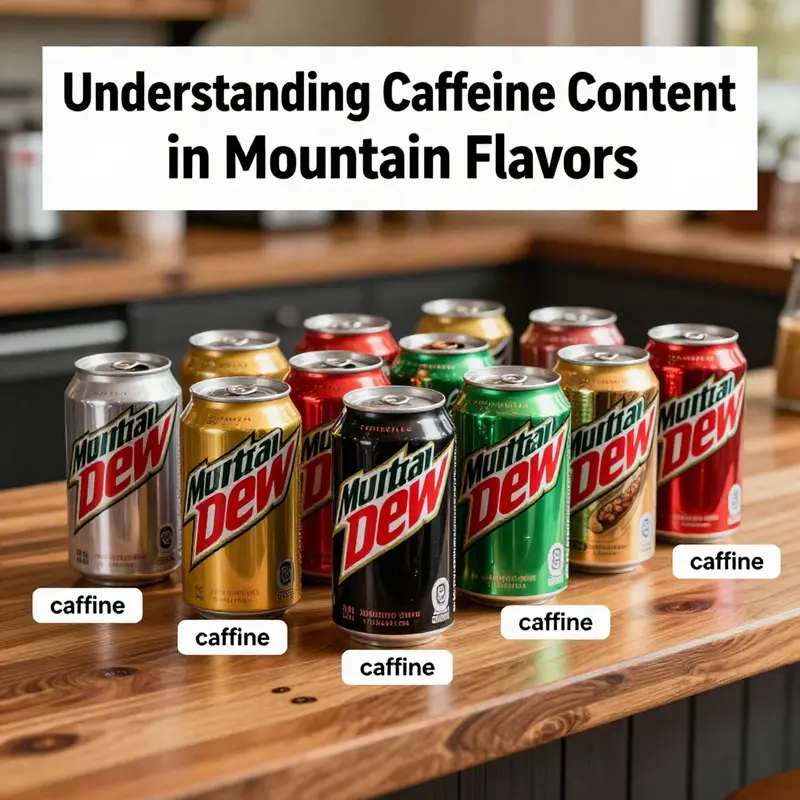
Caffeine is the quiet currency of modern refreshment. It’s the reason a can of soda can feel like a tiny energy boost between meetings, a study session, or a long drive. In the crowded field of popular caffeinated drinks, one flagship citrus soda stands out not just for its flavor but for a striking pattern in how it delivers caffeine across its lineup. The research that began to crystallize in early 2026 shows a surprisingly consistent caffeine footprint: roughly 54 milligrams per 12-ounce serving across the core varieties, with most flavors landing in a narrow 54–55 mg range. That subtle exactness—a high but predictable punch—was not accidental. It reflects a deliberate formulation choice: to give consumers a reliable wake-up without introducing wide swings in caffeine between one flavor and the next. In a market where taste preferences vary as much as caffeine needs, this consistency matters. It means that a consumer seeking a quick alert can reach for any member of the flagship citrus family and expect a similar stimulant effect, regardless of the flavor profile they choose.
The headline figure, 54 mg per 12 oz, places this citrus-forward beverage among the most caffeinated mainstream soft drinks available in standard serving sizes. The detail is not merely a trivia answer; it has practical implications for how people plan their caffeine intake. In a typical daily routine, where many rely on multiple sources of caffeine—coffee, tea, caffeinated snacks, energy shots—the steady 54 mg per can provides a predictable baseline. A single serving delivers enough stimulation to cut through afternoon drowsiness for many people without pushing total daily caffeine well into the stratosphere. For someone who drinks two cans in a day, the total rises to about 108 mg, which is still well within the broad ranges many health guidelines consider moderate for non-pregnant adults, though sensitivity and personal limits vary. The 12-ounce format itself reinforces this predictability. This size is the standard for most mainstream sodas, a practical measure that keeps serving size consistent even as flavor variety expands. From a consumer’s standpoint, that means you can switch flavors without recalibrating how much caffeine you’re ingesting per day.
The consistent caffeine content across the lineup also hints at a broader branding and product-design philosophy. A beverage portfolio thrives when consumers can rely on a familiar stimulant experience no matter which flavor they pick. For the brand that carries a legacy of bold, citrus-forward refreshment, maintaining a high caffeine baseline across key products reinforces a particular position in the market: a premium citrus soda that also delivers a reliable energetic boost. Market positioning in this space often ties taste to function. The product architects appear to have taken the latter seriously, ensuring that the functional punch—an energizing lift—doesn’t drift apart as flavors cycle through seasonal releases or reformulations. The effect is subtle but real: a consumer who wants the taste of citrus with a dependable caffeine kick can rotate through the lineup without worrying that a new flavor is less capable of delivering that boost.
In the published research that anchors these observations, several flavor variants are explicitly discussed alongside their caffeine content. The traditional or base citrus formula, along with at least one popular flavored variant, are both reported to contain about 54 mg per 12-ounce serving. A notable parallel point is that a diet or zero-sugar version retains the same high level of caffeine, at 54 mg per 12 oz. This detail matters for those managing sugar intake without sacrificing energy. The diet option delivers the same stimulant effect as its sugared counterpart, despite the absence of calories from sugar. That parity is significant; it challenges a common assumption that sugar-free or diet variants always reduce caffeine as a secondary effect. In this case, the caffeine profile travels with the product’s stimulant identity, independent of sugar content.
The research also gestures toward other flavors in the family, describing them as vibrant and refreshing in character. While precise caffeine figures for every single flavor were not enumerated in every source, the analysis speculates that these other offerings align with the same 54 mg per 12 oz baseline. The logic is straightforward: consistency supports the brand’s core promise of a reliable energy boost across a broad flavor spectrum. If one flavor reliably registers 54 mg, and if the brand’s formulation strategy is to maintain that experience across the family, then it is reasonable to expect that the remaining core flavors fall into this same energetic envelope. This isnibility is more than a matter of numbers; it reflects an integrated product-development approach where flavor innovation coexists with a stable caffeine target. You can see how this principle plays out in practical terms as a consumer moves from one can to another: the switch in taste is real, but the caffeine punch remains steady, preserving the overall perception of vitality that the beverage line has built its reputation on.
From a consumer education standpoint, the uniform caffeine content across the principal products can shape how people think about “strong flavors” versus “strong caffeine.” The assumption that a more intense or darker flavor might pair with a bigger caffeine hit is challenged here. Instead, the data points toward a design choice where flavor complexity and caffeine intensity run parallel in a controlled range rather than diverge wildly. This makes the experience predictable and transparent, a quality many shoppers value when they need to plan a caffeine-rich snack or a late-afternoon pick-me-up without surprises. For someone who loves a particular flavor for its brightness or tartness, the knowledge that the energizing punch remains consistent can be reassuring. It’s not simply a matter of taste; it’s about reliability in an everyday routine.
For readers who want a quick synthesis of the caffeine profile, a concise discussion is captured in the chapter’s reference materials. A summarized table, though not repeated in every source, shows the central finding: 54 mg per 12-ounce serving for the primary lineup, with a slight, optional acknowledgment that some sources cite a narrow 54–55 mg range depending on production runs and batch variation. This kind of minor fluctuation is normal in beverage manufacturing, where sourcing, bottling, and minor formulation adjustments can introduce tiny differences from batch to batch. Even so, the overarching narrative remains clear: the caffeine story remains remarkably uniform across popular flavors, at least among the most widely distributed products in the line.
The practical takeaway for readers who track caffeine intake is straightforward. If you are calculating your daily caffeine load, apply 54 mg per 12-ounce serving to the drinks in this citrus family. The diet version does not relieve that calculation; it is equally potent in caffeine. When you consider other sources—coffee, tea, energy products—the math remains projectable. You can thread a controlled caffeine plan through a busy day by sequencing these 12-ounce options with healthier meals and hydration, rather than letting caffeine accumulate in an ad hoc way. As you plan, think of the 12-ounce can as a modular unit of energy: the same boost, the same flavor potential, the same financial and caloric footprint across the primary options.
To readers who want to look under the hood of this profile, there is a concise, accessible summary of the caffeine content for this family in an explanatory piece focused on the broader caffeine landscape of citrus-soda products. The article notes that the 54 mg per 12-ounce serving is a standout within the mainstream market, a point that helps explain why the brand has maintained momentum with a high-caffeine approach across flavors. For those who wish to dig deeper into the precise formulation and quality standards behind these figures, a detailed source is available that gathers technical details about Mountain Dew flavors and caffeine content. This external resource provides context for how a beverage brand can hold a high caffeine target across an array of flavors while preserving taste, texture, and overall consumer experience. External resource.
From a consumer-education perspective, it is also useful to contrast these findings with how caffeine is viewed in the broader market. While some beverages offer clear reductions in caffeine as a marketing feature, this particular citrus family emphasizes consistency as a core promise. The result is a product line that appeals to those who want a reliable energy boost without the unpredictability of fluctuating caffeine doses. That consistency also aligns with the brand’s communication strategy, which centers on delivering a strong, recognizable lift regardless of which flavor you choose. The message is not that one flavor is “better” for caffeine than another; it is that flavor variety exists alongside a stable caffeine platform. Consumers can enjoy exploration of taste while maintaining a familiar stimulant baseline.
It is worth noting that the data do not present a dramatically lower-caffeine option within the mainstream lineup. The absence of a clearly lower-caffeine variant reinforces the interpretation that caffeine is a central feature of the product’s identity, rather than a secondary or optional attribute. This approach can be both a strength and a potential limitation. For caffeine-sensitive individuals or those who must limit intake for health reasons, the fixed high caffeine content means that even non-sugar versions demand attention. For athletes, students, and professionals who rely on caffeine to support focus and endurance, the lineup’s consistent caffeine can be a predictable ally. For others who seek to minimize caffeine, there is a need to deliberate choices, perhaps favoring non-caffeinated beverages in situations where a caffeine-free option is preferred. The broader takeaway is that the caffeine strategy is tightly aligned with the brand’s energy-forward image, reinforcing its role as a go-to option for a certain kind of refreshment experience.
For readers who enjoy a little investigative comparison, the internal literature suggests you can compare caffeine content across similar categories using a simple framework: serving size, baseline caffeine, and variability across flavors. Apply that framework to your pantry and your fridge, and you’ll have a practical tool for managing caffeine without sacrificing taste. In practice, that means recognizing that a 12-ounce serving from this citrus family is not a coffee substitute, but a convenient alternative with a consistent caffeine punch that has earned its place in the daily routines of many consumers. The predictability becomes a feature, not a flaw, especially for people who value steadiness in both flavor and energy.
For those who want to connect this chapter to broader reading, there is a straightforward path to a concise technical snapshot that mirrors the findings here. The cited analysis presents the 54 mg per 12-ounce standard and notes that variations are minor and not indicative of a major reformulation across the lineup. The discussion demonstrates how a brand can maintain a strong, recognizable energy profile while continuing to innovate in flavor, packaging, and marketing—an interplay that keeps the beverage’s identity intact as flavors evolve. The practical upshot is simple: when you pick any core flavor from this family, you know you are getting a robust caffeine dose that supports alertness, without the guesswork of fluctuating quantities.
In shaping this chapter, the aim was to weave together the numerical facts with an understanding of how they influence consumer behavior and brand perception. The numbers matter, but so do the choices people make about when and how to use caffeine. The uniform caffeine content across the flagship flavors is not just a statistic; it is a statement about consistency, a built-in guarantee that taste and energy align across the portfolio. And as the science of caffeination evolves, this alignment offers a valuable baseline for anyone who wants to think more critically about what they drink and why they drink it. For readers who want to explore the topic further, a close look at the technical landscape behind Mountain Dew flavors and caffeine content can be found in the referenced external resource, which digs into flavor-specific formulations, quality standards, and applications in the broader beverage ecosystem.
If you are curious about more granular comparisons, an internally linked resource can shed additional light on how caffeine content in this family stacks up against other popular caffeinated beverages. See the discussion summarized at caffeine-content-mt-dew to explore how the numbers translate when you place Mountain Dew’s caffeine profile side by side with other everyday drinks. This quick reference helps bridge the gap between the general trend and the precise figures that matter when planning a caffeine-forward day. Whether you’re assembling a study plan, a work session, or a weekend recharge, the key takeaway remains: a reliable, high-energy profile can coexist with a broad flavor palette, and that combination helps explain why the lineup has endured as a favorite among consumers who value both taste and function.
In closing, the caffeine story of this citrus-forward family is not about a single product or a single flavor. It is about a coherent design philosophy that prioritizes consistency, clarity, and consumer trust. The 54 mg per 12-ounce serving that threads through the core flavors is more than a statistic; it is a daily rhythm that many people rely on. It is a reminder that in a crowded market, the simplest approach—keeping the stimulant level steady while offering a chorus of tastes—can resonate with a broad audience. The data cited here gives readers a clearer picture of what to expect when they reach for a can, while the broader context invites continued curiosity about how caffeine content and flavor innovations evolve together in the world of mainstream soft drinks.
External reference for deeper context: External resource.
The Mountain Dew Buzz: Decoding Caffeine Content, Health Signals, and Everyday Choices
The caffeine story in Mountain Dew is, in many respects, a tale of reliable energy delivery. The 54 to 55 milligrams per 12-ounce can is comparable to what you’d find in many other popular sodas and energy-focused drinks, and it sits above the caffeine content of several classic colas while still below the levels found in many energy-dedicated products. For people who monitor caffeine intake closely, that 12-ounce figure is a practical benchmark. If you drink more than one can in a day—or pair Mountain Dew with coffee, tea, or energy shots—the cumulative caffeine load begins to matter. It is not merely a question of one can. It is the arithmetic of multiple servings, late-night snacking, and the physiological sensitivity of each person. The fact that the same high-caffeine profile tends to carry across flavors means that the stimulant effect is predictable regardless of whether one chooses Original Mountain Dew, Code Red, Live Wire, or other varieties. That consistency supports both consumer awareness and the ability of health commentators to discuss caffeine exposure without having to navigate dozens of slightly different caffeine figures for each flavor line.
From a pharmacological standpoint, caffeine acts as a central nervous system stimulant. It blocks adenosine receptors in the brain, reducing the feeling of fatigue and increasing alertness for a period after ingestion. In moderate amounts, caffeine can improve focus, reaction time, and a sense of arousal that some users interpret as productivity or mental clarity. These short-term benefits are particularly noticeable during tasks requiring sustained attention or during extended periods of wakefulness when the body would otherwise drift toward drowsiness. Mountain Dew delivers this effect in a form that is familiar, widely available, and immediately consumed—a combination that makes it a convenient source of caffeine for many people. The immediate clarity it can provide may be welcome in the moment, especially for those who need to stay awake during late shifts, long drives, or study sessions. Yet the same mechanisms that support alertness can also bring about fatigue later if the caffeine dissipates and sleep pressure returns. The timing and total intake heavily influence whether the experience tilts toward benefit or overextension.
But caffeine does not exist in a vacuum in Mountain Dew. It arrives in a matrix of sugar, acidity, and flavor compounds that together shape how a person feels after a single serving and after several servings. The drink’s sugar content—primarily high-fructose corn syrup in many market formulations—plays a crucial role in the post-consumption experience. Sugar provides a rapid energy source that can complement caffeine’s stimulating effect, intensifying the sense of a “lift” that some drinkers notice soon after taking a sip. This synergy matters because it shapes not only mood and energy but appetite and subsequent eating patterns. When caffeine and sugar collaborate in a single beverage, the overall metabolic load can be more than the sum of its parts for some individuals. It is a combination that can intensify cravings for additional calories, encourage snacking, or create a perception of longer-lasting energy, potentially sustaining caffeine use over a longer stretch than caffeine alone would justify.
The health implications of that synergy become more nuanced when you step back from the immediate effects and consider longer-term patterns. A single can of Mountain Dew supplies caffeine in a dose that aligns with what many adults tolerate without noticeable discomfort. Still, the real-world picture depends on frequency of consumption, the presence of other sources of caffeine, and preexisting health conditions. Anxiety symptoms, sleep disturbance, or a sensitive cardiovascular profile can magnify the adverse effects of caffeine. In individuals who are prone to anxiety, caffeine can heighten alertness in a way that escalates nervousness, restlessness, and even physical symptoms like a racing heart. In the context of normal sleep cycles, caffeine ingested late in the day can push back sleep onset, shorten total sleep duration, and degrade sleep quality. The same mechanism that helps you stay awake can become a disruptor when timing matters, turning a suitable boost into a sleep debt that accumulates over days and weeks.
Beyond the acute effects, the combination of caffeine with the drink’s acidity and sugar input invites a broader look at metabolic health. The body handles fructose primarily in the liver, where excessive intake can contribute to fat accumulation and metabolic stress. While caffeine itself does not directly cause obesity or diabetes, when it is paired with high sugar content and frequent consumption, it can support behavioral patterns—such as prolonged snacking or preference for calorie-dense foods—that contribute to weight gain and insulin resistance over time. The metabolic story thus becomes a conversation about both what is in the drink and how it fits into an overall diet. A beverage that delivers both caffeine and a sweet energy source can create a cycle of energy spikes followed by crashes, prompting further intake in a bid to recapture a perceived energy plateau. In the long run, persistent cycles of high sugar intake and sustained caffeine exposure may elevate the risk for liver fat accumulation, non-alcoholic fatty liver disease (NAFLD), and other metabolic concerns if such patterns are chronic and widespread across daily life.
The dental health angle adds another layer to the risk profile. Mountain Dew, like many citrus- and phosphoric-acid-containing beverages, can contribute to enamel erosion when consumed frequently. The caffeine component interacts with acids in the drink, potentially increasing the likelihood of a dry mouth state, which reduces saliva’s natural buffering and remineralization capabilities. Saliva is a prime defender of oral health, helping to neutralize acids and repair early signs of enamel wear. When caffeine-rich, acidic beverages are a staple rather than an occasional indulgence, the risk of dental erosion and related issues—sometimes described in dental literature as “Dew Mouth”—may rise for some individuals. This is particularly pertinent for younger consumers whose enamel may still be developing, or for people who already have sensitivity to dental erosion or preexisting dental work that could be compromised by acidic environments.
What does this mean for those who want to enjoy Mountain Dew while staying mindful of potential health effects? The guidance is pragmatic and anchored in portion control and timing. Moderation matters because a single can is not inherently dangerous for most adults, but habitual, high-volume consumption can amplify the cumulative exposure to caffeine and sugar, with the associated metabolic and dental considerations. For individuals who are caffeine-sensitive, have sleep disorders, experience anxiety, or manage hypertension, the prudent approach is to limit the number of servings per day and to avoid late-day intake that could interfere with sleep. For people who are watching sugar intake or who are at risk for metabolic syndrome, it may be wise to choose lower-sugar or sugar-free alternatives, or to reserve Mountain Dew for occasional treats rather than daily staples. Pairing any caffeinated beverage with a solid food plan can also blunt sharp glucose spikes and help stabilize appetite and energy levels across the day.
The conversation about caffeine content also invites a broader awareness of where one consumption fits within personal health goals. This awareness is not about demonizing a single product but about understanding how a predictable caffeine dose interacts with an existing physiology and lifestyle. Trends in caffeine consumption show broad variation by age, activity level, and health status. Teens and young adults may experience a more pronounced stimulant effect, perhaps due to lower tolerance or different sleep patterns, which can complicate adherence to healthy sleep and study schedules. Older adults, or people who already manage anxiety or high blood pressure, may notice more pronounced responses even at the same dose, making mindful consumption an essential practice. Those navigating pregnancy or breastfeeding face additional cautions, as caffeine transfer to the fetus and infant can have implications for development and sleep regulation. In all these cases the core message remains the same: be attentive to how Mountain Dew sits within your day, not just in isolation but as part of a larger mosaic of caffeine sources, meals, and rest.
For readers seeking a quick reference that anchors these ideas in a concise caffeine profile, a focused resource on Mountain Dew’s caffeine content offers a helpful complement to this broader discussion. See the brief review at caffeine-content-mt-dew for a snapshot of how this beverage stacks up against a spectrum of caffeinated drinks. This internal reference helps readers quickly evaluate where Mountain Dew sits on the caffeine continuum and how that position might intersect with individual health considerations. While that resource highlights the numeric side of caffeine content, the chapter above emphasizes the lived realities—how that number translates into energy experiences, how sugar can shape the overall impact, and how lifestyle choices influence the health signals that come with regular consumption.
Taken together, the evidence around Mountain Dew’s caffeine content is a reminder that numbers matter, but so do patterns of use and personal health. The 54 to 55 milligrams per 12-ounce can is a reliable baseline, a number that deserves to be known and considered by anyone who chooses this drink as part of a broader daily routine. The broader health picture—encompassing sleep, anxiety, heart rate, metabolic health, and dental integrity—depends on how those numbers are used. A single can can be enjoyed without distress by most adults, but the cumulative effect of daily, weekly, or ritualized consumption should guide decisions about when and how much to drink. By pairing this awareness with practical choices—moderation, timing, and attention to dietary context—one can preserve the enjoyment of Mountain Dew while safeguarding long-term well-being. For readers who want to zoom out from the single-can focus, a broader comparison with other caffeinated beverages can provide perspective on where Mountain Dew fits within a complete caffeine strategy for the day. The next steps in this chapter, and the article as a whole, will continue to balance the stimulant potential with the dietary and health implications, illustrating how a familiar beverage can be understood through a more nuanced, evidence-informed lens.
External resource for further reading: https://www.cafely.com/mountain-dew-caffeine-content/
Final thoughts
Understanding the caffeine content in Mountain Dew and its various flavors is essential for business owners in the beverage industry. It not only aids in product selection but also enhances customer engagement through informed marketing strategies. By being aware of the health implications associated with caffeine consumption, businesses can better align their offerings with consumer needs and preferences. This knowledge empowers you to make decisions that can positively impact your operations and customer satisfaction.