
Understanding the caffeine content in Diet Dr Pepper is crucial for business owners, especially in the beverage retail sector. Caffeine, often misconstrued, plays an intricate role in beverage formulation and consumer choice. This article covers its precise levels, influences on flavor, comparisons with other drinks, health considerations for consumers, and how perceptions shape marketing strategies. Each of these chapters will equip business owners with insights to better navigate the market landscape with informed decision-making.
Counting the Dose: Unraveling the Exact Caffeine Content in Diet Dr Pepper

To understand Diet Dr Pepper’s place in a caffeine-aware diet, knowing the exact dose per can is essential. Across all U.S. markets, a 12-ounce can contains 42 milligrams of caffeine, a figure verified by the manufacturer’s own product information and echoed by reliable beverage data sources. This small but steady dose sits squarely in the middle of what many people expect from a flavored, low- or no-calorie soft drink. It is enough to offer a mild stimulant effect without the sort of jolt associated with higher-caffeine beverages, and it matters for anyone who aims to monitor daily caffeine intake with specificity rather than impression alone. The value is not a guess; it is a defined figure that shows up consistently in quality data across time and across shelves.
The caffeine level in Diet Dr Pepper is identical to that found in regular Dr Pepper, a detail that speaks to how a “diet” label does not imply a different caffeine exposure. In other words, choosing the diet version does not automatically reduce your caffeine load relative to the regular version. When Diet Dr Pepper sits beside other well-known drinks in a typical grocery cart or vending-machine lineup, the caffeine comparison becomes more straightforward. A 12-ounce can of Coca-Cola generally brings about 33.9 milligrams, and Pepsi comes in around 38.9 milligrams. Diet Coke, meanwhile, carries a bit more—about 46.3 milligrams per 12 ounces. Diet Dr Pepper thus sits above standard cola options but slightly below Diet Coke in caffeine content. This positioning matters for anyone weighing flavors, calories, and stimulants together as part of a daily routine.
That flavor complexity comes from a proprietary blend of ingredients that structure Diet Dr Pepper’s iconic profile—cherry, licorice, vanilla, and more. Caffeine does more than wake the senses; it subtly interacts with taste signals to shape the perceptual experience of sweetness, balance, and finish. In practice, caffeine can sharpen the perception of certain flavors, enhancing the drink’s overall bite while contributing to the sense of smoothness that many fans associate with this brand. The 42-milligram dose is a deliberate, standardized measure, designed to support a consistent experience across bottles, cans, and markets. It is a reminder that flavor and stimulant effects can travel together, each reinforcing the other in a way that makes a single beverage both tasty and mildly stimulating.
From a consumer perspective, the precision matters more than the mystery. The caffeine content of Diet Dr Pepper is consistent across all U.S. markets, a reassuring detail for anyone who counts milligrams rather than calories. This predictability supports people who seek to limit stimulants because it makes intake planning possible. It also means that the choice between Diet Dr Pepper and other caffeinated drinks may come down to preferences in flavor, the pace at which caffeine hits, or how the beverage fits into a broader daily rhythm. For individuals who watch caffeine intake due to anxiety, sleep concerns, or certain medical conditions, that consistency translates into a reliable framework for daily limits. A single 12-ounce can contributes roughly 10 percent of the commonly cited 400-milligram daily ceiling for healthy adults, a benchmark that many readers recognize as a practical upper bound rather than a hard rule.
If you’re building a daily plan, translating milligrams into a practical picture helps. Four or five such beverages scattered through a day could push cumulative intake into a range that deserves attention, particularly when coffee, tea, or energy drinks also factor in. For many readers, the math is the simplest guide: one can equals 42 mg; three cans equal 126 mg; a robust cup of coffee can easily surpass 100 mg in a single serving, so a Diet Dr Pepper can integrate smoothly into a routine without tipping the scales. Yet the same can matters when late-afternoon fatigue nudges cravings for a caffeinated lift, especially if evening routines include wind-down activities that depend on sleep. The key is awareness, not restriction. Knowledge of the exact caffeine content empowers readers to tailor choices to their tolerance, rather than relying on assumptions sparked by the “diet” label alone.
To deepen the understanding, consider how this exact caffeine figure appears in broader conversations about beverages and daily consumption. The data point is not merely a statistic; it is a practical tool for planning meals, snacks, and beverages around a daily caffeine budget. If curiosity extends beyond the tasting room, readers can explore a more detailed breakdown of this figure in the dedicated post that analyzes the caffeine content of Diet Dr Pepper. For a deeper dive, see the article detailing the caffeine content of Diet Dr Pepper, which translates the numbers into everyday decisions and links flavor choices with stimulant exposure in a way that respects both taste and health considerations. The exact figure becomes a bridge between palate and plan, letting readers navigate cravings without losing sight of goals.
Where this knowledge meets daily life becomes most tangible when someone asks whether Diet Dr Pepper contains caffeine at all. It does, and the amount is carefully calibrated to be neither negligible nor overpowering. The beverage operates as a mild stimulant that complements its taste, a combination that has helped it endure in a crowded field of soft drinks. For someone who enjoys the ritual of a cold, flavorful sip but must manage caffeine, Diet Dr Pepper offers a predictable option that can blend with morning coffee, tea, or a late-afternoon snack, without necessarily dominating the caffeine tally. Yet even a modest choice can become complicated if multiple caffeinated sources accumulate in a single day. The responsibility falls on the consumer to track and adjust, using the known 42 mg per can as a baseline for mindful decision-making.
For readers who want a reference point outside the tasting room, the official product information from the manufacturer provides the primary source of truth about caffeine content and composition. While taste remains subjective, the milligram figure is objective and critical for dietary planning. The knowledge of exact caffeine content, when combined with other dietary data, supports a holistic approach to wellness that does not sacrifice enjoyment. In the end, Diet Dr Pepper’s caffeine profile is a small but meaningful detail—an intersection of science, flavor, and daily habit that helps explain why this drink remains a familiar fixture in many refrigerators, office coolers, and social gatherings.
Caffeine as Flavor Architect: Unpacking the Bold, Layered Profile of Diet Dr Pepper

Caffeine often travels in the same breath as energy, a quick jolt that many readers associate with wakefulness. Yet in the context of a complex, multi-flavored diet soda, caffeine performs a subtler, more deliberate role. It is one part stimulant, one part seasoning, and entirely a contributor to the drink’s character. In a beverage famous for its 23 distinct flavor notes, caffeine sits at a careful concentration—roughly 41 to 44 milligrams per 12-ounce can. That range, consistent across credible sources, positions this caffeine level on par with a cup of black tea in terms of intensity. It’s enough to notice, but not so much that the drink becomes a battlefield for sweetness and bitterness. The presence of caffeine is a deliberate design choice that helps the overall sensory equation stay compact, yet expressive, and it reminds us that the flavor story of a diet soda extends beyond sweetness and aroma alone.
To understand the flavor role of caffeine, it helps to see how it interacts with the drink’s other foundational elements. The beverage relies on noncaloric sweeteners—artificial sweeteners that deliver a fruity, palate-friendly sweetness without calories. In the balance of sweets and acids, caffeine contributes a subtle bitterness and a certain sharpened edge. This bitterness is not a flaw; it acts as a counterpoint to the sweetness, preventing sweetness from tipping into cloying territory and offering a sense of balance that your palate can recognize as “complete.” In a composition built from a blend of flavors, that bitter note operates like a connective tissue, weaving together the fruit-like brightness with a dry, finishing bite. The result is a more confident, more defined aftertaste than one might expect from a diet beverage that leans heavily into sweetness.
The interplay between caffeine and the drink’s flavor agents—particularly the artificial sweeteners aspartame and Ace-K (acesulfame potassium)—is central to this dynamic. Sweetness in such formulations can be perceived as clean and bright, but a certain complexity requires a counterweight. Caffeine’s modest bitterness helps create that tension, which in turn makes the fruity and berry-like impressions feel more layered. In other words, the stimulant component is not merely a cue for alertness; it functions as a flavor amplifier that nudges the overall profile toward a bolder, more defined character. The effect is akin to a conductor guiding a symphony of flavors toward a more cohesive performance. This is why the drink can feel more robust and multi-dimensional than many other diet beverages that strive for neutrality or a more satin-smooth finish.
From a sensory standpoint, caffeine also contributes to the mouthfeel—the way the liquid interacts with the tongue and the way its bitterness lingers. The perceived bitterness is brief and clean, not harsh, allowing it to carve a precise line through the perceived sweetness. That line is what gives the beverage a sense of purpose. It prevents the drink from dissolving into a generic fruit-flavored seltzer and instead creates a recognizable identity that fans can identify in a quick sip and a lingering finish. The sharpness helps the drink feel more “alive,” a quality that can translate into a more satisfying sipping experience during a long day or a social gathering. In this sense, caffeine is doing double duty: it contributes to the stimulant experience while also shaping how the drink lands on the palate.
This balancing act also helps explain why some readers describe the product as having a more assertive character. The caffeine content mirrors that of traditional, well-known caffeinated beverages in terms of its perceptual footprint, without crossing into the territory of a heavy caffeinated experience. The result is a beverage that remains accessible to most consumers while offering a sensory punch that can feel surprisingly substantial for a diet option. The statement is not that caffeine is the star flavor, but that it plays the role of a co-pilot, enhancing the journey through the drink’s complex flavor map. When considered alongside the 23-flavor backbone, caffeine appears less as a blunt instrument and more as a carefully tuned component that helps the overall composition feel complete and intentional.
For readers who want to quantify this experience, the exact caffeine content matters, and it matters precisely because it frames expectations about both taste and effect. The level of roughly 41 to 44 mg per 12-ounce can is enough to be noticeable without dominating, which means it supports the flavor arc rather than stealing the scene. In markets where consumers are constantly navigating choices about caffeine intake, this level offers a middle path: enough stimulation for a moment of alertness, yet not so much as to overshadow the beverage’s flavor narrative. The practical takeaway is that caffeine in this context functions as a design element, not simply a health metric. It is a facet of the drink’s identity and a contributor to the way the flavor unfolds from first sip to aftertaste.
As with any culinary-inspired formulation, the sensory effect of caffeine depends on the drink’s overall framework. The sweeteners bring brightness and fruitiness, while the carbonation lends a brisk, sparkling mouthfeel. Caffeine threads through this architecture as a mild, well-integrated bitterness that clarifies and clarifies again, leaving a defined finish that invites the next sip. The effect is a more dynamic flavor experience compared with beverages that aim for a smoother, less characterful profile. The result is a product that can feel both familiar and exciting—the signature taste that fans recognize even in a crowded aisle.
External factors such as temperature, glassware, and even the pace of consumption can influence how caffeine interacts with the other flavor elements. In colder conditions, the bitterness can feel crisper, while at room temperature, the aromatic cues from the beverage’s complex flavor set may become more pronounced. The carbonation partners with caffeine to deliver a fresh snap, a sensation that reinforces the overall impression of vitality without sacrificing the drink’s distinctive fruit-forward character. In such a setting, caffeine is not merely a background note but a participant in the dialogue between sweetness, acidity, and aroma. The perception of a bold, assertive finish is not accidental; it reflects a conscious balancing act where caffeine helps knit together the drink’s many notes into a coherent experience that can stand up to a modern palate.
For readers curious about the precise caffeine content, this discussion helps bridge the gap between nutrition labeling and sensory perception, reinforcing that the caffeine level is a purposeful design decision. The broader implication of caffeine’s flavor role is that it can elevate a diet beverage beyond the sum of its calories, contributing to a perception of depth and structure that supports brand storytelling around taste and energy.
In sum, caffeine in this diet beverage serves as more than a stimulant. It is a flavor moderator, an edge-bringer, and a subtle binder that helps the 23-flavor framework come alive with a defined shape. The resulting experience is a bold, nuanced profile that can feel both familiar and distinctly modern. When readers consider the science of flavor and the craft of beverage design, caffeine’s role emerges as a quiet but vital engine behind the drink’s signature character. The integration of caffeine with sweetness, acidity, aroma, and carbonation produces a sensory impression that endures beyond the first sip and invites continued exploration of the drink’s layered personality.
Caffeine in Diet Dr Pepper: A Moderate Lift in a Flavorful Diet-Cola
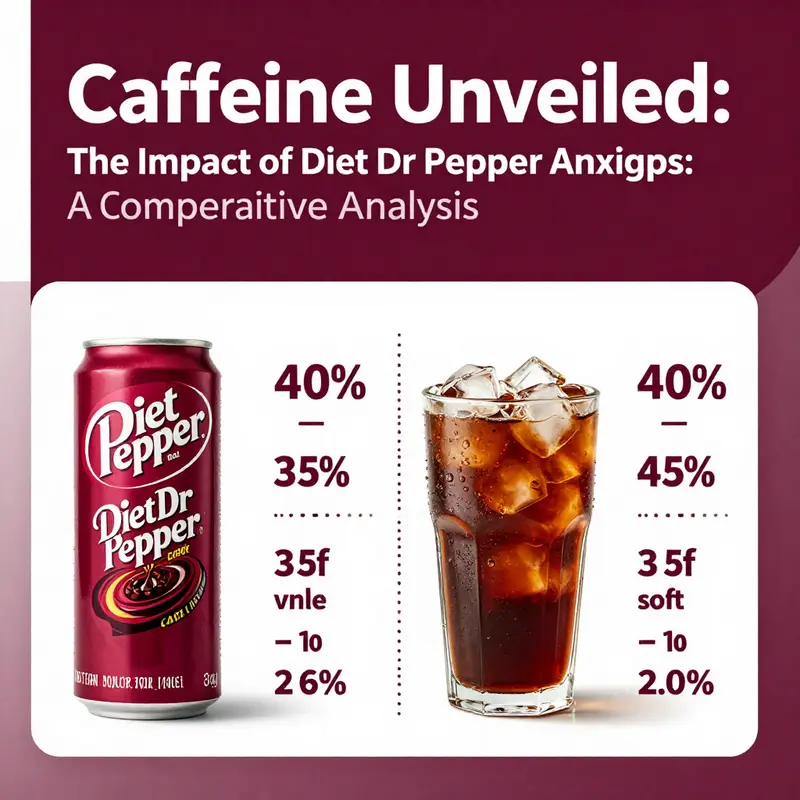
Diet Dr Pepper carries about 42 milligrams of caffeine per 12-ounce can, placing it squarely in the middle of the caffeine spectrum for mainstream soft drinks. This modest amount provides a gentle lift that can help sharpen focus during a mid-morning slump or a late-afternoon dip, without the jitters associated with higher-caffeine beverages. Compared with Diet Coke at roughly 46 mg and Pepsi at about 38 mg per can, Diet Dr Pepper’s caffeine level is very similar to its peers, reinforcing a predictable experience for daily routines. The flavor of Diet Dr Pepper – bold, cherry-like with spice notes – works in tandem with caffeine to provide a crisp finish, so caffeine not only wakes you up but subtly enhances perception of taste. For those tracking caffeine intake, a single can is a clean data point: 42 mg; two cans would be about 84 mg, a total within many general guidelines but worth considering if you also drink coffee or tea. Ultimately, Diet Dr Pepper offers a reliable, mid-range option for caffeine-conscious consumers who value flavor and consistency as part of a balanced day.
Caffeine and Your Health: Practical Considerations for Drinking Diet Dr Pepper
Understanding the caffeine dose in Diet Dr Pepper and how it fits into daily habits helps you make mindful beverage choices. A single 12-ounce can delivers about 41–44 milligrams of caffeine, roughly the same as a cup of strong black tea. That amount produces a mild stimulant effect for most people: sharper alertness, modest improvement in concentration, and a subtle lift in mood for some. The caffeine also contributes to the beverage’s flavor, adding a faint bitterness and balance that many find pleasing.
For healthy adults, that level is unlikely to cause problems when consumed in moderation. The U.S. Food and Drug Administration generally regards up to 400 mg of caffeine per day as a safe upper limit for most healthy individuals. Framed another way, a single can supplies about 10% of that threshold. But context matters. Multiple cans across the day, combined with coffee, tea, or energy drinks, can push intake toward levels associated with jitteriness, elevated heart rate, sleep disruption, or digestive upset.
Certain groups should be more cautious. Pregnant people are advised to limit caffeine; recommended daily caps are lower because caffeine crosses the placenta and the fetus metabolizes it more slowly. Adolescents and children are also more sensitive to stimulant effects, and health bodies advise restricting caffeine in younger age groups. People with anxiety disorders, irregular heart rhythms, high blood pressure, or insomnia may notice that even moderate amounts—like those in a single can—worsen symptoms. For anyone monitoring medications or medical conditions, discussing caffeine intake with a clinician can clarify safe limits.
Sensitivity to caffeine varies widely. Genetic differences influence how quickly individuals metabolize caffeine, and habitual consumers often develop partial tolerance that blunts subjective effects. Someone who rarely consumes caffeine may feel pronounced effects from one can, while a regular consumer might need more to notice the same level of alertness. Because individual response is hard to predict, pay attention to signals such as trouble falling asleep, heart palpitations, increased anxiety, or gastrointestinal discomfort. If those arise, reducing intake or switching to caffeine-free options is a sensible approach.
Timing matters as much as quantity. Caffeine has a half-life of roughly three to five hours in healthy adults, meaning it can remain in the system long after consumption. Drinking caffeinated beverages late in the afternoon or evening can impair the ability to fall asleep or reduce sleep quality. If sleep difficulty is a concern, try limiting consumption to the morning and early afternoon, or choose a caffeine-free beverage later in the day.
Artificial sweeteners are another practical consideration tied to this beverage. Typical formulations use non-nutritive sweeteners to provide sweetness without calories. Current regulatory authorities consider these sweeteners safe at usual consumption levels, yet some people prefer to limit them for personal reasons or because of individual sensitivities. If you track overall intake of artificial sweeteners, include diet sodas in that tally. Moderation and variety in beverage choices can help maintain balance—water, unsweetened teas, and occasional flavored options reduce reliance on any single source.
Calories are minimal in this product, so for those watching caloric intake, a can can be a helpful alternative to sugar-sweetened options. But focusing only on calories misses other factors. Habitual consumption of flavored diet beverages may displace water intake and other nutrient-rich drinks. For people using diet sodas to manage weight, pairing them with a diet that includes whole foods and adequate hydration is important. Behavioral patterns—such as drinking multiple cans during long work sessions—can amplify caffeine exposure without being immediately obvious.
Combining caffeine sources increases total exposure. A midday can plus a morning coffee can double or triple your caffeine compared with a single serving. Energy drinks and concentrated cold brews can add substantial amounts quickly. Keeping a rough tally helps: a can contributes about 41–44 mg; a standard cup of drip coffee typically contains around 95 mg. Add them, and the numbers accumulate fast. If you want to manage intake strictly, consider tracking all caffeine sources for a few days to identify patterns and make adjustments.
Practical steps to reduce risks while still enjoying the beverage include limiting how many cans you drink in a day, avoiding late-day consumption, and alternating with caffeine-free drinks. If sleep or anxiety issues persist, experiment with cutting back for several weeks to see if symptoms improve. For pregnant individuals, follow the specific guidance from your healthcare provider about daily caffeine limits.
Finally, being informed about what’s in a product helps control intake and expectations. If you want a quick reference or a deeper dive into precise caffeine numbers, there are resources that track beverage caffeine content comprehensively. For a targeted overview of whether Diet Dr Pepper contains caffeine and how much, see this internal write-up: does Diet Dr Pepper have caffeine?. For official ingredient lists and product details, the manufacturer provides up-to-date information online: https://www.keurigdrpepper.com
Making caffeine work for you involves balancing alertness needs with health goals. A single can delivers a modest stimulant kick and contributes to flavor, but cumulative consumption, timing, personal sensitivity, pregnancy, and comorbid conditions should guide choices. Simple strategies—moderation, timing, alternating with noncaffeinated drinks, and awareness of artificial sweeteners—allow most people to enjoy the beverage without unintended effects. Tracking intake for a short period reveals patterns quickly and empowers conscious adjustments to match your lifestyle and health priorities.
null

null
Final thoughts
The interplay of caffeine content in Diet Dr Pepper not only informs consumer choices but also shapes marketing strategies for business owners. By understanding the caffeine content, flavor dynamics, and health implications, businesses can better align their products with consumer expectations, fostering trust and brand loyalty. Awareness of these factors equips business owners to navigate the competitive beverage market effectively, making informed decisions that resonate with health-conscious consumers.