
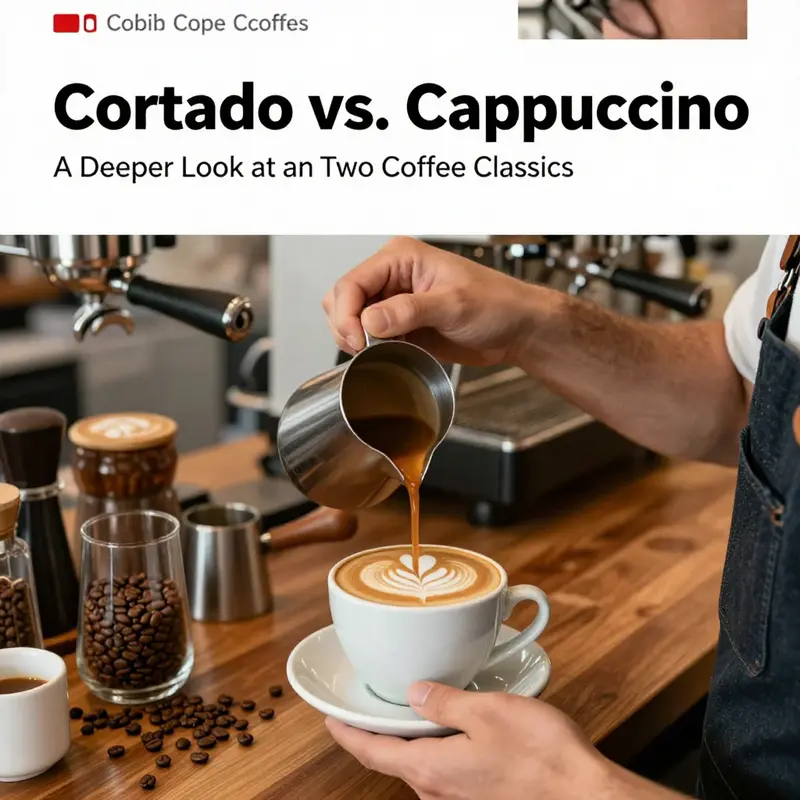
For coffee aficionados and business owners alike, the allure of cortado and cappuccino lies in their distinct characteristics. Both beverages stem from the rich tradition of espresso, yet they present divergent experiences that cater to various preferences. This guide will explore the core differences in milk ratios and preparation techniques, providing an in-depth look at their unique flavor profiles and textures, and discussing their cultural significance and presentation styles. By the end of our journey, you’ll gain foundational knowledge to help determine which coffee suits your clientele and enhances your coffee offerings.
Tiny Balance, Big Flavor: How Cortado and Cappuccino Differentiate Milk, Texture, and Ritual
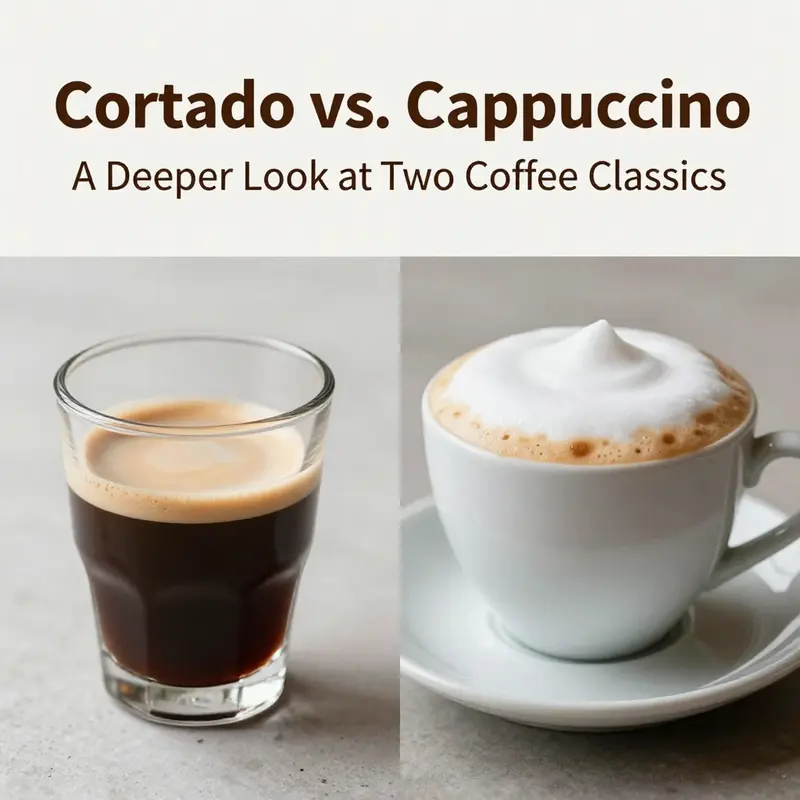
The moment the steam wand sighs and the espresso settles into its cup, two paths diverge in the world of espresso-based drinks. One path celebrates a quiet balance, a pared-down harmony that invites the coffee to speak with barely a whisper of milk. The other path carves out a larger stage, where milk and foam rise in a white, airy crest that softens the bite of the bean and carries the aroma into the room. Cortado and cappuccino are not merely drinks; they are two philosophies of milk, texture, and ritual pressed into a small vessel. If you listen closely, they tell you how culture, technique, and personal preference converge to shape what we sip, when we sip, and why it tastes the way it does. Across continents and cafés, both drinks rely on the same unassuming foundation—espresso—yet they diverge in proportion, in presentation, and in the moment they invite us to pause and reflect on the coffee in our cup.
The most conspicuous distinction between cortado and cappuccino is, undeniably, the milk ratio. A cortado adheres to a 1:1 balance, pairing an equal measure of espresso and steamed milk. In practice, this means a single, or more commonly a double, shot of espresso—roughly 60 milliliters—joined by an equal amount of gently heated milk. The relationship is deliberately simple: the milk neither dilutes nor smothers the coffee, but rather conducts a controlled sweetness that rounds off acidity without erasing the roast’s edge. This balance yields a drink that feels compact in the hand, often sipped from a small glass or cup, typically around 3 to 4 ounces in total. There is a clarity to cortado that many find appealing: the glass confines the liquid so you can see a thin, even blend, with a seamless transition from coffee to milk rather than a layered separation.
In contrast, a cappuccino presents a more expansive equation. The traditional framework follows a 1:1:1 ratio: one part espresso, one part steamed milk, and one part microfoam. The total volume rises as the foam adds a substantial cushion atop the drink. The result is a beverage that fills a larger cup, often between 150 and 180 milliliters, and visually announces its presence with a velvety cap of foam. The microfoam—the aerated milk that behaves like a light, clouded blanket—plays a central role in the cappuccino’s character. It is not merely decoration; the foam modulates texture, tempers the coffee’s intensity, and opens a pathway to a different sweetness profile. When poured with care, the foam forms a gentle hill over a bed of espresso and steamed milk, inviting the drinker to experience a delicate interplay of liquid and air, bite and creaminess.
Texture is the second axis along which cortado and cappuccino travel in opposite directions. Cortado emphasizes a smooth, almost glassy mouthfeel. The milk is warmed to a silk-like gleam, never foamy, and it blends with the espresso without creating a pronounced layer of foam. The barista’s touch aims for an integration that lets the coffee’s chocolatey, fruity, or roasty notes remain discernible even as their surface sweetness grows. The lack of foam means there is no cushion of air between your palate and the drink’s core. Instead, you experience a consistent texture that carries the coffee’s flavors forward, with the milk acting as a facile bridge that softens edges but preserves a sense of boldness. Those who crave a more direct espresso experience, where the roast’s character is unmasked yet kept approachable, often gravitate toward this streamlined, intimate format.
A cappuccino, on the other hand, deploys texture as its signature feature. The thick, stable microfoam contributes not only to a luxurious feel but also to a tactile contrast—creamy foam that yields to the sip, meeting a warmer, frothy middle, and a base of espresso. The sensory journey is layered: first the inhale of warm milk perfume, then the creamy eruption of foam, followed by the espresso’s backbone pressing through. The foam’s sweetness—naturally enhanced by its airiness—interacts with the coffee’s roast profile to craft a smoother, more forgiving profile for many drinkers. The foam acts almost like a palate cleanser between sips, a tiny cushion that keeps the heat from climbing too quickly and a texture that lingers on the tongue. In short, cortado delivers a compact, cohesive texture; cappuccino offers a multi-layered, airier, more dessert-like mouthfeel.
The preparation rituals reinforce the contrast between these drinks. Cortado preparation centers on minimalism and balance. The milk is steamed to a warm, satin-like texture, just shy of forming any microfoam. The aim is to integrate the milk and coffee so that the moment of saturation—the point at which the two liquids fuse—feels seamless. The glass or cup chosen for cortado is typically small, chosen to present the liquid’s clarity rather than a display of artistry. There is no need for elaborate pouring technique or latte art; the aim is to let the beverage speak for itself, two components in negotiation rather than a performance staged for visual effect. The barista’s skill, then, lies in controlling temperature and texture to ensure the milk and espresso meet at a precise balance, preserving the coffee’s fundamental voice while offering a gentle, toasty sweetness that invites another sip.
Cappuccino preparation, by contrast, is a stage for technique and nuance. After the espresso is pulled, the milk is steamed to create a thick, stable microfoam and a creamy, steamy middle. The pour is a careful orchestration: the espresso forms the base; the steamed milk adds body; and the foam is poured to create that familiar, curling cap. The result is a drink that often fills a larger cup and presents a visual cue—the foam—that signals a different sensory expectation. The skill here is not only in heating and texturing the milk but in the pour itself: a precise, controlled flow that sculpts the foam into a moonlike crown, sometimes finished with a simple, elegant line or a more elaborate latte art. The ritual of cappuccino becomes, for many, a morning ceremony—an opportunity to observe the interplay of temperature, texture, and timing as a barista nurtures foam into a stubbornly stable formation.
Beyond texture and technique, the two drinks lead us along distinct cultural paths. Cortado has found a home in spaces where espresso’s intensity is welcomed but not overwhelmed, often thriving in Mediterranean and Spanish coffee cultures. It is the drink of a mid-morning pause or a post-meal moment—a compact energy that supports concentration without overloading the senses. Its smaller size and straightforward composition make it ideal for those who want a quick espresso with a gentle lift, a “now-you-feel-it” jolt that doesn’t demand a feast of time or appetite. Cappuccino, by contrast, is frequently tied to a breakfast ritual in parts of Europe, especially Italy, where the foam presents a creamy invitation to pair with pastries, breads, or light sweets. Its larger volume and frothy top create a sense of indulgence—an entire sensory package in a single cup. The foam’s sweetness and the coffee’s roasted character combine to offer a comforting, almost meal-like experience. In other regions, cappuccino has traveled as a social beverage, shared among friends or used as a quiet moment in a bustling day. Cortado has traveled too, but its footprint remains that of a concise, contemplative drink that values balance over spectacle.
If you pause to compare them side by side, the differences crystallize into a practical framework for choosing which drink to reach for in a given moment. A cortado often suits a situation where the goal is to appreciate coffee’s core attributes with a mild, well-integrated sweetness. The equal parts espresso and milk soften acidity and bitterness without diluting the roast’s character, preserving a sense of the original extraction while smoothing the texture. It is ideal when time is present, yet you want a compact, precise experience—an intimate coffee moment you can savor without a rush. A cappuccino, meanwhile, suits occasions where texture, warmth, and a touch of sweetness are the central purposes. It invites conversation with its foam, encourages a lingering break, and pairs with a pastry in a way that feels almost ritualistic. In whichever form they take, both drinks honor espresso as a foundation and celebrate how milk, in its many forms, can widen the spectrum of flavors and sensations you experience with a single beverage.
For readers who crave further detail on how the milk ratio shapes flavor and mouthfeel in practical terms, a detailed visual and technical breakdown is available in a respected industry guide on milk ratio essentials. The guide traces how milk texturing, temperature targets, and pour technique influence the final profile of these drinks. The emphasis is not merely on following a recipe but on understanding how changes in milk texture and volume shift the perception of acidity, sweetness, and body. This resource can be a useful companion for home brewers and professional baristas who want to refine their approach to milk and espresso in pursuit of a more nuanced cup. See the external resource at the end of this chapter for a deeper dive into milk ratio fundamentals.
Despite the clear distinctions, cortado and cappuccino share a common aim: to elevate espresso with milk in ways that expand the drinker’s experience without losing sight of the espresso’s essence. The cortado keeps the essence close, a minimal infusion that respects the roast and the coffee’s inherent brightness. The cappuccino broadens the palette, inviting a soft, creamy sweetness that can soften even a bold roast’s bite. Both paths honor the idea that milk is not merely a garnish but a partner—capable of revealing, reinforcing, or reshaping the coffee’s character depending on how it is applied. In the end, the choice between cortado and cappuccino often reflects a moment’s mood as much as a preference for texture or scent. It is about whether you want a compact, balanced sip that mirrors the straight espresso with a gentle veil of warmth, or a generous, multi-layered drink that invites you to linger, to watch the foam slowly settle, and to discover how air and milk can translate the roast’s complexity into a comforting, almost contemplative, ritual.
For readers curious to explore a concise, side-by-side overview that captures these differences in a practical, bite-sized format, there is a dedicated article you can consult. It presents a clear comparison between the two drinks and reflects the balance principles outlined here. The link to that resource is provided below as a convenient reference point for further exploration: Cortado-vs-Cappuccino.
As this chapter moves toward a close, the central message remains: cortado and cappuccino are not rival beverages so much as complementary expressions of espresso’s versatility. One line invites you to examine the coffee with a quiet confidence, letting the milk settle into a gentle echo of the bean’s character. The other lifts you into a moment of texture and warmth, where foam creates a soft crown and a sense of ceremony around the act of drinking. Both paths honor the same origin—the espresso shot—yet each carves a distinct path through taste, texture, and ritual. The choice, ultimately, is an invitation: whether you seek a compact balance or a foamy celebration, you are choosing how you want to experience the day’s first or perhaps most intimate coffee moment. In this sense, cortado and cappuccino are not just drinks to be ordered; they are cues for how we approach coffee, ourselves, and the rhythms of daily life.
External Resource for Further Reading: The following guide offers an enriched look at how milk ratio and texture influence espresso beverages, with practical techniques and measurement guidelines that illuminate the discussion above. https://www.espressoacademy.com/blog/milk-ratio-essentials
Cutting Through Foam: A Deep Dive into Cortado and Cappuccino Flavor and Texture
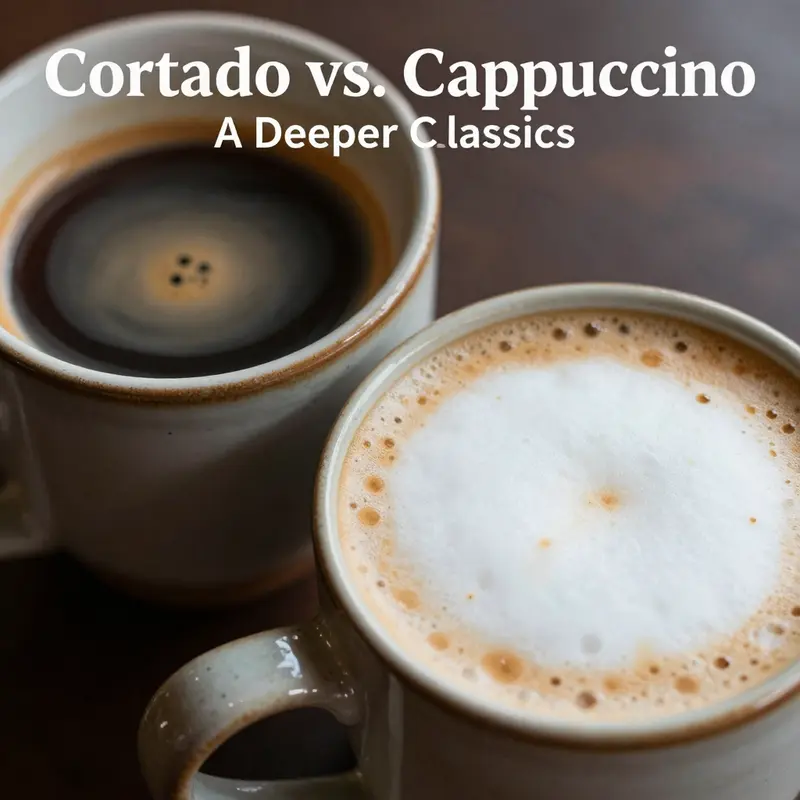
Two espresso-based drinks share a common origin story yet travel in markedly different directions: one seeks balance, the other spectacle. When you pour hot milk over concentrated coffee, the result can feel almost musical, each component playing a distinct part. In the cortado, the emphasis stays squarely on the coffee’s character, tempered by a measured, smooth milk that restrains bitterness without muting nuance. In the cappuccino, milk and foam choreograph a lighter, more playful performance, lifting aroma and texture into a layer of velvet foam that makes the drink feel airy as well as rich. Reading these differences is not merely about preference; it is an invitation to taste the evolving dialogue between precise ratios, technique, and interpretation. The cortado offers a compact, coffee-forward experience that refuses to let milk bury the espresso’s backbone. The cappuccino, by contrast, opens a wider stage where foam acts as a conductor, guiding the senses toward sweetness, aroma, and a creamy mouthfeel that lingers as the cup cools. The result is a pairing of contrasts within a shared framework: espresso as the base, milk as the modifier, and technique as the secret ingredient that reveals or hides certain flavors depending on how generous the pour or how careful the whisking has been.
In this chapter, we explore flavor profiles and texture as if they were two different musical instruments tuned to the same note. The cortado presents a balance that highlights the roast, the acidity, and the natural sweetness of the coffee beans in a way that remains approachable for a wide range of palates. The cappuccino, with its generous foam and three-way balance, elevates the sensory experience into a layered, multi-sensory event—aroma, texture, and temperature cooperating to soften edges while inviting a lingering sweetness that often feels comforting and celebratory. To understand why these drinks feel so distinct, it helps to anchor our discussion in the practical realities of how they’re made. A cortado is typically equal parts espresso and steamed milk, a 1:1 ratio that yields about 30 milliliters of each in a small glass. The aim is not to dilute coffee but to create a smooth, creamy bridge that maintains coffee intensity. By contrast, a cappuccino traditionally follows a 1:1:1 ratio—one part espresso, one part steamed milk, and one part foamy milk. The foam is not merely a decorative crown but an integral texture that carries aroma and contributes to the perceived sweetness. This difference in milk texture—dense, integrated milk in the cortado versus airy, stable foam in the cappuccino—begins a cascade of sensory shifts, from mouthfeel to finish, that coffee enthusiasts can detect with even modest attention.
To taste a cortado, imagine a small glass that shows the liquid’s clarity, a quiet gleam that hints at the milk’s warmth without fogging into a milky blanket. The first sip arrives with a gentle, almost silky viscosity. The coffee’s acidity and roast notes appear, but they are softened and wrapped in a milky satin. There is a sense of immediacy—the espresso’s edge is felt, yet it is tamed by the milk’s 1:1 embrace. The mouthfeel is fuller than a black espresso, yet not so creamy as to dull the coffee’s character. On the palate, you might notice citrusy brightness, caramel sweetness, or a cocoa-like finish, depending on the bean and roast, all carried by the milk’s velvet coat. The lack of a thick foam layer means there is no foam cushion to alter aroma release or to slow the drink’s cooling. The cortado’s charm lies in immediacy: you taste the espresso’s origin story with every mouthful, but the bitterness cools into a smooth, friendly bitterness that invites another sip rather than signaling the end of the coffee moment.
A cappuccino invites a different kind of engagement. Its foam acts as a porous cap that preserves a stronger aroma as the drink warms. When you bring the cup to your lips, the initial impression is often a bright, nutty, or chocolatey scent layered on air. The foam’s texture—light, airy, and persistent—carries the sweetness forward and can soften the espresso’s sharper edges even before the milk beneath fully enters the picture. In texture, the cappuccino is a boundary-pusher: the foam creates a microclimate where airiness and warmth blend. The mouthfeel shifts from a robust initial espresso bite to a creamy, pillow-like finish, with the foam melting gradually to release the milk’s sweetness and the coffee’s deeper notes. Because foam comprises a substantial portion of the drink, the cappuccino often reads as lighter in weight, more buoyant on the tongue, and more forgiving in flavor balance. The aroma lingers, and the foam’s microbubbles can whisper hints of toasted sugar and caramel, inviting further exploration as the drink cools. The layered construction—coffee bottom, steamed milk middle, foam crown—also means a different sensory arc: you may start with a robust coffee note, drift through a mellow milk phase, and end on a soft, foamy kiss that leaves a sweet, lasting impression.
The textures in these drinks also guide our perception of temperature and mouthfeel. The cortado, with its steady, unbroken milk integration, delivers warmth in a streamlined, continuous texture. This makes it ideal for those who want a single, coherent mouthfeel that remains faithful to the coffee’s identity. There is a certain gravity to the cortado—a sense that the drink exists to support coffee’s true flavor, not to obscure or overshadow it with foam. In the cappuccino, the foam acts as a playful counterweight to the liquid, a cushion that can trap a concentrated aroma and release it as you sip. The foam’s airiness contributes to a sensation of lightness, even though the volume of milk might be similar or greater than in a cortado. The finish, then, tends to be longer and sweeter in a cappuccino, with the foam lending a gentle, creamy sweetness that lingers and invites a second taste, a second moment of recognition with the same cup held a touch warmer in the hand.
Beyond taste and texture, the drinks diverge in appearance and how they signal their credentials to the observer. A cortado’s glass—or a small cup—usually presents a clear, uniform liquid that betrays little of a layered structure. The beauty lies in the drink’s honesty: no obvious separation, no rooftop of foam to betray the craft. The glass becomes a stage for the brown-tinged crema to reveal itself in a compact, polished sheet that does not foreshadow a foamy crown. Cappuccino, by contrast, is visually a celebration. The thick, snow-white foam sits on top, often with delicate micro-etching or a simple pull of color from the coffee below. It is a canvas for latte art, a ritualistic promise of sweetness and texture to come. The cup, often larger, becomes a vessel for a drama of layers and aromas—an inviting scene that suggests a more generous, slower, perhaps more ceremonial drinking experience.
The cultural context around these drinks also shapes how we perceive them. Cortado is frequently associated with a straightforward, no-frills appreciation of coffee’s core flavors. It is the drink for someone who wants to taste the bean—its acidity, fruitiness, roast notes—without a foam crown to overshadow those flavors. Cappuccino often accompanies a morning routine, a social or leisurely moment, or a pastry pairing. Its foam invites a slower, more contemplative sipping style, where one savors the contrast between the coffee’s depth and the foam’s lightness. This is not a rigid rule but a leaning arc observed in many cafes and home routines: cortado for clarity and focus, cappuccino for warmth and ritual. Both drinks, however, share a flexible adaptability. A cortado can show up in a morning office ritual, a quick espresso-based break, or a weekend tasting session, especially when the goal is to measure how the milk softens acidity without muting character. A cappuccino can accompany a breakfast spread, a moment of social sharing, or a quiet afternoon, offering a comforting, texturally rich experience that feels generous even when consumed quickly.
When we examine the flavor profiles more explicitly, the cortado’s balance becomes the lens through which we interpret the coffee itself. The equal ratio means the drink cannot rely on heavy milk sweetness or foam to tone down the coffee; instead, it invites the brewer to select a bean with a nuanced profile—one where acidity, fruit notes, or subtle sweetness can come forward without being overwhelmed. The cortado thereby becomes a vehicle for appreciation of the roast and origin notes, with the milk performing the role of a moderator rather than a primary flavor. The cappuccino, conversely, invites the barista to consider how the milk’s sweetness and the foam’s texture will interplay with the espresso’s bitterness and aromatics. The result is a multi-layered perception: a gentle introduction of sweetness, a carriage of aroma by the foam, and a finish that can be creamy, toasted, or chocolatey depending on how the drink is built and how long you let it rest before drinking.
From a tasting perspective, evaluating these drinks involves attending to a few consistent signals. First, aroma: the cortado’s aroma tends to be coffee-forward, carrying hints of roast and subtle fruit or floral notes that are not masked. The cappuccino’s aroma gathers warmth from the foam and the milk, combining with the coffee to release a softer, more caramelized scent as the drink cools. Second, body and texture: the cortado offers a medium to full body without foam’s buoyancy, giving a weighty, cohesive mouthfeel. The cappuccino’s body is lighter in weight due to foam, yet the mouthfeel can feel unusually rich because the air in the foam expands the sensation of creaminess. Third, acidity and sweetness: cortado can preserve a brighter acidity, tempered by milk, whereas cappuccino tends to mellow acidity further with a more communal sweetness from foam and milk. Finally, finish and aftertaste: cortado finishes with a clean, coffee-driven aftertaste that can linger with a gentle bitterness or cocoa notes, while cappuccino tends to leave a longer, sweeter finish, shaped by the foam’s creamy trail and the milk’s residual sweetness.
The practical takeaway for a home experiment or a cafe tasting is simple: if you want to explore coffee in its most unadorned form with just enough milk to quiet sharp edges, aim for cortado proportions and a steady, even steam; if you crave a sensory journey with aroma, texture, and a touch of theater, lean into the cappuccino’s foam and layered structure. For readers who want to dive deeper into the concept of a balanced espresso–milk harmony, there is value in exploring how the cortado achieves that precise equilibrium and how the foam in a cappuccino can carry aroma and sweetness in a way that would be difficult to replicate with a simpler milk integration. In practice, your palate will tell you which approach aligns with your mood and your coffee bean selection. If you are curious about the theoretical framework behind the cortado’s balance and how it speaks to the broader idea of harmony in espresso–milk drinks, you might consult sources that discuss taste profiles and the balance between espresso and milk. cortado-vs-cappuccino offers a concise contrast that reinforces the concepts described here, while inviting readers to consider how tiny adjustments in milk volume or foam can upend the entire drinking experience.
Ultimately, the cortado and cappuccino each tell a different story about coffee. The cortado speaks to clarity, precision, and a direct line from bean to cup. The cappuccino narrates hospitality, warmth, and a celebration of texture, aroma, and the social ritual of sipping. Both beverages honor the espresso at their core, yet they honor it in different keys. When you learn to recognize the subtle cues—the milk’s integration or foam’s lift, the cup’s size, the drink’s opening aroma, the finish’s sweetness—you gain a more nuanced understanding of your own palate’s preferences. In exploring these preferences, you also gain insight into how milk, heat, and air together shape the coffee experience. The cortado, with its quiet balance, encourages a disciplined appreciation for the bean’s inherent character. The cappuccino, with its generous foam and layered composition, invites you to linger with the cup, to savor the evolving textures as it cools, and to welcome a comforting, almost ritual-like moment in your day.
For readers who want to extend this exploration beyond the cup, consider how alternatives to dairy milk may alter the balance and foam structure in each drink. Soy, almond, oat, or coconut milks each bring their own sweetness, mouthfeel, and foaming properties, which can tilt the balance or enhance the foam differently. In many cafes, the choice of almond or oat milk might transform a cortado into a more complex collaboration of flavors, while a cappuccino with oat milk can maintain a robust foam while introducing a subtly nutty, cereal-like sweetness. The same principle applies to temperature: the cortado’s warmth should be steady and comfortable, not aggressively hot, so the milk can carry its own sweetness without masking the espresso’s brightness. The cappuccino benefits from a well-heated milk that yields a stable foam; if the foam collapses quickly or the milk is too hot, the delicate aroma and overall texture can degrade, changing the drinking experience in real time. These practical considerations remind us that sensory evaluation of coffee is both art and science, a dynamic feedback loop between technique, materials, and personal taste.
For those who enjoy a broader context, it is worth noting that the balance of cortado and the foam-centric texture of cappuccino illustrate a broader spectrum of espresso-based drinks. The cortado represents a minimalistic, coffee-forward approach, a reminder that the essence of coffee can be preserved even when a small amount of milk is added. The cappuccino embodies a more generous, craft-driven approach, where milk and foam become integral to the overall flavor mosaic. In either case, the craft lies in controlling variables: the espresso’s dose, the milk’s temperature, the milk’s texture, and the foam’s stability. In skilled hands, these variables harmonize to produce an experience that is greater than the sum of its parts. The result is a conversation about balance versus amplification, about a drink’s ability to be both a faithful portrait of the bean and a generous respite for the senses.
If you are intrigued by these sensory and technical differences and want to explore more scholarly or practitioner perspectives, you can consult external resources that discuss the nuanced taste profiles of cortado and cappuccino. For instance, Barista Hustle offers an in-depth look at how a cortado achieves its “balanced espresso-milk harmony,” a concept that helps explain why the cortado feels neither strictly bitter nor overly creamy. This resource provides a framework for understanding how milk, when used in specific ratios, can reveal the subtleties of coffee without drowning them in sweetness or texture. While the cappuccino’s charm often resides in its foam and aroma, the cortado’s strength lies in its precise equilibrium, a balance that invites a close, careful tasting and a willingness to notice the beans’ signature characteristics in a way that is less likely to be overshadowed by milk’s sweetness. For readers who want to read more about taste profiles and the science behind these textures, external resources can be a helpful extension of what you experience in a cup.
In closing, the cortado and cappuccino are more than two ways to enjoy espresso; they are two different philosophies of how milk interacts with coffee. The cortado treats milk as a moderator, smoothing the drink’s edges while preserving the bean’s personality. The cappuccino treats milk as a partner and a stage-prop, lifting aroma and texture to create a more theatrical, comforting experience. Both approaches reveal the coffee’s versatility and the barista’s craft, and both offer paths for exploration—paths that begin with a simple question: how do you want your coffee to feel in your mouth and what story do you want it to tell about the bean, the milk, and the moment you choose to drink it? The answer will guide your next tasting, your next morning routine, and perhaps your next favorite café ritual. In this sense, cortado and cappuccino are less about competition and more about a dialogue—the dialogue between balance and foam, between coffee’s core and the milk’s embrace, a conversation that continues as you sip and reflect.
Glass, Foam, and Time: The Presentation and Cultural Significance of Cortado versus Cappuccino
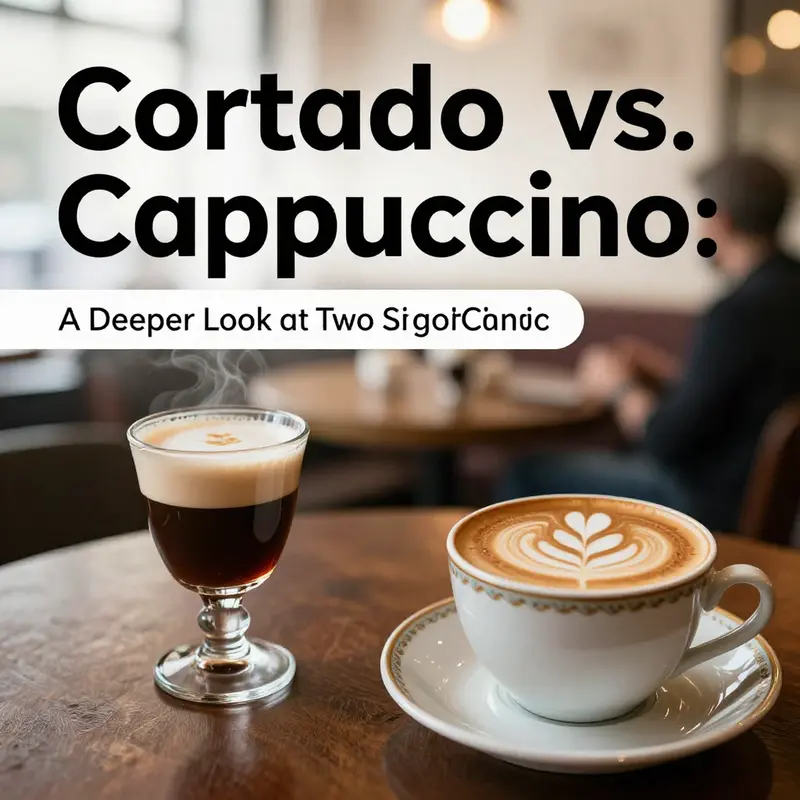
In the quiet hum of a neighborhood café, the first sight of a Cortado and a Cappuccino is not just a cue about what’s inside the cup, but a cue about what the drink intends to be. The Cortado presents itself with clarity, its glass vessel almost whispering that this is a drink about balance. A small, clear cup—often described in café talk as a Gibraltar or a tulip glass—holds a portrait of contrasts: a dark espresso grounded at the bottom and a pale, velvety partner resting on top. The ratio, typically one part espresso to one part hot milk, makes the drink appear nearly transparent, a rare feature in a beverage that still carries a strong aroma. The transparency of the container is not incidental; it is a deliberate stage set. It invites the drinker to study the way the milk has cut through the espresso’s intensity, creating a seamless continuum rather than a layered spectacle. There is no great foamy crown. Instead, the surface is smooth, nearly glassy, a physical testament to restraint. In conversations about presentation, the Cortado is often cited as the anti-showpiece. Its beauty lies in restraint, in the honest display of a 1:1 harmony that preserves the espresso’s backbone while softening its edges just enough to frame the flavor rather than to obscure it. And yet the simplicity of its vessel carries a message: what you sip here is not a latte in disguise, nor a quick energy boost. It is a mindful sip, a moment to notice how gentle the milk can be when poured with purpose rather than splash and flourish.
The Cappuccino, by contrast, is a different kind of theatre. It appears in a larger ceramic cup, its surface a sculpture of foam that rises like a pale mountain, often crowned with delicate latte art that can resemble leaves, hearts, or abstract flourishes. The foam is not merely a topping; it is an integral texture that shifts the entire experience. The Cappuccino’s typical structure—equal parts espresso, hot milk, and foam—creates a layered silhouette that is both audible and visible. When the drink is served, the aroma of toasted milk greets the nose before the first sip, a signal that sweetness and airiness have joined the espresso’s bite. The presentation is a performance: the foam invites the eye to linger, the art invites the mind to linger, and the anticipation builds with the steam’s rise from the cup’s rim. In many cafés, the cappuccino’s foam becomes a canvas for the barista’s craft, a small but public act of skill that blurs the line between drink and art. The larger vessel and more substantial foam give Cappuccino a sense of occasion, a ritualistic quality that marks it as a more festive or ceremonial encounter with coffee.
The glass versus the cup tells a broader story about how these drinks are meant to be experienced. The Cortado’s glass suggests an encounter that favors honesty, speed, and clarity. It’s a drink that travels well, whether you are perched at a window seat or balancing a notebook and a phone in a quiet café corner. The Cortado’s surface is often so smooth and uniform that it seems to glow with the interior warmth of milk and coffee mixed in a single, even shade. In Barcelona, Madrid, and other parts of Spain where the cortado has earned its name, the glass becomes part of the ritual, a compact stage that communicates the drink’s philosophy: keep it brief, keep it balanced, and let the coffee speak for itself. The Cappuccino, with its larger bowl and its crown of foam, tends to call for a longer moment of savoring. The foam is a buffer that can soften the drink’s heat and acidity, extending the sensory experience. The cup’s weight, the ceramic’s warmth, and the foam’s microstructure all contribute to a sense of ceremony that invites a more lingering, social moment. People order cappuccinos not only for the taste but for the ritual of beginning a conversation with a pastry, a friend, or a morning plan that feels worthy of a small celebration. The vessel, then, is not merely a container; it is a signifier of pace and posture in the café’s social life.
Culturally, these drinks embody different historical trajectories that still shape how they are perceived and consumed today. The Cortado’s Basque and broader Spanish roots anchor it in a tradition that prizes balance and drinks that pair well with small bites or a quiet moment after a meal. The term cortar—meaning to cut—captures the drink’s intention: to cut through espresso’s natural brightness with just enough milk to soften but not overshadow. The Cortado’s modest size accommodates a precise experience. It can be enjoyed quickly, but not hurriedly, because the balance invites a moment of reflection on how milk and coffee can coexist rather than compete. The Cortado’s cultural resonance is also tied to regional café cultures that emphasize craft over spectacle. It is the drink of the connoisseur who likes to taste the bean’s character—its roast level, its acidity, its origin—without the foam’s sweetness masking the underlying notes. In this way, Cortado becomes a vehicle for a more intimate coffee conversation, one that rewards attentiveness and restraint.
Cappuccino’s Italian lineage is inseparable from daily life, especially the morning routine. Italy’s café culture has historically celebrated the ritual of starting the day with warmth and a certain sociability. The cappuccino’s foam, its color division—espresso brown at the bottom, milk white in the middle, foam beige at the top—echoes the colors of the Capuchin robe, a small symbolic connection that has deepened into a shared international familiarity. The foam is not merely texture; it is a form of edible air that signals indulgence and comfort. The cappuccino’s larger cup sizes and the social energy around it reflect a tradition that values community, a pause to welcome the day and the people who share it. In many traditions, ordering a cappuccino after a certain hour is considered an unspoken rule, a reminder of how customs shape appetite as much as taste. The foam’s artistry, too, has become a public language. Latte art, once a niche craft, has grown into a symbol of contemporary café culture, turning the drink into a stage for creativity. The cappuccino, therefore, blesses the table with a visible promise: a softer mouthfeel, a sweeter finish, and an invitation to linger.
The sensory profiles of these two drinks further illuminate how presentation and culture intertwine. The Cortado’s milk is warm but not dominating; its role is to temper the espresso’s acidity and bring forward the coffee’s body. The result is a drink that feels as if it has been ground and polished into a single, unified texture. The mouthfeel is compact, almost kinetic—there is a sense that the flavors are being guided along the palate by a smooth, continuous embrace. In contrast, the Cappuccino offers a contrast-forward experience. The foam contributes a creamy, airy cushion that dances above the denser coffee and milk beneath. As you sip, you may notice the creamy sweetness of the foam balancing the coffee’s bitterness, followed by the milk’s warmth that lingers and invites the next sip. The foam’s microstructure—whether the bubbles are fine or more robust—shapes the texture and can subtly influence perceived sweetness. The cup, the foam, and the timing work together to establish a particular tempo: Cortado asks for brisk but attentive sipping; Cappuccino invites a slower, more deliberate enjoyment, a ritual of inhaling the aroma before each mouthful.
An understanding of presentation also sheds light on how cafés curate their menus and their space. The Cortado’s minimalist, almost clinical presentation pairs well with small coffee bars and modern, design-forward spaces where the stage is the glass itself and the drink’s balance is the performance. In such environments, customers are encouraged to consider how the espresso and milk interact, a microcosm of the café’s commitment to precision. The Cappuccino, by contrast, often aligns with spaces that celebrate craft, warmth, and hospitality. A larger cup, a generous foam cap, and the possibility of latte art create a focal point for social interaction. The drink becomes the reason to pause, to exchange a few words with a barista, to admire the foam’s shape, and to decide what pastry best complements the drink. The differences in vessel and presentation thus extend beyond aesthetics; they frame the social experience and the rhythm of a visit to the coffee house.
If we consider how these drinks are positioned in modern café culture, the Cortado and Cappuccino occupy different philosophies of coffee. One embodies the third wave’s insistence on clarity, origin, and technique, presenting coffee as a craft with a chosen milk ratio and a simple, honest vessel. The other embodies a more traditional, almost ceremonial approach to coffee, where the drink is a full, multisensory experience designed to accompany conversation, pastry, and mood. Yet both converge on a single truth: a well-made Cortado or Cappuccino can reveal much about a café’s values, the barista’s skill, and the customer’s moment in time. The choice between them is rarely merely about taste. It is a choice about tempo, setting, and the kind of coffee memory one seeks to create that day.
For readers seeking a practical anchor within this broader cultural frame, it helps to reflect on how you prefer to experience coffee in your daily life. If you crave a coffee that carries the bean’s intrinsic character with minimal masking, the Cortado is a compelling option. Its balance supports a clearer perception of origin, roast profile, and acidity, while still providing the smoothness that milk can offer. If, instead, you want a moment of warmth, a bit of drama, and a sense of ritual that pairs well with conversation and a pastry, the Cappuccino offers a richer, more indulgent experience. Both drinks are, in their essential forms, a celebration of espresso—one that holds the line between strength and gentleness with a quiet confidence and another that lifts the line with foam and ceremony.
To travelers and readers who like to trace the threads of coffee culture across borders, it is instructive to observe how a city or a café negotiates these two drinks. The Cortado’s compact presence can be a badge of urban, cosmopolitan coffee culture that treats a drink as a precise craft rather than a spectacle. The Cappuccino’s broader appeal often reflects a tradition of hospitality and shared rituals that travel easily across languages and borders. In this sense, the drinks become symbols of cultural negotiation: how a place honors its foreground—its origin, its method, its artistry—and how it negotiates with the background—the social rituals, the pastry pairings, the conversation that sets the mood for the day.
For deeper engagement with the Cortado and Cappuccino as presented in different cafés and traditions, see this comparative overview: Cortado-vs-Cappuccino. It expands on the glass versus cup narrative, the foam’s role, and the cultural contexts that shape each drink’s reception. In your own neighborhood, you may notice that a tiny glass promises clarity and focus, while a larger cup delivers warmth and welcome. Both pathways lead to the same essential realization: coffee, in its many forms, is a language of balance and culture, spoken with every pour, every sip, and every shared moment in a café.
For readers seeking a broader historical lens beyond these two drinks, a concise overview of espresso and its global journey can provide useful context. See a respected external resource for a historical framing of espresso and coffee culture at https://www.britannica.com/topic/espresso-coffee.
Final thoughts
In summary, understanding the distinctions between cortado and cappuccino is essential for enhancing coffee menus and catering to diverse customer preferences. Cortado’s balanced nature offers a strong coffee taste with a smooth finish, ideal for those who favor a more straightforward espresso experience. In contrast, cappuccino delivers a more indulgent experience with its airy texture and rich milkiness, often considered a breakfast staple in many cultures. Embracing these differences not only enriches your coffee offerings but also aligns your business with current coffee trends that emphasize quality and authenticity.