

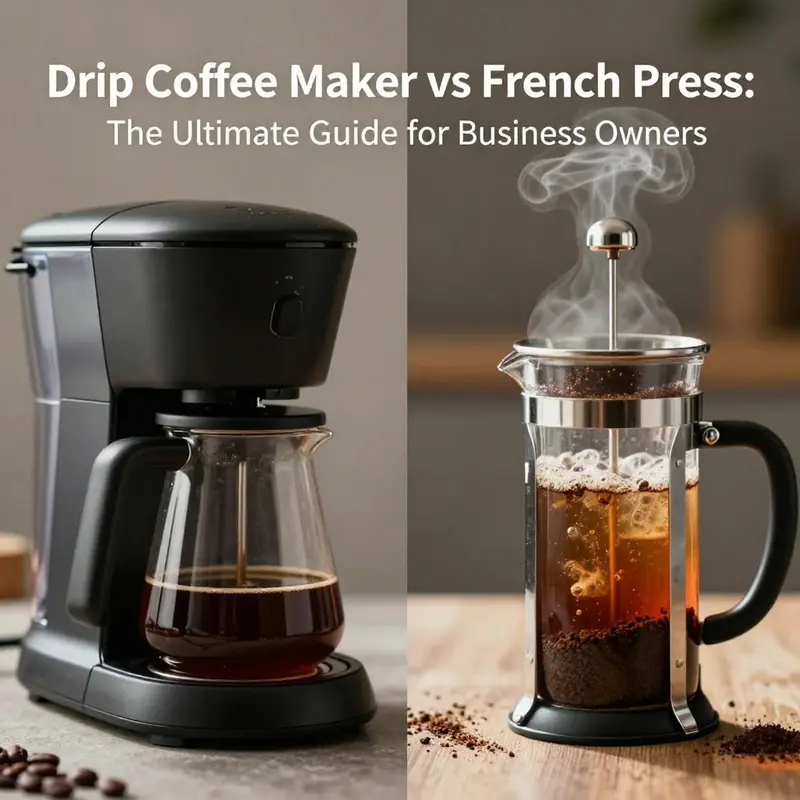
Selecting the right coffee brewing method is essential for business owners aiming to serve high-quality coffee to their customers. Drip coffee makers and French presses are two leading options, each with unique brewing techniques, flavor profiles, and levels of convenience. Understanding these differences is not only vital for enhancing customer experience but is also an opportunity to refine operational efficiency. The subsequent chapters will delve into brewing methods and techniques, compare their flavor profiles and coffee quality, and analyze the convenience and user experience provided by these popular brewing devices.
null
null
Between Clarity and Depth: How Drip Coffee Makers and French Press Shape Flavor, Coffee Quality, and the Morning Ritual
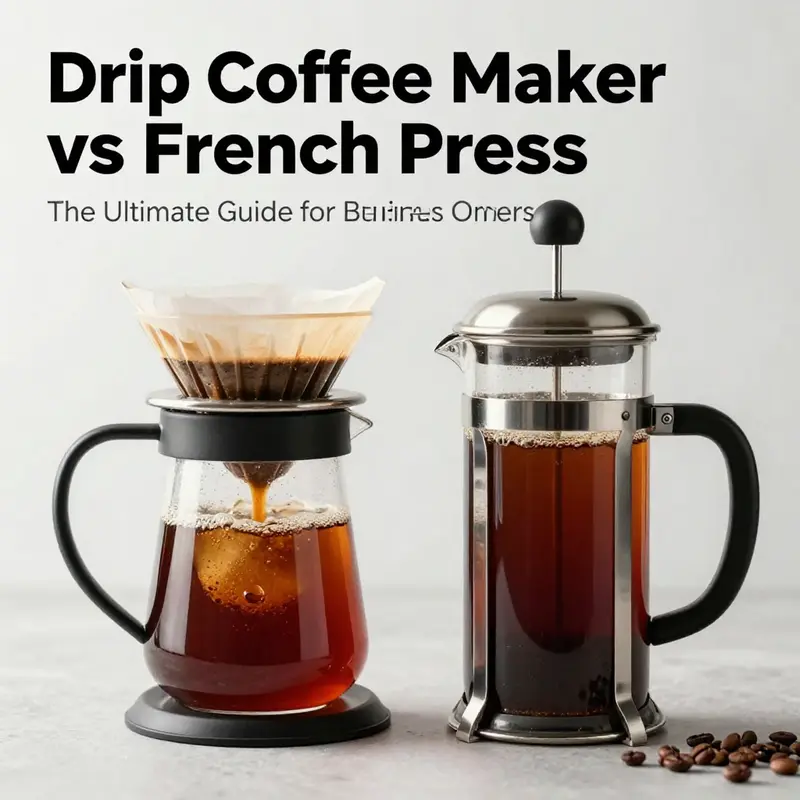
The moment the kettle sighs to a boil and the first wafts of aroma slip into the kitchen, a quiet choice presents itself. Two distinct paths to coffee awaken the senses each morning: the precision and predictability of a drip coffee maker and the hands-on, tactile ritual of a French press. The choice isn’t only about taste; it’s about how you want to brew your day. The drip machine leans toward a clean, bright, almost clinical clarity. It is built for routine—grind, measure, press a button, and return to the kettle or the morning paper with a pot already waiting. The French press, by contrast, insists on a slower pace, a moment of anticipation, and a willingness to negotiate with the brew. It invites you into the process—the grind size, the water temperature, the steep time, even the amount of agitation. When viewed side by side, the differences in flavor and texture reveal themselves not merely as preferences but as actual expressions of how a particular method interacts with coffee’s complex chemistry.
To understand why these two approaches diverge so markedly, it helps to consider the brewing method itself as a kind of flavor instrument. The drip system relies on gravity to pull hot water through ground coffee, which sits inside a filter. The filter, often paper or metal, acts as a sieve that traps grounds and most of the minute particles that can cloud a cup. That filtration, coupled with the relatively consistent water contact time and temperature typical of many machines, tends to yield a cup that is lighter in body and more uniform in taste from cup to cup. The oils that carry much of coffee’s deeper, more nuanced flavors are partially filtered out. In a broad sense, this is how a drip coffee maker wins over busy mornings: a predictable, repeatable, and easily scalable brew that suits households or offices where multiple drinks must be produced with little fuss.
The French press, in contrast, embraces immersion. Ground coffee meets hot water in a tightly sealed cylinder, and the grounds steep for several minutes before a metal mesh plunger is pressed to separate the liquid from the spent solids. The metal filter doesn’t trap oils in the same way a paper filter does, so the brew retains more of those oils and fine particles. What follows is a cup with a richer body, a more pronounced mouthfeel, and a palate that can display a wider range of flavors from oils, fruit acidity, herbal notes, and even hints of chocolate or spice that can feel almost therapeutic in a slower, more deliberate session. The result is not merely a stronger cup, though many drinkers describe it as more robust. It is a cup whose texture and aroma invite a longer acquaintance, a ritual that rewards patience with a deeper sense of presence in the coffee’s sensory profile.
The fundamental contrast, then, is not simply about strength versus gentleness, but about how each method negotiates three core dimensions of flavor quality: clarity, body, and aroma. Clarity describes how easily you can discern distinct flavors in the cup. It often correlates with a less viscous, more transparent perception of the coffee’s tasting notes. Drip coffee typically produces this clarity, aided by the filter that removes a portion of the oils and fine particles that can blur a nuanced blend of flavors. Body refers to the sensation of viscosity, the sense of weight that the coffee leaves on the tongue. The French press leans toward a fuller body because more oils and micro-particles remain in the brew. This is not simply about heaviness; it’s about how the coffee fills the mouth and how long its flavors linger on the palate. Aroma, the third dimension, ties directly to volatile compounds released during brewing. Immersion brewing can preserve more essential oils, while the filtration in drip systems can allow a cleaner, sometimes brighter aromatic profile to emerge in the cup. Each method therefore curates a sensory experience in a slightly different register, shaping the perceived quality through a carefully chosen balance of filtration, contact time, and extraction.
The science behind these outcomes lies in a handful of variables that you can adjust, often with a greater degree of impact than a subtle difference in bean origin or roast level. Water temperature, grind size, contact time, and filtration sit at the center of flavor control. In a drip system, water is heated to a target range and then dispensed over the grounds, with the brew time tied to the machine’s flow rate and the carafe’s capacity. The grind is typically medium, a compromise between surface area for extraction and the risk of over-extraction leading to bitterness. If the grind is too fine, the grounds can over-extract and release bitter compounds that clash with the cleaner cup the machine is designed to deliver. Too coarse a grind, and the extraction becomes uneven, yielding a pale, weak cup that can taste hollow or underdeveloped. These delicate adjustments matter because the drip method, by its design, folds a lot of flavor into a compact, consistent dose across many cups.
In the French press, the variables take on a more intimate role. The grind is usually coarser, which reduces the surface area exposed to water and fosters a steadier extraction during the immersion period. The water is heated to a similar temperature range as drip, but the contact time can be extended from a few minutes to several, depending on the user’s preference. Because the grounds and water mingle in the press, any oils and fine particles have a direct pathway into the beverage. The result is a roasty, sometimes chocolatey, full-bodied cup with more pronounced aromatics. Yet this path can also magnify bitterness if the grounds are too fine, the temperature too high, or the steep time too long. The path to a satisfying cup with a French press depends on a careful calibration of the variables and a willingness to degree-match the bean’s character to the extraction method. In practice, this is where the craft aspect becomes most visible. The ritual of weighing the coffee, verifying the grind, pouring the water with a steady hand, watching the bloom, and then pressing down to reveal the brew can feel akin to an artisanal craft—the moment when the coffee’s personality is coaxed into being through deliberate, tactile actions.
Those who prioritize convenience often gravitate toward drip systems for reasons that go beyond taste. A well-designed drip machine can maintain consistent water temperature across the brew cycle, deliver a reliable pour-over-like profile on a larger scale, and keep a pot warm with the ease of a programmable timer. For households that wake to the same wake-up time each day, the ability to fill the kitchen with the same aroma at the same moment is a powerful, almost comforting, routine. The machine’s automation reduces the cognitive load of morning coffee; you can set it the night before and trust that, come dawn, you’ll be greeted by a familiar cup ready to pour. The ritual remains, but the focus shifts from the technique of extraction to the reliability of the result and the rhythm of the morning.
In contrast, the French press offers a more hands-on experience that can feel like a small ceremony each morning or on weekends when time slows. The user’s involvement—the choice of grinder, the setting of the kettle, the brief bloom of the grounds, the audible clap of the plunger as it seals, and the tactile feel of gravity pressing the plunger through the metal mesh—furnishes a direct line to the coffee’s flavor. This process invites experimentation, a willingness to chase a particular note or body and to adjust variables as the beans evolve. Enthusiasts often describe an intimate relationship with the cup: a sense that flavor is not merely discovered but negotiated with the method. The experience is enriched by the awareness that the same bean, brewed with the same method, can reveal different facets on different days, depending on humidity, water mineral content, and the precise grind moment. Such variability is part of the appeal for many drinkers who see coffee as a living craft rather than a fixed product.
From a broader perspective, the decision between the two methods also hinges on the question of consistency versus artisanal experience. Drip machines excel at delivering uniform results in large batches. They can manage multiple cups with predictable timing, which makes them especially well-suited for offices, homes with heavy daily consumption, or households where several people crave a consistent starting point. The French press, conversely, is the domain of individual control. It rewards experimentation and personal preference, and it often invites a longer ritual that can be mindful and relaxing. The taste of the brew is not simply a matter of one or the other; it is a direct expression of the drinker’s engagement with the process. The same coffee, prepared by either method, can yield an entirely different experience, a reminder that coffee flavor is not a fixed property of the bean alone but a conversation between bean, water, temperature, ground size, time, and the posture of the brewer.
A practical way to approach the question, then, is to consider what you value most in your daily coffee ritual. If you prize speed, consistency, and the ability to run a machine in a busy household or workspace, a drip system offers a practical, reliable cadence. Its design often accommodates larger quantities with minimal maintenance, and the investment in time is amortized by the volume and steadiness of the brew. If you crave flavor depth, a sense of control over every variable, and a process that feels almost meditative, the French press is appealing. The tactile engagement—measuring the coffee, coarse grinding, controlling the steep time, and enjoying the moment after pressing—transforms coffee into a ritual rather than a routine. The flavor you end up with will likely reflect the path you selected: a clean, luminous profile with a gentle sweetness in the drip cup, or a richer, more resinous presence with multi-layered notes in the press brew. Both approaches can reveal the bean’s character in compelling ways, but their outputs sit at different points along the spectrum of clarity, body, and aroma.
In this context, freshness remains the universal driver of coffee quality regardless of the method. Freshly roasted beans are vital, as they carry the maximum set of aromas and oils that contribute to flavor. Grinding just before brewing is equally important; it ensures the surface area exposed to water is appropriate for the chosen method. Even the words about grind size carry weight here. For drip, a medium grind helps prevent over-extraction while maintaining efficient water flow through the filter. For a French press, a coarser grind shapes the extraction by slowing the water’s interaction with the grounds and reducing the amount of fines that pass through the metal filter. These adjustments are not arbitrary; they align with the physics of each method—the way water travels, the surface area it encounters, and the rate at which compounds are drawn from the bean into the cup.
The concept of oil retention also matters, and it is perhaps most telling when comparing the two methods. The lack of a paper filter in French press practice preserves much of the natural coffee oils in the final beverage. These oils contribute to aroma and mouthfeel, adding depth to the perceived quality of the cup. Drip filtration, by contrast, captures many of these oils, producing a lighter, more crystalline cup where the aroma can still be pronounced, but the mouthfeel is smoother and less saturated with oils. The difference can be subtle or dramatic depending on the bean and roast, but it consistently demonstrates how a seemingly small filtration choice can alter the sensory outcome. For some drinkers, those oils define the beloved texture of a coffee; for others, the absence of oils in a filter cup clarifies delicate flavors that might otherwise be overwhelmed by body. The reality is that each method coordinates a different balance of oils in the final cup, and that balance will likely resonate differently with each drinker’s preferences and palate memory.
As with any craft, the language of flavor can sometimes feel abstract. Yet the practical implications are concrete. If you are introducing someone to coffee and want to reveal a wide flavor range with relatively low technique, a drip coffee maker can provide a reliable, approachable starting point. For a more contemplative coffee journey, the French press can serve as an excellent tutor in understanding how variables interact to reveal or mute flavors. In either case, the core recommendation is consistent: begin with a plan that respects the bean’s origin and roast, choose a method that aligns with your daily rhythm, and practice with intention. Your palate will adapt, and your preferences may shift as you become more sensitive to the subtle signals each method offers, whether through the clean bite of a drip cup or the lush body of a press brew.
For readers exploring the broader landscape of these two methods, a more comprehensive guide on their differences lays out additional nuances and situational considerations. French press vs traditional drip coffee maker: a complete comparison guide.
In all, flavor profiles and coffee quality emerge not from a single invention but from a dialogue between equipment, technique, and the plant’s own chemistry. The drip machine’s quiet reliability and the French press’s ritual fullness illustrate two distinct but equally valid pathways to coffee satisfaction. The choice is never merely about which produces a better-tasting cup; it is about which method makes sense for the life you lead and the moment you want to cultivate each morning. When a cup is more than caffeine—when it becomes a ritual, a sensory memory, a doorway to the day—both approaches have something to offer. And in that shared space, both methods help coffee reveal its truth: that flavor is a conversation among heat, time, grind, filtration, and the breath of the person who is listening and tasting.
External resource: Understanding the Differences Between Drip Coffee and French Press. https://www.coffeereview.com/understanding-the-differences-between-drip-coffee-and-french-press/
Between Routine and Ritual: Convenience, Control, and the Coffee Experience in Drip Machines and French Press
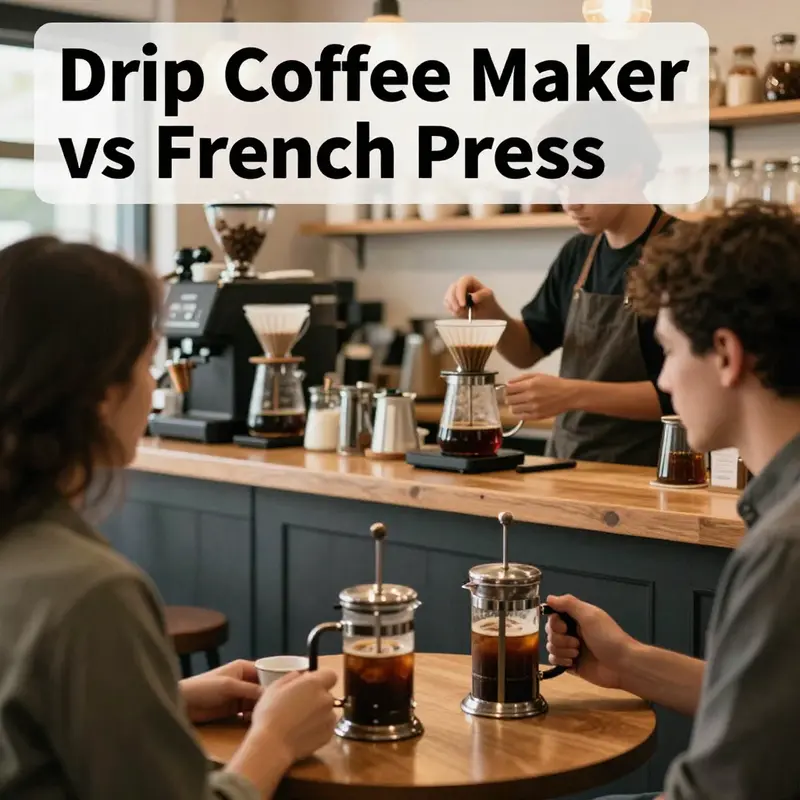
When two people pour themselves a cup of coffee, they are not just finishing a morning routine; they are selecting a way of engaging with the day. The choice between a drip coffee maker and a French press is more than a matter of taste. It is a decision about how much the brewer wants to participate in the process, how quickly the kitchen fills with the scent of coffee, and how predictable the final cup will be from day to day. The research into these two methods highlights a fundamental tension: convenience versus involvement. A drip system is engineered for automation. It heats water, distributes it through a filter containing ground coffee, and delivers a relatively clean, predictable cup on a timer. The same device can keep coffee hot for hours, maintain a steady workflow in a busy home or office, and spare the user from watching a pot or weighing each gram of coffee anew. In practical terms, this means fewer decisions to make in the moment and less variation from pot to pot. The appeal is immediate and durable for people who need caffeine in a hurry and value consistency over variety. The appliance’s design speaks to a lifestyle that prizes reliability, repeatability, and the ease of a routine that starts with a single button press and ends with a familiar aroma filling the room.
On the other side of the spectrum sits the French press. This method invites a slower tempo, a tactile interface, and a deeper involvement with the variables that determine flavor. Coarsely ground beans meet hot water and then steep, while the user gently controls the length of the contact between grounds and liquid. The pressure of the plunger separates the liquid from the grounds, but the process leaves behind a trace of grounds and oils that influence body, mouthfeel, and aroma. The result is a cup that tends to be richer, fuller-bodied, and more nuanced—a cup that rewards patience and attention. The experience is almost ritualistic: measure, heat, bloom, time, plunge, and pour. It is a form of brewing where the bar for success is not only the taste but the precision with which the brewer can adjust variables like grind size, water temperature, and steep time.
These are not merely two devices that produce coffee. They embody two different philosophies about mornings, about how much one is willing to engage with a cup before consuming it, and about what makes a daily ritual meaningful. A drip coffee maker suits a world that values speed, predictability, and the ability to scale coffee service across a household or office. Its automation supports a morning that is crowded with tasks yet still expects a dependable cup ready when the alarm finishes its ring. In such a setting, a thermal carafe can help keep coffee hot without returning it to the heat of a warming plate that might scorch delicate aromas. A programmable timer becomes a quiet ally, letting the machine begin its work before anyone is fully awake. The modular nature of many drip systems also means easy maintenance, straightforward cleaning, and the kind of modularity that fits into a kitchen’s rhythm without asking much of the user beyond a little routine upkeep. The convenience is not simply about speed; it is about reducing cognitive load during the busiest moments of the day.
Yet the French press makes a different economic of time and effort. It promises a degree of flavor control that is simply not available in many automatic brewers. Because the method does not rely on a paper filter, more of the coffee’s natural oils and micro-impurities remain in the cup. The oils can contribute to a richer mouthfeel and a more layered aroma. This flavor depth often comes at the cost of a slightly heavier texture and a cup that may vary more with minor changes in grind size, temperature, or timing. The process is tactile: you grind, you measure, you pour, you wait, you press. You feel the weight of the carafe or the beaker as you set a timer and watch the color and bouquet evolve. The ritual becomes a form of craft, a small but meaningful engagement with the chemistry of extraction. In this sense, the French press is not merely a device but a practice. It asks for attention, and in return the brewer receives feedback that is immediate and intimate: the sensation of the liquid thickening in the mouth, the aroma that lingers as the plunger nears the bottom, the sense that you are participating in a process rather than following a set of automated steps.
The decision between these paths is rarely about flavor in a vacuum. It is about a lifestyle, the pace of the morning, and how much control a person desires over the variables that shape taste. Drip coffee makers excel when the goal is a consistent, approachable cup that travels well across a crowd, a household, or a small office. The grind is standardized, the water temperature is kept within a safe band, and the filter traps much of the coffee’s oils and fines. When a pot finishes, a room fills with a uniform invitation to drink, and the decision about refilling rests on desire rather than timing. In such contexts, the experience is less about a singular sensory peak and more about a dependable, repeatable moment that can be counted on every morning. Critics of drip machines may note that the cup is sometimes lighter in body and more uniform in taste, with less emphasis on the aromatic oils that can carry a more complex flavor profile. Yet the counterargument is equally persuasive: consistency is not sameness. It is the capacity to expect a certain baseline, a familiar structure that can be counted on during a rushed morning or a busy workday.
In contrast, the French press is often chosen by those who want to savor the process as much as the product. The manual aspect becomes part of the pleasure of coffee, a form of concentration that sits between brewing and sipping. The attention paid during grinding, heating, timing, and plunging becomes a mindfulness practice, a small ritual that can introduce calm and intention into a day. The cup that emerges is rarely a pared-down, lean beverage. It tends to carry more weight, more texture, and more variable notes that reflect the precise moment of extraction: the water’s temperature, the grind’s coarseness, the duration of immersion, and even the specific stir or bloom that preceded the plunge. The absence of a filter that traps more oils and fines means that the cup communicates with the drinker in a different language—one of aroma, richness, and a direct expression of the beans’ character. Some days this can feel more exciting; other days, it might feel more forgiving to a rough morning. Either way, the experience remains intimate and personal, anchored in the brewer’s hands and senses rather than in a timer.
A practical way to think about this choice is to consider who is doing the brewing and for whom the coffee is intended. In a household where multiple people share a single machine, a drip system’s predictability and capacity to service several cups quickly can be a major benefit. In a small office, where schedules are tight and the goal is a steady flow of caffeine, automation reduces friction and helps people begin their day with minimal delay. The presence of a thermal carafe, easy-to-read indicators, and simple cleanup routines all contribute to a sense of reliability that can be crucial when time is scarce. On the other hand, a lone coffee enthusiast who wants to explore a spectrum of flavors will find the French press an inviting tool. Its demands on timing and temperature create a stage on which flavor can be refined through repeated experiments. The process rewards curiosity and a methodical approach to parameters such as grind size and water quality. It is not merely about making coffee; it is about understanding how the drink changes as those parameters shift, a kind of in-home coffee science that can be deeply satisfying when the goal is personal discovery rather than fast throughput.
The practicalities of maintenance also shape the convenience equation. Drip machines often rely on disposable filters or reusable metal equivalents. Paper filters remove more oils and fine particles, yielding a cleaner cup but also requiring ongoing consumable purchases. Reusable filters reduce waste and can be durable, but they may demand more thorough cleaning to prevent oil buildup in the basket and reservoir. The design of the machine matters here: models with easy-access brewing baskets, dishwasher-safe parts, and minimalist, shatter-resistant carafes simplify daily care. A well-chosen drip system can remain reliable for years when kept clean and serviced as needed. The trade-off is that routine maintenance, though straightforward, is still a recurring task—one layer of responsibility added to an already busy morning.
The French press, by contrast, tends to require a different maintenance rhythm. Because it uses metal screening rather than a paper filter, there is no recurring filter purchase, which some see as an eco-friendly advantage. Yet the plunger assembly, the gasket, and the beaker require regular washing and occasional replacement to maintain a clean, non-oily taste and smooth filtration. The press prompt invites a quick, deliberate cleaning ritual: rinse away grounds, wash the mesh, wipe the outside, dry thoroughly. This can be less convenient than opening a dishwasher door, but many enthusiasts find the ritual of cleaning to be a seamless companion to the brewing ritual itself. A well-kept French press preserves the quality of the cup and the life of the device, and the absence of disposable filters is a meaningful sustainability note for those who care about waste.
Flavor outcomes ultimately reflect not only the method but the user’s method of use. A drip system’s uniformity can deliver a reliably crisp cup that cleanly highlights brightness, citrus notes, or delicate floral aromas, depending on the beans and the grind. The filter’s influence tends to flatten some of the heavier oils, resulting in a lighter body. The French press, meanwhile, tends to deliver a cup with more texture, more body, and a broader sensory canvas. Oils remain in suspension, and some fines may settle in the cup, contributing to mouthfeel and a sense of depth that can be both inviting and challenging if one prefers clarity. The aroma from a well-brewed press can be robust, with a lingering perfume that speaks to the roast’s character. In the same kitchen, both experiences can cohabit, offering two distinct paths for daily caffeine rituals: one that begins with automation and ends with a predictable sip, and another that starts with a deliberate process and rewards careful attention with a bold, lingering palate of flavor.
For readers who want a deeper, side-by-side understanding of these two methods, there is a valuable resource that lays out the core differences and practical implications in a comprehensive way. It offers a complete guide to comparing the methods, including how grind size, water temperature, and contact time shape extraction and flavor. This guide can help you map your own priorities onto the two brewing paths and decide which one aligns with your mornings and your palate. a complete guide to comparing the methods. If you would like to explore how these variables interact in real-world brewing scenarios, this resource provides a thoughtful framework for experimentation and reflection, without prescriptive or one-size-fits-all answers.
The question, then, becomes not which method is superior in an objective sense, but which method better serves the day’s first moments. Do you need coffee that arrives with minimal friction, a consistent taste across every cup, and a routine that requires little cognitive load? If so, a drip coffee maker is likely the better companion, especially when serving a household or a small team who share a single brew. Do you crave a deeper exploration of flavor, a tactile brewing experience, and a cup that carries the imprint of your choices, minute by minute? Then the French press offers a compelling pathway, one that turns brewing into a personal craft rather than a task to complete. In many kitchens, people find a balance—keeping a drip system for the mornings when time is tight and reserving a French press for weekends or moments when they want to linger over aroma and texture. This balanced approach mirrors a broader truth about coffee culture: there is room for multiple experiences, and they can enrich one another rather than compete for supremacy.
Ultimately, the embrace of either method comes down to values. If you prize consistency, scalability, and speed, you will tend toward the drip approach. If you prize flavor depth, process control, and the joy of a hands-on ritual, the French press will speak more vividly to you. The two methods do not exist in a vacuum; they frame mornings and how people feel about starting their day. They shape, and are shaped by, the rhythms of life—the tempo of a commute, the cadence of office hours, the quiet pleasure of a weekend ritual. The trade-off between convenience and involvement is a trade-off between how much of the coffee experience will be decided by the machine and how much will be decided by the brewer’s own hands. In that sense, choosing between a drip machine and a French press is a choice about self-expression through coffee as much as it is about taste, temperature, or grind.
For readers who want to consider the broader landscape beyond taste and routine, the conversation also touches on sustainability, cost, and practicality. Reusable metal filters in a French press reduce waste and can be a meaningful factor for eco-conscious users. On the convenience side, the digital features and ease of use that characterize many drip machines can translate into tangible time savings, freeing up minutes that accumulate into a more relaxed morning. And while no single path resolves every preference, the dialogue between these methods remains productive. It invites us to recognize that flavor is not a fixed endpoint but a result that emerges from a sequence of choices—where the beans come from, how they are ground, how hot the water is, how long the coffee steeped, what kind of filter was used, and how the final cup was poured and tasted.
In the end, the choice is not about abandoning one method for the other. It is about acknowledging that convenience and user experience are legitimate, complementary dimensions of the coffee journey. A drip coffee maker offers a practical, scalable route to a clean, dependable cup, with the pleasures of automation and a predictable aroma. A French press offers an invitation to slow down, to experiment, to savor the layered flavors and the tactile satisfaction of plunging and pouring. The best approach for many households is to weave both paths into the weekly routine—lean on the drip machine for busy weekdays when a reliable pot is essential, and reserve the French press for moments when curiosity and time invite a more expressive cup. In that way, the kitchen becomes a laboratory of flavor rather than a factory of routine, and coffee becomes not simply a beverage but a personal experiment in how we live our mornings.
External resource: For an independent, up-to-date evaluation of drip coffee makers, see the latest assessment from a major consumer-tested publication at https://www.consumerreports.org/coffee-makers/best-drip-coffee-makers-a123456789/.
Final thoughts
In conclusion, whether you choose a drip coffee maker or a French press depends on your business’s goals, customer preferences, and operational style. Drip coffee makers excel in speed, consistency, and convenience, making them ideal for high-demand scenarios. Conversely, French presses offer a more hands-on, flavorful experience that can enhance the quality of your coffee offerings, appealing to enthusiasts. By carefully weighing the benefits and characteristics of each brewing method, you can ensure that your coffee service meets the expectations of your clientele while contributing to a productive and efficient workflow.