

The art of brewing coffee is a delicate balance of precision and personal preference, particularly when it comes to the French press. Business owners who prioritize coffee quality understand that the coffee-to-water ratio is essential for producing a brew that delights customers. This comprehensive guide will delve into the nuances of the French press ratio, exploring how to customize it according to taste preferences, the critical role of grind size, effective brewing techniques, and common mistakes to avoid. Each chapter of this guide provides vital insights that not only enhance your understanding of brewing but also can transform the coffee experience for your customers, ensuring their satisfaction and loyalty.
Ratio as Rhythm: A Comprehensive Practice for Mastering the French Press

Ratio sits at the core of any successful French press brew. It is more than a number on a scale; it is a compass for aroma, body, balance, and aftertaste. A widely used starting point among professionals is the 1:15 ratio, meaning one gram of coffee for every 15 grams of water. This baseline yields a cup with warmth and clarity and provides a dependable middle ground that resists both bitterness and weakness. If you brew with 600 milliliters of water, you would typically use about 40 grams of coffee at this ratio. The beauty of it lies in its adaptability: small adjustments can transform aroma and mouthfeel without losing balance.
This ratio also supports consistency. In the French press, extraction depends on time, temperature, grind, and agitation, and a precise ratio helps make subsequent tweaks meaningful rather than accidental. Weighing both coffee and water removes variability that comes from volume-based measurements. A digital scale makes it possible to capture a true 40 grams of coffee for 600 milliliters of water, enabling reliable comparisons from brew to brew.
From this base, you can explore variations with intent. For a bolder, more espresso-like cup, try a 1:13 ratio (about 46 grams of coffee for 600 milliliters of water). For a lighter cup, a 1:17 ratio (roughly 35 grams of coffee for 600 milliliters) can offer greater clarity and a gentler finish. The key is to maintain a consistent framework: once you find a preferred ratio, repeat it with the same grind size, water temperature, and steep time to achieve repeatable results.
The grind also matters. A coarse, even grind prevents over-extraction and helps keep sediment under control. A burr grinder is preferred for consistency. The water temperature should be just off the boil, around 92–96°C, and a steep time of about four minutes provides a balance between flavor extraction and avoidance of bitterness. With a stable ratio, grind, and temperature, you build a reproducible routine that yields satisfying results.
null

null
Grinding for Balance: The Subtle Power of Grind Size in the French Press Ratio

Grind size often hides in plain sight, the quiet architect of a French press that either sings or sputters. The ratio—how much coffee to how much water—gets all the glory, but without the right particle size, even the best ratio falters. In practice, most brewers begin with a 1:15 starting point: one gram of coffee for every fifteen grams of water. That baseline is a compass, not a command, guiding you toward a balanced cup that reveals the coffee’s deeper sweetness and body while staying clear of harshness. Yet grind size works in a way that makes the ratio flex with the rhythm of your brew. The texture of your grounds dictates how water touches them, how fast soluble compounds dissolve, and how the final cup feels on the tongue. It’s the subtle partner to the ratio, and when they are aligned, a French press coffee can strike a remarkable balance between richness and clarity.
Extraction in immersion brewing is a dance of time, surface area, and solubility. The more surface area you expose to water, the more compounds can dissolve, but not all at the same rate. Finer grounds present a larger interface, which can hasten extraction but also pull out bitter compounds more quickly. Coarse grounds slow everything down, leading to a lighter, sometimes sour cup if the water is not adjusted. For the French press, the mesh allows most fines to accumulate and then settle, but some slips through, contributing a gritty texture when the dose and grind are misjudged. The grind size thus constrains the effectiveness of the 1:15 ratio by shaping how evenly extraction proceeds during the four-minute steep. If you imagine extraction as a film developing evenly across a canvas, grind size is the brush stroke that determines how smooth or gritty the final image appears.
When the grind is too fine, you invite over-extraction. That means the water draws too many soluble compounds, including bitter-tasting elements, leaving a harsh finish and a brittle aftertaste. The fines also pass through the filter, if only a few particles, creating a sand-like sediment that clings to the bottom of the cup. Conversely, a grind that is too coarse curtails extraction. Water moves too quickly through the bed, pulling out only the most soluble, leaving behind a thin, sour, or hollow body. The small but consequential difference in grind size—on the order of a hundred microns—can flip a recipe from balanced to briny and unappealing. This sensitivity is why many baristas describe dialing in a French press as a finely tuned conversation between grind, ratio, and time, with the goal of a texture that feels both full and clean in the mouth.
For the ideal results, aim for a coarse grind with a texture similar to sea salt or rough breadcrumbs. The representation of particle sizes matters as much as the visible coarseness; you want a relatively uniform bed so extraction happens evenly rather than in clumps of tiny particles. A conical burr grinder is preferred because it produces a more consistent particle distribution and minimizes fines compared with other grinder types. Grinding your beans immediately before brewing preserves essential oils and aromatics that would otherwise begin to oxidize. The result is a cup that carries more nuance and a smoother mouthfeel when the water at just-off-the-boil temperature, usually around 92 to 96 degrees Celsius, meets the grounds. The four-minute steep remains the anchor, but the grind’s roughness shapes whether that four minutes yields a rich, well-rounded cup or a murky, muddled one.
When you pair this coarse bed with the baseline ratio, the balance emerges through a predictable arc of flavors. The 1:15 starting point serves as a sturdy center, but the exact taste is a response to the grind’s geometry as much as the bean’s origin. If your coffee tastes sour or thin, a gentle nudge toward a denser extraction—moving to a 1:14 ratio or narrowing the grind slightly—can pull flavors into a more robust, syrupy spectrum without tipping into bitterness. If the brew is overly bitter and heavy, you may be tempted to go coarser or shorten the steep, but often the true fix lies in advancing toward a slightly coarser grind while maintaining the same ratio to release cleaner sweet notes. The interplay is delicate: a small shift in particle size can magnify the effect of a change in dose, or a minute change in time, or a slight increase in water temperature. The goal remains a cup that presents body and clarity together, without grit or flatness.
Dialing in a French press becomes a ritual of tasting and adjustment. Start with the standard 1:15 ratio and a coarse, even grind, then brew with a four-minute immersion. Using a digital scale matters here more than any other variable; pouring, counting, or approximating with spoons invites drift that compounds into an unbalanced cup. Weighing both coffee and water ensures you hold the ratio steady while the grind determines extraction efficiency. If you adjust the grind, you should re-check the flavor after a single trial to understand how the change shifts sweetness, body, and aftertaste. For a more practical, step-by-step discussion of how these elements weave together, consider the in-depth guide to French press coffee ratios, which treats grind size and ratio as a single, livable system: French press coffee ratios: the ultimate guide. This resource walks through the exact millimeter logic behind achieving consistency from one batch to the next, aligning grind, ratio, and time into a reliable method that can be adapted to different beans and roast levels.
Water temperature around 92–96°C is not a stand-alone rule; it interacts with grind to shape extraction. A warmer environment speeds solubility; with a fine grind, excess heat accelerates bitter compounds, while with a coarse grind, it helps pull more sweetness and aroma into the cup. The four-minute steep acts as a window for the whole bed to surrender its soluble content, and that window becomes more or less effective depending on how evenly the grounds are milled. If you hear sloshing or notice uneven immersion during steep, it may be a sign that the grind is not uniform enough, or that some coffee floats in pockets while others remain dry. Uniform distribution is essential for the water to reach all particles with equal vigor. This is why pre-weighing and agitating the bed gently at the start can help ensure a more even extraction, preventing the common aftertaste of under-extracted sourness or over-extracted bitterness.
Texture matters as much as flavor. A bed that sobers into a smooth, sediment-free cup arises when fines stay behind the mesh and grounds fall evenly to the bottom. If your French press delivers a cup with a noticeable gritty texture, it’s often a sign that the grind is too fine or that the mesh has started to clog. Reassessing the grind size, ensuring a uniform bed, and making micro-adjustments to the ratio can reduce silt and yield a clearer cup without sacrificing depth. The sensory payoff is a coffee that carries weight and sweetness without an edge of astringency. In practice, this means you should feel a gentle, syrupy body with a clean finish, rather than a coarse, sandy mouthfeel that distracts from the aroma and sweetness that the beans offer. The balance becomes a reflection of careful calibration rather than guesswork.
As with many craft processes, the art of the French press ratio is as much about disciplined attention as it is about preference. The grinder you choose, the grind size you dial in, the exact coffee-to-water ratio, the temperature, and the steep time all compose a single loop of refinement—each iteration feeding into a more comfortable, satisfying cup. The results accumulate when you respect the grain size as the critical variable alongside the ratio. With patience, a small change in particle size can unlock a richer sweetness on the palate, a smoother mouthfeel, and a cup that feels both substantial and bright. For readers seeking a broader, reference-driven approach to these variables, see the linked guide on French press ratios; it offers a structured framework for translating taste into numbers and back again, so you can repeat what works across different beans and roasts. External readers may also consult a well-regarded exploration of the topic for additional context on grind and extraction dynamics: https://www.seriouseats.com/french-press-coffee-ratio
Proportion, Patience, and Pleasantries: Mastering the French Press Ratio for Café-Quality Coffee

The journey to a truly café-worthy cup begins long before the kettle roars to life. It starts with a quiet, often overlooked decision: the coffee-to-water ratio. In the world of French press brewing, ratio is not a mere guideline but the very scaffold on which flavor, body, and clarity stand. It is the anchor that keeps a morning routine from drifting into bitterness or weakness. When you approach the process with thoughtful proportion, you invite a brew that feels both sturdy and nuanced, capable of carrying the roast’s character without surrendering to over-extraction or dullness. The widely adopted starting point remains a practical compass: a 1:15 ratio, meaning 1 gram of coffee for every 15 grams (or milliliters) of water. This foundational balance gives you a cup that is neither flattening nor overpowering, a medium-strength profile that supports the coffee’s natural sweetness, fruity accents, and roasted depth. If you’re brewing with 600 milliliters of water, that baseline points you toward roughly 40 grams of coffee. Yet within this framework lies the freedom that makes French press brewing so appealing: the ability to tailor the cup to your mood, the coffee’s origin, and the time you’ve allotted for the ritual. What seems like a small adjustment can be a transformative act, turning a good cup into a signature one, particularly as you practice precision with a scale and learn how your grinder and kettle interact with time and temperature. The shift from a 1:15 to a 1:14 ratio, for example, can intensify the cup’s backbone and throat feel, producing a more robust, almost molasses-like richness; conversely, stepping toward 1:16 or 1:17 lightens the drink, highlighting clarity and a cleaner aftertaste. The artistry, then, is not simply in following rules but in listening to the cup and letting the ratio become a language through which you describe the coffee’s personality.
The importance of measurement cannot be overstated. A digital scale makes the difference between a recipe that works in theory and one that works in practice. Scoops vary in density due to grind size and bean density, and tablespoons are notorious for wildly different conversions across beans and roasts. When you insist on weight precision, you open the door to repeatability. This is how a morning ritual becomes a dependable routine rather than a guessing game. It also clarifies a second truth that often sits in the shadows of general advice: tolerance for small adjustments. If you notice sourness or thinness in a brew, the instinct might be to chase sweetness with sugar, but the more effective move is to re-balance the ratio, perhaps nudging from 1:15 to 1:14, which can resolve underdeveloped flavors and even out acidity. If the cup tastes overly bitter or heavy, a shift toward 1:16 or 1:17 can restore a more graceful mouthfeel and reveal subtler roast notes that bitterness tends to mask. The dial is delicate, but the payoff—a cup that aligns with your palate—makes the attention worthwhile. A good practice is to start with a clear 1:15 ratio, then, after a brew, adjust in small increments of 0.1 or 0.2 on the ratio scale for the next batch. The difference is rarely incremental in perception; it is often revelatory.
Grind size is the other half of the ratio equation. The French press thrives on coarse, even grounds, comparable to sea salt or rough breadcrumbs. The aim is to grind just coarse enough to allow water to pass through without forcing a muddy slurry of fines into the final cup. A grind that is too fine invites over-extraction: a cup that tastes heavy, with a gritty texture and a tendency toward bitter aftertastes. A grind that is too coarse leaves extraction incomplete, resulting in a cup that is thin, flat, and sometimes sour. Fresh grinding just before brewing is essential for capturing aromatics and sustaining a consistent particle size. A burr grinder is the ally here, delivering uniformity that a blade grinder cannot guarantee. The stability of grind size, in combination with a deliberate ratio, unlocks a true sense of balance: the oils and solids stay in suspension long enough to contribute body and aroma, while still yielding a clean enough cup to appreciate the coffee’s subtler notes. The coarse grind’s usefulness becomes particularly clear in the immersion process, where the grounds mingle with hot water for several minutes and the goal is extraction without muddiness. In practice, the grind and the ratio are inseparable partners: you set the grams, you set the grind, and together they sculpt the brew’s texture and flavor.
The immersion method—the heart of the French press—offers a different kind of richness than most other methods. Unlike paper-filtered brews, immersion retains more of the coffee’s natural oils and fine particles, contributing to a fuller mouthfeel and a deeper, more complex profile. The flavor carries weight, not just in taste but in sensation: a velvety density that lingers on the palate. This is not merely heaviness; it is a signal of deliberate extraction and the presence of compounds that other methods often separate out. The philosophy behind the method is aligned with the philosophy of ratio: patience and proportion yield depth, while haste and imprecision yield inconsistency. The typical steep time for a French press is about four minutes, a duration chosen to balance extraction with the risk of over-oxidation and the development of stale notes. Temperature matters as well. Water just off the boil, often cited as around 92 to 96 degrees Celsius, invites the right level of extraction without scorching the grounds. If the water is too hot, the cup may take on a singed or harsh edge; if too cool, the brew can taste thin or underdeveloped. When you place the plunger at the top, you’re not just separating the grounds—you’re concluding a moment of interlude between coffee and water, letting the reservoir of flavor settle into the cup as you wait for the press’s gentle, deliberate downward journey.
A practical pathway to mastery emerges from a few grounded, repeatable steps, each anchored by your ratio. Begin with fresh beans roasted within the last two weeks. This freshness is the first contributor to aroma and sweetness; it matters because the volatile compounds that perfume the cup are more abundant when the roast hasn’t aged in a container or a bag for too long. Grind immediately before brewing to preserve those aromatics. Heat water to a precise temperature—just shy of boiling—and pour over the grounds, ensuring all particles are saturated. Stir briefly to ensure even wetting, then place the lid on with the plunger up. Let the coffee steep for four minutes, a duration that corresponds closely to the equilibrium point where extraction compounds have been pulled into solution without pushing the brew toward heaviness. When the timer ends, steadily press the plunger downward, maintaining a slow, even pressure so you don’t disturb the bed of grounds more than necessary. Pour promptly into your cup to prevent continued extraction from grounds that remain in contact with the water. This sequence, while seemingly simple, is a choreography—each element reinforcing the others: ratio guides strength, grind guides surface area and flow, heat guides the rate of extraction, and time determines depth. The result is not simply caffeine or aroma; it is a narrative—the voice of the coffee speaking through your morning ritual.
The benefits of mastering the ratio extend beyond taste. Consistency—the hallmark of any technique worth repeating—becomes a reliable feature of your mornings. With a well-calibrated ratio, your adjustments become purposeful experiments rather than haphazard changes. You can approach a cup as a living record of your evolving palate. Are you chasing a brighter acidity in a light roast, or does the coffee you love whisper chocolatey notes that deserve a fuller body? You can test these questions by shifting the ratio incrementally. A 5 percent tweak, for instance, may seem minor on the page, but it unlocks a broader spectrum of perception in the cup. The science behind this is straightforward: more coffee relative to water increases the extraction yield, enhancing body and intensity; less coffee reduces extraction and narrows the flavor profile. The balance you seek—whether it leans toward a lush, rounded body or a crisp, nuanced finish—will reflect your chosen ratio and your grind’s coarseness, which themselves reflect your roast choice and the water’s cleanliness and mineral content. Even the water itself works in concert with the ratio. Soft water can let delicate flavors shine through; hard water may accentuate mineral impressions and alter mouthfeel. The true skill, then, is not only choosing the right numbers but orchestrating a holistic approach where ratio, grind, temperature, and steep time harmonize to reveal the coffee’s character.
In thinking through this topic, many home brewers confront a recurring question: how far should one push the ratio before the results stop being enjoyable? The answer, rooted in experience, is always personal. The starting point—1:15—offers a safe harbor: a balanced coffee with sufficient presence and clarity. If your goal is a more assertive cup that demands attention in the morning, you may experiment with 1:13, watching for any bitterness that might accompany higher extraction and adjusting the grind toward a slightly coarser setting if necessary. If your palate leans toward subtler profiles or a lighter roast, a shift to 1:17 or 1:18 can uncover brighter nuances, while maintaining the coffee’s inherent extraction potential. The key is to measure, observe, and adjust with intention rather than relying on guesswork. In this sense, the ratio becomes more than a recipe; it is a tool for auditory and sensory education, a way to train your palate to hear what the coffee communicates when given the right proportion, temperature, and time.
To those who have wondered about the merits of the French press in the era of precision-drip systems and single-serve machines, the answer lies in the easy confidence of a well-tuned ratio. The method invites you to participate in your coffee’s creation, rather than simply ordering taste from a machine or a barista. It invites patience—the simple, satisfying ritual of weighing, pouring, and timing. The result is not merely a cup but a shared experience: a moment in the morning that quietly honors the complexity of coffee and the power of a thoughtful proportion. If you’re seeking a concise guide to these practices, consider exploring further with resources that expand on the precise mathematics and practical tips of French press ratios. The broader conversation around measurement, grind, and infusion time can help you refine your approach even as your palate evolves. For a deeper dive into the practical realities and nuanced ratio ranges that complement the immersion technique, a detailed resource offers a thorough framework for experimentation and refinement. See the linked guide for more on how to calibrate your brew and to explore how small changes in grams can shift the entire cup profile. French press coffee ratios—the ultimate guide
As a closing reflection, the French press is more than a device; it is a philosophy of brewing. Its elegance rests in its restraint and its honesty: you can see the coffee’s transformation as it moves from water to infusion, you can measure it, and you can adjust it with a quiet conviction that the cup will respond in kind. The ratio is the compass you carry through the fog of morning rushes—keeping you oriented toward a cup that feels like an act of personal care rather than a random outcome. When you adopt a disciplined approach to the 1:15 starting point, refine your grind to a coarse, even texture, keep the water at the right temperature, and allow four minutes of patient steeping, you invite a brew that reflects not just a technique but a temperament. You invite a cup that carries the warmth of a ritual, the clarity of a well-maintained palate, and the promise that, with small, thoughtful adjustments, you can tune the experience to every day and every roast. That is the essence of the French press ratio: a match made in heaven between method and flavor, a partnership where proportion and patience yield a result that is, at its core, simply good coffee—the kind that makes morning worth waking up for and makes the day feel a little more intentional. For readers who crave a more technical, structured exploration of how these elements interlock, the wider literature on coffee ratio and immersion provides a firm, evidence-based map of where to begin and how to iterate toward your preferred profile. External resources can be found in the broader guides to balancing coffee strength with water quality and extraction time, which help translate these concepts into repeatable practice.
External reference: https://sprudge.com/french-press-coffee-ratio-guide
Balancing the Brew: Mastering the French Press Ratio to Avoid Common Pitfalls
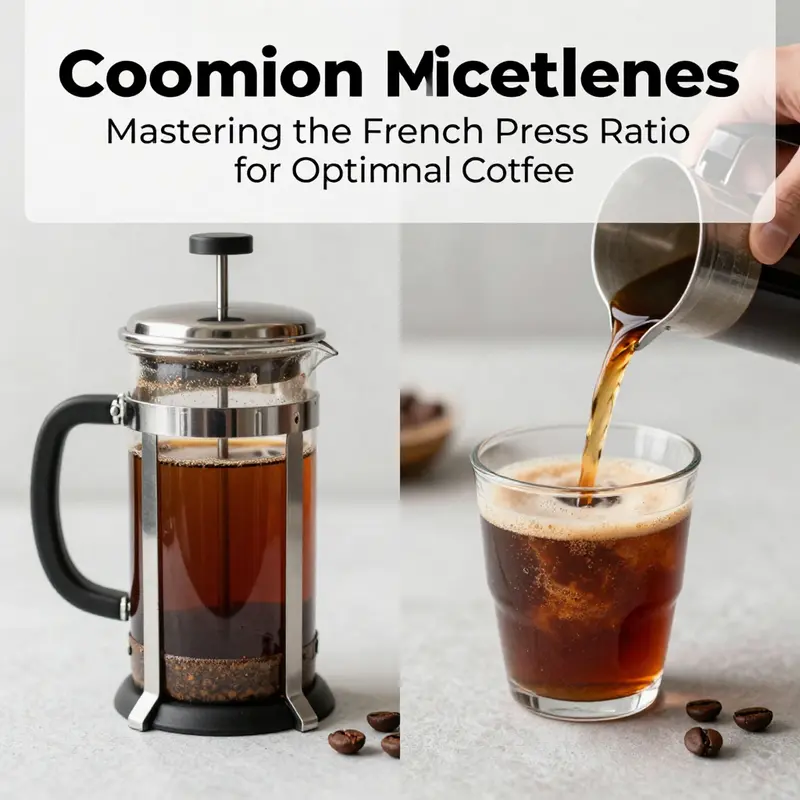
The French press begins with a number, and that number is more than a guideline. It is the heartbeat of the brew. The ratio between coffee and water sets the stage for texture, brightness, and how the cup carries itself across the palate. When that ratio is off, flavor misfires—bitterness clanks against flatness, and body either feels like sludge or disappears into the cup. The widely recommended starting point of 1:15—one gram of coffee to fifteen grams of water—has emerged as a reliable compass. It offers a balance that preserves both richness and clarity, allowing the natural chocolate, fruit, and caramel notes to present themselves without exaggeration. In practice, a 1:15 ratio translates to about 40 grams of coffee for 600 milliliters of water. But coffee isn’t a science with a single, immutable endpoint; it is a conversation between variables, and the ratio is the first line of that dialogue. If you crave a bolder conversation, you move toward 1:13, letting 46 grams of coffee meet 600 milliliters of water. If you prefer a lighter, smoother sip, you drift toward 1:17, pulling back to 35 grams for the same water amount. The essential rule remains precise measurement: a digital scale is your ally because tablespoons hide the truth behind grind size and density. A tiny tweak can swing a cup from flat to singing, from sour to sweet, and the rhythm of your brew follows the tempo set by that initial measurement.
Yet even a perfect starting point cannot stand alone. The coffee-to-water ratio is inseparable from grind size, grind uniformity, and the mechanics of extraction. A coarse, even grind, roughly akin to sea salt or rough breadcrumbs, makes the most of the French press’s method. A burr grinder is a prudent companion here; it produces consistent particle sizes, which keep extraction steady and predictable. Without consistency, the ratio loses its power. A misbehaving grinder—one that spits out a spectrum from powder to large chunks—forces you to compensate with time, temperature, or an acid test of coffee quantities, and that rarely ends in a clean, well-balanced cup. In other words, the ratio cannot be considered in isolation. Water temperature, steep time, grind size, and even how you stir and plunge all braid into the final flavor. A usual starting recipe, if you want a practical precision map, is water just off the boil—around 92 to 96 degrees Celsius—and a 4-minute steep. This combination contributes to a steady extraction, enabling the flavors to open without overreaching into bitterness.
With that foundation, the danger signs become clearer. A lot of readers discover that too much coffee relative to water yields over-extraction. The cup can taste bitter, harsh, and eyes-wateringly robust, with a heavy, clinging mouthfeel. Too little coffee, and the cup falls into under-extraction: thin, weak, and fleeting, like a tune that almost gets there but never lands. The ideal balance, again, rests on the starting point of 1:15 for a general, everyday cup. From there, you can interpolate to fit your taste. The method invites you to approach taste as a signal, not a rule. A practical way to think about it is to treat ratios as a spectrum rather than fixed dials. If your first attempt at 1:15 yields a cup that tastes sour or thin, you have a simple lever to pull: add coffee a touch or reduce steep time, and retest. If the brew is overly bitter or solidly heavy, you can dial back the coffee a bit or shorten the steep. The scale’s sensitivity matters: small, measured increments matter more than broad, sweeping changes.
The craft becomes a matter of systematic, patient adjustment. Start with the baseline 1:15 and a 4-minute steep. Use a burr grinder and a proper scale, and keep the water temperature in that 92–96°C corridor. After your brew, take a moment to evaluate the cup’s body, balance, and aftertaste. If the result is too weak, a slight increase in coffee mass—perhaps moving from 40 grams to 42 or 44 grams while keeping water at 600 milliliters—will push the extraction into a richer zone without turning sharp. If the result is too bitter, consider either reducing the coffee to 38 or 36 grams or shortening the steep by 15 to 30 seconds. This is not a dramatic overhaul; it is a quiet narrative of refinement. And above all, pay attention to how the grind interacts with the time. A coarse grind, if exposed to longer contact, will under-extract; a finer grind will over-extract unless your ratio is adjusted or you shorten the steep. In this delicate ecosystem, the ratio is the scaffold, but the scaffold must be sturdy enough to hold the weight of your grinder’s reality and your tolerance for time.
The art here is often about restraint. The urge to pour more coffee into a French press is a temptation, but it usually yields an ill-balanced cup. The logic of the 1:15 baseline discourages the impulse to push for “more flavor” through brute force. Instead, a measured increment is smarter. If the result leans toward sourness, you are signaling a need for deeper extraction or a tighter balance with more solubles captured by a slightly higher coffee mass or a minor adjustment to water temperature. If the cup lands on the bitter side, you have a signal that extraction has gone too far, perhaps aided by an over-fine grind or an overly long steep. In many cases, the simplest remedy is to nudge toward 1:16 or 1:14, proceed with consistent grind size, and re-brew. Small, deliberate adjustments tend to converge toward a personal sweet spot where the coffee’s inherent character emerges rather than clings to a harsh signature.
To avoid these pitfalls, adopt a practical protocol that treats your workflow as a repeatable experiment. Begin with the standard 1:15 ratio, calibrated to 600 milliliters of water and a measured 40 grams of coffee. Use a burr grinder to establish uniform particle size, and ensure the grind is coarse enough to avoid silt in the cup. Let the water hover at the lower end of the range you’re comfortable with during pouring and allow the steep to complete in exactly four minutes. After plunging, give the brew a moment to settle—about 30 seconds—before pouring. This pause permits heavier particles to sink away from the spout, reducing grit and clarifying the cup’s mouthfeel. Then, evaluate the aroma, flavor, and mouthfeel, embracing notes of chocolate, caramel, or fruit if they surface, but more importantly, gauging balance and persistence rather than louder intensity.
When you crave more depth, the psyche of the process nudges you toward possible comparisons: the 1:13 ratio for boldness or the 1:17 for gentleness. The transition should be gradual, with careful attention to how the taste changes along the way. A ratio move from 1:15 to 1:14, for example, is a fairly small step that can have a pronounced effect if you maintain the same grind size and extraction window. Conversely, you might discover that a slightly finer grind paired with the 1:15 baseline expands the extraction without becoming overpowering—sometimes the balance lies in the conjunction of grind size and ratio rather than in the ratio alone. In practice, it is not enough to pick a ratio; you must also select a grind that can expose the value you expect when you plunge. If you grind too fine, you will face over-extraction; if the particles are too large, the extraction will stall, and the cup will feel hollow. The ratio’s robustness is most evident when all the variables harmonize. In that space, the coffee reveals itself with clarity, holding up to scrutiny and pleasing your palate with a well-rounded, not overpowering, profile.
For readers who want to explore this topic more deeply, a detailed exposition of the ratio mechanics and practical tips exists in dedicated guides. A good touchstone is a resource that walks through exact measurements and methodology in a structured way, including how to approach grind consistency, duration, and temperature in tandem with the ratio. If you crave a broader context that aligns with what you’ll read here, you can refer to a comprehensive guide that outlines at-length the relationship between coffee, water, and extraction in the French press. This external resource complements the approach described here and provides a wider perspective on balancing variables to achieve a satisfying cup: coffee-ratio-french-press.
As you integrate these principles, you’ll notice the ratio’s role as a guide rather than a jailer. The process becomes a dialogue between your preferences and the coffee’s intrinsic character. Your palate learns to discern the difference between a cup with firm sweetness and no sweetness, between a coffee that feels rounded and one that feels harsh or thin. The ratio is the most accessible entry point into a larger craft that includes water quality, agitation, pressure, and the courtesy of letting grounds settle after plunging. The goal is to reach a cup that feels alive—bright without sharpness, full without heaviness, and clean enough to sip sip after sip without fatigue.
If you want to continue exploring, consider testing the ratio across different coffee origins and roast profiles, always anchoring your tests to consistent variables beyond the ratio alone. It is important to remember that the 1:15 baseline serves most daily needs, but your preferences, the coffee’s origin, and roast level will guide how you adjust. The ritual of measurement, grind, and timing becomes a practiced craft. Even a routine that begins with a simple 1:15 can evolve into a precise, personalized method where every cup tastes like the result of a deliberate, thoughtful process rather than a mere accident of brew. This is the essence of mastering the French press ratio: recognizing its centrality while embracing the nuance that makes coffee a daily ritual rather than a fixed formula.
External reference for broader context: https://www.thespruceeats.com/french-press-coffee-ratio-guide-4781922
Final thoughts
Mastering the French press ratio not only enhances the flavor and quality of coffee but also significantly impacts customer satisfaction. By understanding the principles behind the ideal coffee-to-water ratio, adjusting according to taste, maintaining the right grind size, applying effective brewing techniques, and avoiding common pitfalls, business owners can build a loyal customer base that appreciates the care and detail put into each cup. A well-prepared French press coffee can differentiate your establishment in a crowded market, forging a memorable coffee experience that customers will return for time and again.