

Caffeine consumption is a crucial aspect of consumer behavior, particularly in the soft drink industry. As a business owner, understanding how caffeine content influences your product offerings can give you a competitive edge in a crowded market. Dr Pepper, a popular soda brand, contains 41 mg of caffeine in a 12 fl oz (355 mL) can, which is essential knowledge for both inventory management and marketing strategies. This article will explore Dr Pepper’s caffeine content, compare it with competing beverages, evaluate health implications, assess consumer preferences, and discuss the regulatory landscape surrounding caffeine labeling. Each chapter will provide insights to help you better cater to your customers’ needs and align your business practices with current health and safety standards.
The Caffeine Ledger of a Classic Soda: Unpacking How Much Caffeine Dr Pepper Delivers
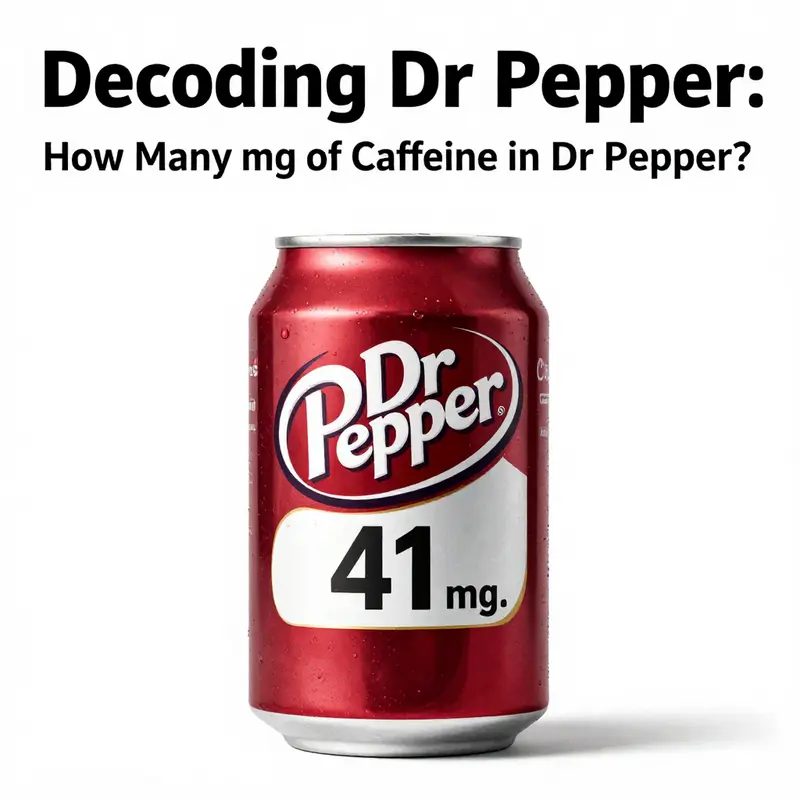
Caffeine is a small molecule with a big footprint, buzzing quietly at the edges of our daily routines. When you pick up a can of a familiar dark-coloured soda, your brain may register only the taste, the fizz, and perhaps a quick caffeine nudge to sharpen focus or wake the morning fog. Yet behind that familiar pop of the tab lies a precise measurement that brands are required to disclose and that researchers routinely verify. For Dr Pepper, the official accounting is clear: a standard 12 fluid ounce (355 millilitre) can contains 41 milligrams of caffeine. This figure is reported consistently across regular and zero-sugar versions, underscoring how the caffeine within this particular beverage is drawn from the same formulation, regardless of the presence or absence of sugar in the sweetening blend. The precision matters because caffeine intake is a daily arithmetic for many people. It affects sleep timing, concentration, and even how we plan our day around meals, workouts, or study sessions. The 41 mg per can translates into a practical metric that is easy to track: roughly 3.5 milligrams of caffeine per fluid ounce, or about 11.8 milligrams per 100 millilitres. These numbers are more than curiosities; they form a benchmark that helps consumers compare beverages, plan their caffeine budget, and answer questions about how Dr Pepper stacks up against other popular choices.
That benchmark rests on a blend of sources that regulators and manufacturers trust. In the United States, the Food and Drug Administration requires accurate labeling of caffeine content when it is added to foods and beverages. The official labeling database, the disclosures provided by manufacturers, and independent laboratory testing converge to create a robust picture of what’s in a can. The data cited here reflect the most current, publicly available information as of February 2026, a snapshot that many readers will rely on when evaluating their daily caffeine intake. For readers who want to verify these details themselves, the FDA labeling database for Dr Pepper provides the regulatory foundation for the numbers discussed here, illustrating how caffeine content is reported on product labels and how it is monitored over time.
In the context of consumer caffeine lore, 41 mg in a 12 oz can sits between some other familiar benchmarks. A beverage that would land closer to a regular coffee cup—a source many turn to for caffeine—offers a markedly different scale. Coffee is notorious for its variability, but a standard 8 oz cup often ranges from about 70 to 95 mg of caffeine, with variations driven by roast level, grind size, and brewing time. Dr Pepper’s 41 mg is well below that range, making the soda a milder option for those who want a caffeine lift without approaching the caffeine levels more typical of coffee. When we extend the comparison beyond coffee, the picture widens still more. A 12 oz cola, for example, commonly carries caffeine in the 30–40 mg range, but the exact amount depends on the brand and the formulation. In this broader landscape, Dr Pepper’s 41 mg per can places it in a competitive middle ground: more caffeinated than some colas, yet less than others that push closer to 50 mg per 12 oz. For example, Diet Coke has frequently been cited as having a higher caffeine content on similar serving sizes, while some other colas hover near or just below the 40 mg mark. The precise figures, of course, hinge on formulation choices and regulatory labeling, but the overall pattern remains: a single ordinary can delivers a measured caffeine hit that is substantial enough to notice, but not overwhelming enough to rewrite a day’s caffeine plan for most people.
If we zoom in on the numbers themselves, the efficiency of caffeine delivery becomes a topic worth pausing over. Calculating per-ounce or per-centimetre metrics helps convert a familiar can into a universal measure. At 3.5 mg per fluid ounce, the caffeine density of Dr Pepper can be compared directly to other beverages in a simple unit.Conversions matter here. When expressed per 100 millilitres, the figure lands at about 11.8 mg. It is a reminder that beverages travel in different units around the world, but the caffeine content remains the same substance, just expressed in a way that suits local preferences for measurement. This consistency is not accidental. It reflects strict labeling practices and standardized testing that aim to keep the caffeine story clear for consumers, healthcare providers, and researchers who track intake patterns across populations.
Understanding the numbers also requires recognizing what they don’t reveal on their own. A mere number on a label cannot capture the full spectrum of how caffeine interacts with an individual’s physiology. Caffeine metabolism is influenced by genetics, age, body mass, and habitual caffeine intake. Regular coffee drinkers may develop some tolerance, which can blunt subjective effects even when the caffeine content is steady. Conversely, people who rarely consume caffeine might feel a stronger kick from a similar milligram dose. In other words, the same 41 mg can feel very different depending on who is drinking it, when they drink it, and what else is in their day. This is why labeling is valuable for planning, but personal experience remains idiosyncratic. The best guidance remains to assess your own tolerance and, if necessary, pace your intake across the day, especially if you have sleep concerns or sensitivity to caffeine.
For anyone who wants to explore the subject further, there is a natural curiosity about how the zero-sugar version compares. The official disclosures report the same caffeine content for both the regular and zero-sugar variants, reinforcing that the caffeine source and delivery are independent of the sweetener system. This parity simplifies the mental math for people who switch between versions for taste or dietary reasons. It also echoes a broader industry pattern: caffeine is introduced into beverages to deliver a consistent experience, and manufacturers often maintain the same caffeine profile across different formulations to preserve brand recognition and functional effects.
As you consider your own consumption, a few practical observations emerge. First, a single Dr Pepper can delivers 41 mg of caffeine, which is a manageable dose for many people when considered alongside other daily sources such as tea, chocolate, or energy drinks. Second, the 12 oz can format remains a stable baseline, with small variations unlikely to push the caffeine amount into a dramatically different territory. Third, when you plan caffeine intake around activities that require high alertness—driving, studying, or operating machinery—knowing the exact milligram content of preferred beverages helps you pace smarter, not just by feeling, but by the numbers.
From a broader perspective, this kind of precise accounting matters because it anchors conversations about nutrition labeling, consumer safety, and personal health plans. For researchers, the Dr Pepper figures provide a reliable data point in longitudinal studies of caffeine exposure, dietary choices, and sleep patterns. For regulators, the consistency of labeling demonstrates how the system can support informed decision-making without overwhelming consumers with uncertainty. And for everyday readers, the hard numbers offer a practical tool: you can compare a can of this soda with a cup of coffee, a bottle of tea, or another cola, all in straightforward milligrams of caffeine per serving.
If you’d like to see how this particular topic threads into broader conversations about caffeine content in related beverages, you can explore a deeper dive that examines Diet Dr Pepper more closely. This resource investigates whether the caffeine content changes with diet formulations and how this compares with other zero-sugar options. Does Diet Dr Pepper Have Caffeine In It?
Ultimately, the simple arithmetic remains one of the most helpful anchors for readers who want to manage caffeine intake with confidence. Dr Pepper, in its classic 12 oz form, delivers a clearly defined 41 mg of caffeine per can, a figure supported by FDA labeling, manufacturer disclosures, and independent laboratory verification. This is not a claim about a single batch but a representation of a standard serving that consumers can rely on across purchases and brands. The exact experience—the lift felt, the timing, and the way it sits in a daily routine—depends on the person. Yet the milligram truth endures: 41 mg per regular or zero-sugar Dr Pepper can. For those who crave a quick refresher during a busy day, this is a number that can be trusted, a steady part of the everyday caffeine ledger rather than a moving target.
For readers who want to verify the official basis of these claims, the external reference to the labeling and regulatory documentation provides a direct pathway to the source material. The FDA maintains an accessible database that outlines caffeine content and related labeling details for Dr Pepper, ensuring transparency and accountability in how these beverages are presented to consumers. You can consult the FDA labeling database for the most current information and any updates to serving sizes, caffeine content, or labeling requirements as they evolve over time.
External resource: FDA Labeling Database – Dr Pepper
In sum, the exact caffeine content in Dr Pepper is not just a trivia fact; it is a practical, verifiable datum that helps people plan, compare, and understand their daily caffeine exposure with clarity and confidence. The consistency across regular and zero-sugar versions, the transparent labeling practices, and the straightforward unit conversions all contribute to a reliable framework for readers seeking to navigate the caffeine landscape with accuracy and ease.
Balancing the Lift: Caffeine in Pepper-Flavored Cola Across Popular Sodas

Caffeine, that familiar little spike in many beverages, often invites a simple question: how much is in this drink, and how will it feel after the first sip? The answer depends on serving size and the beverage formulation. In the pepper-flavored cola, a standard 12-ounce can delivers about 41 mg of caffeine. This figure is consistent across the regular and sugar-free versions, a detail that helps readers compare with other sodas without wondering about sugar content changing caffeine load. The baseline caffeine remains stable here, aiding clear comparisons with similar drinks.
To put that into perspective, a 12-ounce serving equals 355 milliliters, slightly larger than the common 330-milliliter can. With that context, 41 mg sits in the middle of the caffeine spectrum for popular sodas: not the highest, but not the lowest either. When you compare like-for-like volumes, the pepper-flavored option offers a modest lift without venturing into high-caffeine territory.
Across the broader landscape, a typical 330-milliliter cola can delivers about 38 mg of caffeine, a touch lower than the pepper-flavored option. A 330-milliliter serving of a diet cola contains roughly 46 mg, higher than the pepper-flavored version by about 5 mg. The difference is small but meaningful for people tracking caffeine intake precisely.
Larger energy-oriented beverages can approach or exceed this level. For example, an energy drink in a 380-milliliter can may deliver around 46 mg. In terms of concentration, this aligns with the diet cola’s level when scaled to volume, illustrating how caffeine per milliliter matters as much as total milligrams.
In practical terms, the pepper-flavored cola provides a mid-range caffeine boost: enough to improve alertness without excessive stimulation. The fact that regular and zero-sugar versions share the same caffeine content adds simplicity for consumers who balance sugar goals with caffeine needs. When in doubt, check current product labels, as caffeine content can change with reformulations.
In summary, the pepper-flavored cola offers a reliable, mid-range caffeine profile suitable for daily routines that include other caffeine sources. It pairs predictably with meals, afternoon tasks, and exercise plans, and it works well whether you prefer regular or zero-sugar options. For those who want a quick reference, the 41 mg in a 355 ml can serves as a useful benchmark for planning daily caffeine intake.
Every Sip Counts: Reading Dr Pepper’s 41 mg Caffeine in the Context of Daily Health
Caffeine is a small molecule with outsized effects. When you reach for a can of your favorite cola, the caffeine content becomes a quiet, everyday data point in health decisions. For many readers, the question isn’t just whether caffeine exists, but how much is in a single serving and how that fits into a larger daily pattern. In this chapter, we turn a close eye to one familiar option: Dr Pepper. The beverage delivers 41 milligrams of caffeine per 12-ounce can. This figure is supported by FDA labeling, manufacturer data, and independent laboratory analyses. In practice, a standard can delivers about 10 percent of the FDA’s recommended daily limit for most healthy adults, which is 400 milligrams per day. Packaging can vary slightly by volume; some listings cite 330 milliliters, while others reference 355 milliliters for a can. The mass of caffeine remains around 41 mg per standard serving, but the milliliter figure can cause momentary label-level confusion. What matters is that your chosen serving size represents roughly a tenth of a typical daily allowance, a mental checkpoint that helps people gauge how today’s choices stack up against tomorrow’s goals.
How does 41 mg compare with other popular drinks? Placed on a spectrum, Dr Pepper sits in the moderate range of caffeine content. A 330 ml serving of Pepsi clocks in at about 38 mg, slightly lighter but still in the same neighborhood. Diet Coke pushes a bit higher, at roughly 46 mg per 330 ml. Lucozade Energy, often consumed by those looking for a quick lift, also lists about 46 mg per 330 ml. These figures are useful for readers who try to balance caffeine-driven alertness with other daily factors like sleep quality, anxiety, or heart rate concerns. They demonstrate that tiny design choices in a label—serving size, unit, and brand formulation—shape the caffeine burden carried with each sip.
From a health perspective, the caffeine present in Dr Pepper is generally safe when consumed within moderate limits. The FDA guideline of up to 400 mg per day means that a single can accounts for about 10 percent of that limit. That figure can be reassuring for those who enjoy a daily dose of carbonation without crossing boundaries that might affect sleep or anxiety. It’s worth noting, though, that individual experiences vary. Some people can tolerate multiple caffeinated beverages in a day with little disruption, while others may notice jitteriness, elevated heart rate, or trouble falling asleep after a single serving. The picture becomes more nuanced when caffeine sources are not limited to one beverage. A person who drinks coffee in the morning, a can of Dr Pepper in the afternoon, and a caffeinated tea in the evening will accumulate caffeine from several fronts. In that sense, the practical question shifts from “how much caffeine is in this drink?” to “how much caffeine am I allowing myself across all daily sources?”
The science behind caffeine’s effects helps explain this nuance. Caffeine acts as a central nervous system stimulant by blocking adenosine receptors in the brain, a mechanism that reduces the feeling of tiredness. The result can be improved alertness, quicker reaction times, and mood elevation for many people. Yet the same mechanism can disrupt sleep when caffeine is consumed late in the day or in large quantities. Individual sensitivity varies due to genetics, regular caffeine use, age, body mass, and even the time of day. A typical caffeine half-life—how long it takes for the body to reduce the amount by half—ranges from about three to five hours in healthy adults, though it can be shorter or longer for some individuals. That variability helps explain why two people can drink the same beverage at the same time and experience very different outcomes.
For those monitoring caffeine for health reasons—whether addressing anxiety, sleep disturbances, or cardiovascular considerations—the practical takeaway is to treat caffeine as a daily budget. A can of Dr Pepper contributes a modest but real portion of that budget. If you generally maintain a quiet evening routine and avoid large caffeine loads, the 41 mg from one can is unlikely to derail sleep. If, however, your evenings already run on a tight sleep schedule or you’re managing heightened anxiety or palpitations, that 41 mg might push you into uncomfortable territory. And even in the absence of symptoms, the cumulative effect of multiple caffeinated beverages can be more important than a single serving. This is why many health professionals advocate tracking all caffeine sources rather than focusing solely on one product.
What about guidance and limits from reputable authorities? The FDA’s stance is not a strict prohibition on caffeine; rather, it sets boundaries that most healthy adults can safely navigate. Current guidelines commonly cited in consumer information indicate that up to 400 mg per day is generally safe for most healthy adults. Those who are pregnant, adolescents, or individuals with certain medical conditions may need to limit caffeine further, and those who are particularly sensitive should consider even smaller amounts. In practical terms, a Dr Pepper can represents roughly 10 percent of the daily ceiling for a typical adult, which, while modest, becomes meaningful when added to other caffeine-containing items—coffee, tea, chocolate, energy drinks, and certain medications. Readers who track their intake often find it helpful to think in meals and beverages rather than in pills or labels alone. A single 41 mg can can fit comfortably within a balanced day, but only if other caffeine sources are accounted for and timed with sleep in mind.
The everyday decision-making extends to timing and context. Morning caffeine can boost alertness during tasks that require focus, particularly if you wake up groggy or have a mentally demanding schedule. A midafternoon pick-me-up, such as a Dr Pepper, can counter mid-day fatigue and help maintain productivity. But if you routinely consume caffeine well into the evening, the stimulant effects might interfere with falling asleep. Like any tool, caffeine is best used intentionally, with attention to personal rhythm and overall health goals. For readers who are experimenting with dose and timing, a practical approach is to start with a single can and observe how your body responds over a few days. If sleep is unaffected and anxiety remains controlled, your daily budget remains within reach. If not, consider adjusting the timing or frequency or choosing lower-caffeine or caffeine-free alternatives on certain days.
For readers curious about how Dr Pepper stacks up against similar beverages, the comparison helps translate abstract mg figures into real-world choices. The numbers aren’t a perfect predictor of how you’ll feel, but they provide a framework for planning. If you want to explore specific comparisons beyond the ones mentioned here, there are resources and guides that go deeper into the caffeine content of other popular drinks and the implications for daily consumption. When in doubt, choosing water, caffeine-free alternatives, or beverages labeled with clear, easy-to-understand caffeine content information can keep the day on a steadier course.
If you’d like a quick reference about Dr Pepper beyond the general discussion, there’s additional context available on related topics. For readers who want to see how Dr Pepper Zero compares in caffeine content, a dedicated resource summarizes the differences and helps track your choices across product lines. how much caffeine in Dr Pepper Zero.
Finally, it’s useful to anchor this discussion in publicly available guidance to ensure accuracy and transparency. For official direction on caffeine, including how it’s evaluated and labeled, readers can consult the FDA’s Caffeine Guidance. This resource provides a broader picture of caffeine safety, labeling standards, and intake recommendations, complementing the practical figures discussed here. External resource: https://www.fda.gov/food/food-additives-petitions/caffeine. By integrating the numbers with the guidance, readers can navigate daily choices with greater confidence and a clearer sense of how each can fits into a broader health plan. The goal is not to demonize a single drink but to empower readers to align their caffeine habits with personal health needs and real-world routines, so that every can supports rather than undermines well-being across a typical day.
The Gentle Lift in a Classic Can: How 41 mg of Caffeine Shapes Consumer Choices
When a person reaches for a familiar can in the middle of a busy day, they are not just choosing a sweet flavor. They are weighing a small, almost invisible factor that can subtly influence mood, focus, and planning: caffeine. The standard 12-fluid-ounce (355-milliliter) can of this well-known cola carries 41 milligrams of caffeine. This figure holds steady across regular and zero-sugar versions, a detail that matters more than it might seem at first glance. In the grand scheme of caffeinated beverages, 41 mg sits in a middle ground. It is enough to offer a gentle lift without the pronounced jitter that characterizes energy drinks or the higher caffeine stakes found in some other soft drinks. Comparisons help illuminate this position: a similar volume of a popular competitor provides about 38 mg per 330 milliliters, while a leading low-calorie, high-caffeine option sits closer to 46 mg per 330 milliliters. In other words, the beverage in question offers a modest, reliable stimulant that many everyday consumers can count on, without redefining the day’s caffeine budget.
That steady, moderate profile is not accidental. It supports a particular kind of consumption pattern—one that aligns with casual, day-long intake rather than a single, high-dose moment. For people who want a light lift during a workday, a run of errands, or a quiet afternoon, 41 mg can be enough to sharpen focus and lift mood without overtaking the senses. Because the amount is constant across regular and zero-sugar variants, consumers who monitor sugar intake yet still want a familiar stimulant find a predictable middle ground. The situation becomes even more interesting when we consider how this level of caffeine interacts with flavor. Caffeine carries a trace of bitterness, a counterpoint that can temper the drink’s sweetness and create a more balanced sensory experience. The result is a beverage that tastes distinctly satisfying while avoiding the masking sweetness that characterizes some other sodas. The bitterness is not aggressive; it’s a gentle nudge that helps define the drink’s identity and keeps it from tasting overwhelmingly saccharine. Flavor, after all, is not just about sugar or aroma; it is also about how the palate perceives balance. In this can, the caffeine contributes to that balance, shaping how the drink is perceived when sipped alone or on a hot afternoon alongside a salty snack or a pastry.
From a consumer’s perspective, knowing the exact caffeine content is more than curiosity. It becomes a practical tool for daily planning. Health-conscious readers, expectant or managing conditions sensitive to stimulants, or anyone trying to stay within a personal caffeine budget can use the number as a guide. The precision matters because small differences accumulate over a week or a month. When a person tracks intake for health reasons or personal preference, a fixed caffeine amount per serving makes it easier to estimate total daily exposure—whether the drink is part of a single afternoon break, a lunchtime ritual, or a late-evening treat. The consistent 41 mg per can also reinforces trust in the product family. Without fluctuating caffeine levels between regular and zero-sugar lines, consumers can shift between versions without recalculating how much caffeine they are consuming at a given moment. This clarity matters in a landscape where many beverages alter sweetness, flavor, or texture across formulations while keeping other elements fixed.
The ability to forecast caffeine exposure supports more intentional choices, especially when a consumer’s goals extend beyond taste. People who want a mild lift to complement a light meal may choose the 41 mg option as a reliable mid-range companion. Those who prefer to minimize stimulant intake might still reach for a caffeine-containing option in a low-odor, familiar package, but with an awareness of how the amount stacks up against other daily sources, such as coffee, tea, or chocolate. In this sense, the can functions not only as a beverage but as a tool for personal budgeting—one where the stakes are moderate and the payoff is steady energy and mood without the overpowering edge of stronger caffeinated products. It’s a pragmatic approach to enjoying a treat while keeping a steady rhythm through the day.
For readers who want to see how this 41 mg figure plays out in real-world choices, the data point gains significance when viewed alongside broader consumer trends. The beverage landscape includes a spectrum of sugar and caffeine combinations. Some consumers gravitate toward very low or zero sugar options for reasons unrelated to caffeine; others seek the familiar comfort of a classic flavor profile with a reliable, modest caffeinated lift. In both cases, the 41 mg standard can serve as a benchmark; a reference point against which people compare other beverages in their fridge or pantry. It’s not merely about whether the caffeine content is “high” or “low”; it’s about how that level sits in a consumer’s daily routine and how it shapes preferences over time. The clarity of this measurement helps explain why a beverage with a distinctive taste and a gentle caffeine profile remains a staple for many.
The consensus among researchers and brand operators, supported by official product information, is that caffeine levels are well-documented and consistent across formats. This consistency is reassuring for anyone who wants to balance taste, stimulant exposure, and dietary goals. It also dispels common myths that might swirl around a product with a storied flavor. The idea that a beloved cola could be caffeine-free is not only erroneous in the minds of many fans but also a misalignment with the product’s sensory and functional profile. A straightforward fact—41 mg per 12 oz can, across regular and zero-sugar lines—provides a solid foundation for discussion and decision-making. It also invites further inquiry for those who wish to drill deeper into how caffeine interacts with flavor chemistry and with individual tolerance levels. For readers who want to explore how this balance plays out specifically in the zero-sugar version, there is a concise resource that breaks down caffeine content in that formulation: How Much Caffeine in Dr Pepper Zero.
From an analytical standpoint, the value proposition of a 41 mg caffeine dose is reinforced by comparisons within the broader beverage category. If one looks beyond a single brand, the landscape shows substantial variation based on serving size, formulation, and marketing positioning. In this context, the 41 mg figure occupies a strategic position: it is high enough to satisfy a mild need for alertness, yet modest enough to avoid the rapid onset and subsequent crash associated with higher-dose products. Consumers who rely on caffeine as a cognitive nudge—without turning into caffeine-dependent users—often find this level particularly compatible with daily life. It supports steady performance in tasks that require attention, such as reading, problem-solving, or long stretches of screen time, without imposing a heavy stimulant footprint. The result is a beverage that can be enjoyed as part of a routine rather than as a staccato solution to fatigue.
To ground this discussion in verifiable sources, the official information from the beverage’s producer confirms the 41 mg per can standard. This transparency benefits both casual readers and more deliberate shoppers who compare caffeine counts across products as part of a broader dietary strategy. The clarity helps reduce guesswork and promotes informed consumption, so individuals can select formats that align with their personal and health goals. In an era where many formulations add or reduce caffeine with little public notice, a fixed point of reference matters. It invites conversation about sugar, flavor, and caffeine in equal measure, reminding us that our daily choices are shaped by a combination of taste preferences, stimulant awareness, and the practical reality of what fits into our routines.
For a quick reminder of where this information sits in the broader catalog of caffeinated beverages, it’s worth noting that the same product line offers variations designed to meet different goals. Some versions emphasize zero sugar while preserving the same caffeine level, while others focus on lower or zero caffeine, providing an option for those who want to avoid stimulants altogether. This flexibility allows a consumer to switch between formats without sacrificing the most consistent caffeine baseline, which, in this case, is 41 mg per 12 oz can. The result is a pragmatic, predictable experience that many people value in a marketplace full of fleeting novelty.
External resource: For those who wish to verify this caffeine content with an official source and see context for the brand’s broader product lineup, consult the producer’s product information page available here: https://www.keurigdrpepper.com/products/dr-pepper. This reference anchors the discussion in transparent data and complements the consumer-focused narrative by connecting taste, caffeine, and labeling in a single authoritative place.
In sum, the 41 mg caffeine content per 12 oz can functions as more than a numeric detail. It is a cornerstone of how many consumers approach a classic, familiar taste with a reliable, mild lift. The consistency across regular and zero-sugar variants strengthens this position, enabling thoughtful, informed choices that align with health goals, taste preferences, and daily rhythms. As the conversation about caffeine in everyday beverages continues to evolve, this stable reference point helps readers navigate between flavor, function, and personal wellbeing with greater clarity.
Caffeine and Calculation: Dr Pepper’s 41 mg per 12 oz and What It Means for Daily Consumption
Dr Pepper contains about 41 milligrams of caffeine per 12 fluid ounces. This is a modest amount compared with many caffeinated beverages, but it can still contribute to daily caffeine intake if you drink multiple drinks. For context, a 12-ounce Pepsi has roughly 38 mg, and Diet Coke around 46 mg per 12-ounce serving. The FDA requires disclosure of caffeine content on the Nutrition Facts panel when servings exceed 7.5 mg, so the 12-ounce serving of Dr Pepper lists the caffeine amount on the label. The recommended daily limit for healthy adults is about 400 mg, which means roughly ten 12-ounce servings would reach that threshold, though individual sensitivity matters. Pregnant individuals or those with sleep issues are often advised to limit caffeine. Understanding the per-serving figure helps with planning caffeine budgets across a day and choosing beverages accordingly. Keurig Dr Pepper adheres to labeling standards to reflect caffeine content accurately across packaging and digital platforms. For more context, you can compare Dr Pepper’s caffeine to other beverages and consider your own tolerance and timing, such as avoiding caffeine close to bedtime.
Final thoughts
Understanding how many mg of caffeine in Dr Pepper is vital for business owners who want to align their product offerings with consumer preferences and regulatory standards. With a caffeine content of 41 mg, Dr Pepper’s position in the market reflects diverse consumer demands and health considerations. By educating yourself about caffeine levels across soft drink products and the underlying health implications, you can make informed decisions that enhance customer satisfaction and compliance. As the beverage landscape evolves, staying updated on these factors will enable your business to thrive.