
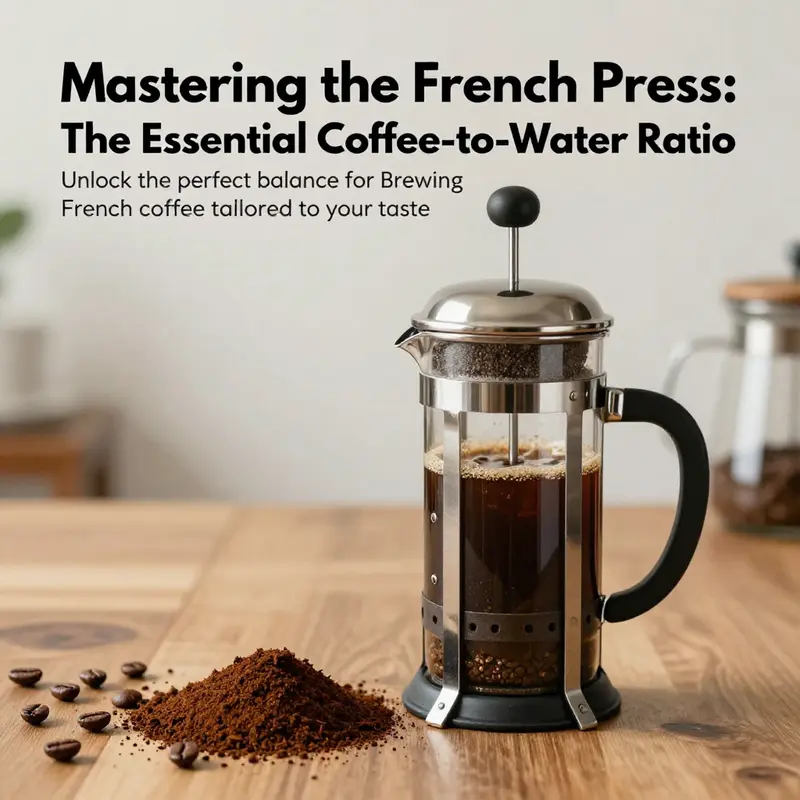
Coffee lovers know that the right ratio of coffee to water is crucial for achieving the desired flavor and body in a cup of French press coffee. Business owners looking to enhance their coffee offerings will benefit from understanding these ratios, as they can elevate customer satisfaction and even set a cafe apart from competitors. This comprehensive guide will delve into the importance of the coffee-to-water ratio, how to adjust it according to individual preferences, and the significant effects these ratios have on flavor profiles. Each chapter provides insights that can directly influence the quality of your coffee service, ultimately contributing to your business’s success.
null

null
Finding Your Perfect French Press Ratio: Personalizing Coffee-to-Water for Boldness, Body, and Clarity

A well-brewed French press is as much about taste as it is about method. The classic starting point—roughly a 1:15 to 1:17 coffee-to-water ratio—provides a solid foundation for a cup that is bold without being gritty. But taste is personal, and the way you hear that flavor in your own kitchen will depend on several variables that interact with each other: the amount of coffee, the amount of water, how finely you grind, how long you let the coffee steep, and even the temperature of the water that meets the grounds. The journey from that starting point to a cup that sings for you is not a straight line; it is a careful exploration of balance, depth, and clarity, a process of trial and adjustment that honors the idea that the perfect brew is the one that satisfies your palate. In practice, this means beginning with a pragmatic baseline and then making incremental changes, one attribute at a time, to coax out the flavors you want while preserving the bottom-line virtues that make the French press a compelling method: a rich body, a clean finish, and a level of aromatic warmth that invites the next cup before you even finish the first.
To appreciate why this approach works, it helps to anchor the discussion in the concrete numbers that professionals and hobbyists alike use as a starting compass. The standard starting range for the coffee-to-water ratio in a French press sits at 1:15 to 1:17. This means for every gram of coffee, you use between 15 and 17 grams of water. Since water mass is very close to water volume, that translates neatly into milliliters as well: roughly 15 to 17 milliliters per gram of coffee. In practical terms, if you weigh out 30 grams of coffee, you would be looking at about 450 to 510 milliliters of water. This proportion yields a cup that lands in the middle of the spectrum—neither thin nor overwhelmed by the coffee’s oils and solids. It is the kind of cup that gives you a confident sense of the coffee’s body and character without marching toward a bitter, over-extracted finish. It is a starting point, not a verdict, and a reminder that adjustments should be made with intention, not impulse. As you brew more often, you begin to hear in the cup the subtle cues that tell you you are on the right track: a balanced acidity that brightens without puckering; a sweetness that lingers as you sip rather than fading to a raw edge; and a finish that feels clean enough to invite the next pour rather than leaving a heavy aftertaste.
If you are chasing a bolder, more intense cup, the math of flavor allows you to tilt the ratio toward more coffee relative to water. In the world of the French press, a stronger profile typically emerges when you move toward a 1:12 to 1:14 range. In practice, that could mean using 30 grams of coffee with 360 to 420 milliliters of water, depending on your taste, grind, and brew time. What you gain is a cup with more concentrated aromas, a higher density of dissolved solids, and a mouthfeel that feels ample and imposing. Yet with that greater concentration comes an increased risk of bitterness and astringency if other variables are not tuned in harmony. The grind becomes especially important here. A coarser grind tends to slow the rate of extraction, which can help prevent over-extraction when you push the ratio toward the higher coffee side. A finer grind, conversely, can intensify extraction and should be approached with a lighter touch to avoid a rough, chalky finish. If you find the brew too bitter when you try a stronger ratio, you can either increase the water slightly, shorten the steep time, or widen the grind a notch to balance the extraction rate. Each adjustment nudges the cup in a different direction, and the interplay between grind, time, and ratio is where your craft truly begins to mature.
On the flip side, a lighter, more balanced or smoother cup often benefits from a ratio that leans toward more water for the same amount of coffee. A 1:16 to 1:18 range often reveals a cleaner, more nuanced cup where floral, fruity, or citrus notes can surface with greater clarity, and where the perceived acidity is tempered by the added volume of water. In this case, you might maintain the same 30 grams of coffee but increase the water to 480–540 milliliters, or you might simply adjust within that same range while exploring a longer steep time. The goal here is to reveal the bean’s subtle character without allowing the cup to feel thin or insipid. Think of it as dialing in the cup’s lift—the way it carries aroma on the palate and how fully the flavors express themselves from the first sip to the last swallow. The careful eye on balance ensures that the smoother profile does not drift into a bland, washed-out finish, while still offering a crisp, refreshing aftertaste.
The core idea behind adjusting the ratio is simple in theory and complex in practice: find a sweet spot where the extraction yields the flavor compounds you want without revealing bitterness or excessive heaviness. In practical terms, most brewers begin with a baseline of 1:16, a point that often serves as a stable middle ground for a wide range of coffees and roasting levels. From there, the path to a personalized cup becomes an incremental exploration. One practical tip is to adjust by 2–3 grams of coffee per 100 milliliters of water and reassess. This rule of thumb gives you a structured way to explore the spectrum without veering into chaotic experimentation. For instance, if you prepare a 500-milliliter brew at 1:16 with 31 grams of coffee, you could test a 1:14 brew with 36 grams of coffee and 504 milliliters of water, then swing back to a 1:18 ratio with 28 grams of coffee and 504 milliliters of water to feel the difference. The aim is not to chase a single perfect number but to understand how each adjustment mutates the cup’s sensation—body, aroma, acidity, and finish—and to learn which combination lands most happily with your preferred flavor profile.
In guiding your experimentation, it is essential to acknowledge that more than ratio alone determines the final drink. Grind size and brew time are closely connected to the ratio’s effects. A coarser grind tends to reduce extraction consistency and can benefit you when you push the ratio toward a bolder setup; a finer grind accelerates extraction and can make a lighter ratio feel overdone if not monitored carefully. Brew time, commonly around four minutes for a standard French press, acts as a throttle on extraction. If you find bitterness creeping in as you increase the coffee amount, consider shaving off 20 to 30 seconds from the steep time or slightly thinning the brew with a touch more water. On the other hand, if the cup tastes flat or sour, you may want to increase both coffee dose and steep time modestly, while paying attention to the grind’s coarseness. The interactions among ratio, grind, and time are a dynamic trio; adjusting one often calls for recalibrating the others to maintain balance.
To make this process tangible, imagine you start with 30 grams of coffee and 450 milliliters of water, a 1:15 ratio. You notice a robust cup with good body but a hint of bitterness and a slightly dry finish. You might decide to shift to a 1:16 by increasing the water to 480 milliliters while keeping the coffee constant, watching how the bitterness recedes and the sweetness emerges. If the cup still feels a touch sharp, you could instead reduce the dose a touch, to 28 grams, and move to 496 milliliters of water, preserving the same 1:17 relationship but easing the extraction pace. The beauty of this approach lies in its modularity. You adjust one dial, you taste, and you adjust another. Over several rounds, you map a small landscape of flavors and textures, learning where your preferences sit along that spectrum.
As you continue this journey, you will notice how the origin and roast level of the beans subtly influence the best ratio for your palate. A denser bean or a darker roast may require slightly more water to pull out the same nuances without leaving a heavy, char-like aftertaste. Conversely, a lighter roast with delicate aromatics might reward a slightly leaner, more concentrated extraction where the higher coffee-to-water concentration helps bloom those floral or fruity notes. The science behind these observations is not merely curiosity; it is grounded in extraction dynamics. The density of the bean and its roast level alter how readily solubles dissolve into water, which means the same recipe can yield different results depending on the beans you use. For those who enjoy delving deeper, there are published explorations into how origin and roast influence extraction dynamics, offering guidance on how to adjust ratios in a bean-aware way. If you want a more science-informed framework to anchor your tweaks, a trusted resource on brewing science examines how bean density interacts with roast level to shape optimal extraction, reminding us that even small changes in the bean can ripple through the cup in meaningful ways. This awareness helps keep your adjustments purposeful rather than accidental, ensuring that your shifts in ratio align with the coffee’s character rather than merely chasing intensity.
Ultimately, the guiding principle remains simple and resonant: there is no single perfect ratio, only the ratio that satisfies your palate. The phrase often cited by experts—that the perfect ratio is the one that satisfies your taste buds—applies with particular force here. The French press is a tool that invites experimentation rather than guarantees a fixed outcome. By treating the ratio as a starting compass rather than a final destination, you give yourself permission to explore. You learn to read the cup’s language: a cup that keeps its sweetness at the front of the palate, a cup with a bright but controlled acidity, a body that feels present but never oppressive, and a finish that departs cleanly, inviting the next sip rather than clinging to the tongue. And as you lean into this practice, you can connect the experience back to a broader aim—not merely to chase a stronger or lighter cup, but to craft a coffee that suits your daily routine, mood, and schedule.
To deepen your understanding while staying practical, you might explore a comprehensive resource that discusses how to approach the subject with a systematic, bean-aware mindset. The guide delves into how various beans and roast profiles affect extraction, providing a more nuanced map of how to adjust the ratio in context with bean characteristics. Reading such a guide can give you a framework for making informed tweaks rather than relying solely on trial and error. In the meantime, start with the plain, actionable baseline of 1:16, then methodically audition a few modest variations using the two-to-three-gram-per-100-milliliter rule. Note how the changes shift body, aroma, and perceived sweetness, then settle on the combination that feels most satisfying to you.
For practitioners who want a quick path to reference, consider this practical approach: begin by weighing out your coffee and water, set a timer for four minutes, and stir gently after the initial bloom to ensure even extraction. If the result is too bitter, add a small amount of water or reduce the steep time marginally; if it’s too weak or sour, increase the coffee dose a touch or extend the steep time by a minute, then re-taste. These adjustments, modest in scope, accumulate into a more personalized and reliable brew over time. It is a cycle of measure, taste, and refine, guided by your own responses to the cup rather than a rigid formula. This is the essence of adjusting the coffee-to-water ratio for personal preference in the French press: a balance between science and taste, between method and memory, between the repeatability of a recipe and the uniqueness of your palate.
If you want a concise reference that gathers the essence of this experimentation into a structured guide, you can consult an extended resource that walks through the core ratios and the logic behind them. The key is to treat the ratio as a malleable parameter rather than a rigid rule, and to approach each brew as an opportunity to learn a little more about your taste. The practice is not about chasing a single number; it is about building a language for your own coffee preferences, a vocabulary you can use to customize your morning routine and to explain your choices to others who share the cup with you. The more you listen to the cup, the more precise your adjustments become, and the more reliably you will land on a brew that feels inevitable—your own signature coffee moment, crafted one small adjustment at a time.
For a more detailed, equipment-agnostic breakdown of ratios and the science behind why they work, you can explore a dedicated guide that expands on the concepts introduced here. This resource complements the practical method described above by situating ratio adjustments within a broader brewing science framework, helping you translate taste observations into measurable changes that you can repeat with confidence. In the end, the pursuit of the perfect cup is a patient, iterative craft—one that rewards careful listening, disciplined measurement, and a willingness to adjust until the cup reflects your own preferences with clarity and joy. If you are ready to dive deeper, follow the link to the in-depth guide and keep the focus on your palate as the ultimate benchmark. French press coffee ratios—the ultimate guide
As you continue to refine your technique, consider also how your daily context—time, water quality, and even your mood—affects the brew you end up enjoying. The same ratio can yield different experiences if the water you use has a unique mineral balance or if your kettle is heating to a slightly different temperature than usual. Your brew becomes not just a recipe but a signal of the moment: the way the coffee expresses itself in the cup captures a bit of the day’s atmosphere. This is not a flaw but a feature of the method, a reminder that the art of making coffee is inseparable from the art of living with attention to small details. And when you approach each cup with that mindset, the journey from 1:15 to 1:17, and beyond, becomes less about chasing a perfect number and more about crafting an experience that you can recognize as distinctly yours. The process, once familiar, transforms into a reliable ritual that anchors your morning and offers a quiet invitation to pause, inhale the aroma, and savor the complexity of a well-made cup. In that sense, the ratio is not a constraint but a doorway—a doorway to taste, memory, and the daily rhythm of your own kitchen.
External resource: https://www.coffeescience.org
null

null
Final thoughts
Understanding and mastering the coffee-to-water ratio for French press brewing is pivotal for business owners aiming to deliver superior coffee experiences. By starting with the recommended 1:15 ratio and adjusting it to meet the preferences of customers, cafes can achieve a depth of flavor that enhances their brand’s reputation. As you explore the nuances of these ratios and their effects on flavor profiles, remember that experimentation can lead to discovery, allowing your coffee service to stand out in a competitive market.