

As a business owner, the choices you make about the products you offer can significantly impact not only customer satisfaction but also health outcomes. This article dives deeply into the two popular beverages, Mountain Dew and coffee, contrasting their origins, ingredients, and effects on the body. Understanding these differences can help you make informed decisions for your establishment whether you cater to health-conscious consumers or those looking for a quick energy gain. We’ll explore the origins and perceptions of these drinks, their nutritional profiles, and how they affect your customers’ overall well-being, ultimately helping you align your beverage offerings with your business goals.
Electric Spark and Quiet Brew: Tracing the Origins, Energies, and Cultural Life of Mountain Dew and Coffee

To compare Mountain Dew and coffee is to trace two divergent arteries of energy in modern life. One runs through a neon can, a fizz of citrus, and a promise of instant uplift; the other travels through a roasted bean, a slow drip of aroma, and a ritual of focus. Put side by side, they resemble two distinct answers to the same question: how do we summon attention, mood, and momentum in the hours that stretch ahead? The narrative of Mountain Dew begins in a rural, late afternoon landscape in Tennessee, during the 1940s, when two brothers sought a practical mixer for corn whiskey during Prohibition’s lingering aftershocks or the shadow of rural moonshine economies. The term Mountain Dew itself is a bright phrase, a kind of slang that evokes a rush of mountain air and clandestine gatherings. The beverage was not born as a health drink or a daily ritual; it was engineered for boldness, a citrus-forward, non-alcoholic beverage that could keep pace with the cliff-edge energy of a line of work and a culture that valued grit and speed. With time, the product found a steady ally in PepsiCo, the corporate giant that saw in Mountain Dew a chance to own a color and a mood—the electric green, the tart and sweet dance on the palate, the sense that this drink could cut through sameness and turn a moment into a kind of audacious performance. The 2024 branding update, a retro-inspired return to the original full name and a landscape-inflected visual language, suggests not a retreat from modernity but a recalibration: Mountain Dew wants to be seen as rooted in a place, in the Appalachian landscapes that shaped its identity, even as it remains a global, mass-produced, flavor-forward beverage. In its current form, Mountain Dew sits at the intersection of industrial efficiency and consumer fantasy. Its core ingredients, a sweetened, carbonated base enriched with acidulants and stabilizers, plus caffeine, create a quick, sharp sensation that announces itself with brightness and a little bite. The drink’s texture is the fizz first, the sugar second, and the caffeine third, a triad designed to deliver a moment of alertness and a rush of taste that lingers just enough to reorient attention before fatigue returns. In some markets and versions, brominated vegetable oil once served as an emulsifier to keep the bright color stable amid the carbonation; in others the ingredient was eliminated or replaced as regulatory and health concerns gained prominence. Diet variants traded sugar for artificial sweeteners, a shift that reshaped flavor, mouthfeel, and the metabolic picture for those who choose them. All while the taste remains unmistakably the same statement: a bold, lemon-lime character that seems to contain a spark and a dare to reach for more. The whole package carries a cultural intensity that borders on a lifestyle choice: fast, bold, and ready for the next move, a signal that you are awake and you want to feel alive in a world that often asks for quick responses rather than slow contemplation. The search for that quick moment of brightness has a long lineage in American consumer culture, and Mountain Dew, with its electric color and high-energy associations, plays into that tradition while also embracing contemporary concerns about packaging, health, and environmental impact through the years. Its evolution has moved from a regional curiosity to a global icon, a testament to how a beverage can carry mood and myth as much as flavor.
Coffee enters on a different plane. It is a product of centuries of cultivation, trade, and craft, and its origin story carries a more grounded relationship to geography and ritual. Ethiopia’s frontier highlands are the cradle of a legend about Kaldi, a goatherd who noted unusual energy in his flock after they fed on certain berries. The story, whether myth or memory, marks the moment when a plant with remarkable caffeine-laden seeds began traveling beyond its birthplace, through the Islamic world and into Europe, eventually becoming a global commodity with a layered, artisanal present. The core of coffee is in the bean, a seed that, after roasting, releases a spectrum of compounds that shape aroma, flavor, and body. Caffeine is the headline act, but antioxidants, organic acids, and a delicate balance of lipids contribute to a cup that can be bright, bitter, nutty, or chocolatey depending on roast, grind, and brew method. The aroma carries with it a memory of place: the soil, altitude, cloud cover, and harvest timing all translate into the flavor profile we experience in the cup. Coffee’s evolution from a regional curiosity to a cosmopolitan staple has been driven by a network of farmers, traders, roasters, and baristas who have sought to preserve a sense of craft even as the product scales to millions of cups daily. Unlike Mountain Dew, coffee’s identity is less a single, bright marketing mood and more a spectrum of experiences that can be gentle and introspective or intense and communal. The very act of brewing—whether it is a slow pour-over, a precise espresso pull, or a bustling cafe routine—becomes part of a social script that defines mornings, meetings, and moments of quiet togetherness. The bean’s journey from a remote hillside to a crowded urban cafe is a narrative of globalization that foregrounds labor, climate, farming practices, and the ethics of supply that guests and consumers increasingly demand from the products they drink. The sensory world of coffee—its aroma, its texture, its varying degrees of acidity and sweetness—invites a slower, more tactile engagement with energy as a concept, contrasting with the rapid fizz of Mountain Dew.
The practical differences between these beverages also show up in numbers. A typical serving of Mountain Dew in a can contains about 170 calories and roughly 54 grams of sugar, a combination that translates into a quick energy burst that rides on a sugar high. The caffeine content sits in a modest range, commonly around 54 milligrams per 12-ounce serving, which makes the drink less caffeinated than a standard cup of coffee in many contexts. Coffee, when served black, is almost devoid of calories and sugar, and caffeine per eight-ounce cup tends to fall in a range that covers roughly 95 milligrams, though this number can swing with bean type, roast, and extraction. The carbonation of Mountain Dew provides a sensory lift—the bite, the effervescence, the way the fizz travels along the tongue—while coffee’s lack of carbonation preserves a different kind of mouthfeel, one defined by roast oil, acidity, and a slow, evolving finish. The sugar profile of Mountain Dew matters beyond calories. The sheer quantity of sugar in a single can makes it a target for dental health concerns and metabolic considerations if consumption becomes habitual. In contrast, coffee’s profile is cleaner in this respect, provided one sticks to unsweetened versions or uses modest amounts of sugar or dairy. It’s not simply about calories; it is about how a beverage integrates into daily life, appetite, and energy management. A simple comparison reveals how these products anchor different daily routines and health considerations: Mountain Dew invites a rapid, sugar-laden lift in moments of heightened demand or social play, while coffee invites a slower, more deliberate energy that can be mapped to longer attention spans, deeper cognitive work, and social rituals anchored in time and place. The numbers do more than quantify; they hint at the behavior and the lifestyle that each drink tends to accompany, and they invite readers to consider how their own consumption patterns align with the rhythms of sleep, exercise, study, and work that structure a typical day.
Health considerations push the conversation beyond taste and mood. Many health researchers and nutrition writers point to the long arc of Mountain Dew consumption as a potential risk factor for tooth decay, obesity, and risk factors associated with metabolic dysregulation when intake is sustained at a high level. That does not erase the drink’s pleasures or its social role in gaming marathons or casual gatherings. It simply situates it within a broader dietary pattern that must be watched. Coffee, by contrast, often enters a more favorable light in the literature when used moderately. In moderate amounts, it has been associated with broader health benefits, including potential protective effects against certain neurodegenerative diseases, a lower risk of certain liver conditions, and a metabolic profile that supports activity and alertness without the same sugar burden. The nuance matters: coffee’s benefits are dose-dependent and sensitive to sleep, stress, and overall diet. In this way, caffeine is not a universal magic bullet; it is a tool that interacts with our bodies’ rhythms, and the choice between these two beverages becomes a matter of aligning intake with goals, routines, and health realities.
Culturally, Mountain Dew and coffee live in different worlds, even as they both fulfill the universal function of energy. Mountain Dew’s aura is one of rebellion and youth energy, a color-saturated invitation to go faster and push harder, often tied to sports and adventure culture that thrived in late twentieth-century and early twenty-first-century advertising. The branding emphasizes the extreme, the outdoors, and the thrill of being first to the line, the latest trick, or the next break in the schedule. The new branding, with its nod to historical landscapes and the full name Mountain Dew, signals a desire to anchor the product in a sense of place as well as sensation. Coffee has long been a symbol of ritual and connection. It marks mornings, business meetings, study sessions, and quiet conversations in libraries or cafes alike. The craft movement around premium coffee foregrounds not just flavor but ethics: direct trade, fair wages, and sustainable farming practices, all of which contribute to how people perceive value in the beverage. The stories attached to coffee—its farms, harvests, roasters, and baristas—transform it from a simple ingredient to a cultural practice. In modern urban life, coffee is often imbued with a sense of artisanal care, from bean sourcing to water quality to the precision of an espresso machine. The culture around coffee invites experimentation, immersion, and education, as baristas share tasting notes and customers seek ever more refined flavor experiences. Mountain Dew, by contrast, often exists in a social ecosystem built around games, music, extreme sports, and a rebellious edge that appeals to a different subset of youth culture and, increasingly, to a broader audience that finds its energy appealing for moments of spontaneity and social bonding.
If one attempts to map these beverages along a continuum, Mountain Dew sits toward the end of high-intensity, short-term energy with sensory richness and a social ritual anchored in play, gaming, and social excitement. Coffee sits more toward the long-term, mindful energy end of the spectrum, where focus, conversation, and ritual form the core of daily life. Yet neither position should be cast as absolute. A cup of coffee can pair with an afternoon energy boost in a way that feels almost as bright as a Mountain Dew, especially in contexts where sugar intake is not desired. In gaming sessions or late-night study rooms, Mountain Dew can supply a social glue that the group consumes with a sense of shared enthusiasm, even as it creates a temporary spike and a potential later slump. The key lies in balance, portion control, and awareness of how the body responds over time, a reminder that caffeine is a nutrient like any other: its benefits reveal themselves only when use is considered and purposeful, not merely habitual. The social dimension matters here as well: the choice of drink often aligns with the environment, whether that space is a dorm room, a coworking hub, or a kitchen table where conversations flow as freely as the liquids.
For readers curious about precise numbers and how they translate into real-world choices, there are easy reference points. The caffeine content in Mountain Dew and in coffee is not the same across brands or methods, but a helpful rule of thumb emerges: one cup of coffee typically carries more caffeine than a single can of the soda, while the soda carries more sugar per serving. This means that if you want a sharp mental nudge with minimal sugar, coffee is usually the better bet, whereas if you want a high-sugar, high-volume experience quickly, Mountain Dew can deliver. The broader point is not to vilify one drink or exonerate the other, but to recognize how each drink arrives at your desk in a different time and with a different physiological and cultural payload. Understanding these payloads means paying attention to what you want to achieve in any given moment—clarity, speed, focus, appetite, social mood—and letting that guide your choice. A deeper comprehension of caffeine in context—how it interacts with sleep and hydration and how sugar interacts with energy metabolism—helps to make more deliberate decisions about when and how often to use either beverage as part of a broader health plan.
To ground the discussion further in accessible sources, readers can consult technical summaries that discuss caffeine content in Mountain Dew and similar beverages. For a deeper look at the caffeine content of Mountain Dew specifically, you can explore an internal resource that breaks down the numbers in depth: caffeine content in Mountain Dew. By turning the page from memory to data, you can compare your own intake across days and contexts, and you can begin to calibrate your habits for sleep, hydration, and energy. This kind of self-monitoring matters because caffeine interacts with sleeping patterns, hydration status, and the dietary fiber and macronutrient balance you pursue in a given day. The broader literature suggests a general guideline: moderate caffeine consumption—typically up to about 300 to 400 milligrams per day for healthy adults—may be compatible with health for many people, provided sleep and hydration are not compromised. The dual narrative here is that Mountain Dew and coffee stand as two ends of a spectrum: one with a bright, rapid, sugar-backed tempo; the other with a nuanced, craft-driven, and steadier energy source. The two beverages illustrate how energy can be both a physiological event and a cultural statement, and they invite readers to reflect on their routines, environments, and personal responses to caffeine and sugar.
Finally, in the larger story of energy beverages and caffeinated culture, Mountain Dew and coffee reveal the variety of paths people take to feel alert, engaged, and part of a social scene. Mountain Dew, with its symbol of speed, color, and dare-to-play attitude, embodies a contemporary urban mythology about adrenaline and competition. Its visual identity and campaigns have cultivated a sense that the drink is part of a lifestyle toward speed and spectacle. Coffee, with its long-standing tradition of ritual and sociability, stands for connection, craft, and contemplation, inviting people to slow down just enough to savor a moment with another person or with their own thoughts. The branding strategies behind both drinks reveal how marketers attempt to harness energy as a cultural currency, not merely as a chemical effect. When these threads are woven together in daily life, they remind us that energy is not a single mood but a spectrum of possibilities. Mountain Dew and coffee sit on a continuum rather than a fence, inviting us to reflect on our routines, our relationship with food, and how the drinks we choose shape the way we start, work through, and end our days. This is not a sermon about renouncing one beverage in favor of the other; it is a meditation on the way energy is produced, consumed, and socialized in different contexts, and on how our choices align with the goals we hold for our health, productivity, and happiness.
To close this thread without finalizing the judgment, consider the power of context. In a study session, a cup of coffee can anchor mental effort; in a late-night gaming session, a can of Mountain Dew can anchor a shared moment of exuberant focus. Each bottle and each mug is a signal about your current mood, your goals, and your appetite for risk versus repose. The brands associated with each choice carry a message about origin and identity, about the pace of life and the pace of thinking. Whether the path you travel runs through the kitchen or the cafe, what matters is not only the beverage but the habit you cultivate around it. If you can weave caffeine into a broader pattern of hydration, sleep, nutrition, and physical movement, you will edge closer to a healthier, more intentional energy flow. And if you want to dig deeper into the provenance and branding history behind Mountain Dew, you can consult the official history from the brand’s parent company, which narrates its evolution from a moonshine mixer to a global energy-symbol in a way that resonates with the broader story of American consumer culture. The source adds context to how a product can become more than a drink, becoming a cultural emblem that feeds both appetite and imagination. The beverage landscape continues to evolve, with producers experimenting not only with flavors and sweeteners but with packaging, sustainability initiatives, and responsible marketing that considers the needs of diverse audiences and the health concerns of a growing population that seeks clarity and vitality without compromising long-term well-being. The dialogue between these two beverages—one bright, volatile, and instantly gratifying; the other nuanced, social, and settlement-friendly—maps a broader societal negotiation about how we want to feel and how we want to live in the hours that comprise our days.
External resource: PepsiCo – Mountain Dew Official History: https://www.pepsico.com/about-us/history/mountain-dew
Zest, Roast, and the Energy Equation: Tracing the Ingredients and Caloric Toll of Mountain Dew and Coffee
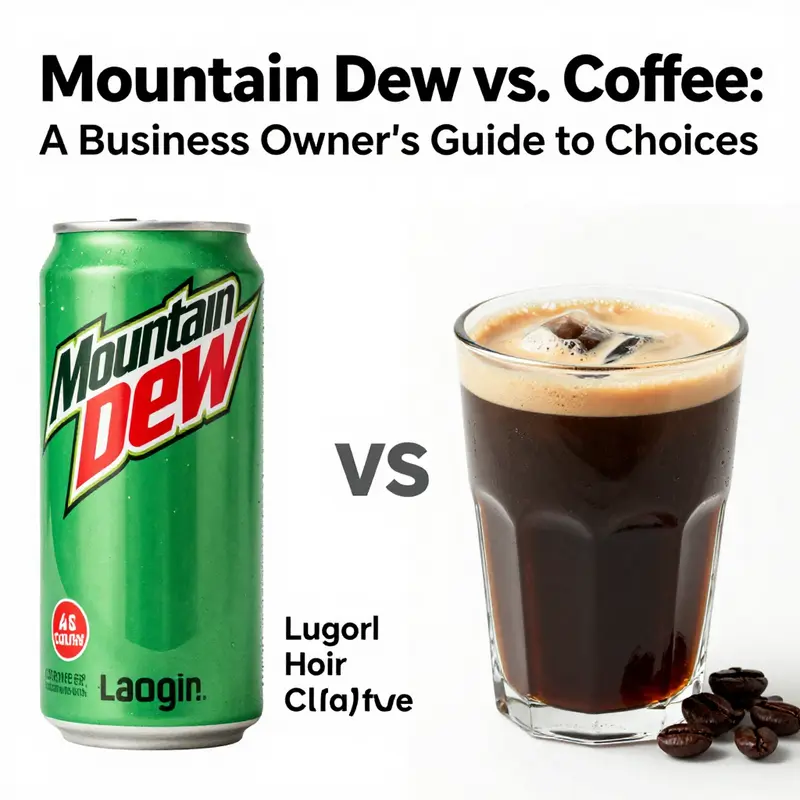
Two beverages sit at opposite ends of the spectrum of everyday caffeine: one fizzing with citrus brightness and a bang of sweetness, the other dark with roasted complexity and a more modest, steadfast energy. When we compare Mountain Dew and coffee, we are not merely weighing taste and caffeine; we are weighing origins, production, nourishment, and cultural meaning. Each drink encodes a set of choices about how we want to feel in the moment, how we value health over quick blast of alertness, and how we connect with rituals that stretch from mountain hollows to crowded city halls. The two beverages illuminate the broader terrain of modern stimulant consumption, where flavor, texture, and brand identity collide with physiology and lifestyle. To grasp their differences and parallels, we can follow a single thread from source to stomach to social setting, tracing how each drink is born, what it delivers on the body, and what it represents in everyday life. Mountain Dew emerges from a soda lineage that emphasizes immediacy and spectacle. Born in the mid-twentieth century as a mixer and then folded into a global brand with a signature color and a rebellious edge, it has evolved into a symbol of bold flavor and rapid energy. Coffee, in contrast, originates in a much older ecosystem: beans cultivated, roasted, and brewed with patient ritual, carrying centuries of social and ritual meaning into contemporary cafes and kitchens. These divergent paths converge in a pragmatic question about energy, appetite, and habit. How does the body interpret a can of citrus fizz packed with sugar compared to a cup of black coffee, which delivers caffeine with very little caloric baggage? The answer lies in the ingredients that go into each drink, how those ingredients interact with metabolism, and the cultural scripts that shape when— and why—people choose one over the other.
Mountain Dew is a carbonated soft drink that has become inseparable from a certain kind of sensory experience: bright, electric color, a tart-sweet bite, and a fast, fizzy mouthfeel. Its origin story sits at the intersection of necessity and branding. It began as a product devised by brothers in Tennessee in the 1940s and then grew into a PepsiCo flagship through the decades. The current form of Mountain Dew is defined by a blend of carbonated water, a high-intensity sweetener system, and a citrus-forward profile that keeps the palate craving more. The taste profile is designed to deliver quick gustatory satisfaction as well as a stimulant kick, which helps explain its popularity in social and recreational settings—from gaming sessions to road trips. Yet flavor is only part of the story. The beverage also embodies a branding strategy that leans into countercultural energy—a nod to extreme sport aesthetics, youth culture, and a knack for creating moments of shared, almost theatrical, exhilaration. The neon-green hue, the aggressive flavor notes, and the marketing campaigns collectively construct a scene in which the drink is not just a refreshment but a mood—an invitation to seize the moment with a bold, unapologetic taste.
Coffee, by contrast, is a product of a longer arc of cultivation, processing, and ceremony. The bean itself carries a story of land, climate, altitude, and human labor. Roasting reveals a spectrum of flavors—nutty, fruity, smoky, even chocolatey—each reflecting the choices of roasters and the terroir of origin. Brewed coffee concentrates caffeine in a form that is more slowly absorbed than a quick sugar rush, especially when the drink is consumed black or with minimal additions. The ritual around coffee—from the quiet morning cup to the bustling café experience—adds a social and psychological dimension that Mountain Dew does not typically engage. Coffee has become a symbol of routine, focus, and community, a drink that anchors morning rituals and invites small talk in shared spaces. It has also evolved into a space for ethical considerations—shade-grown beans, fair-trade practices, and direct trade philosophy—adding another layer of meaning to the simple act of pouring a dark-brewed cup. If Mountain Dew is a spark that intensifies a moment, coffee is often a lever for consistency and clarity across a day, a companion to work, study, and conversation.
The ingredients and nutritional profiles of these drinks illuminate how they deliver their distinct signals to the body. Mountain Dew relies on a combination of carbonated water and sweeteners that create a rapid rise in blood sugar, followed by a swift decline that often leaves a sense of jittery energy or a post-crash lull. The typical 12-ounce can contains about 170 calories and roughly 46 grams of carbohydrates, largely from sugars. The sugar content is staggering enough to contribute to dental concerns and metabolic considerations when consumed in excess. The amount of caffeine, around 54 milligrams per 12-ounce serving, augments the immediate stimulatory effect, but the energy is inseparable from the sugar response, the carbonation, and the other additives that give the drink its characteristic tang and glow. The presence of citric acid and artificial color compounds adds to the sensory punch but also introduces a profile that is far from neutral from a nutritional perspective. In short, Mountain Dew offers a high-sugar, moderate-caffeine experience that is quick to please the palate and fast to impact the bloodstream, with health implications that accumulate when consumption becomes habitual.
Coffee, on the other hand, delivers caffeine with a remarkably small caloric footprint, especially when consumed in its pure, black form. A typical 8-ounce cup of black coffee contains about 2 calories, essentially negligible in the daily tally. The caffeine content tends to be higher per serving than Mountain Dew, with around 95 milligrams per cup, depending on the roast and brew method. This means a cup of coffee can offer a more potent and more sustained cognitive lift without the sugar-driven energy spike that characterizes Mountain Dew. The absence of sugars and fats in black coffee means there is little to no immediate metabolic load on blood sugar levels, assuming no sweeteners or creamer are added. The trade-off, of course, is flavor complexity and the intangible benefits of antioxidants present in coffee, which have been studied for potential protective effects against certain diseases and conditions. The contrast is stark: coffee emphasizes a lean energy that supports alertness over a longer arc, while Mountain Dew emphasizes a bright, rapid energy that is coupled with a strong taste and a festive, even celebratory, mood.
Beyond the ingredients and physiology, the cultural imaginings surrounding each beverage reinforce their roles in daily life. Mountain Dew positions itself as a rebellious, boundary-pushing brand with a history tied to the Appalachian region and a modern appetite for extreme sports and outdoor adventure. The launch of retro-inspired branding and a reconceived logo in 2024 ties the drink back to its roots while signaling a renewed emphasis on natural landscapes and a sense of place. This branding communicates a narrative about risk, spontaneity, and a willingness to push the limits of flavor and experience. Coffee, by contrast, embodies ritual, refinement, and global connectivity. It is associated with a sense of sophistication, with mornings that begin with intention, and with social spaces—cafés and roasteries—that celebrate craftsmanship and community. Specialty coffee markets emphasize sustainable sourcing, transparency about bean origins, and the artistry of roasting and brewing. The cultural language around coffee invites listeners to appreciate aroma, body, and the long, patient process that culminates in a single cup. In this sense, Mountain Dew and coffee do more than meet a need for alertness; they signal distinct identities about risk tolerance, daily tempo, and social belonging.
From a practical standpoint, the choice between Mountain Dew and coffee often boils down to context and function. If one seeks a quick pick-me-up during a high-energy moment—perhaps a gaming session, a road trip, or an outdoor break—the immediate jolt of Mountain Dew can be appealing. The high sugar content delivers a rapid feel-good surge that some people crave, especially in settings where flavor excitement and social energy matter more than long-term health considerations. Yet the accompanying sugar load can undermine longer-term goals around energy stability, dental health, and metabolic balance. Mountain Dew’s quick burst may be well suited to short-term activities that benefit from a momentary lift, but this is not sustainable energy for a day that requires consistency and steady focus.
Coffee, conversely, tends to fit into routines built around concentration, productivity, and social exchange that extend over hours. The absence of a heavy sugar load means that the energy is more durable and less likely to crash. For many people, coffee serves not only as a stimulant but as a ritual that frames time, provides a moment of pause, and facilitates conversation. The sensory depth of coffee—the aroma, the warmth, the tactile feel of a ceramic mug—contributes to a distinct experience that is less about a single bright moment and more about a cultivated mode of engagement with the day. The potential health signals associated with coffee—protective effects against certain conditions when consumed in moderation, and the possibility of sleep disruption if timing and dose are poorly managed—are nuanced but generally supportive of a balanced diet when consumption sits within reason. In this sense, coffee often represents a sustainable cognitive tool: a means to maintain focus with a relatively modest caloric and metabolic footprint. Mountain Dew, while not devoid of its own social and sensory benefits, carries a sugar-centered energy proposition that can be thrilling in the moment but more challenging to sustain over the long arc of daily life.
The question of use cases and best contexts is worth returning to. If one needs a quick, flavored, high-energy jolt during a moment of play or celebration, Mountain Dew can feel like a natural ally. The deprivation of a longer-term metabolic budget might be worth paying in those moments when taste and excitement trump other concerns. If the goal is steady cognitive performance, minimal caloric burden, and a daily ritual that rewards consistency, coffee tends to be the more prudent choice. In any case, the best approach for a healthful rhythm is to negotiate between these two beverages with awareness. A person might reserve Mountain Dew for occasional occasions—gaming sessions, road trips, or celebrations—while making coffee the default fuel for routine work, study, and social interaction. By aligning beverage choices with the aims of each moment, one can enjoy the flavor and energy that each drink best provides without letting one overshadow the other.
In the broader landscape of caffeine and everyday beverages, it is helpful to keep in view an external point of comparison and a practical takeaway. For readers seeking a deeper, side-by-side understanding of how these drinks stack up in terms of caffeine content, sugar, calories, and how those elements translate into daily habits, a comprehensive comparison exists that lays out the trade-offs in a concise, accessible way. This resource can serve as a bridge between the sensory experience of tasting and the physiology of energy. For readers who want to explore more, the related piece on Coffee vs Mountain Dew provides a focused contrast and a structured assessment of how taste, nutrition, and lifestyle intersect in the Mountain Dew vs coffee dialogue. Coffee vs Mountain Dew
Despite the differences, there is a shared thread: both drinks shape moments through a combination of flavor and stimulation. The teeth of Mountain Dew—the citrus zing, the bright color, the sweet finish—mirror the sharp, instantaneous gratification of a pop of energy that can brighten a late-night session or a long drive. The smooth, contemplative profile of coffee mirrors a slower, more deliberate engagement with the day, one that invites reflection and sustained performance. The contrast between them illuminates a broader cultural question: what do we want our stimulants to do for us? Do we want a moment of exuberant spark or a steady, reliable bloom of attention? The answer varies with the person and the task, but the choice is never simply about flavor alone. It is about how we design our days and how we balance pleasure, health, and efficiency.
External resource: https://www.prospre.com/food/mountain-dew-nutrition-facts
Two Caffeine Roads, One Body: Reading Energy, Sugar, and Habit Through Mountain Dew and Coffee

Across the globe, the human body responds to stimulants with a shared chemistry and distinct personal narratives. The comparison between a neon-green, citrus-forward soda and a humble cup of coffee opens a window into how ingredients beyond caffeine—sugar, acidity, and added preservatives—shape energy, mood, appetite, and long-term health. It is not merely a contest of which keeps you awake longer; it is an invitation to understand how what you drink can steer your metabolism, influence dental health, and weave itself into daily rituals that carry cultural weight as much as physiological effect. To fully appreciate the contrast, one must consider not only the immediate jolt of caffeine but also the cascade that follows: how quickly sugar hits the bloodstream, how this interacts with the brain’s reward system, and how the social and environmental contexts surrounding each beverage amplify or mitigate those physiological ripples. The neon citrus beverage, for instance, arrives with a high sugar load, a robust level of acidity, and a fizzy delivery that heightens sensory perception in the moment of consumption. The coffee cup, by contrast, offers a more concentrated form of caffeine with minimal intrinsic sugar unless sweeteners are added, and it arrives within a ritualized, almost ceremonial framework that can extend into social fabrics, work habits, and contemplative pauses. The body’s response to these beverages cannot be reduced to a single dimension; instead, it emerges from a triad of pharmacology, nutrition, and behavior, each reinforcing the other in ways both predictable and nuanced. The story begins with origins, not to romanticize but to remind us that context matters. The neon citrus beverage arose from a mid-20th-century era of mass production and clever marketing, a product that evolved from a simple mixer into a globally recognized brand, known as much for its electric hue as for its bold, sweet-tart profile. Coffee, with roots stretching back to Ethiopian lands and rippling across continents through trade, scriptural rituals, and café cultures, carries a sense of lineage and craft, a sense that a cup can be both quick pick-me-up and a quiet, enduring ritual. These starting points influence not only taste but also expectations—the idea that one may drink to push through a long afternoon or to celebrate a moment with friends, to salt the day with a spark of sweetness or a note of roasted depth. The sensory experience alone is part of the equation. The neon citrus beverage fizzles, crackles, and floods the tongue with a sharp tang that can momentarily sharpen attention through gustatory surprise. Its sweetness is not merely a pleasure but a motor on the brain’s reward circuitry, delivering quick feedback to the pleasure center that can feel like momentum in motion. That momentum, however, is tempered by the reality of the sugar crash that often follows, a dip in energy that can erode the initial lift and leave a gap that the next sugar rush may attempt to fill. In contrast, coffee presents a more understated and persistent profile. The caffeine in a standard cup often arrives with a smoother kinetic energy—the kind that seems to settle into the neural networks and sustain, rather than spike, focus and wakefulness. The difference emerges not only from caffeine content, though that matters; it is amplified by what accompanies caffeine. Black coffee contains virtually no calories, no sugar, and minimal additives, which makes its impact on blood sugar and insulin modest compared with beverages that carry heavy carbohydrate loads. This metabolic footprint helps explain why coffee is often associated with a sense of steadiness, with longer-term cognitive benefits that researchers continue to document in various contexts, from executive function to mental endurance. Yet even coffee is not wholly neutral. The beverage can be acidic, and for some individuals, even this mild acidity interacts with the stomach or teeth in ways that shape daily comfort and long-term oral health. A dose of caution becomes sensible when one contemplates habitual intake: the acid- and caffeine-rich environment can influence enamel integrity, especially when combined with add-ons like sweeteners or dairy. The comparison therefore requires a careful accounting of not just caffeine but the matrix in which caffeine travels. Beyond chemistry, the social and cultural frames surrounding each beverage exert a powerful pull on behavior. The neon citrus soda exists within a world of extreme sports, late-night gaming sessions, and a marketing language that prizes intensity, speed, and a certain rebellious energy. Its consumption often marks moments of high arousal or celebration, where the environment invites a quick burst of activity and a rapid, almost ritualistic sugar-fueled recharged state. The coffee routine sits within a different cultural ecosystem—one that values ritual, conversation, and routine. The act of brewing, whether through manual methods or a trusted machine, tends to become a daily anchor, a moment of pause that helps calibrate attention for the hours ahead. This ritualization shapes how the body experiences caffeine: it fosters expectations of steadiness and social connection, while also encouraging mindful preparation and savoring of flavor, aroma, and texture. The physiological consequences of these differences unfold with time. The neon citrus beverage’s high sugar content—often measured in grams per serving—drives rapid glucose absorption. The surge in blood glucose triggers an insulin response, which can lead to a transient spike in energy, followed by a dip as insulin acts to clear glucose from the bloodstream. For some, especially in contexts of frequent consumption, these cycles can contribute to more sustained cravings, fluctuations in mood, and, over the long run, a higher risk of weight gain and metabolic disturbances. The metabolic story of coffee, particularly when consumed without sugar, tends to be gentler in its immediate footprint. Caffeine can increase lipolysis and gym performance in certain contexts and may reduce perceived exertion during physical activity, a point that aligns with the notion of sustainable wakefulness rather than an all-at-once sprint of energy. The energy is not purely muscular or cognitive; it is a composite of how neural networks manage attention, how mood modulates motivation, and how appetite signals respond to the presence or absence of caloric load. In practical terms, this means that the neon citrus soda might deliver a rapid, bright start to a task that benefits from quick spikes of alertness—activities that can be performed in bursts, short, intense moments where rapid reaction time matters. The coffee, on the other hand, may serve as a companion to sustained work, study, or conversation, where gradual onset and longer duration support steady thinking, continuous concentration, and a more predictable emotional tone. The body’s response to these beverages also dwells in the realm of oral health and dental wear. The additive-laden neon citrus soda carries acids and sugar that can erode enamel and promote caries in individuals who consume it frequently. This is not a verdict against sugar or acid in isolation, but a reminder that frequent exposure to both can alter the mouth’s microenvironment, potentially fostering a landscape where dental concerns accumulate over years. Coffee, while acidic by nature, tends to pose dental challenges largely when sugar, creamers, or artificial flavorings are added in large amounts. In other words, the baseline coffee—black or with minimal additives—presents a relatively modest risk to enamel compared with a sugary, carbonated beverage, though no beverage can be considered entirely risk-free in terms of dental health. The health considerations extend beyond teeth to broader metabolic and systemic outcomes. The high-sugar, high-calorie profile of the neon citrus beverage, when consumed chronically, correlates with increased risk factors for obesity, insulin resistance, and type 2 diabetes in some populations, alongside potential weight management challenges. Coffee, within a moderate range—roughly two to four cups per day, depending on individual sensitivity and health status—has been associated in observational data with a portfolio of potential benefits: improved cognitive function, enhanced liver health markers, and, in some studies, a modest protective effect against certain neurodegenerative conditions. It is important to emphasize that these benefits do not arise in isolation; they depend on context, ingredients, and overall lifestyle. A cup of coffee that is black or lightly sweetened is inherently different in endocrinological impact from a neon citrus soda loaded with sugar and additives. The way these beverages intersect with daily life matters as much as their chemistry. If you rely on a quick energy boost to power through a late-night gaming session or a physical task, the neon soda offers a potent, immediate reinforcement. If your daily schedule hinges on steady cognition and moderate energy through long stretches of reading, writing, or problem-solving, coffee becomes a more reliable ally, particularly when you are mindful about added sugars and dairy choices. The social rituals around these drinks also shape habit formation. In many communities, coffee culture carries a sense of intentionality—brewing, exchanging stories, and pausing to reflect—habits that can gently cultivate mindful consumption, portion control, and consistency. The neon citrus beverage, conversely, often anchors moments of high energy and social exuberance, where the emphasis is on speed, flavor, and shared excitement. This distinction matters because habit formation thrives on the alignment between physiological need and environmental cues. If your cue is a need for rapid stimulation after a midday lull, the neon soda may respond to that cue in a moment of immediacy. If your cue is a desire for sustained focus and meaningful social connection at the start of a workday or during collaborative tasks, coffee aligns more naturally with that need. Understanding these patterns can illuminate personal choices and reveal the subtle ways in which routine and preference shape health outcomes. In considering long-term health, it is essential to weigh not only caloric content and sugar load but also cumulative exposure, quality of sleep, and the body’s broader metabolic milieu. The neon citrus beverage, when consumed in moderation as an occasional treat, may be less consequential than if used as a daily staple in place of more nutrient-dense choices. Coffee, in contrast, can be integrated into a balanced lifestyle that prioritizes whole foods, regular physical activity, and adequate hydration. The conversation becomes more meaningful when we acknowledge the role of additive choices—sweeteners, flavor shots, and dairy options—that alter the beverage’s metabolic profile. A splash of cream or a spoon of sugar can transform a near-zero-calorie beverage into a source of additional calories, with downstream effects on weight, glycemic response, and appetite regulation. In a world where convenience and taste often drive decisions, making informed choices means recognizing that a beverage is not only a source of caffeine but also a signal about one’s health priorities for that day. The narrative of caffeine itself is not inherently good or bad; it is a tool, and like any tool, its value is determined by how it is used. A daily cup of coffee, plain or lightly enhanced, can fit comfortably into a health-minded pattern, particularly for individuals who monitor sugar intake and maintain other healthy habits. The neon citrus beverage, consumed rarely or within the context of an overall lower-sugar diet, can be enjoyed without derailing health goals, though its impact on dental health and caloric balance merits mindful consumption. For those who oscillate between the two beverages, a thoughtful approach can harmonize energy needs with metabolic and cognitive goals. If you seek a quick kick for a brief window of time, reserve the neon citrus option for those moments when you know you will be highly active for a short duration. If you require sustained mental clarity and a consistent energy baseline across several hours, favor coffee with minimal sweeteners and no heavy creamers. The broader takeaway is not a verdict that one beverage is categorically superior to the other, but a recognition that each carries a distinct energy signature and set of potential health implications. The best choice for any given person depends on timing, context, and personal health status. When we move from theory to practice, the real measurement becomes habit. Do you reach for one beverage as a reflex at the start of work, or as a celebratory ritual after a win? Do you drink in response to hunger, thirst, or mood cues, or as a signal to break the monotony of a long task? These questions reveal as much about health outcomes as the chemistry of the beverages themselves. The evidence assembled here supports a nuanced view: coffee offers a more favorable profile for regular use, especially when sugar is kept in check and caffeine is consumed in moderation. Mountain Dew and other high-sugar, highly acidic alternatives present more pronounced risks if integrated into daily routines and often contribute to energy fluctuations and dental concerns. Yet there is room for balance. An occasional soda with a sharp, refreshing flavor can be part of a varied, mindful diet, particularly when it replaces other less nutritious choices in a given moment rather than becoming a daily staple. The cultural resonance of each drink matters, too. The neon green beverage thrives in spaces that celebrate speed, risk, and spontaneity, while coffee remains a staple of routine, contemplation, and communal exchange. These cultural associations shape expectations and, in turn, influence how bodies respond to the beverages. In the end, the most compelling narrative is not simply which drink has more caffeine or fewer calories. It is how a person chooses to align their beverages with their goals, their health status, and their daily rhythm. If the aim is sustained cognitive performance with a modest metabolic footprint, coffee—prepared with attention to sugar and dairy—offers a coherent pathway. If the aim is a momentary surge during a peak of activity, the neon citrus option can satisfy that need, provided it is enjoyed with awareness of its sugar content and dental implications. A holistic approach also invites consideration of hydration, sleep, and overall dietary choices. Caffeine can help with alertness, but it is not a substitute for a balanced diet, adequate hydration, and regular rest. It is the interplay of these elements—caffeine, sugar, acidity, ritual, and lifestyle—that determines how Mountain Dew, coffee, or any other caffeinated beverage affects the body over days, months, and years. For readers seeking a concise synthesis, the takeaway remains practical and actionable: when you need steady focus and a healthy metabolic profile, choose coffee and be mindful of added sugars. When you crave a bold, tangy burst and understand the trade-offs, enjoy a neon citrus soda in moderation. If curiosity leads you to explore more about how these drinks interact with your body in everyday life, you can read further in a detailed comparison that delves into the nuances of caffeine content, sugar loads, and how these factors translate into real-world performance. For a deeper look at the nuanced comparison and how flavors, culture, and physiology intersect, see the article on coffee-vs-mountain-dew. For readers who want to verify nutritional specifics behind the discussion and explore related beverage chemistry, the official product and ingredient profiles provide a platform for deeper understanding of how additives and acidity shape both taste and health outcomes. External resources, including comprehensive research and industry profiles, further illuminate the conversation about stimulants, sugar, and the body’s response to different beverage matrices. Those seeking a broader scientific lens can consult sources that analyze caffeine pharmacokinetics, sugar metabolism, and oral health interactions. In sum, the path through caffeine’s landscape is a personal one, shaped by taste, schedule, and health priorities. The contrasting journeys of a neon citrus soda and a quiet cup of coffee reveal how two familiar beverages can function as tools that either sharpen daily life with a quick, gustatory spark or sustain cognitive endurance with a calmer, longer-lasting energy. The right choice—like the best path through a mountain pass—depends on terrain, destination, and the pace at which you wish to travel. If you want to explore the topic further, a detailed, reader-friendly comparison is available under the banner coffee-vs-mountain-dew, a resource that synthesizes chemistry, nutrition, and habit into a coherent guide for everyday decisions. For readers who wish to extend their understanding beyond caffeine itself, a broader look at how these drinks influence lifestyle choices and health can be found through trusted health and nutrition resources, and practical guidance on moderating intake and making mindful substitutions, as well as reflective considerations about how beverage choices intersect with culture and personal identity. In the end, the body’s response to these beverages serves as a reminder that nourishment is both chemical and contextual, a blend of molecules and moments. As taste, habit, and health continue to weave together, the best path forward is to stay curious, to observe how your energy rises and falls, and to design your daily rituals around choices that support long-term well-being. If you are curious about the nuanced comparison and want a richer, linked discussion that builds on the framework outlined here, you can explore the deeper analysis at coffee-vs-mountain-dew, which anchors this conversation in a broader exploration of caffeine, sugar, and lifestyle. For those seeking more technical data and practical dietary insights, official ingredient disclosures and third-party nutritional databases offer a complementary lens to the narrative, helping readers translate the science of the body’s response into everyday decisions. External reference: https://www.mountaindew.com
Final thoughts
In summary, while both Mountain Dew and coffee hold substantial places in the beverage market, their differences span far beyond taste; they encompass health implications and different customer experiences. As a business owner, recognizing these distinctions is key to tailoring your offerings. By strategically choosing the beverages you provide, you not only cater to the preferences of your clientele but also promote healthier choices that can enhance overall well-being and productivity. In today’s market, being informed can be a significant competitive advantage.