

The art of brewing French press coffee hinges significantly on the water to coffee ratio. Achieving the perfect balance not only ensures a consistent flavor but also reveals the intricate notes hidden in the coffee beans. For business owners in the coffee industry, understanding this vital aspect can lead to a competitive edge by providing customers with an exceptional coffee experience. Throughout this guide, we will delve into key aspects of the water to coffee ratio, including its impact on flavor profiles, how to adjust it for personal preferences, common mistakes to avoid, and best practices for accurate measurement. By the end, you will be well-equipped to implement these insights in your business, enhancing customer satisfaction and loyalty.
Proportions That Pour: Mastering the Water-to-Coffee Ratio in French Press Brewing

Brewing with a French press is a conversation among heat, time, and proportion. The water-to-coffee ratio sits at the center of that dialogue, shaping whether a cup leans toward sweetness and balance or slides into bitterness. The numbers matter because they are the scaffolding on which extraction builds a clean, full flavor.
The standard starting point is a ratio of 1:15, meaning 1 gram of coffee to 15 grams of water. In practice that means about 40 grams of coffee to roughly 600 grams of water for a single cup, or 20 grams of coffee to about 300 grams of water for a smaller brew. Those figures translate into a well balanced, rich cup with enough body to carry chocolatey and nutty notes, without becoming dull or flat. But the beauty of the French press is that the ratio is not a fixed wall but a dial you can turn, a tool you can tailor to your palate.
If you crave a smoother, lighter cup with less intensity, a lighter ratio around 1:17 can be used. With a scale, that might look like 35 grams of coffee to 600 grams of water, a proportion that yields a breath more clarity and a brighter finish. Conversely, if the day calls for a stronger, more assertive brew, you can inch toward a bolder ground by dialing in around 1:14. The difference may seem small on paper, but in the cup it changes how the coffee exposes its aromatics and how long those aromatics hold onto sweetness before bitterness takes the stage.
The key is consistency. A digital scale is your most faithful ally, because the margin for error with tablespoons or scoops is wide, and grind size compounds the variability. When coffee and water are measured precisely, the chemistry behind extraction becomes predictable enough to repeat, even as beans vary from batch to batch. The scale converts a feel of guesswork into a precise equation that you can replicate on different mornings, and the French press finally becomes less of a ritual of luck and more a method you can trust.
Grind size is the companion variable that makes or breaks the ratio. A coarse, even grind is essential for the press. The texture should resemble coarse sea salt or breadcrumbs, with enough consistency to hold up to the pressing action. If the grind is too fine, fines slip through the metal mesh and result in a gritty mouthfeel and a bitter aftertaste born from over extraction. If the grind is too coarse, extraction slows and you lose the perception of sweetness and body because the water has less surface area to work on. The ratio and the grind size operate like two hands on the same drum, guiding the extraction toward depth without pushing bitterness to the foreground.
A practical way to approach the process is to start with the baseline 1:15, measure your coffee and water, and then respect time as a complement to ratio. After you preheat the carafe and the plunger, pour hot water to saturate the grounds evenly. This initial pour should be enough to cover the grounds and start a gentle bloom, but not so much that it floods the chamber. A 30 second pre-wet, followed by a full pour to reach the target water weight, creates an even surface for extraction and allows the aroma to rise without rushing the oils out of the beans. Stirring gently after the pour helps ensure that all grounds meet the water, particularly when the grind sits near the finer edge of coarse. Then place the lid on, keep the press floating just above the water, and let the coffee steep for about four minutes. The precise time can shift with the ratio; a 1:14 ratio with a finely tuned grind might require a slightly shorter dwell, while a 1:18 ratio may tolerate a few seconds more.
Temperature matters as well. Water around the mid 90s Celsius is a reliable ally for extraction because it offers enough energy to dissolve the desirable compounds without overdoing the bitter ones. If the water runs cooler, you may taste a leaner cup with sour or grassy notes; too hot and you risk drawing out harsh compounds, even with a careful grind. The balance between temperature, grind, and time is delicate and iterative. It invites a practice of mindful tasting: note how the cup changes as you vary the ratio by one notch, or adjust the grind by a degree on the scale of coarse to finer.
Brewing with the French press is as much about water quality as it is about proportion. Tap water with chlorine or mineral imbalance can mask the delicate sweetness of a well dosed cup, so many home brewers preheat with clean water and use filtered water for the final pour. The water should be fresh and free of stale flavors, because the press does not linger on the palate the way filtered or reverse osmosis systems might produce a crisper finish. Preheating the vessel warms the metal and prevents the temperature from collapsing once the hot water enters, preserving the velocity of extraction in the early moments of contact.
In practice, many roasters or baristas keep a standard routine that anchors the process while leaving room for personal adjustment. You begin with a 1:15 ratio, grind to a coarse consistency, and fill with hot water until the grounds are just submerged. After a minute or so, you stir to break up any clumps and ensure even saturation, then you top up to the final water weight and let the coffee rest. The scene after four minutes is the moment of truth: press steadily, then serve promptly to preserve the vibrant aromas that emerge as the coffee meets air. If the result feels bright and clean with a gentle sweetness, you’ve found a reliable baseline for your palate. If it seems too strong or too weak, revise the ratio by a notch and repeat the cycle, keeping everything else constant so you can see the effect of your change distinctly.
The act of measuring, of weighing every component, transforms the French press into a precise craft rather than a guesswork ritual. But the beauty of this approach lies in its flexibility. If your mornings lean toward bold, smoky coffee, tighten the ratio toward 1:14 and stay vigilant on grind coarseness and brew time to avoid bitterness. If your evenings crave a mellower note, drift toward 1:17 or 1:18, allowing the water to extract more sweetness from the same beans. In practice, the journey is less about hitting a single number and more about learning how the coffee behaves as the variables shift, so you can reproduce a specific profile again and again.
Beyond the numbers, the identity of the bean—origin, roast level, and freshness—steers what ratio yields your preferred expression. Darker roasts often tolerate slightly higher brew strength with 1:14 or 1:15, because their soluble compounds dissolve a bit differently; lighter roasts sometimes reward a slightly higher water load or a touch more time. Freshly ground beans release oils that accentuate texture; stale coffee tends to taste dull regardless of ratio. So, while the math is essential, the sensory memory you build from tasting helps you decide how strict you should be with the scale and the timer.
Finally, remember that the French press is forgiving in some ways but brutal in others; small deviations do not ruin a single cup but accumulate over days of practice. Documenting your experiments, labeling the grind setting or the batch size, and repeating the best recipe while adjusting one variable at a time helps you climb toward consistency. The moment you taste a cup and recognize it as your own standard is when the ratio stops being a rule and becomes a personal preference you can defend with evidence from your own kitchen.
For readers seeking a concise reference that ties together these practical shifts, a guide specifically on the coffee ratio for French press exists to help with memory and consistency. The goal is to offer a framework that keeps the taste consistent even when beans vary in origin or roast level. Better yet, keep a small notebook of your trials: the date, the bean, the ratio you used, the grind size, the water temperature, and the time. Over weeks the pattern emerges, and you begin to recognize how your own palate responds to small adjustments. With time you can fine tune toward a signature cup that feels both familiar and thrilling, a cup that tells the story of your morning in your kitchen.
To keep the experience grounded, imagine the scene of a home kitchen where the scale sits next to the kettle, the grinder hums, and the French press stands ready in its cradle. The ritual becomes a quiet ceremony, a daily practice where patience pays off in a cup that awakens the senses without harshness. The ratio is not a constraint but a language that helps you communicate with the beans you chose, the water you draw from your faucet or filter, and the time you allocate before the first sip. The better you are at translating this language, the more your coffee reveals its temperament—whether it leans toward cacao and caramel or toward citrus brightness, whether it finishes with a round, lingering sweetness or a clean, crisp aftertaste.
If you want a quick, practical reference, see the guide on coffee ratio for French press. coffee ratio for French press. Once you have the hang of this reference point, you can wander toward the edges of flavor with a handful of grams and a minute or two of brew time to sculpt your cup. And when you want to explore the literature a little deeper, the broader discussion of the correct French press ratio is well documented by respected sources in the field. The science behind extraction remains robust and continues to reveal how slight adjustments in ratio, grind, and temperature can shift sweetness, body, and balance, so the journey is ongoing rather than a single destination.
For a deeper dive into the science behind the ratio, a respected analysis is available online. The discussion covers how 1:15 to 1:18 balances extraction—pulling the desirable flavors while curbing the bitter compounds—and how even a small step toward 1:14 or 1:17 can tilt the cup toward boldness or clarity. The article notes that many brewers prefer starting with 1:15 and then adjusting to taste, a method that aligns well with home experimentation and seasonal bean changes. You can explore these ideas in the linked external resource to widen your perspective on how the ratio translates across different beans, roasts, and water profiles. The focus remains on achieving consistent results, so the method supports repeatable outcomes even as variables shift.
External reference: https://www.seriouseats.com/the-perfect-french-press-ratio-2022-08
Dialing In Flavor: The Water-to-Coffee Equation That Defines French Press Coffee

The water-to-coffee ratio is more than a mere measurement; it is the quiet dial that tunes the conversation between beans and water. In a French press, where the grounds stay in contact with the water for a thoughtful stretch of time, the ratio becomes the steering wheel of flavor. It is the lever you adjust before you press the plunger, the variable most responsible for balancing sweetness, body, and acidity. When you picture a cup as a story told by dissolved compounds, the water-to-coffee ratio writes the length and emphasis of that story. A reasonable starting point helps you hear the plot, but the real craft is understanding how this ratio interacts with grind size, temperature, and brewing time to reveal the cup you want to taste.
A widely cited starting point in the practical world is 1:13, which means one gram of coffee to thirteen grams of water. This ratio tends to yield a well-balanced cup with noticeable sweetness and a sense of clarity that lets the origin of the beans show through without being overwhelmed by heaviness. The idea behind weighing water and coffee is straightforward: precision breeds predictability. When you dial in 1:13, you set a baseline from which to explore the subtler shifts that come with small adjustments. For many coffee lovers, this baseline feels like a dependable doorway into the spectrum of flavor that French press coffee can offer.
Yet the same dial can push the flavor in many directions depending on how far you turn it. A higher ratio, such as 1:15 or more, tends to produce a lighter, more delicate cup. In practical terms, this means the brew body is thinner, and the sweetness can feel more fleeting. The risk with a larger ratio is under-extraction. The water is doing less work per gram of coffee, so fewer flavorful compounds are pulled into the solution. The cup can become sour or flat, lacking the depth that makes a French press feel substantial on the tongue. This outcome is not a failure; it is a sign that the ratio preserves certain attributes—perhaps brightness and a crisp finish—that some palates and certain beans prize. It is also a reminder that the ratio does not operate in isolation. If the grind is coarser, if the brew time is short, or if the water temperature is cooler, the likelihood of under-extraction increases at higher ratios.
On the other end of the spectrum lies the lower ratio, around 1:11 or even 1:10. Here the brew tends to be stronger and more concentrated. The same principle of extraction applies, but the balance shifts toward body and intensity. When the ratio draws closer to these lower numbers, there is a real risk of over-extraction: too many bitter compounds are pulled from the coffee, and the cup can taste harsh, with astringency that grates on the palate. The mouthfeel may feel dense, but the overall sensation can become prickly rather than pleasurable. Those who enjoy a bold, punchy cup—perhaps a darker roast with more roast-derived sweetness—may find a low ratio appealing. Still, the flavor often carries more bitter notes, and the smoother, sweeter facets can recede if the brew time and agitation are not carefully managed.
The central lesson lies in recognizing that ratio is not a stand-alone dial. It is part of an ensemble that includes grind size, grind uniformity, water temperature, and the length of time the coffee sits in contact with water. Consistency matters more than any single adjustment because it lets you hear and compare the effects of change with clarity. When you keep the ratio constant and vary one other variable at a time, you create a controlled environment in which the resulting flavor changes are interpretable rather than chaotic. This is the core reason why many devoted home brewers begin with a stable baseline and then treat adjustments as experiments rather than as improvisations. The goal is reproducible quality: a coffee profile you recognize and can replicate, cup after cup.
To illustrate the interplay, consider a practical scenario using the commonly recommended starting point of 1:13. If you dose 20 grams of coffee, you would use about 260 grams of water. As you increase the ratio toward 1:15 or 1:16, you are effectively adding water relative to the amount of coffee, which tends to dilute the concentration of solubles, softening the perception of body and muting some acidity. The resulting cup often presents a sweeter finish, but the trade-off is a lighter, sometimes less coherent overall structure. If you seek a more nuanced profile—where sweetness and acidity balance against a defined body—you might test a slightly higher ratio, such as 1:14 or 1:15, and note whether the change brings more legibility to the cup without fragility.
Alternatively, dialing toward a stronger brew with ratios like 1:11 or 1:12 invites a different kind of conversation. The increased concentration can reveal a richer texture and a bolder aroma, which many people associate with a more traditional, robust feel in the cup. Yet the risk remains that the bitterness can dominate and the sweetness may retreat. In this zone, adjustments to grind size and brew time become critical. A finer grind, longer steep, and careful agitation can push you into over-extraction more quickly at these lower ratios, demanding a careful touch. The balance you chase—sweetness, body, and clean finish—often travels along a tight path where a small misstep yields a noticeable shift in character.
The takeaway is not a rigid rule but a pathway for exploration. The French press rewards curiosity and methodical adjustment. A good practice is to settle on a baseline, say 1:13, then explore a few deliberate steps away from it while keeping the other elements steady. Track your results with honest notes: how did the sweetness evolve as you nudged the ratio? When did the acidity brighten in a way that felt articulate rather than piercing? When did the body deepen enough to anchor the cup without veering into heaviness? Over weeks of tasting and adjusting, a personal map forms—each bean and roast telling a different part of the same language.
Consistency is the quiet engine behind this map. It is easier to notice the impact of a change when the other variables behave predictably. If you weigh your water to precise grams, keep a steady grind size for a given batch, and maintain a consistent brew time, you create a reliable environment for your palate to learn. The process of learning your preferred profile mirrors the craft of any disciplined practice: repeatability first, refinement second. Once you have a stable baseline, you can experiment with confidence, knowing that the changes you perceive are the direct consequences of the variable you chose to adjust. This disciplined approach makes the French press a forgiving and approachable method rather than a cryptic art form. You can still chase a brighter, more acidic cup or settle for deeper, sweeter notes; you simply do so with an educated, reproducible method rather than guesswork.
Beyond the immediate implications for flavor, the ratio also interacts with personal preference and context. A lighter, more delicate cup suits a bright morning, a moment when you want clarity and a quick, clean finish. A fuller, more substantial cup may pair better with a languid afternoon ritual or a catch-up session with a friend at a café table in the imagination. Beans that carry pronounced fruit or floral notes can shift the perceived sweetness and acidity as the ratio shifts, sometimes making a cup feel more alive and expressive at a slightly higher ratio that preserves those delicate tones. Darker roasts, with their roast-derived sweetness and grip, may balance more effectively at a slightly lower ratio where the body carries through without letting bitterness take center stage. In the end, the goal is not to chase a universal standard but to discover a personal equilibrium that respects the bean’s character and the moment’s mood.
For readers seeking a practical pathway to apply these ideas, a concise guide on ratios and method is worth a closer look. You can explore a dedicated resource on coffee ratio for the French press that distills these concepts into actionable steps and measurements. coffee ratio for French press
As you move through this exploration, remember that the journey is cumulative. Small changes compound over multiple attempts, and your palate becomes more adept at reading the subtle signs of under- versus over-extraction. A sour note in one cup is not a verdict; it is a signal that the ratio might be leaning too far toward under-extraction, or that the grind size is not aligned with the water’s ability to extract. A harsh, bitter finish is likewise a signal, one that points toward possible over-extraction or an overly aggressive grind. Each tasting becomes a data point that supports a more refined approach, not a solitary moment of judgment.
In the broader arc of the article, the water-to-coffee ratio functions as a foundational concept that unlocks the broader dialogue about brewing with intention. It connects to the precision of measurement, the artistry of tasting, and the science of extraction. When readers embrace this ratio as a flexible compass rather than a rigid map, they gain a reliable method for coaxing out desired flavors from diverse beans and roasts. The French press thus emerges not as a fixed ritual but as a platform for personal experimentation—an invitation to calibrate sweetness, body, and acidity to taste while keeping a steady eye on reproducibility and control.
External resource for a deeper dive into the science and practice of French press ratios can be found at the following external guide: https://www.caffeineandcoffee.com/french-press-coffee-ratio/
Fine-Tuning the Water-to-Coffee Equation: Personalizing Ratios in the French Press for Your Ideal Cup

The water-to-coffee ratio in a French press is not merely a numerical starting point. It is the living backbone of flavor, body, and balance, the invisible lever that tilts a cup from brisk and bright to deep and soothing. When you approach this ratio with curiosity rather than compliance, you begin to hear the coffee speaking in a more personal voice. The baseline ideas are simple: for most French press brews, a ratio around 1:15 to 1:18 by weight gives you a balanced cup. In practical terms, that means for every gram of ground coffee you use, you pair 15 to 18 grams of water. A quick example—20 grams of coffee paired with 300 to 360 grams of water—shows a standard approach that many brewers find reliable. Yet the beauty of this method lies in its flexibility. The same framework that yields a dependable middle ground also opens the door to a more exacting form of customization, one brewed from taste rather than trend, from aroma rather than anxiety about over-extraction.
To lean into flavor intensity, many tinkerers drift toward a stronger, bolder profile. A ratio near 1:13 or 1:14—say 20 grams of coffee with about 260 grams of water—transforms the cup. The body thickens, the mouthfeel gains heft, and the chocolatey or nutty notes of a roast can become more pronounced without tipping into harsh bitterness when the grind, time, and temperature align. This approach is particularly effective with a mid to dark roast, where the darker sugars and roast-derived compounds can ride a more assertive wave of extraction. The result invites sipping that reveals more depth with each swallow, a cup that stands up to breakfast or a late-afternoon alertness without feeling thin or metallic. The same ratio can be dialed even further toward 1:13.5 or 1:13.8 if you crave a touch more nuance in the aftertaste—still robust, but with a touch more clarity in the finish.
On the other end of the spectrum, a lighter, smoother, and more balanced cup favors a leaner coffee presence relative to water. A 1:18 ratio—for example, 15 grams of coffee with 270 grams of water—produces a extract that pours with brightness, allowing acidity to shine and fruity or floral notes to emerge from the cup’s background. In this configuration, origin character—such as delicate citrus notes or nuanced floral aromatics—can become more accessible, especially with lighter roasts. The coffee becomes a field of perception: the acidity is not masked, but it recedes into a balance where the cup never feels heavy, even as it carries a complex flavor profile. If you desire even more lift without sacrificing balance, you might edge toward 1:19 or 1:20, though you will begin to demand precise control over grind size and agitation to avoid under-extracting the lighter roast notes.
These adjustments are not isolated changes. They exist within a framework that includes grind size, brew time, water temperature, and even the quality of the water itself. In a French press, with its metal filter and longer contact time, the grind must be coarser than you would use for a pour-over. Think of sea salt as a rough guide to the texture you want. A coarse grind minimizes fines that can slip through the filter and contribute to muddy silt at the bottom of the cup. It also helps prevent over-extraction, which can lead to bitterness if the grounds are left to steep too long. Speaking of time, a four-minute steep is the common target for many French-press routines, followed by a slow, deliberate press. If the grounds are coarser, a four-minute window remains a reliable baseline; if you push toward a stronger ratio like 1:13, you might shave a little time to maintain balance, though many brewers prefer to keep the time consistent and adjust only the ratio and grind.
The interplay among these variables is subtle but meaningful. Temperature, for instance, matters as much as ratio. Water in the 92 to 96 degrees Celsius range supports a complete extraction of the coffee oils and aromatics without provoking excessive bitterness. In a French press, where the metal filter lets more oils pass into the cup, keeping the water within a moderate temperature band helps preserve the cup’s clarity and prevents the bitterness that can accompany over-heat extraction. And because temperature interacts with grind and time, a change in one area can necessitate a small adjustment in another. If you increase the coffee amount significantly without adjusting water, the brew can feel denser and more intense, which might require a slightly higher temperature to keep the aromatics accessible. If you keep temperature constant but raise the water and coffee together, you will often notice a dilution of some stronger notes, while the origin flavors become more apparent.
In practice, the most effective way to navigate these adjustments is not to chase a single “correct” number but to stay curious and methodical. Start with a sensible baseline, such as 1:15, and brew a batch that you can reliably compare to a second batch with a minor adjustment. The difference is not always dramatic, but it is real. A 1:15 batch with a 20-gram dose and 300 grams of water makes a cup that sits solidly in the middle: not too heavy, not too faint, with a balanced interplay of aroma, acidity, and sweetness. Then try a batch with 1:13.5—keeping the grind coarse and the time steady—and see if the increased coffee presence magnifies the chocolatey notes you enjoy or simply makes the cup feel more full-bodied without adding bitterness. The next step might be a 1:18 batch, testing whether the lighter profile reveals more delicate acidity or fruitiness that was hidden in the denser cup.
Guidance from practice can be reinforced by careful note-taking. Record the exact coffee dose, the water weight, the grind size descriptor (roughly “coarse as sea salt”), the water temperature, the brew time, and the pressing technique. Tasting notes should focus on body, sweetness, acidity, aroma, and aftertaste. Was the cup smooth or prickly on the palate? Did the acidity lift the cup or seem out of place against the roast’s sweetness? Did the finish linger pleasantly or vanish too quickly? Over repeated trials, you begin to observe patterns: perhaps your palate prefers a 1:16 for a medium roast with pronounced caramel notes, or a 1:14 for a bold take on a breakfast blend. The point is to treat the process as a conversation with your own senses, not a search for someone else’s ideal.
To deepen this exploration, a wider resource on the science behind these numbers can be a useful companion. A concise overview of how ratios influence extraction and perception helps anchor your experiments in accepted practice, while still allowing for personal adjustment. If you want a deeper dive into the science behind these numbers, see the coffee-ratio-french-press guide. It provides context for why certain ranges work better with the French press’s metal filter and longer immersion and how minute changes in the grind, time, and water can tilt the flavor balance in meaningful ways. The goal is not to lock you into one method but to empower you to tailor the brew to your own taste profile while understanding what each dial turn is doing to the cup.
Beyond the numbers themselves, there is a practical ethic to ratio adjustment. Consider the quality of your water, the age and roast of the beans, and even the vessel you use. Water that is hard or heavily mineralized can accentuate certain flavors or impart a perception of chalkiness; soft water tends to extract more sweetness and aroma. Beans that are very fresh can bloom in the cup, but a French press extraction can sometimes make the bloom feel overpowering if the ratio is too aggressive. A well-balanced approach often starts with a familiar baseline, then explores small variations to find where the roast’s harmony with water truly resides. The grind should be consistently coarse, as inconsistency in particle size can lead to uneven extraction and a perception of grittiness that masks the delicate notes you are chasing. The 4-minute rule provides a simple, repeatable standard, but do not be reluctant to adjust in small steps if your results diverge from expectation.
In sum, adjusting the water-to-coffee ratio in a French press is less about chasing a single perfect number and more about tuning a personal flavor dial. The 1:15 to 1:18 range is a dependable playground that accommodates both boldness and clarity. A closer 1:13 to 1:14 stance yields a cup with more depth and presence, ideal for those mornings when a cup must carry more weight. A 1:18 to 1:20 approach invites a lighter, more nuanced experience that can reveal origin notes and a livelier acidity. Each adjustment requires thoughtful attention to grind, time, and temperature, and the habit of recording what works. The French press becomes a partner in your routine, not a test you pass or fail. It becomes an instrument for expressing your palate as it evolves with roast changes, bean origins, and the simple joys of morning ritual.
For readers seeking a concise anchor to this journey, remember this: begin with a baseline, then tweak in small steps, always noting the outcome. If you want a structured resource to guide your ongoing experimentation, consider this internal reference: coffee-ratio-french-press. And when you are ready for a broader landscape of brewing science and professional standards, consult reputable sources such as the Specialty Coffee Association (SCA) for extended guidance and context: https://sca.coffee/.
Dialing In the Ratio: The Water-to-Coffee Equation That Defines French Press Flavor

The water-to-coffee ratio is not a whisper in the brewing process; it is the main driver of body, clarity, and balance in a French press cup. By weight, a practical range sits between 1:15 and 1:18. That means for every gram of coffee, you add 15 to 18 grams of water. Put simply, 20 grams of grounds get 300 to 360 grams of water; 15 grams of grounds sit with 225 to 270 grams of water. Within this band, flavor tends to stay in balance, showing the coffee’s character without being overwhelmed by either under extraction or the harsh tang of over extraction. This isn’t magic; it’s chemistry plus taste, working together in a way that rewards precision without demanding impossible perfection from the home brewer.
However, this range is not a rigid rule but a starting line. If you prefer a stronger, bolder cup, shift toward 1:13 or 1:14; if you want something lighter, aim toward 1:18 or 1:20. This flexibility is what makes the French press approachable for home brewers. It rewards careful weighing and patient adjustment more than any other single variable. The goal is balance, not a fixed profile, and that balance shifts with the beans you choose and the mood you bring to the brew. A practical mindset is to start in the middle of the range and then lean toward your preferred end as you learn how your grinder, roast, and water behave together.
Common mistakes begin with sloppy ratios. Under-extraction creeps in when water is far more abundant than coffee, producing a weak, wan body and muted aroma. A typical misstep is using 1:20 or even 1:25 in the worst cases—think 30 g of coffee with 600 ml of water. The opposite pitfall is over-extraction: too much coffee relative to water, as in 1:10, such as 60 g of coffee for 600 ml of water. The result is a cup that tastes bitter, tannic, and aggressively dry; the mouthfeel can feel thick, but the flavors may be flat and sharp rather than layered. These outcomes are not failures of technique so much as consequences of letting the ratio wander and then blaming the equipment.
Even when you think you are precise, the results can drift because people measure by volume or by guesswork. A spoonful here is not the same as a spoonful there. Ground density changes with roast level, grind size, and even the agitation during brewing. A darker roast tends to weigh more per scoop due to density, and a finer grind will pack more mass into the same scoop. Relying on volume measures makes your ratio wander, and with it the brew’s balance. The fix is simple in concept—weight everything—but it requires a small habit shift: a kitchen scale becomes your most valuable tool, not merely an accessory.
Even with precise measurements, personal taste plays a starring role. A morning routine might crave a compact, high-energy cup, while another session may seek a smoother, more nuanced cup with a touch less intensity. If your baseline feels flat or harsh, adjust the ratio gradually rather than overhauling the method. Think of the ratio as the anchor of your brew. The rest of the variables can drift around it, but the anchor helps you reproduce a stable cup across days and different beans. This approach is not about chasing a single perfect number; it is about discovering a reliable range that consistently yields a pleasing canvas for the coffee you pour.
Recommended approach starts with a conventional ratio of 1:15, which translates to around 40 g of coffee for 600 ml of water. Weigh both coffee and water, and time the brew so that the contact remains steady as the water begins to interact with the grounds. When you taste, note the body, the sweetness, and the aftertaste. If the body feels thin, nudge the ratio toward 1:14 or 1:13 for the next batch. If you want to dial back the intensity, move toward 1:16 to 1:18. The idea is not to freeze a single shot in time, but to build a simple, repeatable protocol that can be adjusted incrementally. The act of measuring becomes part of the flavor conversation, a deliberate step that keeps your expectations calibrated with the beans you have on hand.
To make this approach resilient, use a kitchen scale for every step of the process. Weighing both coffee and water removes guesswork and makes your adjustments meaningful. This discipline matters because coffee grounds do not compress uniformly. The grind size you use in a French press—coarse enough to prevent an exhaustively fine filtration—will still pack differently from batch to batch. A slight change in grind distribution can alter how much water is held in the bed at the moment of immersion, which in turn shifts the effective ratio. When you pair weighing with a consistent grind and a steady steep time, the ratio’s influence becomes predictable rather than capricious. The learnings accumulate quickly: the more consistent your measurements, the more food for your palate to analyze and refine.
Beyond the numbers, the ritual matters. The act of weighing and pouring becomes a quiet test of your palate and patience. In the moments after you add water, the aroma rises and you can sense the coffee’s character emerging—notes of fruit, chocolate, or spice depending on the bean. The ratio helps reveal those notes rather than bury them; it is the scale that ensures the true flavor potential does not hide behind a miscalculation. For a deeper dive into the nuances of ratios and practical tips, see french-press-coffee-ratios-the-ultimate-guide.
While ratios set the stage, they do not exist in isolation. Temperature, grind size, contact time, and agitation all interact with the water to coffee proportion. The more you practice with a consistent baseline, the quicker you will learn to adjust without losing balance. You may find that a shorter steep yields a brighter cup with the same ratio, or that a longer contact time enhances sweetness only if the grind is slightly coarser. The point is to iterate patiently, letting the coffee teach you how far you can push the ratio without tipping into bitterness or thinness. The rhythm you establish at the scale becomes a language you use to communicate with each new batch.
Finally, consider the broader context. A robust 1:15 baseline might work well with a medium roast, but a brighter, more acidic bean might benefit from a touch more water relative to coffee, nudging toward 1:16 or 1:17. Lighter roasts sometimes respond to smaller adjustments, not big leaps, and the same ratio will react differently when you use a different bean or grinder. Understanding this relativity is key to mastering French press brewing. The ratio is not a lone dictator but a conductor that harmonizes with grind, heat, and time to create a cup that is both bold and balanced. With practice, your method becomes a reliable language for your palate. The numbers on a scale translate into texture and aroma on the tongue. You will notice that the same beans yield a very different tasting experience when you adjust yourself away from the familiar 1:15 baseline. Yet the principle remains constant: measure, taste, and refine in small steps. The relatively forgiving nature of the French press means that even modest adjustments can yield meaningful improvements, provided you keep the proportions in view and the measurement precise.
An external guide offers a longer, well-structured treatment of the technique and its variables, complementing this chapter’s practical focus. See the external resource for a broader map of approaches and tested practice: an authoritative external guide.
Measured Precision: Mastering Water-to-Coffee Ratios for a French Press
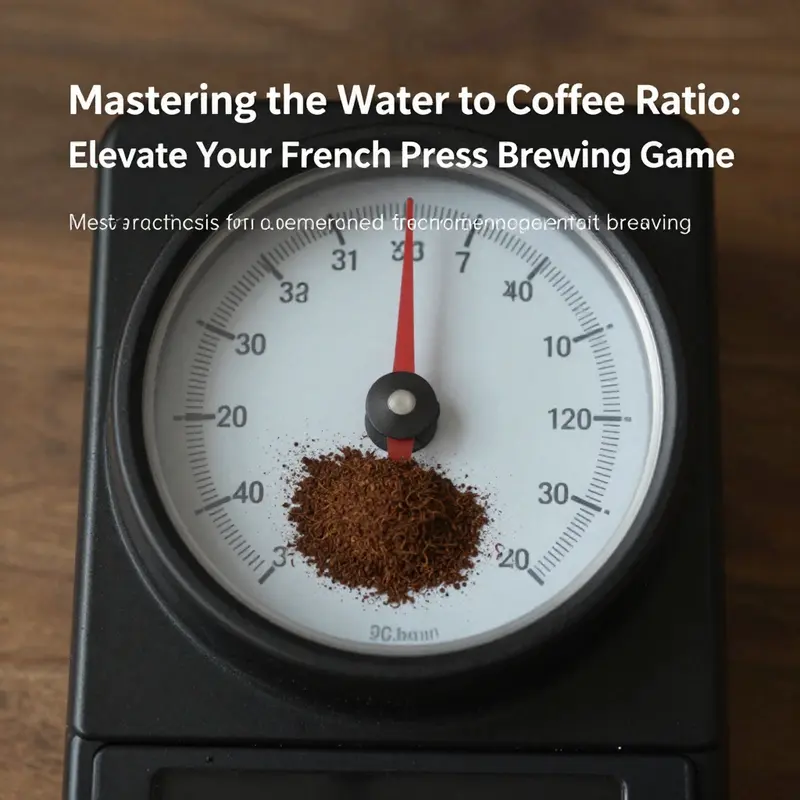
A French press invites a tactile confidence: grounds resting in a metal cradle, water waiting to wake them, and a ratio between the two that quietly determines the cup’s character. The numbers matter not as abstract rules but as levers that shape body, aroma, and clarity. In practice, a water-to-coffee ratio in the range of 1:15 to 1:20 by weight provides a reliable compass. This means for every gram of coffee, you pour between 15 and 20 grams of water. The reasons are practical as well as sensory: too little water and the grounds become under-extracted; too much and the flavors can be diluted, leaving the cup hollow or murky. The midpoint, about 1:17, is a common starting point that yields a balanced, full-bodied result with clean articulation of aroma and acidity. It is not a sacred code but a sturdy baseline from which you can tune your brew toward personality rather than sameness.
From a measurement standpoint, precision is your ally. Coffee is a fickle medium, with grind density, roast level, bean density, and even the size of your scoop all nudging the outcome in small, perceptible ways. The simplest way to tame that variability is to weigh both coffee and water. A digital scale offers numbers you can trust rather than guesses you hope to remember. Once you switch to measuring by weight, you gain a repeatable foundation for experimentation. If you want to brew consistently, the first move is to set a scale on the kitchen counter, tare it to zero, and begin with a known ratio. The moment you see the difference between a weighed 30 g of coffee and a measured 450 g of water versus a weighed 30 g with 600 g of water, you understand how the ratio behaves across the same coffee.
Water quality enters the scene as the quiet accomplice of good extraction. Water that is too soft or too mineral-rich can tilt the cup away from balance, dulling sweetness or injecting harsh metallic notes. A practical target around 150 parts per million gives water the right balance for most coffees, allowing the natural sugars, acids, and textures to express themselves without being overwhelmed by mineral chemistry. If your tap water runs hard or tastes chlorinated, a simple filtration that improves the overall mineral profile can do wonders for clarity. If the water is very soft, you can experiment with a touch of mineral adjustment to restore balance. Temperature follows water quality as a partner in extraction. Heating water to 195 to 205 degrees Fahrenheit (90 to 96 degrees Celsius) provides enough energy to unlock flavors without scorching the grounds. A brief rest of about 30 seconds after the water boils helps the kettle settle into this sweet spot, ensuring a smoother transition from kettle to coffee bed.
Next comes grind and contact time, two aspects intimately linked to the ratio. The ideal grind is coarse enough to prevent a muddy slurry yet fine enough to yield proper extraction within the brew window. A texture comparable to sea salt is a useful reference point for most French press setups. When the grind is too coarse, the water runs through quickly, resulting in a thin cup with muted flavors; too fine, and you risk over-extraction and a heavy, coating mouthfeel. The ratio you choose helps to define the practical brew time. A stronger cup often benefits from a slightly tighter ratio, but that increase gains its effect only if you also adjust grind and temperature to avoid a harsh bite. In other words, the ratio and grind must move together, not in opposition.
To anchor the concept in everyday practice, consider a typical starting point: 30 grams of coffee with 450 to 600 grams of water, a 1:15 to 1:20 range. This spectrum accommodates a broad range of preferences: toward 1:13 or 1:14 for a bolder profile, or toward 1:18 to 1:20 for a lighter, more nuanced cup that preserves delicate acidity and aroma. The key is not to chase a universal standard but to listen to the cup you are brewing and let the variables teach you. If you want a deeper dive into the practical implications of this ratio, see the linked resource on coffee-ratio-french-press. It presents the core idea through a slightly different language, helping you triangulate your own ideal equation and encouraging a systematic approach to adjustment.
Beyond numbers, the ritual of brewing anchors the experience. A careful routine helps translate theory into taste. Heat the water to the target range and weigh both coffee and water on a reliable scale. Grind to a coarse texture, place the grounds in the vessel, and begin the bloom by pouring a small amount of water to saturate evenly. Give the mixture a 30 to 45 second pause to let the grounds de-gas and release aromatics. Then pour the remaining water to reach the final weight, set the plunger on top, and give a gentle stir to ensure even saturation. Allow the coffee to infuse for roughly four minutes, then press slowly and steadily. The proportional relationship between time, grind, and water is not a rigid timetable but a set of signals you learn to read by tasting and adjusting. If the brew tastes thin, you may be under-extracted; if it tastes flat or metallic, you may be over-extracting or over-wetting the grounds. Small tweaks to the ratio, grind, or temperature can shift the balance noticeably, and that is the beauty of the method: you are not chasing a perfect equation but cultivating a reproducible flavor profile that aligns with your palate.
The sense of mastery grows with documentation. Keep a journal of your experiments: the exact coffee weight, water weight, grind setting, water temperature, bloom duration, total brew time, and the sensory notes you observe in aroma, body, and aftertaste. A week of careful notes builds a map of how your grinder behaves with your chosen beans and how your water quality interacts with the coffee’s inherent character. You may find your preferred cup lies somewhere between 1:16 and 1:18 with a bloom closer to 40 seconds and a stable four-minute total contact time. Or you may discover that a brighter, livelier cup emerges at 1:17 with a slightly cooler water temperature and a coarser grind. The reader who treats each brew as a data point becomes a more confident brewer over time, capable of translating a gust of wind or a night of slightly inconsistent grind into a reliable, satisfying cup.
One aspect that often gets overlooked is preheating and pre-wetting the equipment. A hot vessel helps preserve the temperature during the critical first few minutes of extraction, so preheating the carafe and the plunger can prevent premature cooling. Pre-wetting the grounds with a small amount of water before the full pour helps initiate uniform extraction and reduces clumping during the bloom. All these micro-choices—preheating, bloom timing, pour technique, and post-brew pressing—need not be dramatic to matter. They are the subtle adjustments that, when combined with a disciplined ratio, yield a smoother, more complete cup. And even with all the science behind it, the sensory outcome remains the ultimate measure: the way the aroma unfolds in the air, the way the body feels on the tongue, and the way the finish lingers with sweetness rather than an astringent edge.
The appeal of the French press is not its simplicity alone but its capacity to reveal the coffee’s personality when you respect the science behind the brew. The ratio is the architecture of the experience, a framework that makes the cup predictable enough to replicate and flexible enough to tailor to mood and coffee. It is a dialogue between precision and taste, a negotiation that rewards curiosity and disciplined practice. When you begin with a balanced anchor like 1:17, you set a baseline from which to explore. You can push toward stronger grounds with a slight adjustment in grind and temperature, or ease back toward a lighter, cleaner expression by widening the ratio while maintaining good extraction. In either path, the key is measurement and patience: weigh what you pour, respect the water’s temperature, grind with control, and let the cup guide you to your own preferred equilibrium.
A final reminder: the ratio is not a fixed rule but a starting line for your ongoing exploration. The most satisfying brew often results from careful listening—your palate catching the dialect your coffee speaks when expressed through the water that touches it. Document what you learn, repeat what works, and adjust what doesn’t. The craft evolves as your experience grows, and the French press remains a reliable classroom in which small changes yield meaningful flavor. When you finally find the cadence that makes your daily cup feel like a small, perfect ritual, you will know that the measured precision was never about perfection in theory but about freedom in practice—the freedom to shape your cup with intention and to savor the result with clarity.
External resource: https://www.jameshoffmann.com/coffee-brewing/french-press/
Final thoughts
Mastering the water to coffee ratio is an indispensable skill for any business owner in the coffee industry. A well-balanced ratio not only enhances the flavor but also allows for customization that can cater to a wide range of customer tastes. By understanding and implementing the insights shared in this article, you can elevate your coffee offerings, encourage customer loyalty, and stand out in a competitive marketplace. Remember, the perfect cup of French press coffee is just the right ratio away.