
Understanding how caffeine content, health considerations, and cultural trends differ between coffee and Coca-Cola helps businesses tailor offerings and messaging. This guide explores four core chapters that compare caffeine content, health implications, consumption trends, and cultural perspectives, providing actionable insights for product strategy and consumer engagement.
The Caffeine Gap: Coffee vs Cola
Caffeine acts as a reliable morning driver. It sits in the background nudging you toward alertness and focus. When comparing coffee to cola, coffee usually contains far more caffeine per standard serving. The exact amount varies with roast level, grind size, brewing method, and serving size, but the general pattern is clear: coffee typically delivers more caffeine than cola.
Roast level influences caffeine only modestly. Light roasts can seem slightly higher in caffeine than dark roasts, not because the beans themselves change, but because density and extraction during brewing differ. Brewing method matters as well: drip coffee tends to yield a steady extraction, while immersion methods can pull more caffeine from the same beans with equal time. Espresso concentrates caffeine into a small volume, around 60 to 70 milligrams per shot, but people often drink more than one shot in a beverage, which can add up quickly.
Cola generally sits at a lower baseline. A 12 ounce can often carries about 30 to 40 milligrams of caffeine, much less than a typical cup of coffee. The exact amount varies by brand and formulation, so there is some diversity within the category. Still, even the most caffeinated sodas rarely match the caffeine payload of a standard coffee serving.
If you widen the lens beyond the classic 8 ounce cup and 12 ounce can, the contrast remains meaningful but the picture becomes more nuanced. Cold brew and large iced coffees can push caffeine well past 200 milligrams per serving, widening the edge for coffee. Serving size matters: pouring a taller mug or a larger cup increases caffeine intake in a way that cola cannot mirror for the same unit of measurement.
Beyond coffee and cola, many caffeinated beverages vary. Some drinks push caffeine higher per serving, but the general rule holds: coffee delivers more caffeine per standard serving than most colas. Understanding this helps you plan intake to match your goals, whether you want a quick lift or sustained alertness.
For further context, you can consult beverage nutrition resources that map caffeine levels across many drinks. The key takeaway remains stable: coffee tends to be the stronger caffeine source per standard serving, even as formulations evolve and new beverages appear.
null
null
Caffeine at the Crossroads: Why Coffee Delivers More per Sip Than the Classic Cola
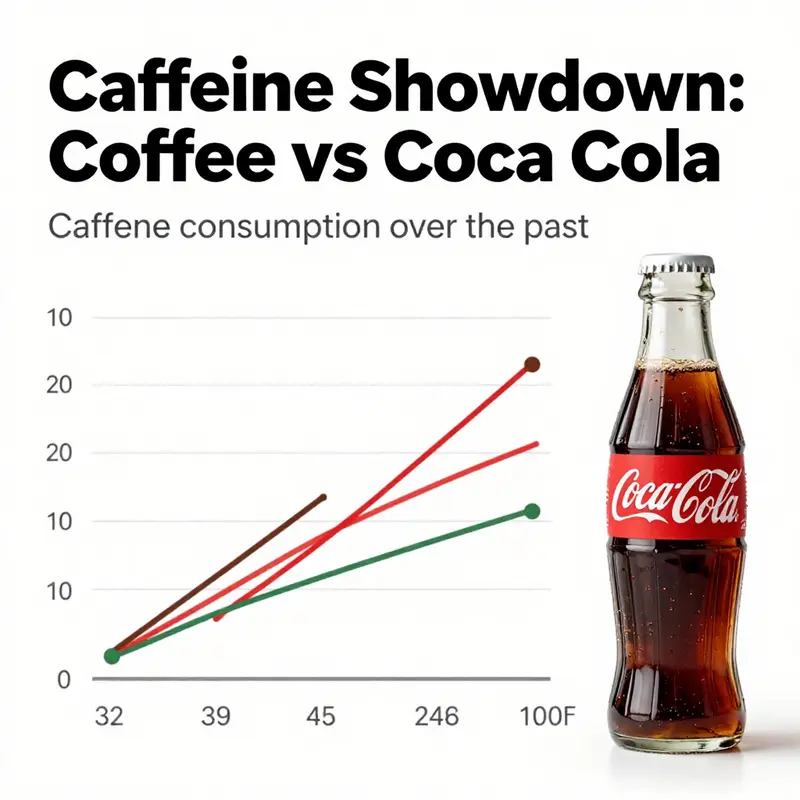
When researchers and curious readers ask which delivers more caffeine, coffee or a popular cola, the answer comes wrapped in servings, preparation methods, and personal choices. The simplest takeaway is often the most useful: by standard serving size, brewed coffee tends to overpower a typical cola in caffeine content. An eight-ounce cup of brewed coffee usually carries about 95 milligrams of caffeine, though the range commonly cited in the literature spans roughly 95 to 200 milligrams, depending on the roast, grind, extraction time, and brew method. In contrast, a standard twelve-ounce can of cola contains about 30 to 34 milligrams of caffeine. Even when you widen the lens to consider caffeinated variants of cola, the numbers can rise, but they rarely close the gap with a properly brewed cup. This is not merely a numerical distinction; it shapes how people reach for a burst of alertness, how manufacturers design products, and how individuals tailor their daily caffeine intake to fit health goals, schedules, and personal tolerances.
To understand why the disparity persists, it helps to consider both the science of caffeine delivery and the realities of everyday consumption. Caffeine is a small molecule that passes quickly from the sip into the bloodstream, where it begins to antagonize adenosine receptors, reducing the sensation of fatigue and increasing perceived energy. The speed and duration of that effect depend on the dose, the beverage matrix, and the drinker’s metabolism. Coffee, especially when brewed from freshly ground beans, provides a relatively concentrated dose in every standard serving. The caffeine content is not just a function of grams of coffee grounds; it also reflects the extraction efficiency during brewing. As a result, even two eight-ounce cups from the same coffee maker can differ noticeably in caffeine content depending on grind size, water temperature, and brew duration.
The cola category, by contrast, presents caffeine in a different packaging and flavor framework. In the classic soda format, caffeine is delivered in a lighter, often sweeter beverage with a carbonation backbone that can alter the pace at which caffeine is perceived by the palate and absorbed in the gut. The standard twelve-ounce can of cola sits in the neighborhood of 30 to 35 milligrams of caffeine. For many people, that amount provides a gentler energy lift or a mood boost rather than a sustained wakefulness spike. The same family of products also offers caffeinated variants with higher concentrations, crafted for quickness and portability. But even with these variations, the per-serving caffeine dose tends to stay well below a typical eight-ounce cup of brewed coffee. The upshot is straightforward: if you drink a single standard serving, coffee usually provides more caffeine than the standard cola, and it does so with a higher likelihood of sustaining alertness over a longer period.
These numerical distinctions matter not only for individuals counting milligrams but also for how people structure their daily routines. The demographic landscape reveals a dynamic pattern: younger consumers often turn to ready-to-drink caffeinated beverages for the same reason many adults gravitate toward coffee—convenience, portability, and a price point that fits a busy lifestyle. In many markets, quick access to a caffeinated pick-me-up comes in the form of a can or bottle, which is appealing precisely because it can be consumed on the go, without the barrier of brewing equipment or waiting for a pot to finish. This shift does not imply that coffee is vanishing from the daily routine; rather, it signals a diversification of the caffeine habit. People often combine sources: a morning cup of coffee to establish baseline alertness, followed by a caffeinated cola or an energy drink later in the day for a fast, convenient lift when time is tight. The result is not a simple replacement of one product by another but a broader spectrum of options that accommodate different contexts, budgets, and energy needs.
From a market perspective, this diversification reflects evolving consumer preferences for personalization and control. The coffee world has long celebrated ritual, aroma, and technique, but the beverage aisle now includes a range of low-caffeine and caffeine-free options as well. This is not about choosing one over the other in a vacuum; it is about matching the stimulant profile to the moment. A caffeine-free cola, for example, offers a crisp, refreshing taste without the stimulant effect, appealing to individuals who desire flavor and hydration without the energy surge. The existence of such alternatives underscores a broader trend toward tailored wellness in the beverage industry. People are increasingly mindful of how caffeine interacts with sleep schedules, anxiety, and overall energy balance. The market, in turn, responds with products designed to accommodate different health goals and sensitivity levels.
In comparative terms, a concise snapshot emerges when one looks at typical serving sizes and caffeine content across categories. Coffee, in its standard form, sits in a higher range—roughly 95 to 200 milligrams per eight-ounce serving—providing a more robust and sometimes longer-lasting energy effect. Cola beverages, counted by the can, tend to deliver about 30 to 54 milligrams per serving in many mainstream brands, with caffeinated variants pushing those numbers higher but still generally not matching a single standard cup of coffee. The upper end of the cola spectrum, driven by energy-focused variants, can bring it closer to coffee but often still leaves a gap, especially if one consumes only one serving. These patterns reinforce coffee’s role as a primary source of sustained energy for many individuals, while cola constitutes a lighter, mood-enhancing option that remains appealing because of taste, refreshment, and portability.
It is also important to acknowledge that the caffeine story is not purely about the stark numbers. Absorption rates, individual sensitivity, and daily caffeine load play critical roles in how the experience feels. Some people metabolize caffeine quickly and experience a brief but intense lift, while others feel a slower onset with a more prolonged effect. The timing of consumption matters as well. A morning cup of coffee can set the tone for the day, while a late-afternoon can of cola can provide a quick pick-me-up that helps bridge the gap before evening activities. The difference between a measured eight-ounce cup and a twelve-ounce can is thus not only about milligrams but about how those milligrams shape behavior, mood, and productivity across real-world contexts. The science supports the intuitive observation: coffee offers a larger caffeine payload per standard serving, a payload that is often better suited to longer periods of wakefulness and cognitive endurance, whereas cola serves as a lighter, more flexible option for a quick lift that fits a busy schedule without overwhelming the system.
To underscore the broader pattern, consider the idea of a caffeine content spectrum that spans coffee, soda, and other caffeinated beverages. Coffee anchors the high end of the spectrum in everyday practice, delivering a potent dose that many rely on to remain alert through demanding tasks. Soda sits toward the middle or lower end, offering a gentler caffeine experience that can deliver mood elevation and a momentary boost that can be sufficient for short tasks or social moments. Energy drinks and other caffeinated variants occupy a range in between and above in some cases, further illustrating how the market has expanded to accommodate various needs. This spectrum reflects not only what people drink but also how they think about energy. For some, caffeine is a tool for focus; for others, it is a mood lifter or a social ritual with a familiar, fizzy taste.
The data in the detailed research results paint a practical picture as well. The canonical comparison lists coffee at 95–200 milligrams per eight-ounce serving, while cola beverages sit around 30–54 milligrams per serving, with caffeinated variants altering the exact figure. This numerical framework aligns with the lived experience of many consumers who observe that a single cup of coffee typically provides a stronger lift than a single cola can. And in a world where people often drink more than one serving at a time, the math compounds quickly. Two eight-ounce cups of coffee clearly exceed a single twelve-ounce cola can in caffeine content, and adding a third cup tends to far outpace most cola options unless one purposely seeks multiple caffeinated beverages in a short window.
In tracing trends over time, the narrative reveals both continuity and change. Coffee has long been associated with a ritualized approach to energy, the result of cultural habits, local roasts, and a brewing culture that prizes technique and flavor. Cola and other sodas, meanwhile, have matured into a style of convenience—highly portable, budget-friendly, and accessible in a range of flavors. Together, they illustrate a broader shift in how people think about caffeine: not merely as a one-size-fits-all stimulant but as a spectrum of choices that can be adapted to preference, health considerations, and the demands of daily life. This evolution mirrors a larger movement toward personalized wellness where consumers seek to balance energy with sleep, anxiety, and long-term health goals. It also reflects a competitive landscape in which beverage makers respond to consumer appetite for both tradition and experimentation—offering caffeine-rich and caffeine-free options, as well as lighter and more intense formulations to suit different moments.
For readers who want to explore these comparisons in a broader context, a deeper, cross-category analysis of caffeine content across common beverages can be enlightening. See the following resource for a detailed side-by-side breakdown that places coffee alongside tea and soda, illustrating how caffeine distributes across everyday drinks. caffeine-content-mt-dew.
As the market continues to evolve, the takeaway remains practical and clear. Coffee is the more potent, and in many cases the more stimulating, beverage per standard serving. Cola offers a lighter, more portable option that still plays a meaningful role in the caffeine ecosystem. The choice between them depends on the context: the need for a longer, steadier period of wakefulness, the desire for a quick, on-the-go lift, or the preference for taste and habit over sheer milligrams. The interplay between these factors helps explain why both beverages continue to thrive in a global landscape that prizes quick energy, diverse flavor profiles, and flexible consumption patterns. In short, the coffee cup tends to carry more caffeine by milligram per serving, while the classic cola provides simpler, more immediate gratification for those moments when speed and convenience matter most.
External resource: https://www.mayoclinic.org/healthy-lifestyle/nutrition-and-healthy-eating/in-depth/caffeine/art-20049376
Brews, Bubbles, and Beliefs: Culture, Caffeine, and the Global Question of Coffee versus Cola
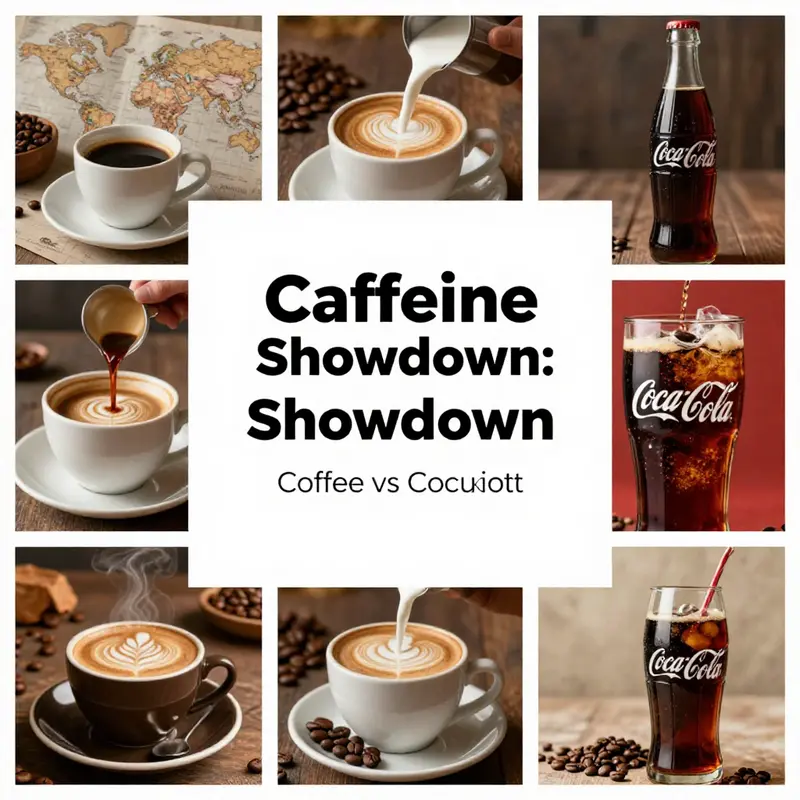
The question of which beverage carries more caffeine—coffee or the cola that dominates many urban fridges—goes beyond a simple numerical comparison. It is a doorway into how people around the world structure their days, their identities, and their conversations about health, productivity, and modernity. The basic numbers are straightforward: a typical eight-ounce cup of brewed coffee delivers about ninety-five milligrams of caffeine, while a standard twelve-ounce can of a cola beverage contains roughly thirty-three milligrams. In raw terms, coffee carries caffeine about 2.5 to 3 times as much per serving. Yet numbers rarely travel alone in human culture. They travel wrapped in rituals, symbols, and social scripts that shape how we experience the jolt of caffeine, and what that jolt signifies in different places and moments. For readers who want a grounded reference, reputable health sources like the Mayo Clinic summarize these levels and underscore that while there is variation—roast level, brewing method for coffee, and formulation for cola products—the general pattern remains: coffee is the stronger source of caffeine on a per-serving basis. Read as data, these figures tell us about chemistry; read as culture, they tell us about how people justify, justify themselves, and narrate their daily lives around a caffeine fix.
The cultural payload of caffeine in beverages is not uniform. In some places, the act of drinking coffee is a ritual that travels with artisanal tradition, local ecology, and a sense of historical continuity. In others, the cola remains a symbol of global connectivity—an emblem of modern life, urban youth, and fast-paced change. Across continents, the same two beverages acquire distinct meanings that mold preferences, media messages, and even political conversations about local food systems and national identity. The contrast between them becomes a case study in how bodies meet bodies of culture and history when caffeine becomes a social signal rather than just a stimulant.
Consider Indonesia, where coffee is woven into local wisdom and cultural heritage. In regions such as Wonosobo, researchers describe coffee production and consumption as more than economic activity; they are vehicles of symbolic value and communal memory. Symbols, rituals, and values attach to the very act of growing, processing, and sharing coffee. When a community treats coffee as a living artifact—partly sustaining livelihoods, partly anchoring identity—caffeine consumption operates within a broader matrix of tradition and collective resilience. This is not simply about waking up; it is about belonging, memory, and place. The local coffee economy thus becomes a cultural practice that persists because it embodies a set of social commitments, not merely a daily caffeine boost. The takeaway is not that Indonesians drink more coffee than others, but that their coffee culture demonstrates how caffeine can be mobilized to sustain language, ceremony, and social cohesion.
Meanwhile, the cola beverage has traveled alongside globalization, often arriving with a promise of universality. In many urban centers around the world, drinking cola is tied to notions of modernity, Western influence, and youth culture. Yet this broader acceptance can come with anxieties. National debates about cultural preservation and the pressures of foreign brands frequently surface in conversations about food and drink. The cola, in these settings, becomes a symbol not only of refreshment but of cultural negotiation—how a society balances openness to global trends with the desire to protect traditional dietary patterns and local industries from homogenization. A related line of inquiry—found in scholarship on the cultural and gender politics of coffee consumption—reminds us that beverage choice can become a focal point for social narratives about masculinity, femininity, aspiration, and anxiety. The same act of pouring a cup or opening a can can carry gendered meanings, class associations, and national pride, depending on the context.
Media and global trends further complicate the picture. Across continents, marketing scripts reinforce distinct expectations around caffeine. Coffee marketing often frames the drink as a tool for productivity, focus, and creative energy—an image that speaks to work culture, entrepreneurial ambition, and the rhythms of modern life. In contrast, cola branding has long aimed to be the universal companion of moments of social connection, celebration, and refreshment. These narratives shape public perceptions of caffeine: coffee is a work partner, a ritual, a companion to long hours; cola is a social signal, a quick lift during a break, a shared experience across friends and strangers alike. Yet even within cola marketing, regional adjustments appear. In some places, the tea-dark simplicity of a cola is reframed through local flavors or dietary practices, reminding us that global products are continually remade by local tastes.
The idea that caffeine content alone dictates preference becomes less persuasive when the social life of beverages is considered. For example, scholars note that in certain urban environments, people may opt for a beverage with lower caffeine content not to avoid stimulation, but to align with cultural norms around ritual and moderation, or to accommodate dietary expectations within family life. In other cases, the very awareness of caffeine levels informs public health conversations about sleep, anxiety, and energy management. The subtle point is that caffeine quantity matters for the body, but the reasons people choose one beverage over another are deeply cultural. In cities with rich, diverse drink landscapes, people measure time not just by the clock but by the ritual of preparation, the ambience of the café, and the social expectations tied to a given beverage. A deliberate choice—between a robust brew and a lighter, more refreshing fizz—reflects personal temperament and social position as much as metabolic need.
To those who study everyday life as it unfolds in markets, streets, and kitchens, the apparent edge of coffee in caffeine content does not eliminate the value of coca-cola or cola beverages as cultural artifacts. The cola’s comparatively modest caffeine dose can be perceived as part of its appeal: a quick, dependable lift without the intensity associated with a larger caffeine hit. In some cultural contexts, this steadier profile aligns more closely with social routines, family settings, or public-health norms that favor moderate caffeine intake. In others, the strong caffeine dose of coffee harmonizes with the pace and demands of work, study, or creative endeavor, becoming almost a shorthand for energy itself. The divergence in caffeine content thus becomes a lens through which people articulate what energy means in their daily lives, and how energy is earned, shared, and observed within communities.
For readers who want to explore the way individuals narrate these choices, there is a wealth of scholarship on how ordinary beverages become instruments of cultural conversation. The very acts of selecting a drink, preparing it, and sharing it in a social setting can convey expectations about time, gender, class, and national identity. One line of inquiry shows how beverage choices can reflect and reinforce social anxieties about cultural change and global influence. The same discourse that treats coffee as a symbol of industriousness may, in another setting, cast cola as a marker of cosmopolitan sociability. The duality of these meanings speaks to the adaptability of caffeine as a cultural resource—able to anchor tradition while accommodating new tastes and pressures from global markets. For readers seeking a compact synthesis of these ideas, consider that caffeine content provides a physical axis, while cultural content provides the axis along which people locate identity, belonging, and modern life.
If you want a concise portal into how everyday drink choices can reflect broader cultural narratives, a good starting point is to consider how ordinary rituals become sources of meaning. For a broader sense of how everyday drink choices shape identity, see Coffee Rich Life. It weaves together reflections on how daily beverages participate in shaping who we are, what we value, and how we relate to others in shared spaces. This chapter thus sits not merely at the intersection of chemistry and commerce but at the crossroads of memory, habit, and social aspiration. The numbers remain constant in the lab; the meanings shift with communities, languages, and streets. To understand which beverage carries more caffeine in the abstract is to miss the larger story: caffeine is a global resource, and culture is what gives it local form.
The broader scholarly conversation, including analyses of gender politics in beverage consumption, invites us to read these choices with nuance. A classic line of inquiry demonstrates how the social meanings attached to coffee can intersect with national identity and personal aspirations, sometimes creating tensions around tradition and modern influence. That research, anchored in cross-cultural contexts, helps explain why the same number—coffee containing more caffeine—does not translate into a single universal preference. Instead, people weigh caffeine against ritual, taste, social expectations, and the memory of a place. In short, the physiological edge of coffee is stable, but the cultural edge is flexible, and it is this combination that makes the topic both scientifically interesting and culturally rich.
As a closing reflection, the numbers tell us what the body experiences: coffee has more caffeine per serving than a typical cola beverage, a fact that remains consistent across brands and regions. The culture surrounding those beverages, however, is as diverse as the places they are consumed. Indonesia’s coffee heritage, with its rituals and community-centered production, contrasts with the cola’s global branding as a symbol of modernization and immediacy. Together, they illustrate how humans negotiate energy, identity, and globalization in everyday life. The chapter thus remains faithful to the core question while expanding it into a narrative about people, places, and the social meanings that travel with caffeine. For researchers and curious readers alike, the path forward lies in examining both the precise chemistry of caffeine and the cultural scripts that frame our choices in the moment of a pour, a sip, or a shared toast.
External resource for further theoretical framing: https://www.jstor.org/stable/10.1086/497832
Final thoughts
While coffee generally delivers higher caffeine content, the choice between coffee and Coca-Cola entails considering health, lifestyle, and cultural factors. Businesses should align product offerings with consumer values, balancing caffeine experiences with moderation and context. By understanding these dynamics, brands can craft informed strategies that resonate with health-conscious consumers and those who enjoy the occasional caffeinated indulgence.