

The choice of coffee brewing method can significantly impact flavor, customer satisfaction, and operational efficiency in your business. As a business owner in the coffee industry, understanding the nuances between French press and filter coffee brewing methods is essential. Each method offers distinct taste profiles, brewing processes, and consumer appeal. This article breaks down these elements into five key chapters: we analyze the taste profiles of each method, the effort required in the brewing process, the impact of these methods on coffee flavor, their efficiency and cleanup requirements, and finally, the health and nutritional aspects of each. By the end of this exploration, you will be equipped to make informed decisions that enhance your coffee menu and cater to your customers’ preferences.
How Brewing Method Shapes Flavor: The Taste Divide Between French Press and Pour-Over
How brewing method shapes flavor
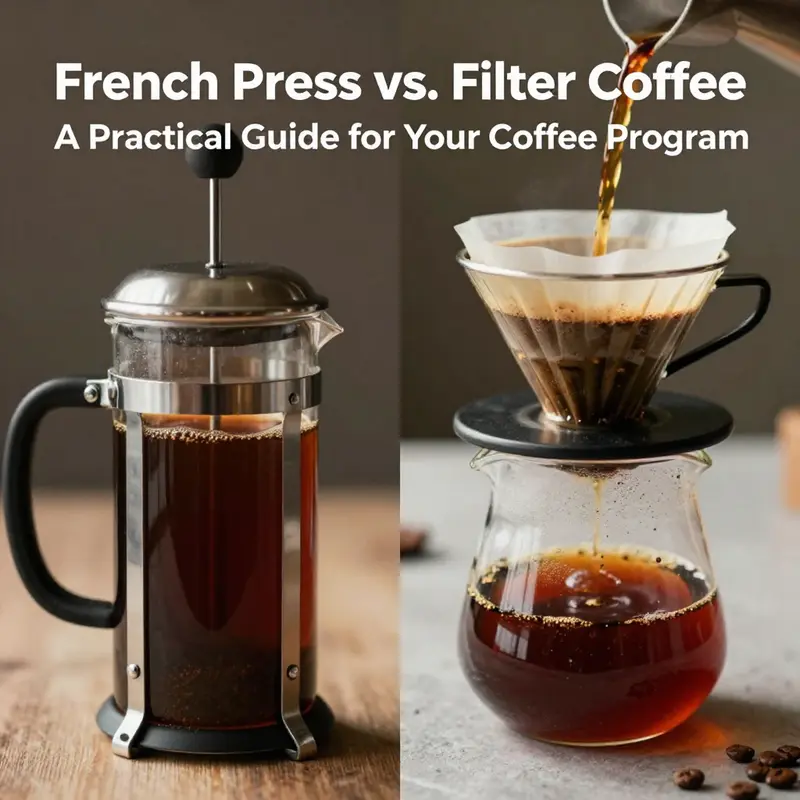
The French press and pour-over are not simply different tools. They create fundamentally different tasting experiences. The reason lies in how water meets coffee, how particles and oils are filtered, and how extraction unfolds over time. Those mechanics translate directly into what you notice first, and what lingers last, in a cup.
A French press is an immersion brew. Grounds steep fully in hot water, then a metal mesh separates liquid from grounds. That metal mesh does not trap oils or the tiniest particle fragments. The cup ends up carrying dissolved oils and micro-fines, producing a dense body and a tactile richness. Pour-over, by contrast, is a percolation method. Hot water is poured over a bed of coffee and gravity pulls the liquid through a paper or fine metal filter. Paper filters catch oils and fines. The result is a cleaner, lighter cup where delicate aromatics and acidity stand forward.
This difference in filtration explains most sensory contrasts. With a French press, mouthfeel is immediately thicker. The presence of lipids from the beans gives a silky to oily texture. That texture enhances perception of sweetness and maltiness, and it rounds acidity. A muted, rounded acidity works well with darker or medium roasts that favor chocolate, caramel, and nutty notes. These flavors feel more integrated and comforting in the press. However, when extraction runs hot or contact time extends too long, those same oils and fines amplify bitterness and astringency. The balance can swing quickly if grind size or steep time is off.
Pour-over emphasizes clarity. Paper filters remove oils and fines, leaving a cup with a crisp surface and bright edges. The sensation is one of transparency. Citrus, floral, and berry notes arrive clearly. Tea-like and fruity single-origin characteristics become audible in the cup. Because body is lighter, acidity appears more prominent and defined. That can be thrilling for beans with complex origin notes. It also makes flaws easier to detect. Uneven pouring or wrong grind size produces thin or over-extracted cups more obviously than a French press would.
Perceived sweetness, acidity, and bitterness are not fixed properties of the bean. They are shaped by method. Viscosity from oils can trick the palate into sensing more sweetness. Conversely, a clean cup without oils lets acidity sing but reduces the sense of body. In practical terms, a bean that tastes flat as a pour-over might feel alive and more balanced as a French press. A delicate Ethiopian that dazzles in a pour-over could taste washed-out or muddy in a press if not brewed with care.
Grind size and contact time play decisive roles in both methods. For French press, a coarse grind helps prevent excessive extraction of bitter solubles and reduces sediment. Typical steep times range from three to four minutes at about 195–205°F. Too-fine grounds and long steeping invite over-extraction and bitterness. Pour-over uses a finer grind and shorter, controlled contact. The brewer controls flow rate through pour speed, profile, and bloom. A long, slow pour extracts more sweetness and body; a fast pour leans toward brighter acidity. The paper filter gives room to experiment because small shifts in pour technique produce obvious changes in flavor clarity.
Bean selection interacts tightly with method. Blends and darker roasts often find a flattering home in the French press. The press accentuates roast-derived notes like chocolate, toast, and low-end sweetness. It also forgives minor grinders and roast inconsistencies better than pour-over. Light and single-origin beans, especially those prized for floral and citrus characteristics, typically perform best with pour-over. The paper filter lets those subtle volatile aromatics arrive unmasked. If you want to explore terroir, pour-over reveals the bean’s story more transparently.
Aroma and first impressions differ too. French-press aroma tends to feel more robust and enveloping. Oils in suspension carry aroma compounds that coat the glass and rise with each sip. Pour-over aroma is cleaner and sharper, with top notes that hit the nose first. Both are satisfying, but they send different signals about what to expect on the palate.
Sediment and finish matter. French press cups can deliver a soft grit and a lingering finish. The presence of micro-fines increases perceived strength and can leave a slightly heavy aftertaste. Some drinkers enjoy that lingering mouth-coating sensation. If you prefer a clean finish, allow grounds to settle, pour gently, or decant into another vessel after plunging. With pour-over, the finish tends to be more immediate and delicate. Aftertaste often highlights the cup’s acidity or floral notes rather than body.
Adjusting technique can nudge profile in either direction. To make a French press brighter, use slightly cooler water, a coarser grind, or shorten the steep time by thirty seconds. To fatten a pour-over, slow the pour, use a slightly coarser grind, or choose a thicker filter. Small changes produce large perceptual shifts because the methods accentuate different variables.
Tasting methodically helps match beans to method. Smell the dry grounds first. Taste a small sip of the brewed coffee and note body, clarity, and the dominant notes. If fruit and blossom dominate, pour-over will likely be rewarding. If chocolate, caramel, or earthy tones predominate, the press may amplify those qualities into a more satisfying cup. Consider this a form of triage: choose the method that highlights the bean’s best traits.
Cleanup and serving alter perception too. A well-rinsed paper filter removes lingering paper flavors. A clean press without stale oils prevents rancid notes from masking the cup. Fresh equipment and fresh beans matter as much as technique. Stale oil residue in a French press will degrade sweetness rapidly. Stale filters or residual oils in a pour-over dripper will introduce off-notes.
Finally, mood and context shape preference. The French press delivers a tactile, comforting cup that suits mornings when a heavy, satisfying drink is desired. Pour-over offers a contemplative experience, best when you want to parse subtle notes and appreciate origin nuances. Both methods reward attention and fresh beans.
If you want a practical next step, experiment with a single bean across both methods. Use identical ratios and water temperature. Note differences in body, clarity, sweetness, and acidity. Track how small changes in grind affect the result. For a deeper dive into pressing ratios and how they influence body, the guide on French press coffee ratios — the ultimate guide is a helpful resource.
For a concise explanation tying oils and extraction to perceived sweetness and acidity, James Hoffmann’s discussion in his coffee atlas offers clear science and context: https://www.jameshoffmann.com/world-atlas-of-coffee/
Hands-On vs Hands-Off: The Real Effort Behind French Press and Filter Coffee
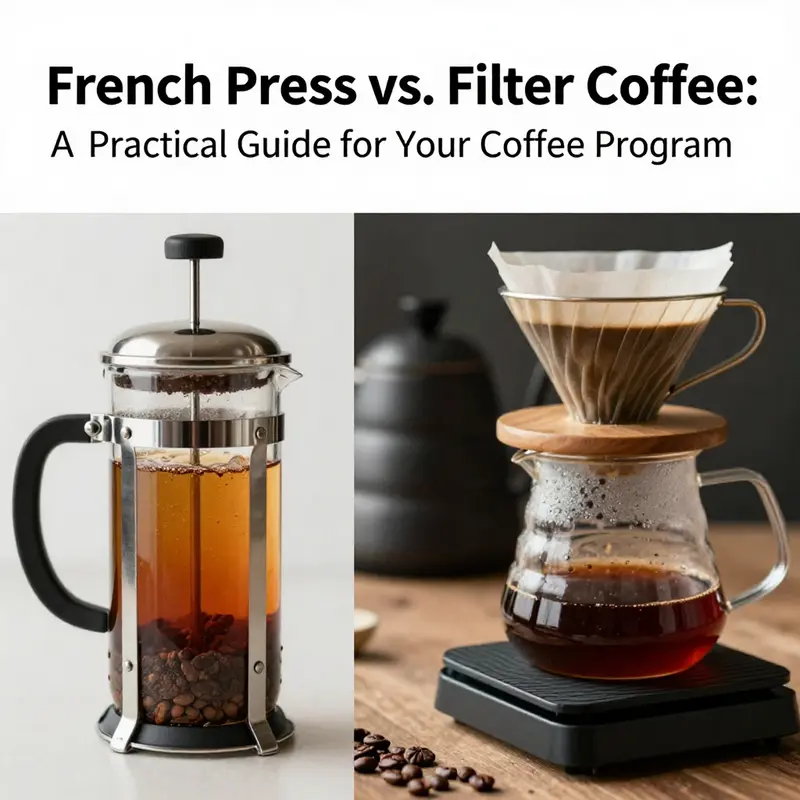
The way you brew coffee shapes more than flavor. It defines the ritual, the daily momentum, and the control you have over each cup. When you stand between a French press and a pour-over filter setup, you’re choosing two distinct approaches to effort and process. One rewards tactile involvement and forgiving technique. The other demands measured attention and precise execution. Both can make exceptional coffee, but they ask different things of you.
Start with the French press and you step into a straightforward, tactile workflow. The equipment list is short: press, grinder, kettle, and fresh beans. Grind coarsely, aim water just off boil, pour, steep, then press. Those few steps feel simple, but they offer a surprising amount of nuance. Grind size controls how quickly flavours extract. Steep time determines balance between brightness and astringency. Water temperature nudges sweetness or bitterness. Because the grounds steep directly in water, small shifts in any variable carry visible results. That hands-on nature turns brewing into a live experiment. You can adjust mid-game by shortening steep or tweaking grind next time. The French press is forgiving to technique errors you can often compensate for with a different brew ratio or a slight change in time.
That very immersion is also why the French press produces a weighty cup. The mesh filter allows oils and fine particles into your mug. Those elements thicken mouthfeel and round out flavour. For darker roasts, this highlights chocolate and nutty notes. For lighter roasts, the body may blur delicate acidity and floral tones. Because the method is so direct, clarity is sacrificed for texture. If you like coffee that feels substantial and lingering, the French press rewards minimal fuss with maximal body.
Cleanup is another part of the effort equation. There’s no paper filter to toss, but you will separate grounds from the carafe and rinse the plunger. Old grounds can cling to the mesh and the glass, so occasional deep cleaning prevents stale flavours. For many, the rinse-and-wipe routine feels quick and honest. It matches the hands-on brewing and keeps maintenance simple. There’s also a portability advantage. A French press fits well into travel and camp scenarios where lightweight simplicity matters. For people who value straightforward gear and robust cups, the small cleanup trade-off is acceptable.
Filter coffee, especially pour-over methods, requires a different kind of discipline. The process looks almost ceremonial. You weigh coffee, grind to a medium-fine texture, pre-wet a paper filter, bloom the grounds, and pour water in carefully controlled pulses. Each pour affects extraction, so a steady hand and a gooseneck kettle make a real difference. The bloom phase—letting trapped gases escape after a short initial pour—is crucial. It equalizes the bed and avoids channeling. With a steady pour and consistent timing, the paper filter traps oils and fines. The result is a bright, transparent cup where origin characteristics sing: citrus, tea-like acidity, or floral perfume. Pour-over rewards precision. When you nail technique, you taste clarity and nuance that other methods mute.
That precision comes at a cost in time and attention. Setting up takes longer. You must measure water and coffee, prepare the filter, and focus on a controlled pour. For single cups this feels meditative. For bigger quantities it becomes less practical. Machines that automate the drip process reduce that burden, but free-pour pour-over remains a manual craft. The cleanup is arguably simpler when using paper filters: lift, discard, and rinse a single device. But the ritualized process and the gear maintenance— kettle care, filter basket cleaning—are part of the ongoing commitment.
Control is where these two methods diverge most. With a French press, you have a few broadly tunable levers: grind size, steep time, and ratio. Adjust any one and you shift the cup’s character. That makes the press ideal for experimentation without complex technique. Pour-over, conversely, offers many fine-grain controls: grind distribution, pour rate, pour pattern, water temperature, and timing. Each element is a precise dial. If you enjoy adjusting small variables to coax subtleties from a bean, pour-over gives a deeper palette.
Consistency also plays a role. The French press can be consistent if you standardize grind and timing. But it’s often more sensitive to small inconsistencies in grind distribution. Filter methods, whether manual or automated, can deliver highly repeatable results when technique or machine calibration is stable. For households serving several cups throughout the morning, the predictable nature of drip systems is attractive. For solo drinkers who prefer to shape each cup individually, the French press feels more personable.
Common mistakes reveal each method’s practical demands. Over-extraction and bitterness in the press often stem from too fine a grind or too long a steep. Under-extraction in a pour-over usually results from a coarse grind or an uneven pour. Channeling—where water hugs certain paths instead of evenly saturating the bed—can ruin a pour-over’s clarity. The press is forgiving of imprecise pours but less forgiving of the wrong grind size. Conversely, pour-over tolerates a wider range of ratios if the pour is even and the grind consistent.
Choosing between these methods comes down to what you want from ritual and result. If you appreciate a quick, tactile process and a rich mouthfeel, the French press suits you. If you want a bright, detailed cup and enjoy measured technique, pour-over is likely your preference. Consider also lifestyle: a busy household benefits from the low-effort consistency of a drip setup. A solo brewer who views coffee-making as a small ceremony will enjoy mastering pour-over or the ease of a press.
Practical tips help reduce friction for both methods. For the press, aim for a 1:15 to 1:17 ratio as a starting point. Use a coarse setting, and keep steep time near four minutes. Stir gently before plunging to break the crust. Rinse the press promptly to avoid stale oils. For pour-over, pre-wet the paper filter to remove papery taste and to preheat the brewer. Start with a 1:15 to 1:17 ratio as well. Bloom for 30–45 seconds, then pour slowly in concentric circles. Invest in a scale and a gooseneck kettle for reproducibility.
If you want deeper guidance on exact proportions for the press, consult a detailed ratio resource like this French press coffee ratios guide. It walks through increments and adjustments tailored to taste.
Both brewing philosophies reward attention, but they value different types of attention. The French press favors broad, forgiving adjustments and tactile connection. Filter coffee demands precise pouring and attention to small details. Choose the method that matches your appetite for ritual, your tolerance for cleanup, and the kind of cup you enjoy. When you understand how effort maps to result, every morning becomes an opportunity to choose the right balance between convenience and craft.
For a technical, step-by-step breakdown of French press technique and how it compares to other brewing methods, see this detailed guide: https://www.seriouseats.com/french-press-coffee-guide
null
null
Efficiency and Cleanup: Weighing Time, Waste, and Ritual in French Press vs Filter Coffee
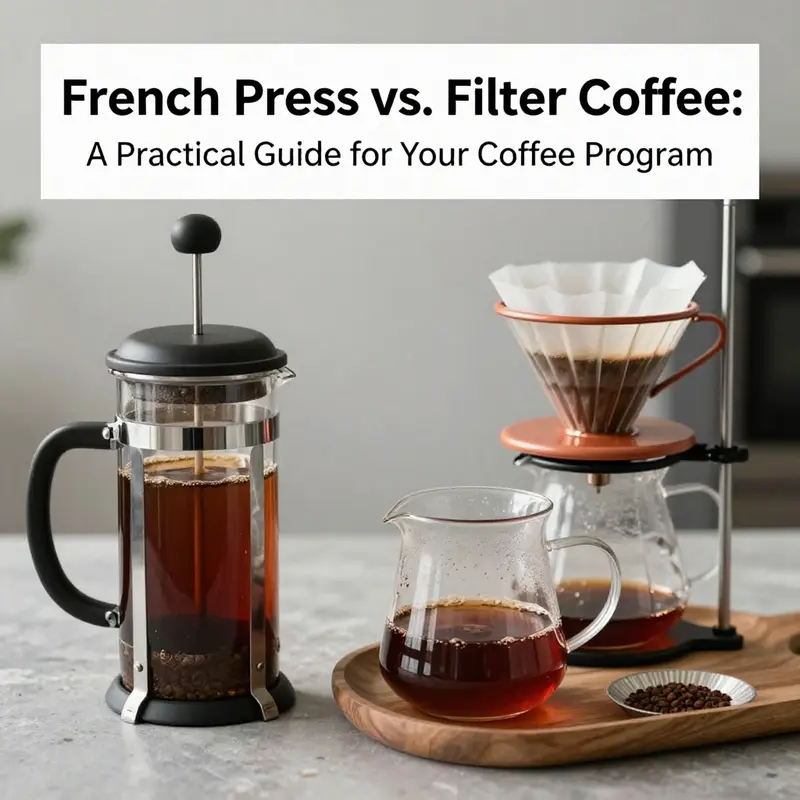
Two ways to coax coffee from dry grounds sit side by side in the kitchen, each with a distinct rhythm and a different promise for the cup in your hand. The conversation around efficiency and cleanup often centers on time and effort, but it also threads through how a brewer experiences control, predictability, and waste. When you look at the French press and a pour-over style of filter coffee as two paths to a similar destination—hot water meeting ground coffee and delivering aroma to a waiting room of anticipation—the practical math begins to matter as much as the taste. The less glamorous, but equally important, metrics of the equation are how quickly you can go from coffee to cup, how much you clean up afterward, and how those choices ripple into daily routines, weekend rituals, or a kitchen used by more than one person. In this chapter, the focus is less on the flavor notes that define each method and more on the choreography of effort, speed, and the materials that carry or obstruct your enjoyment.
Brewing efficiency is a straightforward, almost tactile measure for most home brewers. The French press, with its immersion approach, often bites into the clock in a surprisingly direct way. Ground coffee meets hot water, and the mix rests for about 3 to 4 minutes before you press the plunger and pour. The actual brewing act is quick, and the tactile satisfaction of a clean plunge—no machine cycling, no burners cooling in the background—feeds a sense of immediacy. The broader workflow, however, can feel more intimate and, at times, improvisational. You gauge grind size, temperature, and timing in real time, reacting to the stillness of the brew as you wait for the signals of readiness. In a kitchen where time is precious, the French press earns points for being a compact, hands-on process that yields a cup with body and depth in a relatively short span.
Drip or filter coffee presents a different pace, even when the same aroma lingers in the air. The typical drip cycle — preheating, loading grounds, and letting hot water travel through a paper filter and into a carafe — encompasses a longer arc. Five to ten minutes is common from start to finish, depending on the brewer and the grind size. The hands-off appeal of automated drip systems can be a selling point for households that value routine and predictability, especially when mornings demand a consistent flow of coffee without daily attention. Yet the ritual of a manual pour-over, with its gooseneck kettle, deliberate pours, and staged timings, can also become an efficient practice once the steps are learned. The discipline of even pours and steady water flow translates into a different form of efficiency: one that rewards precision and consistency over speed alone.
Cleanup, the often overlooked sibling of brewing efficiency, reveals a telltale difference between the two camps. The French press presents a relatively lean post-brew routine. After coffee is poured, you discard the used grounds from the carafe, a process that is straightforward and messy only in the sense that grounds cling to the bottom. The metal mesh filter is removable and rinsed under running water. Occasional deeper cleaning—perhaps with a small brush to extract trapped oils and fines—keeps the system fresh. Since there is no paper filter to dispose of, the French press generates less ongoing waste. The flip side is that the press accumulates oils and sediment that can require more thorough cleaning over time to prevent flavor carryover or a dulling of the vessel’s taste. Still, the overall waste footprint tends to be smaller, particularly when you consider the absence of paper waste and the minimal components involved.
In contrast, the drip method introduces a different cleaning rhythm. The paper filter must be discarded after each brew, and the carafe, reservoir, and any removable filters or baskets require regular cleansing to prevent mineral buildup, especially in hard-water environments. Drip machines accumulate residues in places you don’t see at first, and descaling becomes a recurring maintenance task to preserve flavor integrity and machine longevity. The maintenance schedule for a drip system often includes descaling every few months, more frequent if the water is particularly hard or if the machine is used heavily. While the daily footprint might feel small—one paper filter per brew—the cumulative waste, cartridge-like filters, and occasional deep cleaning contribute to a higher maintenance routine compared to the French press. In other words, drip coffee leans into convenience over the long haul at the cost of more ongoing attention to the machine’s internal environments.
There is a practical efficiency that emerges when you compare the two on a per-cup basis. The French press’s minimal disposal matters: fewer disposable components, less packaging, and a simpler teardown. That translates into a lighter daily ritual for those who want to keep cleanup quick and straightforward, particularly when brewing for one or two. The filter approach, with its more automated, multi-cup potential, can win on volume but pays in post-brew maintenance, especially if a household runs multiple devices or if there is a desire to minimize visible waste in the kitchen. The trade-off becomes a matter of personal priorities: is speed and tactile control the priority, or is hands-off convenience and repeatable filtration the larger consideration? Either path can be optimized with thoughtful habits—preheating a kettle, keeping a brush handy for the press, or scheduling regular descaling and filter disposal routines for the drip system.
The sensory impact of efficiency and cleanup should not be overlooked. Efficiency in brewing often correlates with how reliably you can reproduce a cup’s profile. In a French press, the emphasis on immersion can harmonize well with full-bodied roasts and deeper flavor communities. The process invites the user to trust the timer, the grind, and the water’s temperature, creating a sense of ownership in the cup. When speed matters, and you want a strong start to a day without a long ritual, the press can deliver a robust, ready-to-drink product in a compact window. In the world of filter coffee, efficiency is often measured not only by time but by how well the method allows a controlled extraction—how even the extraction is across the grounds, how clean the cup remains, and how the ritual itself can be streamlined without sacrificing the nuanced brightness that good filter coffee expresses. The bloom, the careful pouring, the steady descend of the water through the coffee bed—all these moments contribute to a different kind of efficiency, one that is less about speed and more about precision and predictability in the final cup.
If you want a concise anchor for how these concerns play out in real kitchens, envision a morning routine where a single device serves two modes: a quick, confident press that delivers texture and warmth within a few minutes, and a more deliberate pour-over that rewards patience with clarity and lift. The choice may hinge on the day’s demands. A rushed morning might favor the press for its immediacy; a free afternoon or a weekend moment might invite the pour-over’s nuanced extraction and ritual. Either path remains valid, and both deliver coffee at a level that can please most palates when the fundamentals—the grind, the water, and the timing—are managed with care.
For those who want to investigate the mechanics behind these practical differences in a structured way, a deeper dive into the broader comparison can be illuminating. French press vs traditional drip: a complete comparison guide offers a detailed framework to weigh grind size, extraction mood, and the influence of filtration on flavor, while clarifying how efficiency and cleanup shape every brew. The guide helps you map your kitchen routines onto your taste preferences, showing that small changes in technique or cadence can shift the outcome more than a larger equipment swap might suggest.
External context on this topic can be found in a rigorous, science-driven exploration of how immersion and filtration affect extraction, body, and clarity. For readers seeking a more technical lens, the Coffee Brewing Science resource provides a comparative guide that grounds these everyday decisions in research about extraction dynamics, filter impact, and the role of oils and fines in the cup. This external perspective helps situate the practical experiences described above within a broader understanding of how technique and equipment interact to shape flavor and consistency over time.
External resource: https://www.coffeescience.org/brewing-methods/french-press-vs-drip-coffee/
What Your Brew Does to You: Health and Nutrition in French Press vs Filter Coffee
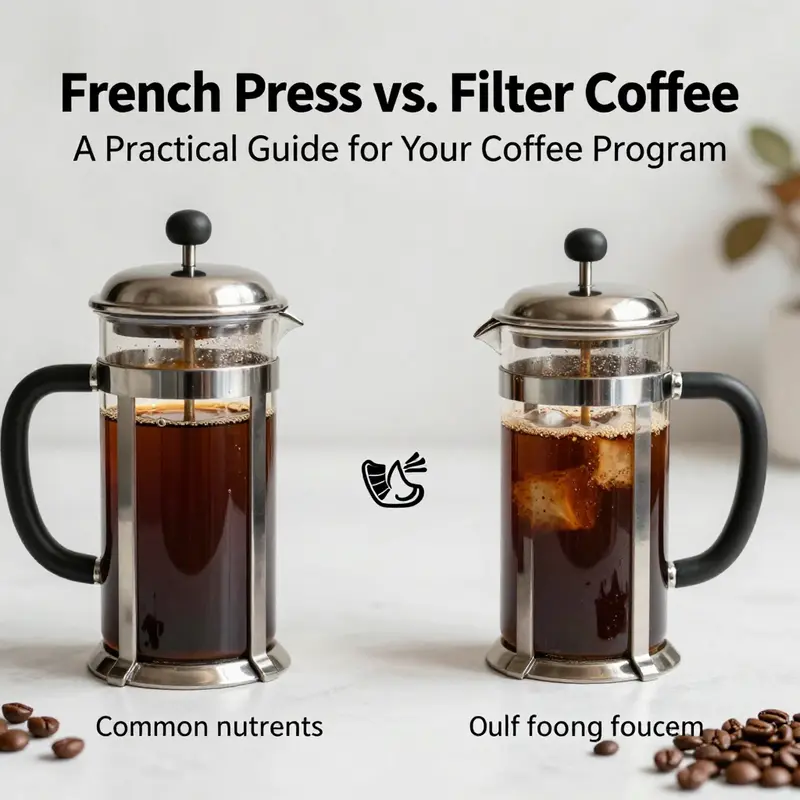
What your brew does to you is more than a matter of taste. Brewing method changes which compounds make it from bean to cup. Those differences can affect cholesterol, mouthfeel, and subtle nutrient delivery. Understanding the health and nutritional contrasts between French press and filter coffee helps you choose a method that matches both flavor and wellbeing.
At the heart of the debate are two naturally occurring compounds: the diterpenes cafestol and kahweol. These oily molecules are part of coffee bean lipids. They contribute to flavor and aroma, and they also influence how your body handles cholesterol. The mechanical difference between French press and filter coffee determines how much of those diterpenes end up in your mug.
French press coffee is an immersion brew. Coarse grounds steep directly in hot water and a metal mesh plunger separates grounds from liquid. That metal mesh is generous compared to paper filters. It lets oils and microscopic particles pass. The result is a cup with more body, a heavier mouthfeel, and, importantly, higher levels of cafestol and kahweol. If you drink French press regularly, those diterpenes accumulate in your daily intake.
Paper-filtered brews, such as pour-over and drip coffee, use a porous barrier that traps most oils and fine particles. The paper absorbs or retains the majority of cafestol and kahweol, producing a cleaner, brighter cup with fewer of those compounds. Nutritionally, that means paper-filtered coffee presents a lower risk when it comes to impacts on blood lipids.
The connection between unfiltered coffee and cholesterol is not theoretical. Clinical studies show a small but consistent rise in total and LDL cholesterol from regular consumption of unfiltered coffee. The magnitude varies by study and by how much coffee a person drinks. Evidence suggests that drinking five or more cups of unfiltered coffee daily can be associated with increases in LDL cholesterol in susceptible individuals. That effect is general, and individual response varies based on genetics, baseline diet, and overall lifestyle.
But this chapter does not stop at diterpenes. Coffee delivers a complex mix of antioxidants and stimulants regardless of method. Polyphenols and other antioxidative compounds are present in both French press and filtered brews. Their health contributions—reducing oxidative stress and influencing metabolism—tend to be similar when overall intake, bean quality, and roast level are comparable. Caffeine content is also more a matter of bean quantity, grind size, and brew ratio than filter type. A strong paper-filtered pour-over can contain as much caffeine as a similarly dosed French press. In short, the major biochemical difference is that unfiltered coffee carries more oils and micro-particles into the cup.
For people with normal cholesterol and minimal cardiovascular risk, the richer profile of French press coffee can be enjoyed as part of a balanced diet. The sensory payoff—thicker body, amplified mouthfeel, and rounded flavor—makes this method attractive. Those benefits must be weighed against the small potential for increased LDL if consumption is high. For anyone with elevated cholesterol, familial hypercholesterolemia, or cardiovascular disease, paper-filtered coffee is the safer choice. The filter removes a large fraction of the diterpenes linked to cholesterol increases, while preserving most antioxidants and caffeine.
Moderation and practical steps can bridge the gap between preference and health. If you favor French press but are concerned about cholesterol, limiting intake to fewer than four cups daily reduces potential risk. Another simple strategy is to decant French press coffee immediately into a separate carafe or pour it through a paper filter before drinking. This practice preserves much of the flavor while cutting back on oily compounds. Maintaining clean brewing gear matters too: old oils trapped in equipment can go rancid and alter both flavor and health qualities.
Beyond cholesterol, consider digestion, inflammatory responses, and tolerance. The higher sediment content of French press can feel heavier to people prone to reflux or a sensitive stomach. Paper-filtered coffee is gentler on the digestive tract for many drinkers because it contains fewer microscopic particles and a lighter body. Conversely, the fuller mouthfeel of French press can be more satisfying, which may reduce the tendency to add sugar or cream—choices that significantly affect the nutritional profile of any cup.
Caloric and macronutrient concerns are mostly independent of brewing method. Plain black coffee contains negligible calories. Add-ins—milk, cream, sugar, syrups—transform the beverage into a caloric drink. Choosing skim or plant-based milk, moderating sugar, or using flavoring sparingly will have a greater nutritional impact than choosing one manual method over another. So if health is the central priority, pay close attention to what you put into your coffee as much as to how you brew it.
Some practical guidance can help translate this information into daily routines. If you want the body and depth of French press with fewer cholesterol-related compounds, try using a paper cone or a cloth filter between grounds and kettle. Alternatively, brew in French press style and then transfer the coffee through a paper filter before serving. If you prefer the clarity of pour-over but miss body and oils, selecting a slightly darker roast or using a coarser grind with a longer contact time can increase mouthfeel without reintroducing as many diterpenes as an unfiltered immersion method.
Keep in mind that individual variability is significant. Some people are hyper-responders to caffeine and other coffee compounds; others show measurable changes in cholesterol when switching between filtered and unfiltered brews. Regular medical checkups and blood lipid testing are sensible if you consume several cups daily and have risk factors for heart disease. Small changes in brewing technique can meaningfully alter exposure to cafestol and kahweol.
For a broader look at how French press compares to other methods, including traditional drip machines, the guide “French press vs traditional drip coffee maker: a complete comparison guide” explores practical differences in flavor and technique. It can help you balance taste preferences with health priorities.
Ultimately, both French press and filter coffee deliver antioxidants and the ritual many people value. The choice becomes one of trade-offs: a richer, more enveloping cup with slightly higher diterpene exposure, or a cleaner, lighter cup with lower cholesterol impact. Small lifestyle choices, like limiting daily intake, filtering a brewed cup, or selecting paper-filtered methods, allow you to enjoy coffee while keeping health risks modest. If you have concerns about cholesterol or cardiovascular risk, consult your healthcare provider and consider paper-filtered methods as a straightforward way to lower exposure to cholesterol-raising compounds.
For a concise review of the connection between coffee and cholesterol, and what the research shows, see the Mayo Clinic summary linked here: https://www.mayoclinic.org/healthy-lifestyle/nutrition-and-healthy-eating/in-depth/coffee/art-20058961
Final thoughts
In conclusion, the choice between French press and filter coffee is more than just a matter of taste; it encompasses numerous factors that can influence your business’s coffee offerings. From flavor profiles and brewing techniques to efficiency and health benefits, each method presents unique opportunities and challenges. By understanding these differences, you can tailor your coffee menu to better cater to your clientele’s tastes, enhancing their overall experience and potentially boosting your coffee sales. Consider the preferences of your target market, the resources you have available, and the atmosphere you wish to create as you decide which method or methods to implement in your operations.