

Understanding the caffeine content in beverages like Dr Pepper is essential for business owners who serve or sell soft drinks. With a 12-ounce can containing approximately 41 milligrams, or 0.041 grams, of caffeine, it’s vital to contextualize this information. This article explores the implications of this caffeine content and compares it with other soft drinks, providing a comprehensive analysis of potential health impacts, consumer awareness, and current trends in caffeine consumption. Each chapter will offer insight into how these factors can influence business decisions and customer preferences in the beverage market.
Measuring the Kick: Exactly How Many Grams of Caffeine Are in a Can of Dr Pepper
Precise measurement and everyday meaning
A standard 12-fluid-ounce (355 mL) can of Dr Pepper contains roughly 41 milligrams of caffeine. Converted into grams, that equals 0.041 grams of caffeine per can. The math is straightforward: there are 1,000 milligrams in a gram, so 41 mg divided by 1,000 equals 0.041 g. Presenting caffeine in grams can feel unfamiliar because beverage labels and nutrition data typically use milligrams. Still, expressing the amount in grams helps place soda caffeine on the same scale as other dietary constituents measured by weight.
Thinking about 0.041 grams as a physical quantity changes perception. It is a tiny mass—barely perceptible if you tried to weigh it on a kitchen scale. Yet, that small amount is pharmacologically active for most people. Caffeine, even in milligram doses, influences alertness, mood, and taste perception. In a can of Dr Pepper, 0.041 g contributes to a gentle stimulant effect and adds a mild bitter note that balances the beverage’s sweetness.
How this amount compares to other drinks
At 41 mg per 12-ounce serving, the caffeine level in Dr Pepper sits in a moderate range for carbonated soft drinks. It is higher than some classic cola formulations and noticeably lower than concentrated coffee drinks and many energy beverages. Comparing milligrams across drink types helps illustrate potential effects. For example, a standard cup of brewed coffee can carry several times the caffeine found in a can of soda. Energy drinks often pack even more, sometimes matching or exceeding an entire day’s recommended amount in a single serving. Still, soda-level caffeine results in a milder stimulant profile, making it suitable for casual, regular consumption for many adults.
Daily limits and practical serving math
Regulatory and health authorities commonly reference a daily intake limit of about 400 mg of caffeine for most healthy adults. Using that benchmark makes the arithmetic simple. At 41 mg per can, you would need to drink roughly 10 cans of Dr Pepper in a single day to reach the 400 mg threshold. That calculation is direct: 400 mg divided by 41 mg per can equals approximately 9.76 cans. For context, reaching the limit through soda alone would require substantial volume and corresponding calorie or sweetener intake—unless you choose low- or zero-sugar variants.
Remember that the 400 mg guideline applies to average healthy adults. Different populations have different tolerances and recommendations. Pregnant people, those with certain medical conditions, and children are advised to limit caffeine much more strictly. For children and adolescents, even moderate amounts can cause jitteriness or sleep disruption. Pregnant people are often advised to keep intake below 200 mg per day. In these contexts, the 41 mg in a single can becomes more significant.
Variability and labeling nuance
Most public sources and beverage analyses converge on the 41 mg figure for a 12-ounce can of Dr Pepper. However, slight variations appear across different reports. Some measurements and label reads report figures like 42.6 mg per 12-ounce serving. That difference is small and within a normal range of manufacturing and measurement variability. Caffeine content can vary with manufacturing batches, regional formulations, or analytical methods. Despite these small discrepancies, the consensus centers on roughly 41 mg per can.
The same approximate caffeine level appears in both regular and zero-sugar versions of the drink. The stimulant is added for flavor balance and effect, not for caloric content, so sugar or sweetener changes do not significantly alter caffeine quantity. This consistency ensures similar stimulant effects regardless of the version chosen, though the overall sensory experience will differ due to sweetness and mouthfeel.
Why measure in grams? Practical applications
Converting caffeine to grams is useful when integrating with dietary analyses that use grams for macronutrients and other components. It also aids in scientific or technical discussions where consistent units matter. For daily-limit calculations, milligrams are more intuitive. Yet, acknowledging that 0.041 grams per can is equivalent to 41 milligrams reinforces the small physical mass that produces a measurable effect.
If you track your consumption meticulously, converting to grams might make sense when tallying multiple items with diverse unit conventions. For example, a supplement may list caffeine in grams, while beverages use milligrams. A uniform unit reduces conversion steps and lowers the chance of arithmetic errors.
How the caffeine functions in a can
Beyond stimulation, caffeine subtly alters the beverage’s flavor profile. It adds a slight bitterness that offsets sweetness, improving perceived balance. This role is intentional: formulators use small amounts to adjust taste and mouthfeel. Physiologically, caffeine acts on the central nervous system to block adenosine receptors. That blockade reduces perceived fatigue and increases alertness, even at moderate doses like 41 mg.
Because of the modest amount per can, the stimulant effect is usually mild. A single can may sharpen focus and reduce mild sleepiness, but it will not replicate the stronger lift people get from a concentrated espresso shot or a highly caffeinated energy drink. Repeated intake or stacking several cans in a short timeframe will amplify effects and increase the risk of side effects like heart palpitations, insomnia, or jitteriness.
Putting it into real-life perspective
Most adults can enjoy one or two cans daily without approaching recommended limits. If your day includes coffee, tea, or energy drinks, factor those sources into the total. Also consider timing: consuming caffeine late in the day can impact sleep more than the absolute dose. For people sensitive to stimulants, even small amounts early in the afternoon may interfere with nighttime rest.
If you want to compare variants or dig deeper into the exact caffeine content of zero-sugar formulations, a focused resource covers those specifics and differences. For a direct look at the caffeine level in zero-sugar versions, see this resource on how much caffeine is in Dr Pepper Zero.
For authoritative guidance on caffeine content in packaged carbonated beverages and how labels report it, consult the FDA’s detailed findings and data on prepackaged beverages: https://www.fda.gov/food/food-labeling-nutrition/caffeine-content-prepackaged-national-brand-and-private-label-carbonated-beverages
In everyday terms, 0.041 grams of caffeine per can is a modest, intentional ingredient. It adds balance to flavor and a mild stimulant effect. Understanding the unit conversions and how this amount fits into daily intake limits helps people make informed choices about consumption and timing.
The Caffeine Gram: Dr Pepper and the Everyday Energy Equation
Caffeine is a small molecule with a big footprint in how we experience everyday beverages. When you ask how many grams of caffeine are in Dr Pepper, the simplest answer is a single number: about 0.041 grams per 12-ounce can. That 0.041 isn’t a mystery so much as a unit conversion that helps place a familiar drink on a wider scale. In practical terms, a standard can of Dr Pepper delivers roughly forty-one milligrams of caffeine. If you translate that into grams, the figure becomes 0.041 grams. The arithmetic is straightforward, yet the resulting figure sits at the heart of a larger conversation about how caffeine functions in our daily routines, how it tastes, and how it stacks up against the rest of the soft drink landscape.
Far from being a mere number, this gram-level perspective invites a tactile sense of what a single can contributes to a day that might already include coffee, tea, or other caffeinated companions. It helps answer questions not just about strength in a cup, but about scheduling, energy, and mood through the hours that follow.
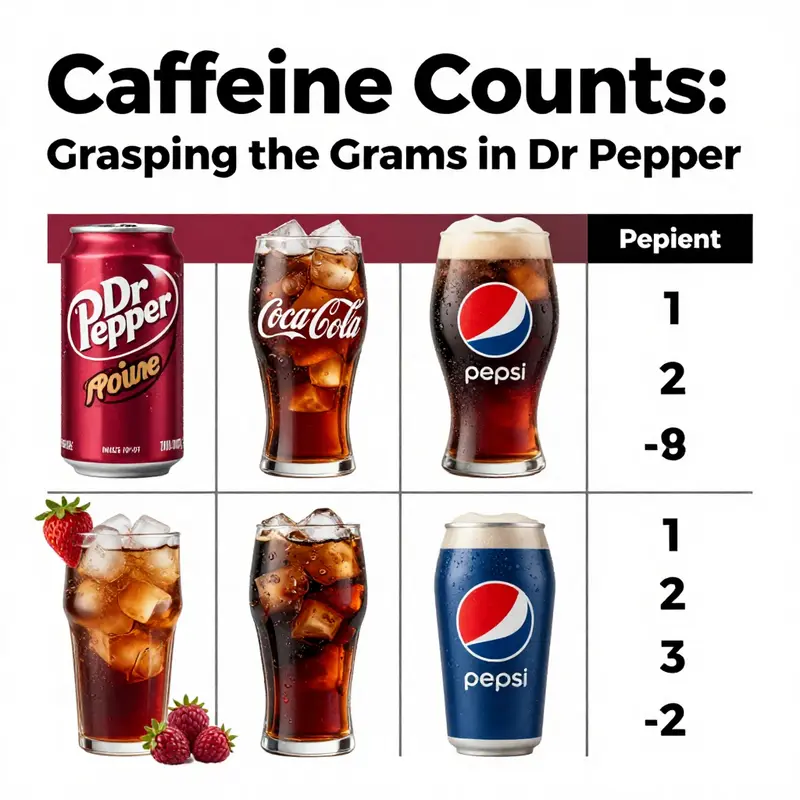
In the world of soft drinks, grams rarely travel alone. They ride on a tide of other ingredients—carbonation, sugar, acid, and a blend of flavor notes—that determine how a beverage feels on the tongue and how long its effects last. Dr Pepper’s caffeine content places it in a moderate range when you compare it with peers in the same aisle. A conventional 12-ounce serving carries approximately 41 mg of caffeine, which translates to about 0.041 g. Put next to Coca Cola at roughly 34 mg (0.034 g) per 12 ounces, and Pepsi at around 38 mg (0.038 g), the Dr Pepper number begins to look like a middle ground. Diet Coke, with approximately 46 mg (0.046 g), nudges a little higher, while Mountain Dew comes in strongest among the familiar mainstream sodas at about 54 mg (0.054 g) per 12 ounces. These figures aren’t just trivia; they sketch a spectrum of caffeine intensity that helps consumers calibrate their intake, plan their day, and gauge how a beverage will interact with sleep, digestion, or activity rhythms.
The practical implications of these gram-level numbers extend into daily life in several ways. First, there’s the simple arithmetic of a daily caffeine budget. The widely cited ceiling for most healthy adults is around 400 mg per day. With Dr Pepper clocking in at about 41 mg per 12-ounce can, a single can represents roughly 10 percent of that upper limit. If a person were to drink two or three servings across a day, the math rapidly adds up, especially when other sources are in the mix. This is where grams become a clarifying lens: they remind us that the impact of caffeine is a sum, not a single line-item value. They also encourage mindful consumption, not because caffeine is dangerous in itself, but because it is a stimulant that can influence sleep onset, heart rate, and jitteriness in sensitive individuals.
Second, the gram view invites attention to product variations. In Dr Pepper’s lineup, the zero sugar version is often cited as having a caffeine range that tracks closely with the regular, typically around 41–44 mg per 12-ounce can (0.041–0.044 g). This near parity across versions underscores a broader industry pattern: caffeine levels in mainstream sodas are designed to preserve a consistent experience, even when sweeteners or calories shift. The tolerance for slight fluctuations speaks to the practicalities of formulation and supply chain realities. Consumers who are especially sensitive to caffeine, or who are comparing products for the sake of a regimen, will appreciate that the difference between 41 mg and 44 mg can be meaningful on a tight daily schedule, but often not large enough to transform the overall experience.
Third, the cultural and geographic layers of caffeine use color these numbers as well. Dr Pepper is a globally distributed beverage with deep regional roots, especially in parts of the United States, where it has become a cultural marker embedded in social rituals and daily routines. The caffeine content, while modest on a per-can basis, contributes to a larger narrative about how people use flavor to steady momentum and to accompany a bite of comforting food. The grams in each can thus inhabit a broader social space: they become part of a ritual, a shared knowledge pool, a way to talk about a drink not just in terms of taste but in terms of effect and duration.
As this chapter threads together the gram-level facts, it also nudges readers to see caffeine content as part of a larger system rather than a stand-alone metric. The official figures come from a consistent set of measurements that help people compare products with fairness. It’s important to acknowledge that individual responses vary. Some metabolize caffeine quickly, others more slowly; some cannot tolerate caffeine at all due to medical or personal reasons. In that sense, grams illuminate a constant while mg and personal biology fill in the variability of experience. A can of Dr Pepper, at 0.041 grams, offers a moderate energy signal and can fit into a morning routine or a midafternoon lift without overpowering sleep when consumed with reasonable care.
To connect to the broader conversation about caffeine in everyday beverages, this gram-scale view points readers to questions of balance and timing rather than chasing the strongest possible number. The story of 0.041 grams per can is a precise piece of a larger nutritional and experiential picture, one that includes flavor, sweetness, acidity, texture, and the social moment in which the drink is enjoyed. For readers who wish to explore the caffeine detail beyond this chapter, a deeper dive can illuminate how different formulations influence the overall experience. How much caffeine sits in Dr Pepper Zero, for instance, invites direct comparison with the regular version and with other sodas. External references and official product data provide the foundation for the same gram-focused framework that guides this chapter.
In the end, the gram count places Dr Pepper in a middle tier—meaningful enough to contribute to daily energy without being a dominant stimulant. The comparison with peers underscores a shared design philosophy in mainstream soft drinks: a balance between flavor, caffeine, and daily rituals. The information matters not only to caffeine nerds or nutrition trackers but to anyone who wants to enjoy a familiar drink with eyes open to how the numbers sit in daily life. The story of 0.041 grams per can is a modest lesson in moderation, context, and the small yet real ways a single beverage can harmonize with a caffeine-aware routine.
What 0.041 Grams of Caffeine Means for Your Health: Practical Risks and Limits with Dr Pepper
Understanding the actual amount matters. A standard 12-fluid-ounce can of Dr Pepper contains about 41 milligrams of caffeine. That equals 0.041 grams. On its own, that number is small. In context, it tells a clearer story about daily limits, individual sensitivity, and choices that affect wellness.
The first thing to grasp is scale. The U.S. Food and Drug Administration considers up to 400 milligrams of caffeine per day safe for most healthy adults. One can of Dr Pepper supplies roughly 10 percent of that upper limit. For many people, a single can offers a mild stimulant effect that can sharpen alertness and lift energy without notable harm. It is not a replacement for a strong cup of coffee, but it can contribute meaningfully to daily intake when consumed repeatedly.
Sensitivity varies widely. Genetics, habitual use, body weight, and current health conditions shape how someone responds to 41 mg. Some people metabolize caffeine quickly and barely notice small doses. Others experience jitteriness, a racing heart, or heightened anxiety from even modest amounts. Sleep quality is another important factor: consuming caffeine later in the afternoon or evening can interfere with falling asleep and reduce sleep depth, because the compound’s effects often persist for several hours.
Special populations require extra caution. Pregnant people are advised to limit caffeine to under 200 milligrams per day. By that measure, two or three cans of Dr Pepper could approach or exceed recommended intake for pregnancy. People with anxiety disorders, insomnia, or uncontrolled high blood pressure should treat even moderate caffeine doses as potentially problematic. A clinician can give tailored guidance when there is uncertainty about interactions with medications or existing conditions.
Cumulative consumption is where low amounts add up. Drinking several cans across a day multiplies the effect. Three cans equal about 123 mg. Five cans reach roughly 205 mg. Ten cans approach 410 mg, slightly over the FDA’s general safe limit. Reaching the upper limit is technically possible but inadvisable, because non-caffeine ingredients also matter. Regular versions of the beverage deliver a large dose of sugar, which affects metabolic health, dental health, and calorie balance. Zero-sugar versions remove sugar but add artificial or non-nutritive sweeteners, which carry their own considerations for people monitoring diet and gut health. If your goal is to manage overall health, counting only caffeine paints an incomplete picture.
Practical signs of too much caffeine are straightforward to watch for. Common symptoms include restlessness, irritability, tremors, fast heartbeat, upset stomach, and trouble sleeping. If these occur after consuming one or two cans, consider that you may be sensitive. Reducing frequency, switching to a lower-caffeine option, or avoiding late-day cans often fixes the issue. For persistent or severe symptoms, consult a healthcare professional.
Timing matters as much as amount. Caffeine peaks in the bloodstream within 30 to 60 minutes after ingestion. Its half-life—the time it takes for the body to eliminate half the dose—varies but often sits around four to six hours in healthy adults. That means a can consumed mid-afternoon can still exert effects late into the evening. If you struggle with sleep onset or early-morning grogginess, cutting out late-day caffeine is the simplest adjustment with meaningful benefits.
Assessing personal tolerance requires small experiments. Try removing the beverage for several days and note differences in sleep, anxiety, and heart rate. Then reintroduce a single can and observe. Keep the tests short and controlled. If removing caffeine improves sleep or reduces anxiety, the cost of moderate caffeine may outweigh the immediate benefits of alertness.
Contextual factors influence health outcomes. Combining caffeine with heavy carbohydrate or sugar intake, for instance, can amplify energy swings. Drinking several sugary cans across the day can lead to repeated spikes in blood sugar and insulin. For people managing weight, diabetes, or metabolic syndrome, the sugar content may present a greater long-term risk than the caffeine itself. For those avoiding sugar, zero-sugar formulations maintain the same caffeine level while removing calories. Yet some people report digestive changes or altered taste preferences with artificial sweeteners, so personal preference should guide choices.
When monitoring daily intake, a simple mental rule helps: treat each can of Dr Pepper as about 40 mg of caffeine. Add other sources—coffee, tea, energy drinks, chocolate—to gauge the total. Many common sources can push total intake higher than expected. If you regularly consume coffee plus soda, you may reach the FDA’s upper limit without realizing it. If limiting caffeine is necessary for health reasons, plan a daily cap and track it conservatively.
There are also moments when avoiding extra caffeine is prudent. Before medical procedures, some clinicians advise reducing stimulants. During acute anxiety or panic episodes, caffeine can exacerbate symptoms. People taking certain medications should check interactions; stimulants and some antidepressants can alter how the body processes caffeine. When in doubt, ask a provider.
Small shifts in habit reduce risk without dramatic sacrifice. Choose a can earlier in the day rather than in the evening. Alternate with water or a non-caffeinated beverage. When craving flavor, try a flavored sparkling water or a naturally caffeine-free herbal option. Swap one can a day for a lower-caffeine beverage, and the cumulative reduction becomes significant over weeks and months.
For people tracking grams specifically, converting milligrams to grams clarifies scale. Forty-one milligrams equals 0.041 grams. That value is easy to forget because grams feel substantial compared to milligrams. Thinking in milligrams helps for daily limits because guidance from authorities uses milligrams. For practical purposes, it is fine to say one can supplies about 40 mg of caffeine and plan around that figure.
Ultimately, the health implications of the caffeine in Dr Pepper come down to patterns and context. A single can is unlikely to cause harm for most adults. Repeated consumption, sensitivity, and coexisting health concerns change the balance. Mindful choices are the best strategy. Track total daily intake, consider timing, and weigh other beverage ingredients when deciding how often to drink it.
If you want a closer comparison of caffeine across similar options, a useful resource explains how much caffeine is in Dr Pepper Zero. That page helps match expectations between sugary and zero-sugar versions. For official safety guidance on daily caffeine limits, consult the U.S. Food and Drug Administration guidance here: https://www.fda.gov/consumers/consumer-updates/caffeine-what-you-need-know
For most people, moderation and attention to personal response matter more than the exact decimal of grams. Treat each can as a modest contributor to daily caffeine, and adjust based on sleep, anxiety, and underlying health. Small changes to timing and frequency yield better sleep, steadier mood, and clearer awareness of how caffeine fits into a healthier routine.
What 0.041 Grams Means: A Consumer’s Guide to the Caffeine in a Can of Dr Pepper

A clear figure you can use. A standard 12-fluid-ounce (355 mL) can contains about 41 milligrams of caffeine. Converted to grams, that is 0.041 grams. That single number helps you place one can of this cola in the wider landscape of caffeinated drinks and manage your daily intake with confidence.
Think of caffeine the way you think of sodium or sugar on a label. The number itself is small, but its impact depends on how much you drink and who you are. Forty-one milligrams is moderate compared with other popular beverages. It is larger than the caffeine found in some colas, and much lower than the typical content in brewed coffee or many energy drinks. A standard cup of coffee often delivers between 95 and 200 milligrams, so one can of this soda delivers roughly a quarter to a tenth of that amount. That scale helps explain why many people can enjoy a can without obvious stimulant effects while others feel them clearly.
Context matters: the commonly recommended upper limit for healthy adults is about 400 milligrams per day. One can at 41 milligrams accounts for roughly 10% of that guideline. That percentage is useful when you plan a day of beverages. Two cans move you to 20% of the suggested limit. Add a morning coffee and an energy drink, and the numbers add up fast. Keeping caffeine in grams or milligrams is practical. It lets you add totals quickly and share them with a doctor or a nutrition tracking app.
Not every body responds to caffeine in the same way. Some people can consume 400 milligrams without obvious symptoms. Others feel jittery, anxious, or have trouble sleeping after a much smaller amount. Certain groups should be especially mindful: pregnant people are usually advised to limit caffeine more strictly. People with certain heart conditions or those taking medications that interact with stimulants must be cautious too. If you belong to a sensitive group, knowing that a single can contains 0.041 grams gives you a clear, measurable unit to work from when following medical or lifestyle advice.
Serving size and portion control are practical tools. Many people pour soda into a large glass or share a bottle, which changes how much caffeine they actually consume. Cans are straightforward because the serving equals the container. Bottles and fountain pours are less predictable. A 20-ounce bottle contains more than one serving, so it contains proportionally more caffeine. When counting milligrams, scale the value by the volume you drink to get an accurate total.
Zero-sugar and diet formulations often prompt questions. Some assume sugar-free versions contain less caffeine. In many cases, the caffeine level remains consistent between regular and zero-sugar versions. That means the 41 milligrams figure applies to both standard and zero-sugar cans in most formulations. If you are choosing zero sugar to reduce calories, remember that caffeine intake will not necessarily change. For a deeper look at variations between regular and diet formulations, see the analysis of whether diet versions contain caffeine found at the Coffee Rich Life site: does diet dr pepper have caffeine.
Labels and official sources matter when you want the most accurate, current information. The company’s published nutrition facts and independent beverage analysis reports agree on this 41 mg number for a 12-ounce can. Those sources are the best place to confirm any formulation changes or regional differences. When in doubt, check the nutrition facts printed on the packaging or the manufacturer’s nutrition pages for the latest figures.
Practical math makes this useful. For example, if your morning routine includes one cup of coffee at 120 milligrams and a midday can at 41 milligrams, your total is 161 milligrams. That number remains comfortably below the 400-milligram guideline for most adults. If you add an energy shot, which might contain 150 to 200 milligrams, your total approaches or exceeds the recommended limit. Tracking by milligrams stops guesswork and helps you notice trends. If you consume multiple beverages across the day, a quick sum tells you whether you are in a safe range.
Mixing with alcohol or combining stimulant products changes effects. Caffeine does not cancel out alcohol’s impairment. It can mask feelings of drowsiness and lead to riskier behavior. Combining caffeinated soda with other stimulant sources yields additive effects. If you drink multiple caffeinated products in a short time, watch for increased heart rate, sleep disruption, or anxiety. Those are common signs you have crossed your personal comfort threshold.
Timing matters. Caffeine peaks in the bloodstream within an hour and may last several hours. Many people find that consuming caffeine late in the day impairs sleep. If you are tracking total intake to protect sleep quality, set a cutoff time and plan total milligrams accordingly. A single can consumed in the late afternoon can still affect nocturnal sleep for people with higher sensitivity.
Children and adolescents require a different approach. Public health guidance often recommends much lower caffeine limits for younger people than for adults. A single can may be a sizable portion of an adolescent’s recommended maximum. For children, occasional exposure is different from habitual intake. Monitor frequency and total daily milligrams, not just single servings.
Practical tips help make the number actionable. First, treat 41 milligrams as a unit you can scale. Multiply by the number of cans or scale proportionally for different volumes. Second, add up all sources: coffee, tea, soda, energy drinks, chocolate, and certain medications. Third, watch for symptoms that indicate you may need to lower intake: restlessness, rapid heartbeat, upset stomach, or sleep disruption. Fourth, choose alternatives when you want the taste without caffeine. Decaffeinated sodas or flavored sparkling water provide variety with less stimulant impact.
Understanding the label also helps manage expectations. The caffeine amount is fixed per serving on modern nutrition panels for many brands. That consistency means you can plan with confidence. If you switch between regular and zero-sugar versions, caffeine often remains unchanged. If a product changes its formulation, the manufacturer typically updates the published nutrition facts, so occasional checks keep your tracking accurate.
Finally, put the figure in human terms. Forty-one milligrams equals 0.041 grams. That change in units does not alter the effect, but it may help those who prefer grams. It makes it easier to compare caffeine to other macronutrients tracked in grams, like fat or sugar. When you think about your daily diet in grams, adding 0.041 grams for one can is a straightforward calculation.
Knowing the caffeine content of a typical can turns an abstract idea into practical information. Whether you are monitoring for health reasons, trying to improve sleep, or simply curious, the 41-milligram figure gives you a reliable baseline. Use it to add up your day, compare beverages, and make choices that match your personal tolerance and goals. For official, up-to-date nutrition information, consult the brand’s published nutrition facts available on the company website: https://www.keurigdrpepper.com/nutrition
Where Dr Pepper Fits in Modern Caffeine Habits: Grams, Context, and Consumption Patterns
Caffeine Consumption Trends and Dr Pepper’s Place
Caffeine intake is shaped by habit, culture, and choice. Across the United States, most adults reach for a caffeinated drink each day. About 69% of people consume at least one caffeinated beverage daily, and coffee remains the dominant source. Recent data show 66% of U.S. consumers reported drinking coffee in 2025. These broad habits create a backdrop for how people perceive and use alternatives such as cola-style sodas. A single 12-fluid-ounce can of Dr Pepper delivers about 41 milligrams of caffeine. Converted to grams, that equals roughly 0.041 grams. That single serving supplies about 10% of the commonly cited 400 mg daily limit for adults.
Population groups differ in average intake. Older adults, particularly those aged 50–64, tend to drink more caffeine overall than younger groups. That pattern reflects routine, lifestyle, and preference. In many regions, coffee fuels most of the total caffeine. But cultural differences shape choices. For example, in Saudi Arabia, traditional coffee and sweetened tea remain primary sources, while soft drinks also rank high. These regional contrasts show why a 41 mg can of cola matters more in some diets than others.
Understanding caffeine quantities in familiar drinks helps people balance daily totals. A 12-ounce cola at 41 mg sits between weaker soft drinks and intense energy beverages. It contains more caffeine than some classic colas, yet far less than many energy drinks. The zero-sugar version contains nearly identical caffeine, so opting for a sugar-free variant does not meaningfully change caffeine intake. Diet formulations can vary slightly. One documented diet formulation shows about 44.1 mg per 12 ounces, or 0.0441 grams, a difference small enough to leave overall daily strategy unchanged for most adults.
Consumers mix sources. A morning cup of coffee, a mid-afternoon cola, and an occasional energy shot can add up quickly. Since the adult safe limit is commonly cited at 400 mg, three to four cans of cola would still leave room under that threshold. But add brewed coffee, and the same limit can be met with fewer servings. Understanding the gram-level transformation—milligrams to grams—helps clarify quantities. Saying a can has 0.041 grams sounds small. Saying it has 41 milligrams feels more tangible. Both express the same reality, but different units change perception.
Media coverage and health narratives also influence trends. When studies highlight benefits, like improved alertness, consumers may lean toward caffeinated options. Conversely, reports about sleep disruption, anxiety, or heart palpitations can prompt shifts away from high-caffeine beverages. Public discussion often drives demand for lower-caffeine or caffeine-free alternatives. Some people move to decaffeinated or naturally lower-caffeine drinks. Others opt for precise portion control. Awareness of per-serving content, such as 41 mg per can, empowers these choices.
Age and lifestyle factors matter too. Younger people favor energy beverages and trend-driven options at higher rates. Older adults may prefer traditional drinks consumed in moderation. Parents often scrutinize caffeine when choosing beverages for teenagers. Even modest amounts matter when consumed by children. Many health guidelines advise limiting caffeine for adolescents and avoiding it for very young children. A single can’s 41 mg can be a large percentage of a recommended limit for a teen, while for an adult it represents a modest portion.
The beverage market supplies many choices with varying caffeine. Some sodas contain as little as 20–30 mg per 12 ounces. Others exceed 50 mg. Energy drinks commonly start around 80 mg per can and go much higher. The moderate count of 41 mg for a 12-ounce cola places it in a comfortable mid-range. That helps explain why it remains a frequent, casual choice. It delivers a perceptible pick-me-up without the intensity of stronger concoctions.
Formulation and labeling practices affect consumer understanding. Most manufacturers list caffeine in milligrams on nutrition labels or company resources. When labels show milligrams, converting to grams is straightforward. Multiply milligrams by 0.001 to get grams. So, 41 mg becomes 0.041 g. This simple conversion can help with cross-product comparisons when some sources use different units. It also assists people tracking macronutrients and additives who prefer consistent units.
Practical consumption strategies follow directly from these numbers. For anyone monitoring sleep, anxiety, or sensitivity to stimulants, spacing caffeinated drinks matters. Late-day consumption of even moderate caffeine can disrupt sleep. For pregnant people, medical guidance often recommends tighter limits than the general 400 mg adult recommendation. In those cases, a single can might be a significant fraction of a daily allowance. For those combining multiple sources, tracking milligrams helps avoid unintended excess. Small differences between regular and zero-sugar versions are rarely decisive. But when multiple drinks accumulate, every milligram adds up.
Public health messaging and consumer tools have improved. Many nutrition databases and manufacturer sites publish caffeine content. Checking label information before consuming multiple kinds of caffeinated products helps avoid overshoot. For readers who want a closer look at specific product variations, there are focused resources discussing the caffeine content of zero-sugar and diet formulations. One useful internal reference explores the caffeine in the zero-sugar variant in greater depth: Dr Pepper Zero caffeine content.
As market choices expand, the role of a moderate-caffeine cola remains steady. It appeals to those seeking flavor and a mild stimulant effect. Its 41 mg per 12-ounce serving offers predictable energy without the volatility of higher-caffeine drinks. Yet this steady role does not absolve consumers from attention. Combining beverages across a day, or consuming multiple servings, can push an individual past recommended intake levels. Being literate about milligrams and grams gives clarity and control.
Finally, macro trends matter for future consumption. Aging populations in developed markets may sustain stable caffeine consumption, while younger demographics exploring new drink formats could shift demand patterns. Media narratives, health research, and product innovations will continue to alter choices. For now, a 12-ounce can with 0.041 grams of caffeine fits into a moderate, manageable slot in most adult diets. Knowing that figure makes it easier to balance preferences, health concerns, and daily totals.
For more detailed and current statistics on global and regional caffeine consumption trends, consult the comprehensive report from Statista: https://www.statista.com/statistics/1289579/global-caffeine-consumption-by-beverage/.
Final thoughts
Dr Pepper’s 41 milligrams of caffeine per 12-ounce can serves as a vital piece of information for business owners in the beverage industry. Not only does this moderate amount align with consumer coffee and soft drink preferences, but understanding how it compares with other beverages can guide labeling, marketing strategies, and health-related discussions with customers. Navigating the caffeine landscape empowers businesses to make informed choices that enhance customer satisfaction and promote responsible consumption practices. As caffeine consumption trends continue to evolve, staying updated on these metrics will help producers and vendors alike to adapt and thrive.