
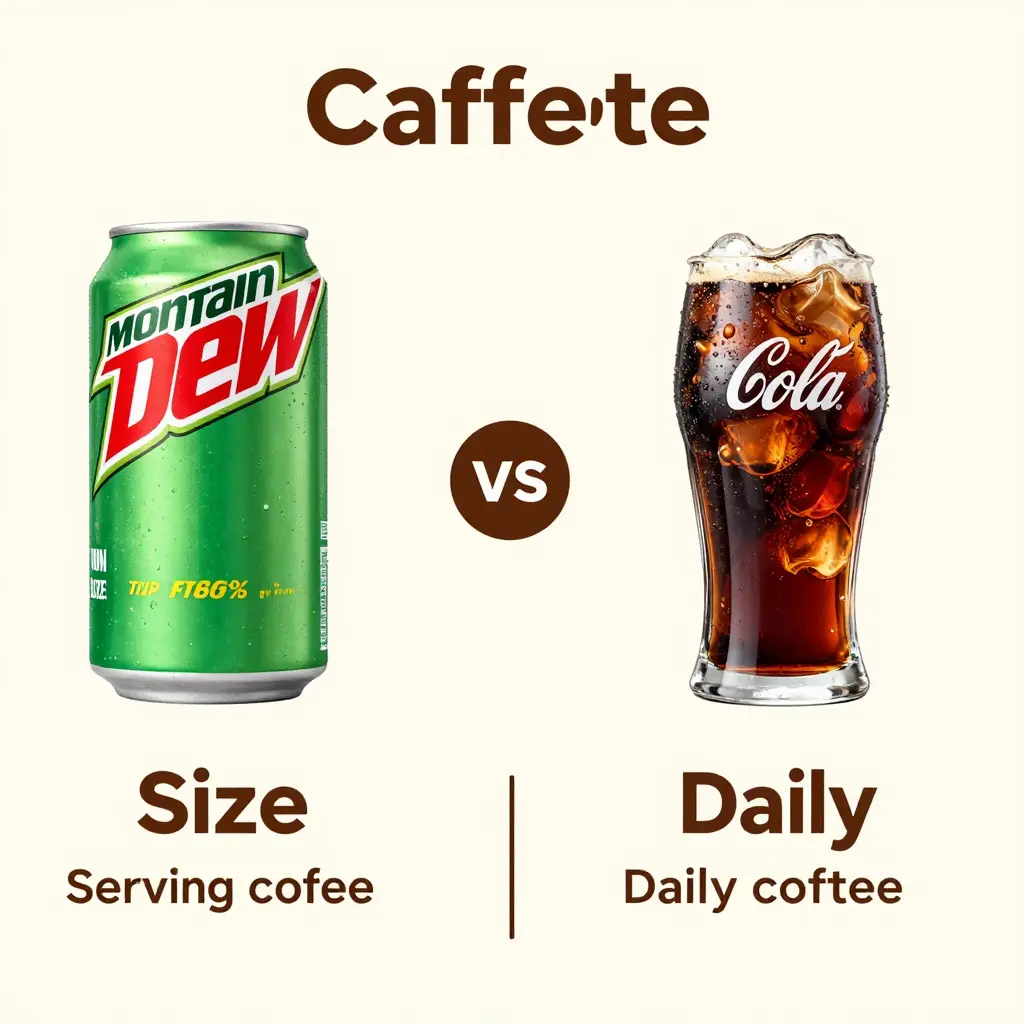
Caffeine in Mountain Dew vs Coke: Why Serving Size Matters
Mountain Dew and Coke both contain caffeine, so comparing them per serving tells you something useful about what you drink in a day. The confusion, though, usually isn’t the caffeine difference itself. It’s serving size. Cans, bottles, and fountain cups each define a serving differently, and that is what changes the totals people write down.
The number printed on a label doesn’t always match what you drink. A can, a bottle, and a fountain pour can hold different amounts of the same drink, so caffeine per package varies even when the drink doesn’t. That mismatch, not the brand, is what throws off a daily caffeine count.
The sections below cover the specifics so you can compare accurately:
- Caffeine per ounce versus caffeine per container
- How can, bottle, and fountain serving sizes differ
- Realistic daily totals for both drinks
- Practical ways to count caffeine without over- or under-estimating
For background first, see our reference on the caffeine in Mountain Dew vs Coke and our side-by-side coffee vs Mountain Dew comparison.
Why Serving Size Is the Hidden Variable in Caffeine Comparison
Labels report caffeine per serving, not per container, and that one distinction undercuts most Mountain Dew vs Coke comparisons. Two people can drink the same product and take in very different amounts of caffeine just because they picked different sizes. Serving size, more than brand, decides the number that ends up in your body.
At a cooler or fountain station, the same drink comes as a 12 oz can, a 16.9 oz bottle, a 20 oz bottle, or a fountain cup. Each label lists caffeine per serving, and a serving is rarely the whole container. A 20 oz bottle usually holds somewhere between 1.5 and 2 servings, depending on how the brand rounds. Finish the whole bottle and you take in more than the front of the label suggests.
The size you pour, more than the drink you choose, is often what sets your daily caffeine total.
That is where the error grows. You read “54 mg” on a label and treat it as one serving, but a 20 oz bottle delivers closer to 90 mg, and a large fountain cup can pass 140 mg. Refill through the day and the total runs well past what you think you drank. To see how the label figures compare side by side, look at how Mountain Dew and Coke match up.
Here is how one product can hide several different totals:
| Container | Typical Volume | Labeled Servings | Approx. Caffeine |
|---|---|---|---|
| Can | 12 oz | 1 | ~54 mg |
| Bottle | 16.9 oz | ~1.4 | ~76 mg |
| Bottle | 20 oz | ~1.7 | ~90 mg |
| Fountain cup | 32 oz | ~2.7 | ~144 mg |
(The figures above are approximate and use a standard 4.5 mg per ounce rate; actual totals vary by brand and how the fountain is calibrated.)
Before you trust any caffeine comparison, check the serving size first. Multiplying that number by how much you actually drink tells you far more about your intake than the headline figure on the label.
Mountain Dew vs Coke: Serving Size vs Whole Container
| Product | Labeled Serving Size | Caffeine per Labeled Serving (mg) | Caffeine if You Drink the Whole Container (mg) |
|---|---|---|---|
| Mountain Dew (regular) | 12 fl oz | 54 | 90 (20 fl oz bottle) |
| Mountain Dew (diet) | 12 fl oz | 54 | 90 (20 fl oz bottle) |
| Coke (regular) | 12 fl oz | 34 | 57 (20 fl oz bottle) |
| Diet Coke | 12 fl oz | 46 | 77 (20 fl oz bottle) |
Caption: The first two columns show what the label tells you; the last two show why those numbers can mislead. Most soda labels list caffeine for a single 12-ounce serving, but the bottle or fountain cup you finish often holds 20 ounces or more. That gap between labeled serving and full container is what pushes your daily caffeine total higher than expected. See more in this breakdown of caffeine in Mountain Dew vs Coke.
What the Numbers Actually Show
The pattern is easy to miss: serving size multiplies caffeine totals more than the drink itself does. A can or bottle is rarely one serving, and that gap changes your daily intake.
Per serving, a 12-ounce Coke has about 34 mg and the same serving of Mountain Dew has about 54 mg. Ounce for ounce, Mountain Dew is roughly 60% stronger.
Per container, those same figures add up fast:
| Beverage | Serving Size | Caffeine per Serving | Servings per Container | Total Caffeine per Container |
|---|---|---|---|---|
| Coca-Cola (12 oz can) | 12 oz | 34 mg | 1 | 34 mg |
| Mountain Dew (12 oz can) | 12 oz | 54 mg | 1 | 54 mg |
| Coca-Cola (20 oz bottle) | 12 oz | 34 mg | 1.67 | 57 mg |
| Mountain Dew (20 oz bottle) | 12 oz | 54 mg | 1.67 | 91 mg |
| Mountain Dew (2 L bottle) | 12 oz | 54 mg | 5.6 | 304 mg |
A 20-ounce Coke bottle holds about 1.67 servings, for a total of roughly 57 mg. The same-size Mountain Dew bottle reaches about 91 mg. A 2-liter Mountain Dew bottle holds about 5.6 servings and totals over 300 mg, close to the 400 mg daily ceiling for most healthy adults.
Always check the servings-per-container line before you count caffeine.
That is why the story here is less about the drink than the portion. Two bottles can double or triple a single serving’s number and throw off any estimate of your daily caffeine. For a deeper side-by-side, see our full breakdown of caffeine in Mountain Dew vs Coke.
Common Serving Sizes and Their Caffeine Totals
Any caffeine estimate starts with the container in your hand, because serving size is the number most people guess wrong. A “can” can mean 12 ounces, a “bottle” can mean 20, and a fountain cup can hold more than both combined. That makes caffeine per serving a moving target, and it is the reason two people drinking the same brand can end the day with very different totals.
The figures below use published brand data and standard US container formats. Treat them as approximate, since fountain mixes and regional recipes vary slightly, but they give you a realistic starting point for tracking your daily intake.
- 12 oz can (Mountain Dew): about 54 mg of caffeine – the baseline format and the one most nutrition labels are built around.
- 12 oz can (Coke): about 34 mg of caffeine – noticeably lower per ounce than Mountain Dew.
- 20 oz bottle (Mountain Dew): about 91 mg of caffeine – roughly 1.7 cans in a single container.
- 20 oz bottle (Coke): about 57 mg of caffeine – easy to underestimate because the bottle feels like “one drink.”
- 32 oz fountain cup (Mountain Dew): about 144 mg of caffeine – a large movie-theater pour.
- 32 oz fountain cup (Coke): about 91 mg of caffeine – still substantial, but a step below the Dew.
- 1 liter bottle (Mountain Dew): about 152 mg of caffeine across the full bottle (roughly 2.8 twelve-ounce servings).
Ounce for ounce, Mountain Dew does carry more caffeine than Coke, and a large serving widens that gap fast. If you prefer citrus sodas without the sugar, it helps to know whether Diet Mountain Dew contains caffeine, since the diet version keeps nearly the same kick. And if you are comparing other sodas in the same aisle, this breakdown of the caffeine content of Diet Dr Pepper puts a third popular option side by side with them.
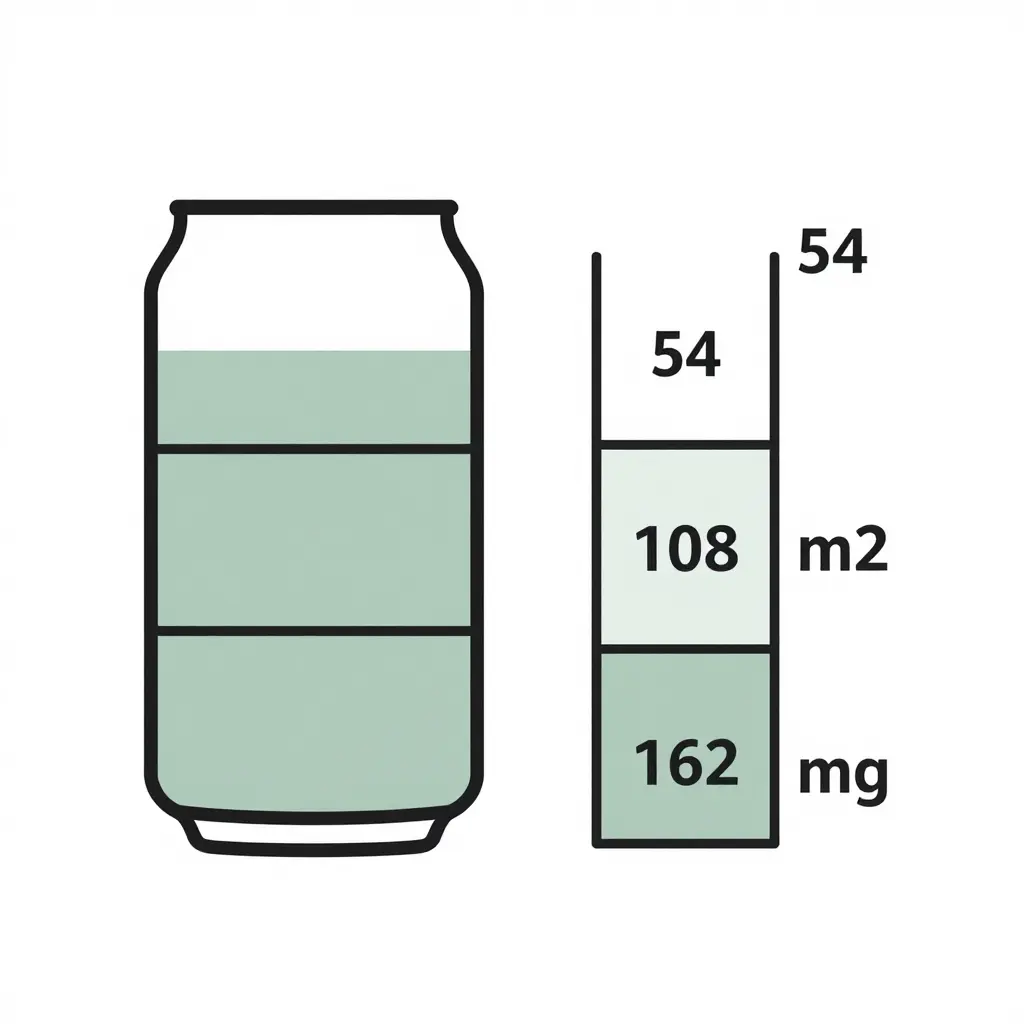
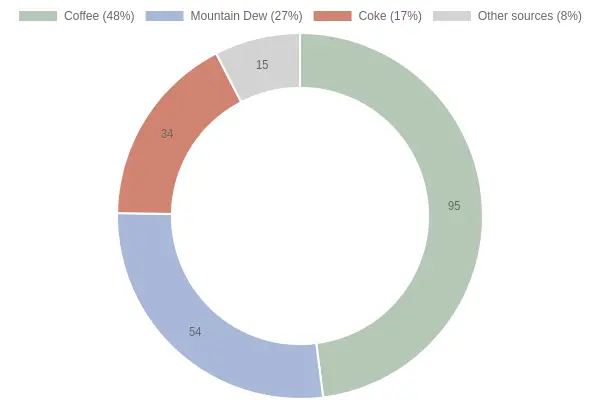
The whole-day picture: a single coffee can supply nearly half of a typical person’s daily caffeine, while sodas like Mountain Dew and Coke make up much of the rest. Every slice here assumes a specific serving size, so swap that 12 oz can for a 20 oz bottle and the proportions shift. That is exactly why tracking the full day matters more than judging any one drink. When you’re ready to see how the two sodas compare can to can, start with the real caffeine gap between Mountain Dew and Coke.
Diet Variants vs. Regular Sodas: Caffeine Doesn’t Disappear
Many shoppers grab a “diet” soda and assume it is caffeine-free. That assumption is wrong. The word “diet” describes sugar and calories, not caffeine. Diet Mountain Dew has essentially the same caffeine as the regular version, and Coke Zero matches regular Coke at 34 mg.
Here is how the numbers stack up per 12 fl oz serving:
| Soda | Caffeine per 12 fl oz |
|---|---|
| Mountain Dew | 54 mg |
| Diet Mountain Dew | 54 mg |
| Coke | 34 mg |
| Coke Zero | 34 mg |
| Diet Coke | 46 mg |
| Pepsi | 38 mg |
| Diet Pepsi | 35 mg |
| Dr Pepper | 41 mg |
| Sunkist Orange | 0 mg |
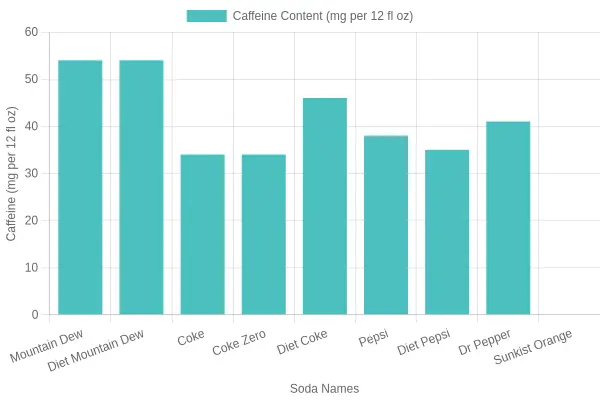
A few things stand out. Switching to a diet version rarely changes caffeine: Coke and Coke Zero both come in at 34 mg, and Diet Mountain Dew matches its full-sugar sibling at 54 mg. If you want the full breakdown, see how Mountain Dew compares to Coke.
Diet Coke is the exception. At 46 mg, it carries noticeably more caffeine than regular Coke, so “diet” can even mean a bigger jolt. You can explore the diet Mountain Dew caffeine numbers here for a closer look at how its diet label hides a full-strength dose.
Caffeine also isn’t universal across soda. Most citrus and orange brands skip it entirely, which is why Sunkist Orange lists none – a useful reminder to check whether orange soda has caffeine before assuming every can has a kick.
The real trap is comparing bottles instead of servings. A 20 oz bottle of Diet Mountain Dew holds roughly 1.7 servings, pushing your total past 90 mg. Diet soda isn’t caffeine-free – the caffeine follows the serving size, so read the label for mg per serving, not per bottle.
FAQ: Caffeine in Mountain Dew vs Coke
Does Mountain Dew have more caffeine than Coke?
Yes. A 12 oz can of Mountain Dew contains about 54 mg of caffeine, while a 12 oz can of Coca-Cola contains roughly 34 mg. Ounce for ounce, that makes the caffeine in Mountain Dew vs Coke about 60% higher. The gap grows larger in practice because Mountain Dew is frequently sold in bigger bottle sizes.
How many servings are in a 20 oz bottle?
Most 20 oz bottles are labeled as containing more than one serving. A 20 oz Mountain Dew bottle lists one serving as 12 oz, so the container holds about 1.67 servings. Drinking the whole bottle therefore delivers around 91 mg of caffeine, not the 54 mg printed on the label.
Does diet Mountain Dew have caffeine?
Yes. Diet Mountain Dew contains caffeine at levels close to the regular version, around 54 mg per 12 oz. Removing sugar does not remove caffeine, so a diet label does not mean a lower caffeine count. Check the label directly if caffeine is a concern.
Why does serving size change my caffeine total?
Caffeine values on labels are listed per serving, not per container. When a bottle contains multiple servings, your daily caffeine total depends on how much you actually drink rather than how many bottles you open. Reading the serving size and multiplying accordingly gives you an accurate figure.
Is fountain soda caffeine different from canned?
Yes, slightly. Fountain soda is mixed on site, so the syrup-to-water ratio and the caffeine content per ounce can vary between dispensers. Canned and bottled versions are standardized, which makes them more consistent for tracking caffeine in Mountain Dew vs Coke.
Does the serving size on the can match a restaurant cup?
Not always. Restaurant cups and fountain pours are often measured in fluid ounces that differ from the 12 oz can standard. Because of this, a single fountain drink can shift your daily caffeine total more than the can label suggests. Measuring the pour is the most reliable approach.